
Norm Cash is a name that may not be as immediately recognized as some of the other stars of his era, but his contribution to Major League Baseball, particularly with the Detroit Tigers, places him among the more influential players of the 1960s and 1970s. His career spanned from 1958 to 1974, and over that time, he cemented his reputation as one of the best first basemen in the American League. Cash’s combination of power, average, and ability to get on base made him one of the most consistent offensive forces of his generation. While he never garnered the same level of fame as some of his contemporaries, his steady production and clutch performances had a lasting impact on the Detroit Tigers and the game as a whole.
Norman Dalton Cash was born on November 10, 1934, in Hisperia, Texas. He was raised in a baseball-loving family, and his early exposure to the game instilled a passion for the sport. Cash’s physicality and natural ability to play baseball became evident early on, as he played both baseball and football during his youth. His exceptional athleticism allowed him to stand out, and as he developed into a teenager, his talent on the diamond became undeniable. He attended Bowie High School in Arlington, Texas, where he was a star player, and after graduation, Cash was drafted by the Chicago White Sox in 1955.
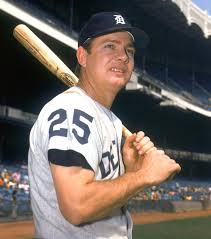
Cash’s journey to the major leagues was not immediate. After being drafted by the White Sox, he spent several years in the minors, refining his hitting approach and developing his defensive skills. He played for the White Sox’s minor league affiliates, making his way through the ranks with strong seasons at every level. By 1958, Cash was called up to the White Sox for the first time. His early years in the major leagues, however, were marked by inconsistency and a lack of regular playing time. Cash played in only 34 games for the White Sox in 1958 and struggled to find a steady spot in the lineup.
Despite this early setback, Cash’s work ethic and determination to improve as a player paid off. In 1959, Cash was traded to the Detroit Tigers, a move that would forever shape the trajectory of his career. Initially, Cash was used in a platoon role, but the Tigers soon recognized his potential and handed him the everyday first base job. It was with the Tigers that Cash would truly blossom as a player, developing into one of the premier hitters in the American League.
By 1960, Cash was beginning to make a name for himself. That season, he posted a solid .266 batting average with 18 home runs and 78 RBIs. Although his numbers were respectable, it was in 1961 when Cash had his first truly remarkable season. He batted .361 with 41 home runs, 132 RBIs, and a league-leading 16 triples. His offensive explosion that year helped solidify his reputation as one of the most potent power hitters in the league. His .361 batting average, in particular, was one of the highest in the American League, and Cash finished the season second in the MVP voting behind Roger Maris, whose 61 home runs captured the headlines.
1961 was a defining year in Cash’s career, and his performance was a key factor in the Tigers’ resurgence. Though they finished in second place, the Tigers were competitive in a tight race for the AL pennant, and Cash’s production in the middle of the lineup was essential to their success. The following season, Cash continued his strong play, although his numbers dipped slightly. In 1962, he batted .302 with 27 home runs and 94 RBIs, helping the Tigers remain competitive in the American League. While Cash may have lacked the power numbers of some of the league’s other stars, his ability to hit for both average and power made him one of the most complete offensive players of the early 1960s.
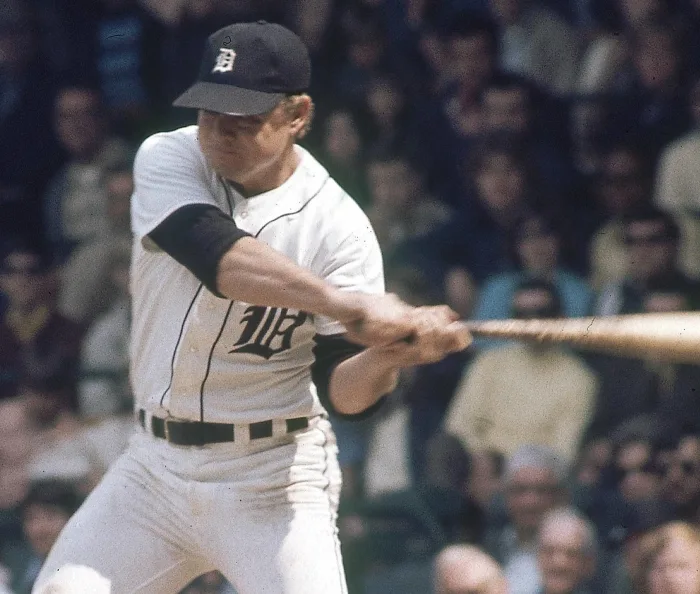
Throughout the 1960s, Cash remained one of the most consistent and valuable players on the Tigers. His ability to get on base, his power from the left side of the plate, and his leadership in the middle of the lineup made him a key figure for the team. In 1963, he hit .307 with 28 home runs and 101 RBIs, once again showcasing his all-around hitting ability. He continued to play a major role in the Tigers’ lineup, consistently ranking among the league leaders in RBIs and home runs. His power was particularly evident in 1965, when he hit 25 home runs and drove in 95 RBIs, while also maintaining a solid .273 batting average.
Though Cash’s numbers continued to be strong throughout the mid-1960s, the Tigers were never able to break through and win another World Series during this period. Cash was part of a strong Tigers team that included Hall of Fame players like Al Kaline, but the team struggled to surpass the powerhouse New York Yankees in the standings. Despite these challenges, Cash’s individual performances continued to stand out. His consistency and ability to contribute on both offense and defense made him one of the most respected players in the American League.
By the early 1970s, Cash was in the later stages of his career, but he remained an important fixture for the Tigers. In 1972, at age 37, Cash hit .261 with 25 home runs and 91 RBIs, showcasing that his power and ability to produce runs had not diminished. His offensive consistency remained valuable for the Tigers as they transitioned to a new era, but Cash’s days as a starting player began to come to an end. In 1973, he played his final season with the Tigers, finishing with a respectable .263 batting average and 13 home runs.
Over the course of his 17-year Major League Baseball career, Cash compiled a .271 batting average, 377 home runs, 1,346 RBIs, and 1,114 runs scored. His 1,099 career walks demonstrated his keen eye at the plate and his ability to get on base. He was a three-time All-Star and finished his career with a solid .358 on-base percentage. Cash’s power was particularly impressive considering he played in an era when home runs were not as common as they are today, and he was often ranked among the league leaders in extra-base hits.

Cash’s impact on baseball, however, goes beyond his individual statistics. He was a model of consistency and professionalism throughout his career. His leadership in the clubhouse and his ability to perform in clutch situations made him one of the most respected veterans on the Tigers. Cash was known for his ability to deliver key hits in pressure moments, often coming through when his team needed him most. He was also recognized as a key part of the Tigers’ efforts in the 1960s and early 1970s, helping to stabilize the lineup and provide offensive production year in and year out.
One of the most unique aspects of Cash’s career was his unconventional stance at the plate. Cash was known for holding the bat high above his shoulder, a posture that set him apart from most other hitters of his era. His unique style was both a result of his individual comfort at the plate and an attempt to generate more power. While his stance was often a topic of conversation, it did not stop him from becoming one of the most successful and feared left-handed hitters in the game. Cash’s ability to generate power with his distinctive approach helped him become one of the most consistent power hitters of the 1960s and early 1970s.
Though Cash’s career may not have included a World Series title, his contributions to the Tigers were immeasurable. He was one of the most feared hitters of his time, capable of changing the course of a game with one swing of the bat. His ability to get on base, hit for average, and drive in runs made him a key component in the Tigers’ lineup during a time when the team faced stiff competition from the Yankees and other powerful teams in the American League.
Following his retirement as a player, Cash stayed involved in baseball, working as a coach and an instructor for various organizations. Though his later life was not as high-profile as his playing days, he remained a beloved figure in Detroit, where his time with the Tigers had left a lasting legacy.
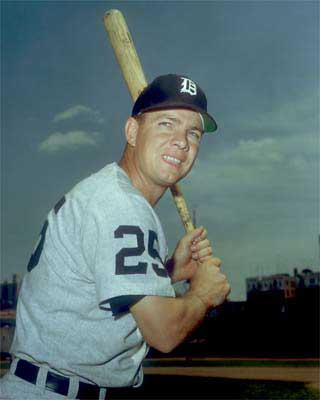
Norm Cash’s impact on Major League Baseball cannot be overstated. He was a pioneer in many ways, from his unique batting stance to his powerful bat and ability to get on base. His contributions to the Tigers, particularly in the 1960s and early 1970s, helped solidify him as one of the best first basemen in the game. Although he may not have received the same level of recognition as some of his contemporaries, his steady and consistent production in the middle of the Tigers’ lineup made him an invaluable asset to the team and a key figure in baseball history.
Norm Cash’s legacy is one of excellence, consistency, and resilience. He was a player who produced year in and year out, contributing both offensively and defensively to the success of his teams. While he may not have achieved the individual accolades of some of his peers, his place in baseball history is secure, and his contributions to the game will continue to be remembered by those who appreciate the art of hitting and the importance of a steady presence in the lineup.



 The Baseball Scholar
Leave a reply to 1960s All-Decade Team – The Baseball Scholar Cancel reply