
Curt Schilling’s MLB career stands as a testament to the determination, skill, and passion that characterize the very best of professional baseball. Known for his fiery competitiveness, exceptional postseason performances, and mastery on the mound, Schilling carved out a legacy that is as controversial as it is remarkable. Over a career spanning nearly two decades, he accumulated significant statistical achievements, shone in the sport’s most high-pressure moments, and left a lasting impact on the game of baseball. His journey from a young, talented athlete to one of the sport’s most decorated pitchers provides a rich narrative of triumph, controversy, and legacy.
Curtis Montague Schilling was born on November 14, 1966, in Anchorage, Alaska. As the son of a U.S. Army soldier, Schilling moved frequently during his youth, which exposed him to different environments and opportunities. Despite the instability of a military family lifestyle, Schilling’s love for baseball remained constant. He was inspired by the likes of Nolan Ryan, whose powerful fastball and aggressive demeanor would later become hallmarks of Schilling’s own game.
Schilling attended Shadow Mountain High School in Phoenix, Arizona, where his potential as a pitcher began to shine. While his high school career was marked by flashes of brilliance, he did not dominate in the way some future stars do at that level. After high school, Schilling attended Yavapai College, a junior college in Arizona, where he honed his skills and caught the attention of MLB scouts.
In the 1986 MLB Draft, the Boston Red Sox selected Schilling in the second round. While he was not an immediate standout, his potential was evident. Over the next few years, Schilling worked his way through the minor leagues, developing the pitch repertoire and mental toughness that would define his career. Early stints in the major leagues provided glimpses of his talent, but it would take time for him to evolve into the dominant pitcher he would eventually become.
Schilling made his MLB debut with the Baltimore Orioles on September 7, 1988. His time with the Orioles was short-lived, as he was traded to the Houston Astros in 1991. These early years in the majors were marked by inconsistency, as Schilling struggled to find his footing. He primarily worked as a reliever and spot starter, showing flashes of potential but failing to establish himself as a frontline pitcher.
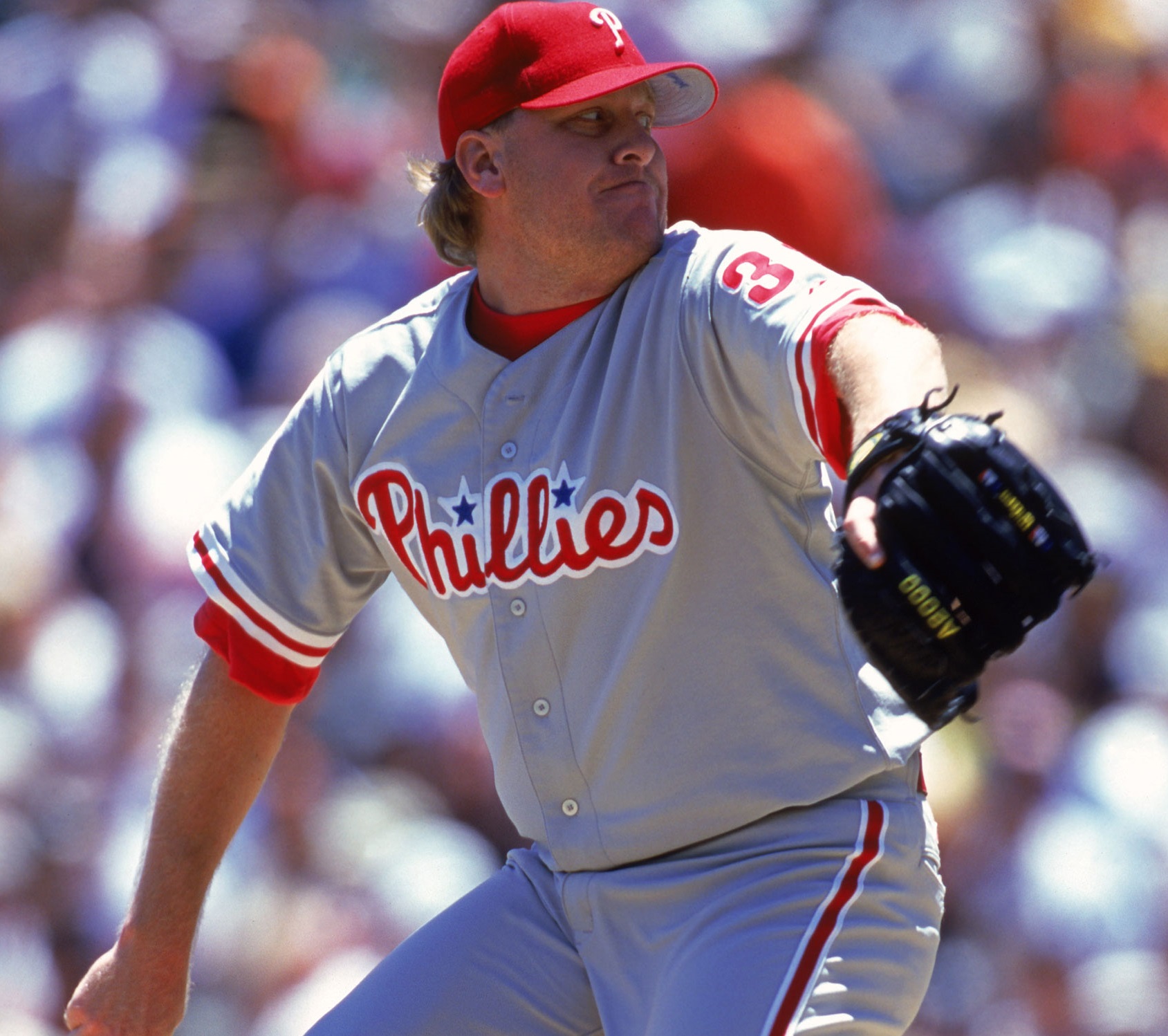
The turning point in Schilling’s career came in 1992 when he was traded to the Philadelphia Phillies. It was with the Phillies that Schilling began to realize his potential. Under the tutelage of pitching coach Johnny Podres, Schilling refined his mechanics and developed a more effective approach to attacking hitters. He transitioned to a full-time starting role, and by the mid-1990s, he had become the team’s ace.
Schilling’s tenure with the Phillies marked his ascension to stardom. He quickly established himself as one of the most dominant strikeout pitchers in the league. In 1997, Schilling led the National League (NL) in strikeouts with 319, becoming the first Phillies pitcher since Steve Carlton to surpass 300 strikeouts in a season. His ability to miss bats with a high-velocity fastball and devastating splitter made him a nightmare for opposing hitters.
Perhaps Schilling’s most memorable season with the Phillies came in 1993 when he played a pivotal role in leading the team to the World Series. The Phillies, a scrappy and overachieving group, were underdogs throughout the postseason. Schilling delivered a masterful performance in Game 5 of the World Series against the Toronto Blue Jays, pitching a complete-game shutout to stave off elimination. Though the Phillies ultimately lost the series, Schilling’s heroics solidified his reputation as a big-game pitcher.
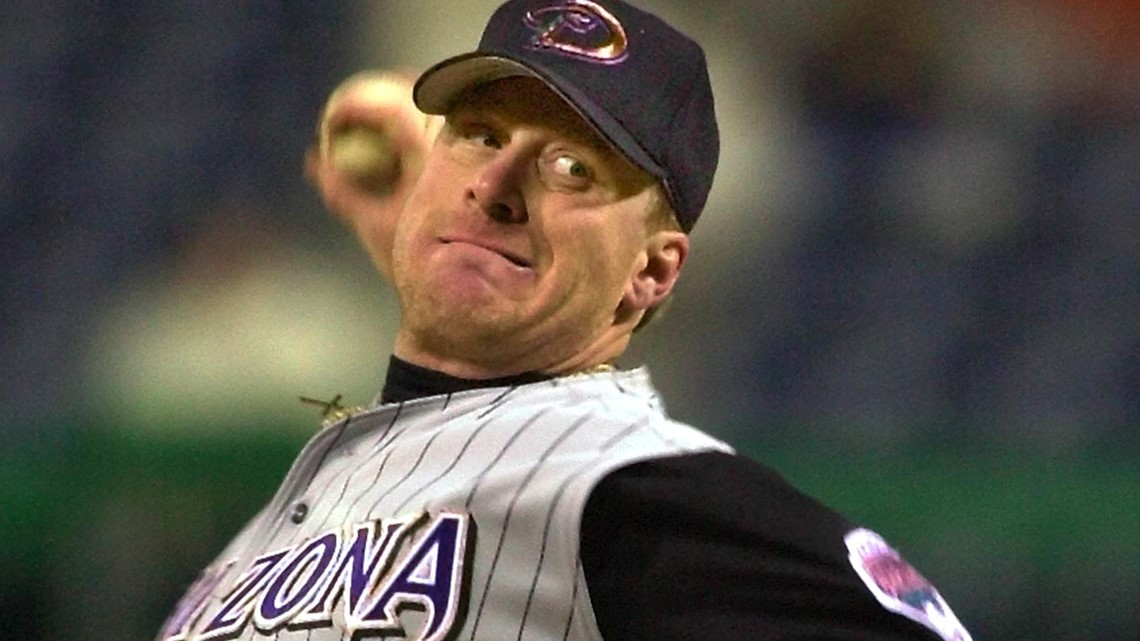
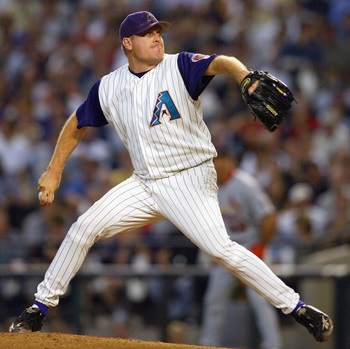
In 2000, Schilling was traded to the Arizona Diamondbacks, a move that would prove transformative for both him and the franchise. Teaming up with fellow ace Randy Johnson, Schilling formed one of the most formidable pitching duos in MLB history. The two powerhouses dominated opposing lineups, leading the Diamondbacks to unprecedented success.
The pinnacle of Schilling’s career came in 2001 when the Diamondbacks won the World Series. Schilling and Johnson were instrumental in Arizona’s postseason run, sharing the World Series MVP award. Schilling went 4-0 in the playoffs, including a heroic performance in Game 7 of the World Series against the New York Yankees. He pitched 7.1 innings of one-run ball, setting the stage for Luis Gonzalez’s walk-off single. Schilling’s ability to elevate his game on the sport’s biggest stage cemented his legacy as one of the greatest postseason pitchers of all time.
In 2004, Schilling joined the Boston Red Sox, a team desperate to end its 86-year World Series drought. Schilling immediately became the leader of the pitching staff, bringing his veteran experience and unrelenting drive to a franchise on the cusp of history.
Schilling’s performance in the 2004 postseason is the stuff of legend. In the AL Championship Series (ALCS) against the New York Yankees, the Red Sox faced a 3-0 series deficit. Schilling, pitching with a severe ankle injury, delivered a gutsy performance in Game 6. With his ankle sutured together and visibly bleeding, Schilling held the Yankees to one run over seven innings, forcing a Game 7. The image of Schilling’s bloody sock became an enduring symbol of determination and resilience.

The Red Sox went on to complete their historic comeback against the Yankees and swept the St. Louis Cardinals in the World Series. Schilling’s leadership and pitching were critical to Boston’s success, and the team’s championship ended decades of frustration for Red Sox fans.
Schilling’s statistical achievements place him among the all-time greats. Over his 20-year career, he amassed 216 wins, a 3.46 ERA, and 3,116 strikeouts. He is one of only 19 pitchers in MLB history to reach the 3,000-strikeout milestone. Schilling’s career strikeout-to-walk ratio of 4.38 remains one of the best in MLB history, highlighting his exceptional command and efficiency.
In the postseason, Schilling’s numbers are even more impressive. He compiled an 11-2 record with a 2.23 ERA in 19 career playoff starts. His ability to perform under pressure set him apart from his peers and earned him a reputation as one of the greatest clutch pitchers of all time.
Schilling’s impact on baseball extends beyond his on-field achievements. He was a vocal leader in the clubhouse, known for his intense work ethic and unrelenting pursuit of excellence. Schilling’s willingness to mentor younger players and share his knowledge of the game made him a valuable presence on every team he played for.
Off the field, Schilling has been a polarizing figure. His outspoken personality and controversial statements have sparked debate and drawn criticism. While his post-retirement activities have sometimes overshadowed his playing career, there is no denying the impact he had on the game during his time in the majors.
Schilling’s legacy is one of brilliance, passion, and complexity. His performances in the biggest moments of the sport have secured his place in baseball history, while his fiery personality has made him one of the most intriguing figures in the game. Whether remembered for his bloody sock, his devastating splitter, or his role in breaking the Curse of the Bambino, Curt Schilling’s career remains one of the most compelling stories in the annals of baseball.


 The Baseball Scholar
Leave a comment