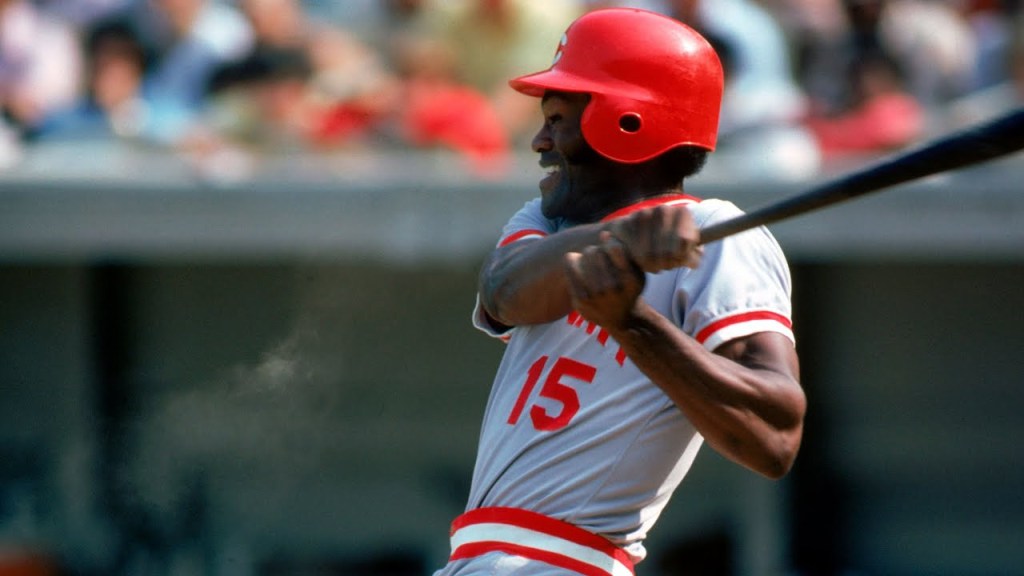
George Foster’s Major League Baseball career stands as one of the more remarkable arcs in the game’s history, particularly given the era in which he played and the legendary teammates who surrounded him. Born on December 1, 1948, in Tuscaloosa, Alabama, George Arthur Foster would eventually emerge as one of the most feared sluggers of the 1970s and early 1980s, best known for his time with the Cincinnati Reds during their “Big Red Machine” dynasty. His path to MLB stardom was neither swift nor predictable, but it was filled with resilience, hard work, and undeniable talent.
Foster’s early life in Alabama and later in Los Angeles, where he attended Leuzinger High School, was marked by athletic promise. A multisport athlete, he stood out particularly on the baseball field, displaying a raw power and athleticism that caught the attention of scouts. In 1968, Foster was drafted by the San Francisco Giants in the third round of the amateur draft, marking the beginning of his professional journey. His early minor league years were filled with flashes of promise, particularly his power at the plate. However, he struggled to consistently make contact and adjust to higher levels of pitching. These developmental years would be instrumental in shaping the disciplined hitter he would later become.
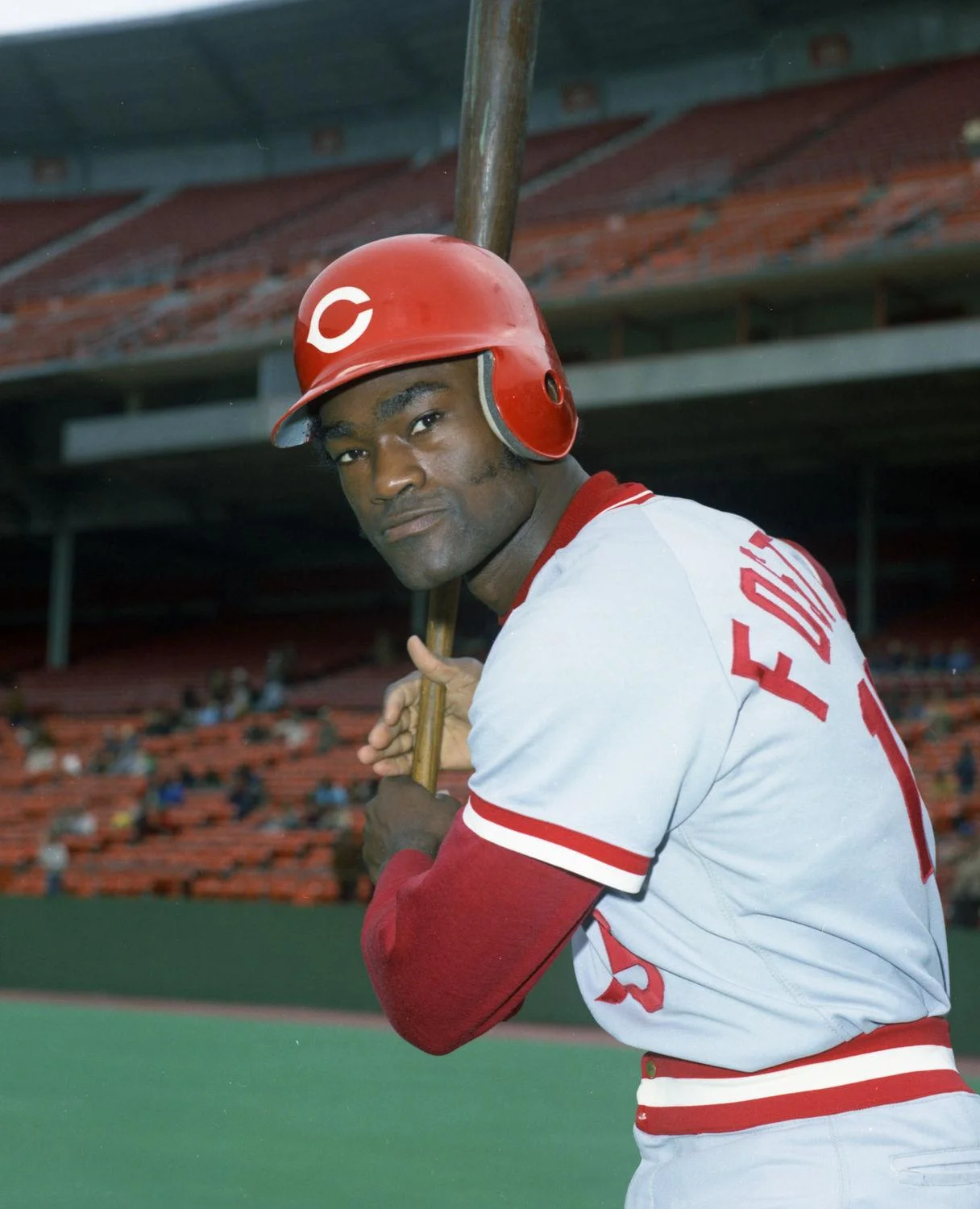
Foster made his MLB debut with the Giants on September 10, 1969. His tenure in San Francisco was brief and uneventful, consisting of sporadic appearances over two seasons. In 1971, he was traded to the Cincinnati Reds in exchange for shortstop Frank Duffy. At the time, this move was largely overlooked, but it would prove monumental for both Foster and the Reds. Initially, Foster struggled to find consistent playing time in Cincinnati’s stacked lineup. However, his breakout moment came in 1975, when he finally earned a full-time spot in the outfield. That year, the Reds won 108 games and steamrolled their way through the postseason, culminating in a World Series title. Though he was still coming into his own, Foster contributed significantly to the team’s success, hitting .300 with 23 home runs and 78 RBIs in 134 games.
The 1976 season solidified Foster as a rising star. The Reds repeated as World Series champions, sweeping the New York Yankees. Foster hit .306 with 29 home runs and 121 RBIs, leading the league in runs batted in. His performance earned him a second-place finish in the MVP voting, signaling his arrival among the game’s elite. Yet it was 1977 that would be remembered as the zenith of Foster’s career. In one of the most dominant offensive seasons in modern baseball history, Foster hit 52 home runs, drove in 149 runs, and batted .320. He became the first player since Willie Mays in 1965 to hit 50 or more home runs in a season, a feat that remained rare during the pitcher-dominated 1970s. His MVP award that year was well-deserved and cemented his status as the most fearsome power hitter in the game.
Foster’s 1977 campaign is often cited as one of the finest individual seasons in the history of the Cincinnati Reds franchise. His 52 home runs led all of baseball by a wide margin, and his 149 RBIs were similarly unmatched. In addition to his raw numbers, his consistent clutch hitting and ability to change games with a single swing made him invaluable to the Reds’ continued success. He followed up that season with another impressive performance in 1978, batting .281 with 40 home runs and 120 RBIs. Though the Reds did not achieve the same postseason success, Foster remained a constant threat in the lineup.

From 1975 to 1981, Foster was selected to five All-Star Games and won two Silver Slugger awards. During this span, he led the National League in RBIs three times and in home runs twice. His blend of power and run production was rare, particularly during an era where offense was generally more subdued than in previous decades. Foster’s swing was both powerful and elegant, with a compact yet explosive motion that allowed him to generate significant bat speed. Defensively, he was a solid left fielder, known for a strong throwing arm and reliable glove work, although his prowess at the plate often overshadowed his fielding contributions.
As the Reds began to retool in the early 1980s, Foster was traded to the New York Mets in 1982. The move was met with considerable excitement in New York, where the Mets were looking to rebuild with a veteran presence. Foster signed a five-year, $10 million contract, making him one of the highest-paid players in the game at the time. Expectations were enormous, but unfortunately, his time in New York never quite lived up to the heights of his Cincinnati years. While Foster still showed flashes of power—he hit 28 home runs and drove in 90 runs in 1983—his batting average and overall production declined. By 1986, Foster was released by the Mets, having hit .252 with 99 home runs and 361 RBIs in his five seasons in New York.
A brief stint with the Chicago White Sox followed, but Foster’s playing days were clearly winding down. He retired in 1986 with a career batting average of .274, 348 home runs, and 1,239 RBIs over 18 seasons. While his numbers may not match the gaudy totals of some Hall of Fame sluggers, they remain impressive, particularly when contextualized within the era he played. His five-year peak from 1976 to 1980 remains one of the most productive stretches of any hitter in MLB history.

Foster’s impact on baseball extended beyond his statistics. He was a key figure in one of the most dominant teams in baseball history, the Big Red Machine, and he played with a consistency and quiet professionalism that earned him the respect of teammates and opponents alike. Despite being somewhat reserved in personality, his bat did the talking. His role in two World Series titles, along with his MVP and multiple league-leading performances, places him firmly among the best players of his generation. In many ways, Foster’s career also mirrored the transitional period in baseball during the 1970s—a time when African-American players were continuing to establish themselves as superstars, and when the game was undergoing shifts in style, power distribution, and media exposure.
Foster’s legacy also includes his contributions to the game after his playing days. He remained involved in baseball through various roles, including as a coach, mentor, and motivational speaker. His commitment to youth development and community outreach reflected the same discipline and grace he exhibited on the field. Moreover, Foster has often spoken about the mental challenges of the game, sharing insights about perseverance, focus, and professionalism—qualities that helped him succeed during the pressure-cooker environment of Major League Baseball.
Despite his accomplishments, George Foster has been largely overlooked in Hall of Fame discussions. Some attribute this to the brevity of his peak, while others point to his decline in the latter part of his career. Still, his statistical resume and impact during the Reds’ championship years make a compelling case for reevaluation. He was the engine behind one of the most potent lineups in history, a player whose power changed the dynamics of games, and whose consistent excellence during the mid-to-late 1970s set a standard for run production.
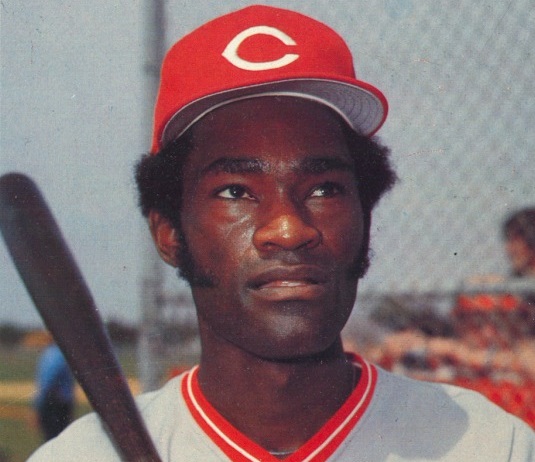
There are also unique aspects of Foster’s career that merit attention. For one, his ability to maintain a high level of performance during a pitching-dominated era cannot be overstated. The 1970s were marked by strong pitching, lowered mound heights, and generally suppressed offensive numbers. That Foster managed to post seasons with 52, 40, and 30-plus home runs during this time speaks to his extraordinary talent. Additionally, he was known for using one of the heaviest bats in the league, often exceeding 35 ounces—a testament to his strength and swing mechanics.
Another anecdote that encapsulates Foster’s impact came during the 1977 season. Pitchers often altered their game plans to avoid giving him anything to hit, leading to a rise in intentional walks and strategic pitching around him. Still, he managed to maintain discipline at the plate, something that became a hallmark of his approach. Foster’s home run total in 1977 would not be surpassed until the steroid-fueled era of the late 1990s, further highlighting its historical significance.
Foster also played with and against some of the most iconic names in baseball history. Sharing the field with Pete Rose, Johnny Bench, Joe Morgan, and Tony Perez, he was part of a Reds core that defined excellence in team baseball. Yet even in such elite company, Foster often stood out as the most feared bat in the lineup. His humility and work ethic helped him integrate seamlessly into a team-first environment, even as he produced MVP-caliber numbers.

In retirement, Foster has received several honors recognizing his contributions to the game. He was inducted into the Cincinnati Reds Hall of Fame, a testament to his enduring impact on the franchise and its fans. His legacy in Cincinnati remains strong, with many considering him the most powerful hitter in team history. Fans remember not only his mammoth home runs but also his role in delivering championships and creating an era of sustained success.
George Foster’s story is one of perseverance, power, and quiet excellence. From a little-known prospect in the Giants system to the MVP slugger at the heart of the Big Red Machine, Foster’s journey through Major League Baseball reflects both personal determination and the broader evolution of the sport during the 1970s. While his name may not come up as frequently as some of his contemporaries, his impact on the field—statistical, strategic, and cultural—deserves deeper appreciation. As baseball continues to revisit and reassess the contributions of past greats, Foster’s name should remain in the conversation as one of the most formidable hitters of his time and a true icon of his era.




 The Baseball Scholar
Leave a reply to Anonymous Cancel reply