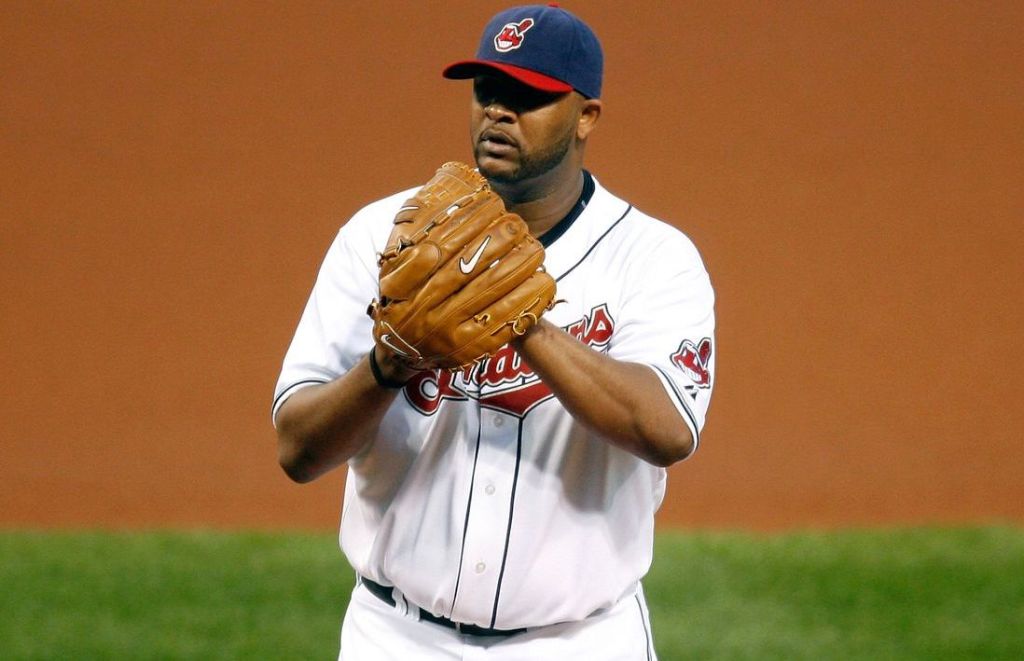
Carsten Charles “CC” Sabathia Jr. was one of the most dominant and durable pitchers of his generation, leaving an indelible mark on Major League Baseball (MLB) over his 19-year career. From his early days as a young fireballer with the Cleveland Indians to his role as an ace for the New York Yankees, Sabathia compiled an impressive resume that cemented his legacy as one of the greatest left-handed pitchers in history. His longevity, adaptability, and leadership on and off the field made him a revered figure in baseball, and his impact extended beyond just statistics. Sabathia’s story is one of perseverance, excellence, and evolution, making him one of the most respected players of his era.
Born on July 21, 1980, in Vallejo, California, Sabathia grew up in a sports-oriented family. From an early age, he exhibited a rare combination of size, athleticism, and competitive fire. His mother, Margie, played a pivotal role in his development, ensuring he remained focused on academics and athletics. Sabathia attended Vallejo High School, where he was a multi-sport athlete, excelling in both football and baseball. As a pitcher, his overpowering fastball and natural command drew the attention of professional scouts. He had initially committed to playing college baseball at the University of Hawaii but was ultimately selected 20th overall by the Cleveland Indians in the first round of the 1998 MLB Draft.
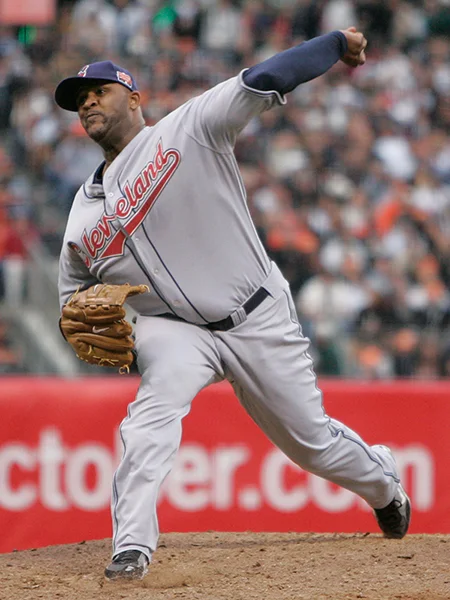
Sabathia quickly ascended through the minor leagues, showcasing an elite fastball and a fierce mound presence. By 2001, at just 20 years old, he made his MLB debut with the Indians. That year, he posted an impressive 17-5 record with a 4.39 ERA, finishing second in American League (AL) Rookie of the Year voting. His ability to overpower hitters with a high-90s fastball, coupled with a developing slider and changeup, made him one of the most promising young pitchers in baseball.
Over the next few seasons, Sabathia established himself as Cleveland’s ace. From 2001 to 2007, he was a workhorse, regularly logging over 200 innings per season. In 2007, he had a career year, going 19-7 with a 3.21 ERA, 209 strikeouts, and a 1.14 WHIP. His dominance earned him the AL Cy Young Award, making him the first Cleveland pitcher to win the honor since Gaylord Perry in 1972. That year, he led the Indians to the AL Championship Series, where they fell just short of a World Series appearance. However, it was clear that Sabathia had arrived as one of the elite pitchers in the game.
In the midst of the 2008 season, with the Indians struggling, Sabathia was traded to the Milwaukee Brewers. His half-season with Milwaukee was one of the most remarkable pitching performances in recent memory. He made 17 starts for the Brewers, going 11-2 with a 1.65 ERA, throwing seven complete games, and almost single-handedly leading them to their first playoff appearance in 26 years. He frequently pitched on short rest and even threw a complete-game shutout on the final day of the season to clinch a postseason berth. His performance earned him NL Cy Young consideration despite playing only half the season in the league.
Sabathia’s dominant stretch in Milwaukee made him the most coveted free agent heading into the 2009 offseason. The New York Yankees, seeking an ace to lead their rotation, signed him to a seven-year, $161 million contract, the richest deal for a pitcher at the time. He immediately delivered, leading the Yankees to their first World Series championship since 2000. In 2009, he went 19-8 with a 3.37 ERA and 197 strikeouts. He was even better in the postseason, winning ALCS MVP honors after going 2-0 with a 1.13 ERA against the Los Angeles Angels. In the World Series against the Philadelphia Phillies, he helped anchor the rotation as the Yankees secured their 27th championship.
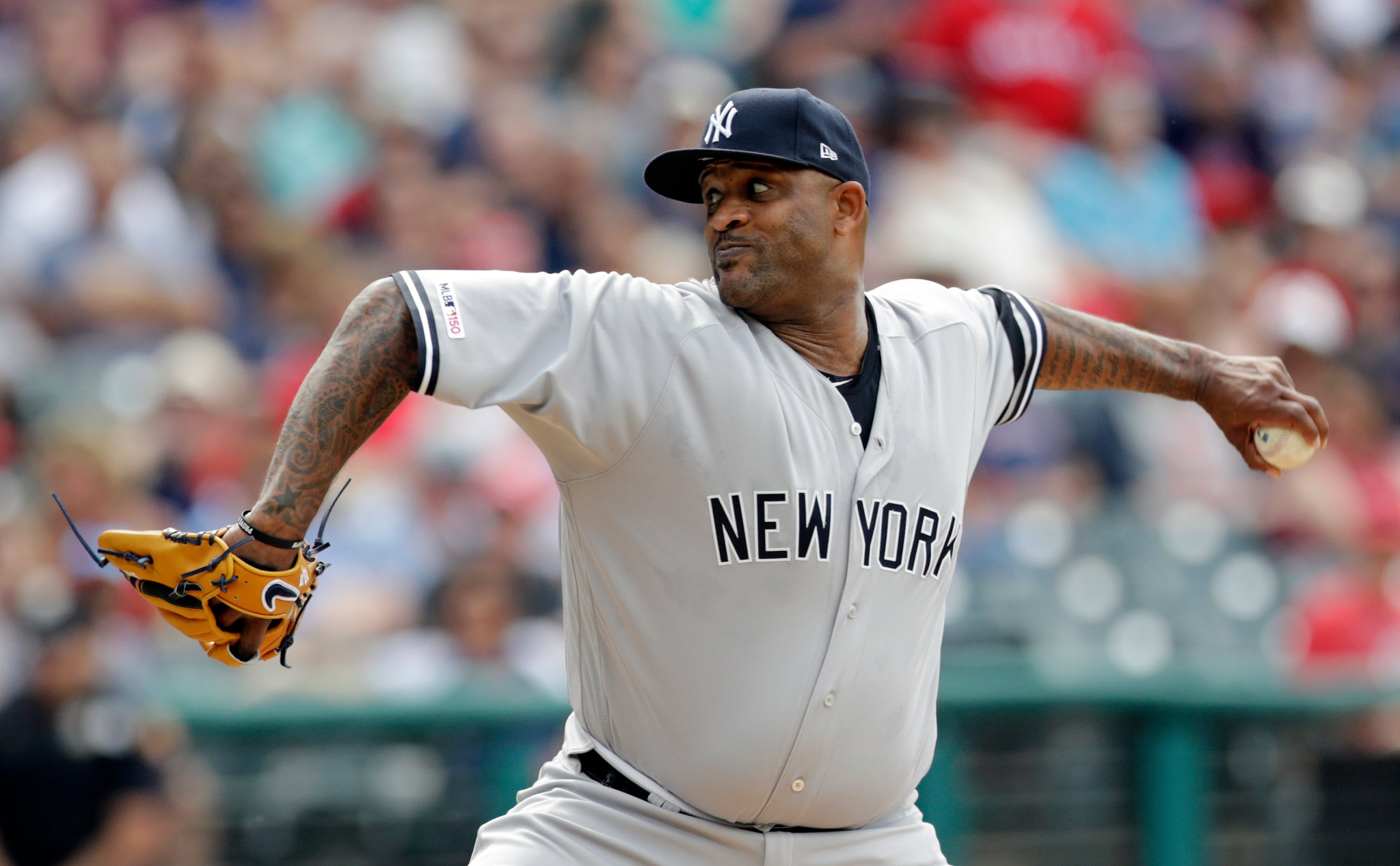
Sabathia continued his dominance over the next few seasons. From 2010 to 2012, he remained among the best pitchers in baseball, earning three consecutive All-Star selections. In 2010, he led the AL with 21 wins, finishing third in Cy Young voting. His ability to pitch deep into games and provide stability to the Yankees’ rotation was invaluable. Even as his velocity began to decline, he adapted by refining his secondary pitches, particularly his cutter, which became one of his most effective weapons.
However, injuries and inconsistency began to take a toll on Sabathia from 2013 onward. Knee problems limited his effectiveness, and by 2014, he had lost much of the velocity that had defined his early career. Many pitchers struggle to adjust to such a decline, but Sabathia reinvented himself as a finesse pitcher. He relied more on movement, deception, and sequencing rather than overpowering hitters. This transformation allowed him to remain a key contributor for the Yankees into the late 2010s.
In addition to his on-field contributions, Sabathia became a respected clubhouse leader and mentor for younger players. He was known for his fierce competitiveness but also for his ability to connect with teammates. His influence extended beyond baseball, as he became an advocate for mental health awareness and substance abuse recovery. In 2015, he took a leave of absence to enter rehab for alcohol addiction, a decision that was widely praised for its courage and honesty. Upon his return, he continued to perform at a high level while also using his platform to help others dealing with similar struggles.

Sabathia’s later years with the Yankees were marked by milestones and a renewed appreciation for his longevity. In 2019, he recorded his 3,000th career strikeout, becoming just the 17th pitcher in MLB history to achieve that feat. He also surpassed 250 career wins, an increasingly rare milestone in modern baseball. That season was his farewell tour, as he announced it would be his final year in the majors. Despite battling injuries, he remained a key contributor down the stretch and helped the Yankees reach the playoffs one final time.
Sabathia retired after the 2019 season with an illustrious resume. He finished his career with a 251-161 record, a 3.74 ERA, and 3,093 strikeouts over 3,577.1 innings pitched. His ability to remain effective for nearly two decades speaks volumes about his talent, adaptability, and work ethic. His contributions to the game went beyond statistics, as he served as a role model for perseverance and leadership.
Beyond his playing career, Sabathia has remained active in the baseball community. He has worked as a broadcaster, analyst, and ambassador for the game. His impact on the sport extends to his philanthropic efforts, particularly through the PitCCh In Foundation, which he and his wife Amber founded to support underserved communities. His advocacy for social justice and commitment to helping young athletes further solidify his legacy as more than just a great pitcher.

CC Sabathia’s MLB career is a testament to his greatness as both a pitcher and a person. His dominance in his prime, adaptability in his later years, and leadership on and off the field make him one of the most respected players of his generation. Whether it was his overpowering fastball in the early 2000s, his heroic run with the Brewers, or his championship leadership with the Yankees, Sabathia left an indelible mark on the game. His legacy will be remembered not only for his statistical achievements but also for his character, resilience, and contributions to baseball culture.


 The Baseball Scholar
Leave a reply to 2000s All-Decade Team – The Baseball Scholar Cancel reply