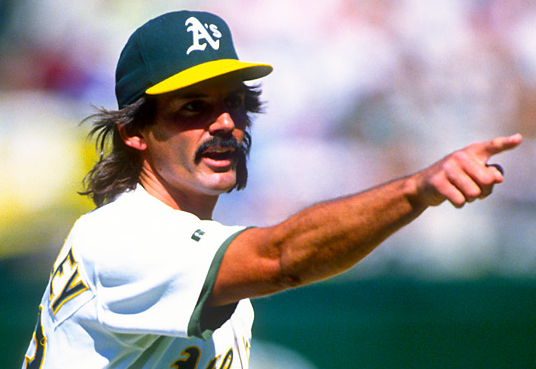
Dennis Eckersley is one of the most iconic and versatile pitchers in the history of Major League Baseball. Known for his dominance as both a starter and a closer, Eckersley revolutionized the role of the closer while also enjoying a successful career as a starting pitcher. His 24-year MLB career, which spanned from 1975 to 1998, was filled with remarkable statistical achievements, moments of dominance, and a long-lasting impact on the game. Eckersley’s ability to adapt his style and reinvent himself throughout his career allowed him to remain one of the most effective pitchers in the league for nearly two and a half decades.
Dennis Lee Eckersley was born on October 3, 1954, in Oakland, California. Growing up in the Bay Area, Eckersley developed a love for baseball early in life, and by the time he reached high school, it was clear he had the talent to pursue a career in the sport. As a teenager, he attended Washington High School in Oakland, where he was a star pitcher and shortstop. His natural ability on the mound earned him a reputation as one of the top pitching prospects in the country. After high school, Eckersley was drafted by the Cleveland Indians in the third round of the 1972 MLB Draft, forgoing college to pursue his dream of playing professional baseball.

Eckersley’s professional career began with the Indians’ minor league system, where he quickly progressed through the ranks. He made his Major League debut on April 12, 1975, at the age of 20, with the Cleveland Indians. His debut season was a mixed bag of success and struggles, as he posted a 4.64 ERA and struggled with consistency. However, his natural talent was evident, and he showed flashes of brilliance that would become a hallmark of his career. In his second season, Eckersley showed marked improvement, reducing his ERA to 3.28 and demonstrating his potential as a key pitcher in the Indians’ rotation.
Eckersley’s early years with the Indians were spent mostly as a starting pitcher, and he showed promise with his powerful fastball and sharp slider. His ability to generate strikeouts and get deep into games was a key part of his early success. However, he also struggled with inconsistency, often battling with control issues that kept him from fully realizing his potential. By the early 1980s, Eckersley had been traded to the Boston Red Sox, where he would experience the beginning of a transformation that would define his legacy in the game.
The trade to Boston in 1984 marked the beginning of a new chapter in Eckersley’s career. While still a starting pitcher, Eckersley began to refine his skills and develop a more consistent approach. His performances during the mid-1980s were solid, but it was in 1986 when Eckersley had one of his finest seasons. That year, he posted a 3.16 ERA and struck out 190 batters while logging 240 innings pitched. He was a crucial part of a Red Sox team that made it to the American League Championship Series (ALCS) and came within one game of winning the World Series.
However, despite his success as a starting pitcher, Eckersley’s true transformation came after he was traded to the Oakland Athletics in 1987. The Athletics recognized that Eckersley’s skill set could be maximized by transitioning him to a closer role. This move would ultimately redefine his career and change the trajectory of the A’s franchise.
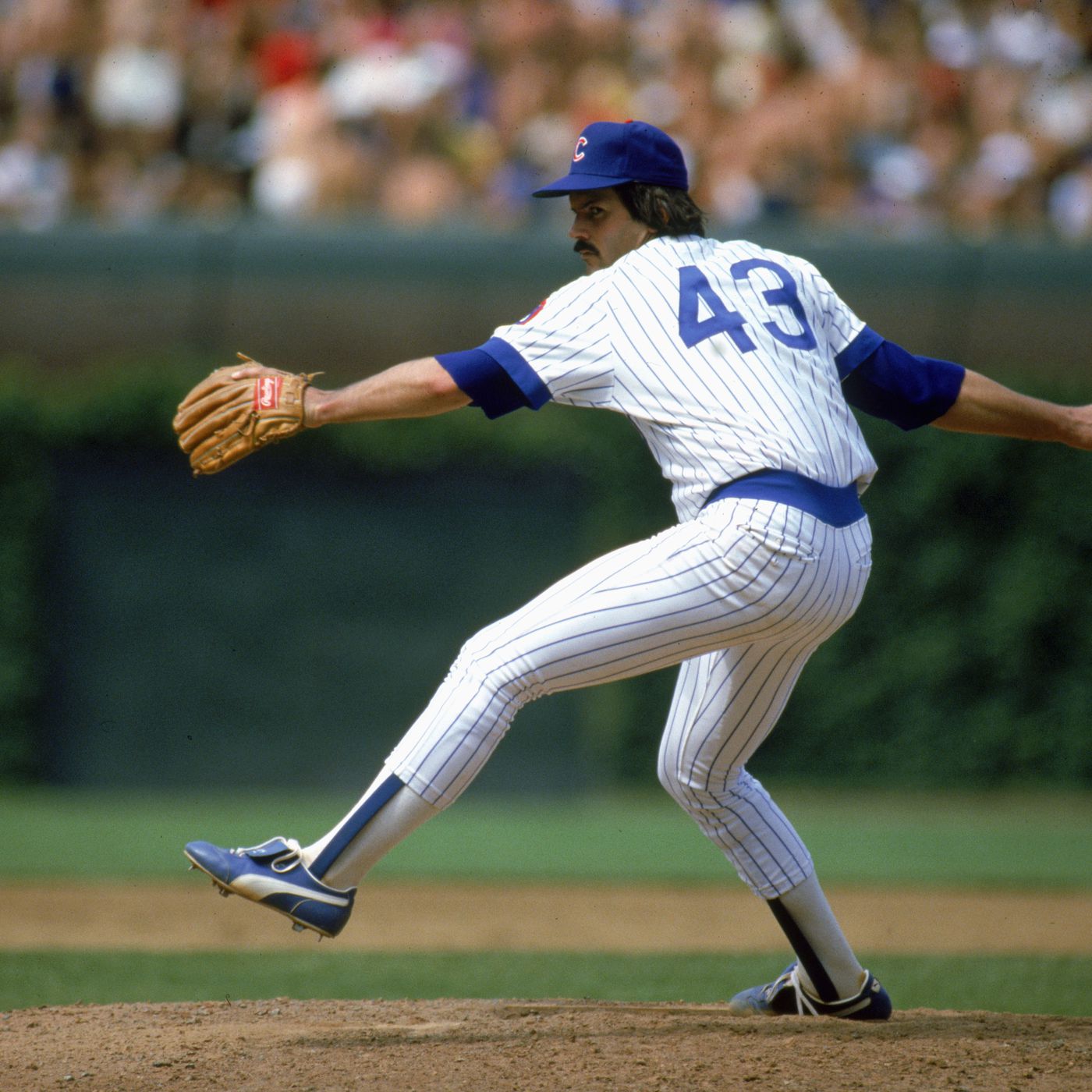
Eckersley’s transition to the closer role was nothing short of revolutionary. Prior to his move to the bullpen, the role of the closer was not as specialized as it would become in the years that followed. Eckersley, however, redefined what it meant to be a closer. His fastball-slider combination, which had been effective as a starter, was even more dangerous in short bursts of work. His ability to throw with pinpoint control and his calm demeanor on the mound made him one of the most dominant closers in baseball history. In 1988, his first season as the A’s closer, Eckersley posted an astonishing 2.60 ERA while saving 45 games and striking out 79 batters in just 74 innings. His success in the role was immediate, and he quickly became one of the most feared relievers in the game.
In 1990, Eckersley reached the pinnacle of his career as a closer. That season, he posted an ERA of 0.61, one of the lowest in baseball history, while saving 48 games for the A’s. His remarkable ability to shut down opposing hitters in pressure situations earned him the American League Most Valuable Player (MVP) award, making him the first relief pitcher to win the prestigious honor since Rollie Fingers in 1981. Eckersley’s dominance that season was a defining moment in his career, as he helped lead the Athletics to a World Series appearance, although they ultimately fell to the Cincinnati Reds in a four-game sweep.
Eckersley continued his excellence as a closer throughout the 1990s, maintaining his effectiveness while adapting his style as his career progressed. His consistency in the bullpen became legendary, and he established himself as one of the greatest relief pitchers in the history of the game. Over the course of his career, he became the first pitcher in MLB history to save 40 or more games in four different seasons, and his remarkable 390 career saves were a testament to his reliability and dominance.
One of Eckersley’s most notable qualities was his ability to perform in high-pressure situations. As a closer, he frequently entered games with the outcome hanging in the balance, and his ability to keep his composure in these moments set him apart from other relievers. His mastery of the fastball-slider combination made him nearly unhittable in the late innings, and he struck out batters with ease while keeping his walks to a minimum. His career WHIP (walks plus hits per inning pitched) of 1.16 was indicative of his ability to control the game from the mound, and his strikeout-to-walk ratio of 2.84 was a testament to his command and control.

Eckersley’s ability to evolve as a pitcher over the years was one of the keys to his sustained success. While he relied heavily on his fastball-slider combination early in his career, he learned to adapt to the changing nature of the game. As he grew older and his fastball lost some of its velocity, Eckersley refined his mechanics and relied more on his mental approach to the game. His ability to read hitters, mix his pitches, and stay ahead in counts allowed him to remain effective even as his physical tools began to diminish. He also benefited from his exceptional work ethic and attention to detail, as he was known for his meticulous preparation before each game.
In addition to his on-field accomplishments, Eckersley was known for his leadership and mentorship of younger pitchers. He was a calming influence on his teammates, particularly the younger players who looked up to him as a role model. His experiences as both a starter and a closer allowed him to offer invaluable advice to pitchers at all levels of the game, and his leadership helped foster a culture of success within the teams he played for.
Eckersley played his final season in 1998, closing out his career with the St. Louis Cardinals after spending time with the Oakland Athletics, Chicago Cubs, and Boston Red Sox. By the end of his career, he had accumulated 390 saves, a 3.50 ERA, and 2,401 strikeouts over 2,710 innings. His career achievements were widely recognized, and in 2004, he was inducted into the Baseball Hall of Fame, receiving 83.2% of the vote in his first year of eligibility. His induction was a fitting tribute to his remarkable career, and it cemented his place as one of the greatest relief pitchers of all time.
Beyond his statistics, Eckersley’s impact on the game of baseball cannot be overstated. He revolutionized the role of the closer, setting a new standard for what was expected from relievers in high-leverage situations. His success in the bullpen helped pave the way for future generations of specialized closers, and his ability to dominate in the late innings became the blueprint for the modern closer role. His influence extended beyond his pitching career as well, as he became a respected analyst and commentator for MLB Network, offering insight into the game from the perspective of one of the most accomplished pitchers in history.

Dennis Eckersley’s legacy is one of excellence, adaptability, and leadership. From his early days as a starting pitcher to his dominance as one of the greatest closers in MLB history, Eckersley’s career was defined by his ability to perform in pressure situations and his unparalleled command of the game. His impact on the sport is still felt today, and his induction into the Hall of Fame is a well-deserved recognition of his contributions to the game. Eckersley’s story is a testament to the power of reinvention, hard work, and perseverance, and he will always be remembered as one of the greatest pitchers to ever take the mound in Major League Baseball.



 The Baseball Scholar
Leave a comment