
Dwight Evans was one of the most consistent and underrated players of his era, known for his exceptional defense, power at the plate, and longevity as a key contributor for the Boston Red Sox. Over a 20-year career, Evans established himself as one of the premier right fielders in baseball, earning eight Gold Glove Awards, three All-Star selections, and two Silver Slugger Awards. While he may not have received the same level of attention as some of his more celebrated contemporaries, Evans’ impact on the game was immense, both in terms of his statistical achievements and the way he redefined what it meant to be a complete outfielder. His career was defined by an elite combination of power, patience, and defensive excellence, making him one of the most valuable and well-rounded players of his generation.
Dwight Michael Evans was born on November 3, 1951, in Santa Monica, California. Growing up in Southern California, Evans displayed an early aptitude for baseball, excelling as a young athlete with a strong throwing arm and natural hitting ability. He played high school baseball at Chatsworth High School in the Los Angeles area, where he quickly gained a reputation as one of the top prospects in the region. His combination of power and defensive skills made him a highly sought-after player, and in 1969, the Boston Red Sox selected him in the fifth round of the MLB Draft.
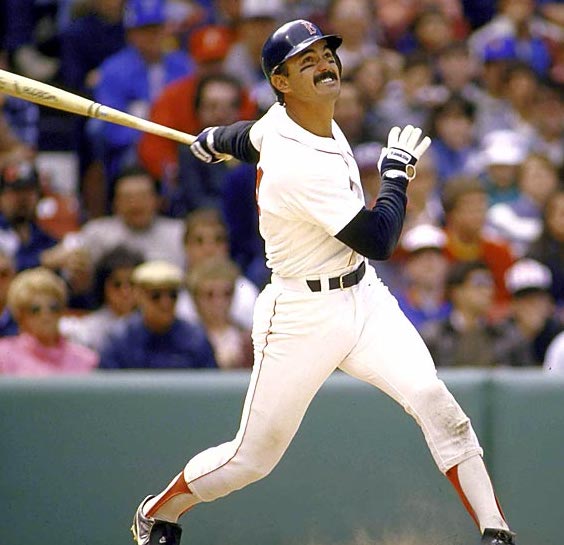
Evans’ rise through the minor league system was swift. He quickly developed into one of the best young hitters in the Red Sox organization, showing an advanced understanding of the strike zone and an ability to hit for both power and average. His defensive skills were also becoming a major strength, as he showcased an exceptionally strong and accurate throwing arm from right field. By 1972, he was ready for the big leagues, making his Major League debut with the Red Sox at the age of 20.
Early in his career, Evans was primarily known for his defensive abilities. He immediately became one of the best defensive right fielders in baseball, using his powerful arm and keen instincts to cut down baserunners and track down fly balls with ease. He won his first Gold Glove Award in 1976, a testament to his impact on the defensive side of the game. At a time when right field was often viewed as a position for power hitters who lacked defensive prowess, Evans helped redefine the position by proving that a right fielder could be both an offensive and defensive weapon.
While his glove was his calling card early on, Evans’ bat would soon develop into a major asset. During the late 1970s, he began to emerge as one of the more dangerous hitters in the American League, gradually increasing his power numbers while maintaining his ability to get on base at a high rate. He was a key member of the 1975 Red Sox team that made a dramatic run to the World Series, where they faced off against the Cincinnati Reds in one of the greatest Fall Classics of all time. Although the Red Sox ultimately fell short in seven games, Evans made his mark on the series with a spectacular defensive play in Game 6, making a leaping catch at the right-field wall to rob Joe Morgan of extra bases in extra innings. The play helped preserve the Red Sox’s chances in the game, which they ultimately won in dramatic fashion on Carlton Fisk’s famous walk-off home run.
Throughout the late 1970s and early 1980s, Evans continued to refine his offensive approach. One of the most notable changes in his game came when he became more selective at the plate, developing an elite eye for the strike zone. His ability to draw walks and work deep counts made him one of the most patient and disciplined hitters in the game, leading to a significant uptick in his offensive production. This approach allowed him to maximize his power, as he consistently found himself in favorable hitting counts.
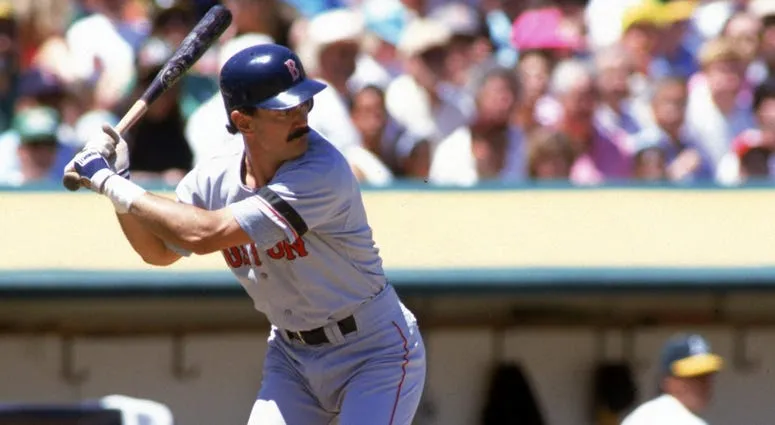
The 1981 season marked a turning point in Evans’ career. Although the season was shortened due to a midseason players’ strike, Evans led the American League in home runs with 22 and posted a career-high .937 OPS. His performance earned him his first Silver Slugger Award and helped establish him as one of the premier offensive players in the game. Over the next several seasons, Evans continued to excel at the plate, putting together some of the best years of his career in the mid-1980s.
One of his finest seasons came in 1984 when he hit .295 with 32 home runs, 104 RBIs, and a .402 on-base percentage. His ability to hit for power while also maintaining an elite on-base percentage made him one of the most valuable hitters in baseball. That season also saw him post a career-best 147 OPS+, further solidifying his status as one of the best offensive right fielders in the game.
Evans played a crucial role in the Red Sox’s run to the 1986 World Series, a year in which he hit .259 with 26 home runs and 97 RBIs while continuing to provide Gold Glove-caliber defense. In the postseason, he was one of Boston’s most consistent performers, batting .300 in the ALCS against the California Angels and continuing his strong play in the World Series against the New York Mets. Unfortunately for Evans and the Red Sox, the series ended in heartbreak, as Boston fell in seven games in one of the most infamous World Series collapses in baseball history.
As he entered the late stages of his career, Evans continued to be a productive hitter well into his late 30s. His ability to get on base and hit for power remained strong, and he continued to be a valuable presence in the Red Sox lineup. In 1987, at the age of 35, he put together another outstanding season, hitting .305 with 34 home runs, 123 RBIs, and a .417 on-base percentage. His advanced approach at the plate allowed him to age more gracefully than many of his peers, proving that plate discipline and intelligence could help extend a player’s effectiveness well beyond their physical prime.

Evans spent 19 seasons with the Red Sox before finishing his career with the Baltimore Orioles in 1991. Although his time in Baltimore was brief, it was a fitting end to a career that showcased his remarkable consistency and durability. He retired with a career batting average of .272, 2,446 hits, 385 home runs, 1,384 RBIs, and a .370 on-base percentage. His career WAR (Wins Above Replacement) of 67.1 ranks among the highest for right fielders of his era, highlighting his all-around value as both a hitter and a defender.
One of the most intriguing aspects of Evans’ career is the way his offensive numbers improved with age. Unlike many players who peak in their late 20s, Evans had some of his best offensive seasons in his mid-to-late 30s. This late-career surge has led to increased discussions about his Hall of Fame candidacy, as modern analytics have provided a greater appreciation for players who excelled in multiple facets of the game.
Beyond his statistics, Evans’ impact on baseball can be seen in the way he helped redefine the role of a right fielder. He proved that a player could be an elite defender while also providing significant offensive production, setting a standard for future generations. His combination of patience, power, and defensive excellence made him a complete player, and his contributions to the Red Sox remain a key part of the franchise’s history.

Although Evans has not yet been inducted into the Hall of Fame, his legacy as one of the most well-rounded players of his era continues to grow. His impact on the game extends beyond the numbers, as he was a leader on and off the field, a player who gave everything to his team, and one of the most respected figures in Red Sox history. Whether through his highlight-reel defensive plays, his clutch hitting, or his relentless work ethic, Dwight Evans left a lasting mark on baseball that continues to be recognized and appreciated by those who understand the true value of a complete player.





 The Baseball Scholar
Leave a comment