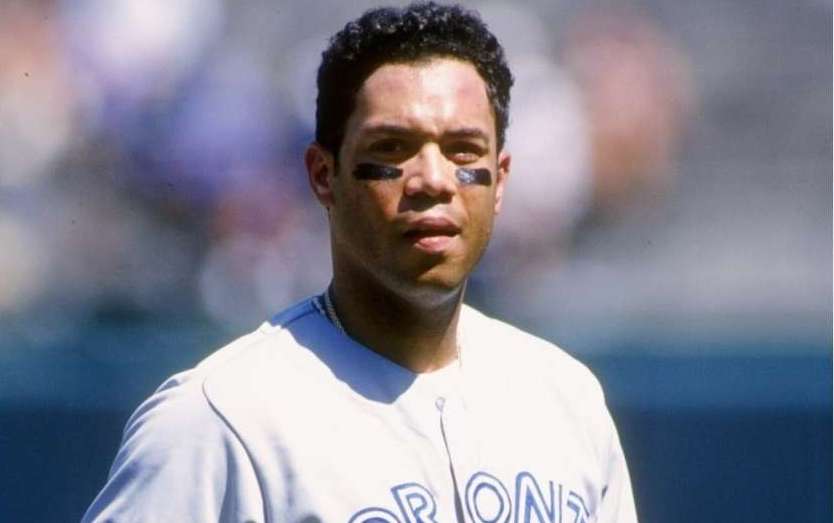
Roberto Alomar was one of the most dynamic and complete second basemen in Major League Baseball history, with a career that spanned nearly two decades. Widely regarded for his defensive prowess, offensive capabilities, and leadership on the field, Alomar left an indelible mark on the game. His combination of speed, power, and defensive excellence made him one of the premier players of his generation, and his accolades, including multiple Gold Gloves, Silver Slugger Awards, and All-Star selections, highlight his exceptional contributions to the sport. Alomar’s legacy is also intertwined with his impact on international baseball, serving as a role model for young players, particularly from Latin America.
Roberto Alomar Velázquez was born on February 5, 1968, in Ponce, Puerto Rico, into a baseball family that deeply influenced his career path. His father, Sandy Alomar Sr., was a former major league infielder and coach, while his older brother, Sandy Alomar Jr., also carved out a successful career as a catcher in the major leagues. Growing up in Puerto Rico, Alomar was immersed in baseball culture from an early age, and his father’s professional connections provided him with invaluable exposure to the sport’s highest levels. As a child, Alomar would often accompany his father to major league stadiums and spring training camps, where he learned the finer points of the game by observing and interacting with elite players. This early exposure helped him develop a deep understanding of baseball and honed his natural talents.
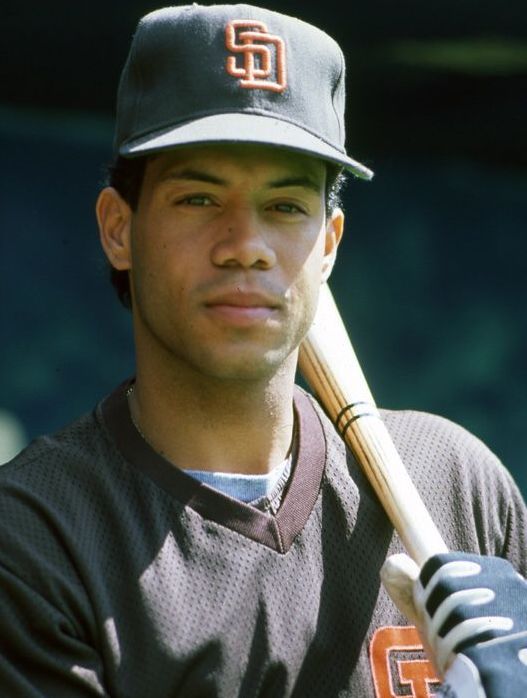
Alomar’s amateur career was equally impressive, as he played in Puerto Rican youth leagues and quickly gained a reputation for his exceptional fielding and hitting skills. He was a standout performer in high school, and his talent did not go unnoticed by major league scouts. In 1985, at the age of 17, Alomar was signed as an amateur free agent by the San Diego Padres, following in his father’s footsteps and taking the first step toward a professional career.
Alomar made his MLB debut on April 22, 1988, with the San Diego Padres, quickly establishing himself as one of the most promising young infielders in the game. He showcased an extraordinary ability to make contact with the ball, combined with speed and defensive range that made him an asset in the middle infield. In his rookie season, Alomar posted a respectable .266 batting average with 24 stolen bases, providing a glimpse of the all-around skill set that would define his career.
After spending three seasons with the Padres, Alomar was traded to the Toronto Blue Jays in December 1990 as part of a blockbuster deal that also sent Joe Carter to Toronto in exchange for Fred McGriff and Tony Fernández. This trade proved to be a turning point in Alomar’s career, as he thrived in Toronto and became an integral part of the team’s success in the early 1990s.
During his tenure with the Blue Jays from 1991 to 1995, Alomar blossomed into a superstar. He was instrumental in leading the team to back-to-back World Series championships in 1992 and 1993, cementing his legacy in franchise history. In the 1992 season, Alomar batted .310 with 49 stolen bases and earned his first Gold Glove Award, highlighting his defensive excellence. His performance in the postseason was even more remarkable, as he delivered clutch hits and defensive gems that helped Toronto secure its first championship.
One of the most memorable moments of Alomar’s career came during the 1992 American League Championship Series (ALCS) against the Oakland Athletics. In Game 4, with the Blue Jays trailing late in the game, Alomar hit a game-tying home run off future Hall of Famer Dennis Eckersley, a moment that is widely regarded as one of the most significant in Blue Jays history. Toronto went on to win the series and eventually captured the World Series title against the Atlanta Braves. Alomar’s postseason heroics earned him the ALCS MVP award and further solidified his reputation as a clutch performer.
In 1993, Alomar continued to excel, hitting .326 with 17 home runs and 93 RBIs, earning his second consecutive World Series ring. His defensive prowess was on full display throughout the season, as he made numerous highlight-reel plays that showcased his exceptional range and quick reflexes.
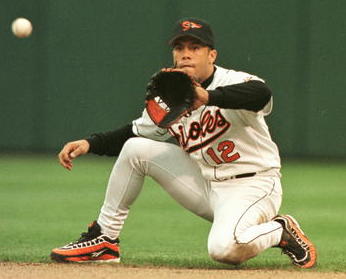
After his time in Toronto, Alomar joined the Baltimore Orioles in 1996, where he continued to perform at an elite level. He enjoyed some of the best years of his career with the Orioles, earning four consecutive Gold Glove Awards and consistently ranking among the league leaders in batting average and stolen bases. In 1996, he hit .328 with 94 RBIs and 17 home runs, leading Baltimore to the postseason and further enhancing his legacy as one of the top second basemen in the game.
Alomar’s time in Baltimore was not without controversy, however. In 1996, he was involved in an infamous incident in which he spit in the face of umpire John Hirschbeck after a heated argument over a called strike. The incident tarnished his reputation and resulted in a suspension, but Alomar later expressed deep remorse and worked to repair his relationship with Hirschbeck. The two eventually reconciled, and Alomar’s efforts to make amends helped restore his image in the eyes of fans and the baseball community.
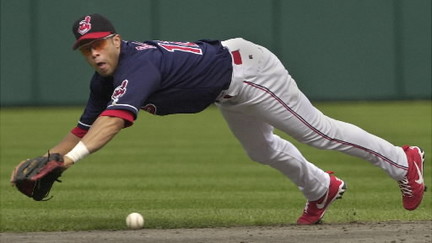
Following his stint with the Orioles, Alomar signed with the Cleveland Indians in 1999, where he enjoyed continued success. He formed a formidable double-play combination with shortstop Omar Vizquel, and the duo became one of the most effective defensive tandems in baseball history. Alomar’s offensive production remained consistent, as he batted over .300 in each of his three seasons with Cleveland and provided veteran leadership to a team that made multiple postseason appearances.
After leaving Cleveland, Alomar had brief stints with the New York Mets, Chicago White Sox, and Arizona Diamondbacks before retiring in 2004. Despite declining production in the latter stages of his career, his overall body of work remains one of the most impressive for a second baseman.
Over the course of his 17-year MLB career, Alomar compiled an impressive statistical record that highlights his all-around excellence. He finished with a career batting average of .300, 2,724 hits, 210 home runs, 1,134 RBIs, and 474 stolen bases. His defensive achievements were equally remarkable, as he won 10 Gold Glove Awards, a record for second basemen at the time, and was named to 12 All-Star teams. Alomar also earned four Silver Slugger Awards, recognizing his offensive contributions at a traditionally defense-focused position.
Alomar’s impact on the game of baseball extends beyond his statistics. He helped redefine the role of the second baseman, demonstrating that the position could be played with a combination of offensive power, speed, and defensive brilliance. His influence is particularly significant in the development of Latin American players, as he served as a trailblazer for future generations of Puerto Rican and Latino athletes in the major leagues.

In 2011, Alomar was inducted into the Baseball Hall of Fame in his second year of eligibility, becoming the first player to enter the Hall wearing a Toronto Blue Jays cap. This honor solidified his status as one of the greatest second basemen of all time and recognized his contributions to the sport.
Alomar’s legacy continues to endure through his work with young players and his involvement in charitable efforts. He has remained active in baseball through coaching, mentorship programs, and initiatives aimed at growing the game in Puerto Rico and beyond. His commitment to giving back to the community and helping the next generation of players has further cemented his reputation as an ambassador for the sport.
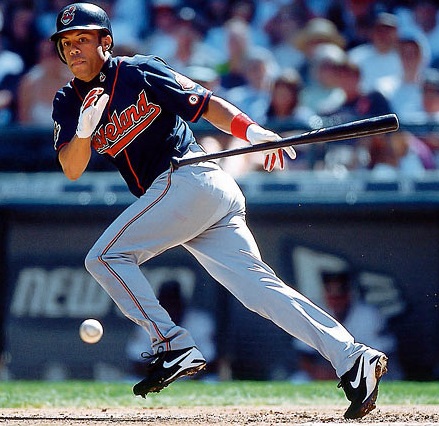
Roberto Alomar’s career is a testament to excellence, resilience, and the enduring power of baseball. From his early days in Puerto Rico to his Hall of Fame induction, Alomar’s journey serves as an inspiration to aspiring players and a reminder of the profound impact that dedication and passion can have on the game.



 The Baseball Scholar
Leave a comment