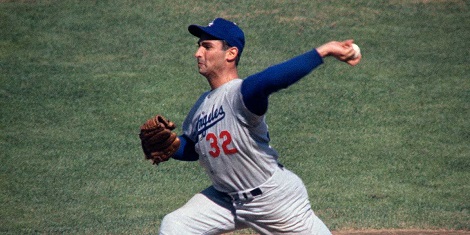
Sandy Koufax stands as one of the most revered figures in the history of Major League Baseball (MLB), a pitcher whose brilliance on the mound captured the imagination of fans and elevated the Los Angeles Dodgers to historic heights during his relatively brief but transcendent career. His left-handed dominance, which unfolded between 1955 and 1966, redefined what it meant to be an elite pitcher, leaving an indelible mark on the game of baseball. Koufax’s story is not merely one of statistical achievement but also of perseverance, innovation, and integrity, which made him one of the sport’s enduring icons.
Sanford Koufax was born on December 30, 1935, in Brooklyn, New York, a borough rich with baseball tradition and fervent fandom. Raised in a Jewish family, Koufax grew up in a supportive but unassuming household that encouraged his pursuit of athletics. While he would later become synonymous with baseball greatness, Koufax’s early interests leaned more toward basketball. He was a standout player at Lafayette High School, where his athleticism and coordination set him apart from his peers. Baseball, at this stage, was not his primary focus.
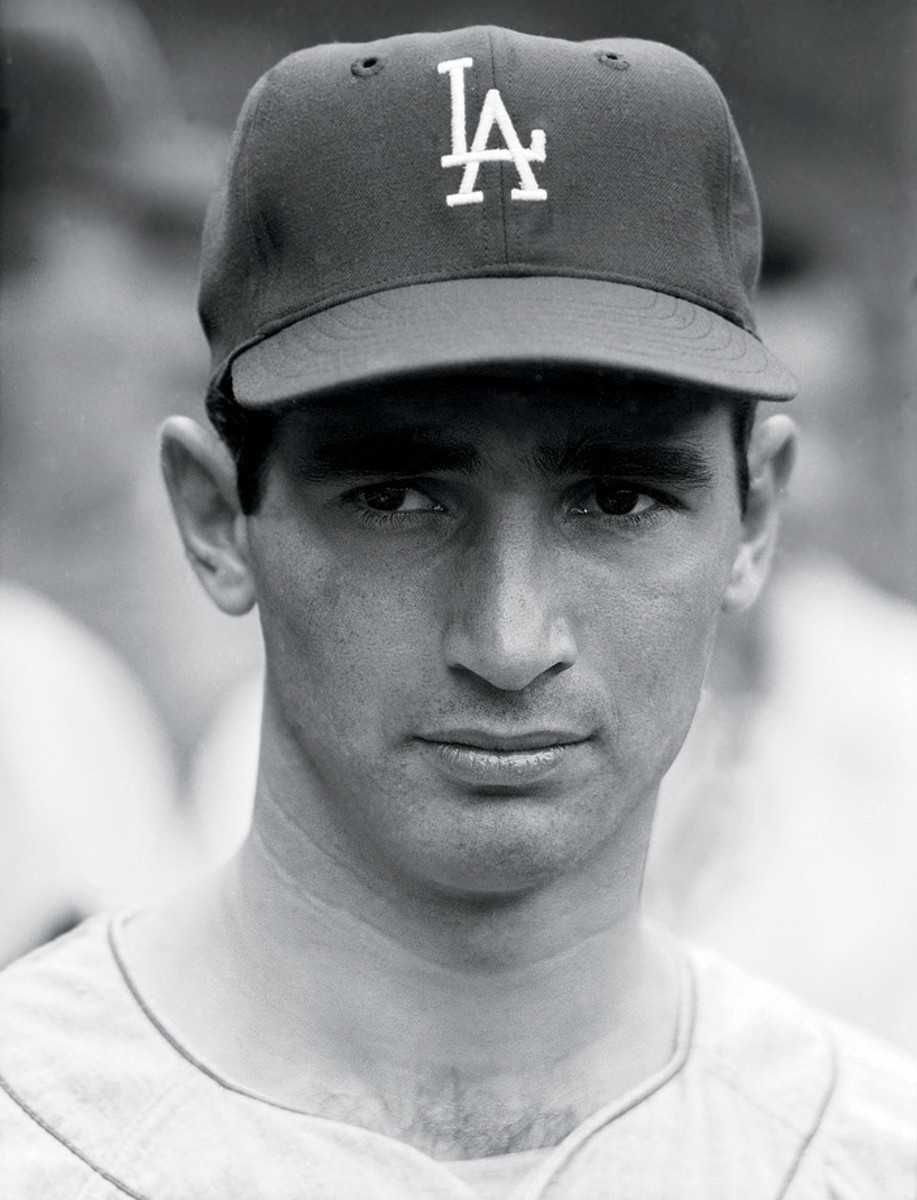
It was not until Koufax enrolled at the University of Cincinnati on a basketball scholarship that his potential as a pitcher began to surface. Playing semi-professional baseball during the offseason, he caught the attention of scouts with his blazing fastball, a pitch that hinted at future greatness despite its rawness. His left arm, which seemed to produce effortless velocity, became a subject of fascination for baseball insiders. The Brooklyn Dodgers signed him in 1954, securing his services through a then-common “bonus baby” contract, which required him to remain on the major league roster rather than being sent to the minors for seasoning. This decision, while financially advantageous for Koufax, presented unique challenges for his development as a player.
Koufax made his MLB debut with the Brooklyn Dodgers on June 24, 1955, at the age of 19. The early years of his career were marked by inconsistency and frustration, as Koufax struggled to harness his immense talent. Though his fastball was among the most powerful in the league, he lacked control and the secondary pitches necessary to succeed at the highest level. His inexperience, combined with limited opportunities to pitch regularly due to the Dodgers’ deep roster of veteran arms, hindered his progress.
From 1955 to 1960, Koufax’s statistics reflected his erratic performance. In 1958, for instance, he led the National League in walks with 105 while pitching only 158.2 innings, a clear indication of his struggles with command. Despite occasional flashes of brilliance, including games where his strikeout totals hinted at his potential, Koufax remained a puzzle—an immensely talented pitcher who had yet to find the key to consistency.
One factor that played a role in Koufax’s early struggles was the coaching philosophy of the time, which often emphasized endurance and repetition over tailored instruction. Koufax, a cerebral athlete, craved a deeper understanding of mechanics and strategy, and it was not until he took matters into his own hands that his transformation began. Frustrated by his inability to establish himself as a frontline starter, Koufax considered retiring after the 1960 season. However, an offseason filled with reflection and self-improvement set the stage for one of the greatest turnarounds in baseball history.
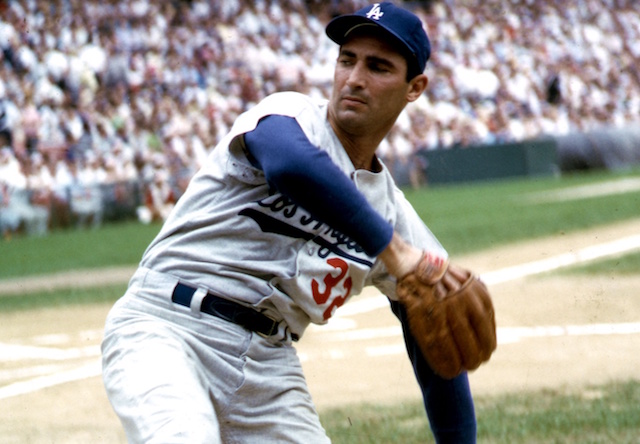
The 1961 season marked a turning point in Koufax’s career. Aided by mechanical adjustments and a renewed focus on honing his craft, Koufax began to showcase the control and precision that had eluded him in earlier years. He struck out a then-record 18 batters in a single game on August 31, 1961, against the San Francisco Giants, providing a glimpse of the dominance that would soon become his trademark. That year, he recorded 269 strikeouts, breaking Christy Mathewson’s National League record, and led the league with 10.4 strikeouts per nine innings.
Koufax’s ascent to superstardom coincided with the Dodgers’ move to Los Angeles, where he became the centerpiece of a pitching staff that would dominate the National League throughout the 1960s. The period from 1962 to 1966, in particular, stands as one of the most extraordinary stretches of pitching in MLB history. Koufax’s mastery on the mound during these years was characterized by his devastating fastball, knee-buckling curveball, and unflappable demeanor, which made him virtually unhittable.
In 1963, Koufax enjoyed one of the finest seasons ever by a pitcher. He went 25–5 with a 1.88 ERA, struck out 306 batters, and completed 20 of his 40 starts. He won the National League Cy Young Award and the MVP Award, becoming the first pitcher to achieve this double distinction in the modern era. In the World Series that year, Koufax delivered two masterful performances against the New York Yankees, including a Game 1 outing in which he struck out 15 batters, a World Series record at the time. The Dodgers swept the Yankees, and Koufax was named the series MVP.
The 1965 season was another pinnacle year for Koufax, as he went 26–8 with a 2.04 ERA and 382 strikeouts, the latter a single-season record for the modern era at the time. That year, he pitched his fourth career no-hitter, which was also a perfect game, against the Chicago Cubs on September 9. His dominance extended into the postseason, where he led the Dodgers to a World Series victory over the Minnesota Twins despite pitching on short rest in the decisive Game 7. Koufax’s refusal to pitch Game 1 of the series because it fell on Yom Kippur, a sacred Jewish holiday, further solidified his legacy as a man of principle and integrity.
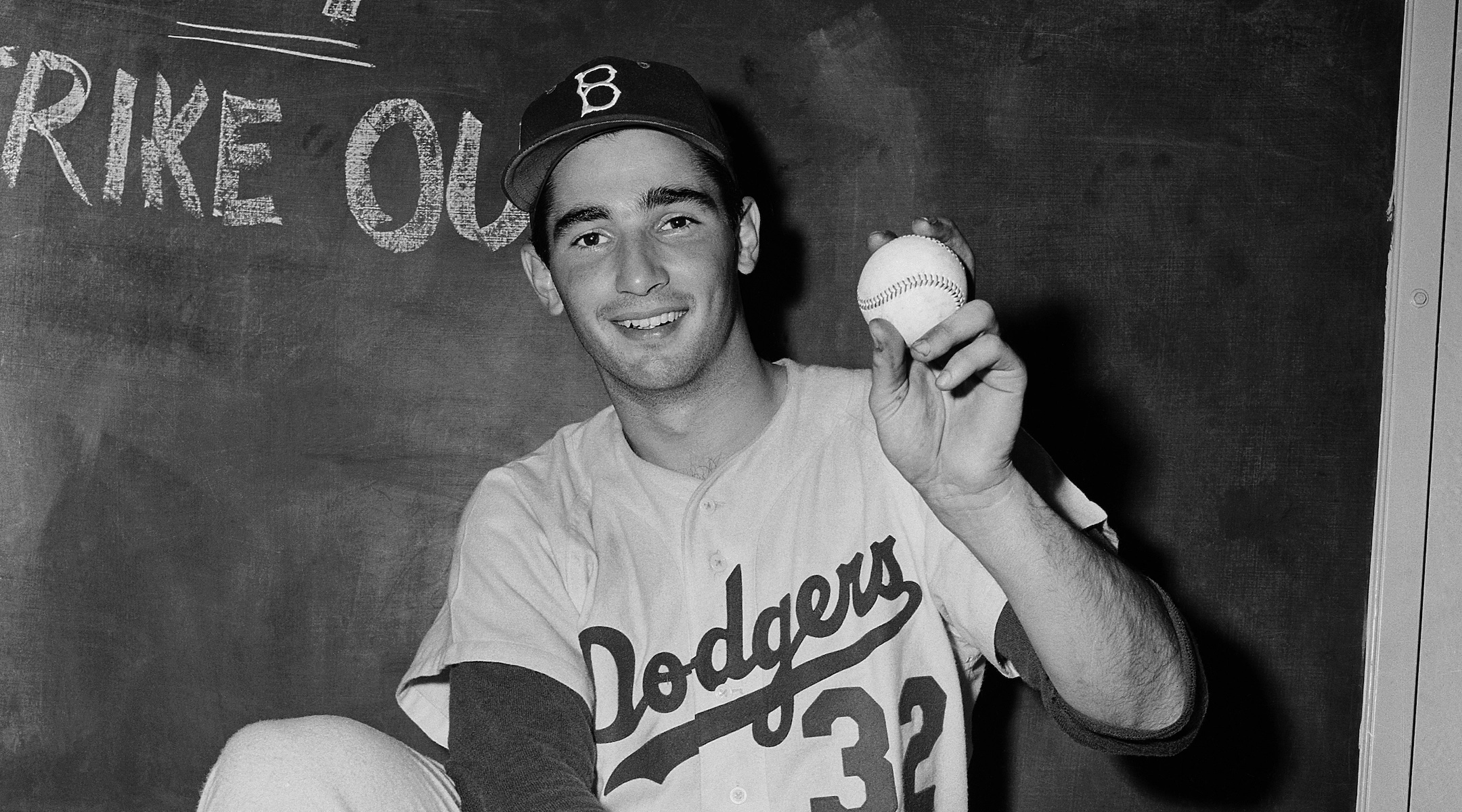
Koufax’s final season in 1966 was marked by both brilliance and physical pain. Despite suffering from chronic arthritis in his pitching elbow, he went 27–9 with a 1.73 ERA and 317 strikeouts, winning his third Cy Young Award. His retirement at the end of the season, at the age of 30, shocked the baseball world but underscored the toll his body had endured during his years of dominance.
Sandy Koufax’s career statistics, though compiled over a relatively brief 12-year span, place him among the all-time greats. He finished with a record of 165–87, a 2.76 ERA, and 2,396 strikeouts in 2,324.1 innings pitched. His .655 winning percentage ranks among the best in MLB history, and his dominance during the peak years of his career remains unmatched.
Koufax’s postseason record further enhances his legacy. In eight World Series appearances, he posted a 4–3 record with a 0.95 ERA and 61 strikeouts in 57 innings. His ability to elevate his performance on baseball’s biggest stage cemented his reputation as a clutch performer and a true ace.
Beyond the numbers, Koufax’s impact on the game transcends statistics. His mastery of pitching mechanics, strategic approach to the game, and ability to innovate under pressure set a standard for future generations of pitchers. Koufax was inducted into the Baseball Hall of Fame in 1972, becoming the youngest player ever to receive the honor at the time.

Sandy Koufax’s influence on baseball extends beyond his on-field achievements. As a left-handed pitcher who combined power and precision, he redefined the expectations for what a southpaw could accomplish. His approach to pitching—meticulous, calculated, and relentless—served as a model for countless pitchers who followed in his footsteps.
Koufax’s decision to retire at the height of his powers due to health concerns also brought attention to the physical demands of professional baseball and the importance of player well-being. His story served as a reminder of the human element behind athletic greatness, highlighting the sacrifices and challenges faced by those who excel at the highest level.
Off the field, Koufax’s decision to sit out Game 1 of the 1965 World Series out of respect for his faith resonated deeply with fans and athletes alike. It was a moment that transcended sports, symbolizing the importance of staying true to one’s principles in the face of immense pressure. Koufax’s quiet dignity and humility further endeared him to fans and cemented his place as a role model both within and beyond the baseball community.

Sandy Koufax’s MLB career, though relatively brief, stands as a testament to the power of perseverance, innovation, and excellence. His transformation from a raw, erratic talent into one of the greatest pitchers in baseball history is a story of dedication and resilience. Koufax’s achievements on the mound, from his record-setting strikeout totals to his legendary World Series performances, have become part of the fabric of baseball lore.
Beyond his statistical accomplishments, Koufax’s integrity, humility, and ability to rise to the occasion in critical moments have made him an enduring figure in the annals of sports history. His legacy is not only that of a dominant pitcher but also of a man who represented the very best of what baseball can offer—a blend of talent, character, and grace that continues to inspire players and fans alike.




 The Baseball Scholar
Leave a reply to Anonymous Cancel reply