
Mark McGwire’s career in Major League Baseball (MLB) was one of immense power, unprecedented achievements, and significant controversy. Known for his towering home runs and record-breaking seasons, McGwire captured the attention of baseball fans worldwide, particularly during the famed home run chase of 1998. However, his career was later overshadowed by the acknowledgment of his use of performance-enhancing drugs, sparking debates about his legacy.
Mark David McGwire was born on October 1, 1963, in Pomona, California. Raised in a sports-oriented household, McGwire demonstrated athletic potential from a young age. He excelled in multiple sports during his youth, including baseball, basketball, and golf, but it was on the baseball diamond where his talent truly stood out. McGwire attended Damien High School in La Verne, California, where he developed into a standout baseball player, garnering attention from college scouts for his powerful bat and impressive stature.
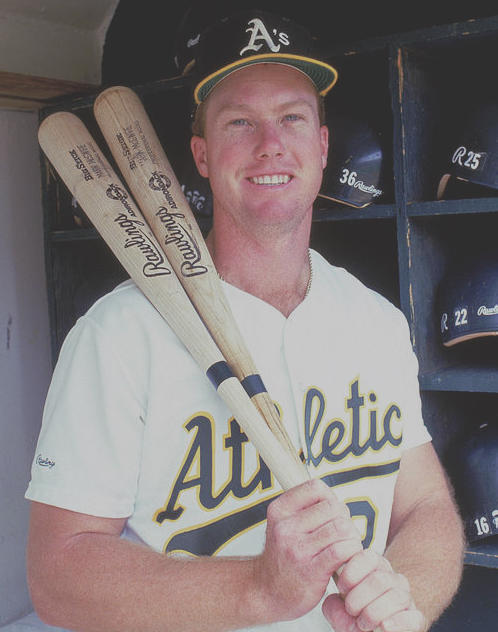
After high school, McGwire chose to attend the University of Southern California (USC), where he continued to refine his skills under the guidance of the school’s renowned baseball program. Playing first base for the Trojans, McGwire quickly emerged as one of the top collegiate hitters in the nation. His combination of power and discipline at the plate made him a feared presence in the lineup, and his performance drew the attention of MLB scouts. In 1984, McGwire represented the United States in the Summer Olympics, which further solidified his reputation as a top prospect.
The Oakland Athletics selected McGwire with the 10th overall pick in the first round of the 1984 MLB Draft. Joining an organization known for its emphasis on developing power hitters, McGwire’s journey to the major leagues began in earnest. After a brief stint in the minors, he quickly established himself as one of baseball’s brightest young stars.
McGwire made his major league debut with the Oakland Athletics on August 22, 1986. Though his rookie season was brief, he showed flashes of his immense potential, hitting three home runs in just 18 games. It was in 1987, however, that McGwire announced his arrival as a force to be reckoned with. In his first full season, he hit an astonishing 49 home runs, setting a rookie record that would stand for decades. Alongside his power numbers, McGwire posted a .289 batting average, 118 RBIs, and a league-leading .618 slugging percentage. For his efforts, he was named the American League Rookie of the Year, becoming an instant sensation.
The 1987 season marked the beginning of McGwire’s dominance as a power hitter. His imposing 6-foot-5 frame, combined with his quick bat speed and strength, made him one of the most feared hitters in the game. Over the next several years, McGwire formed a dynamic duo with fellow slugger José Canseco, and the pair became known as the “Bash Brothers.” Together, they anchored a powerful Oakland lineup that would enjoy sustained success in the late 1980s and early 1990s.
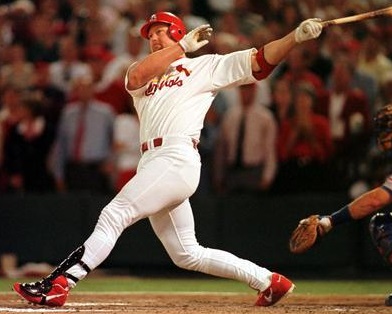
From 1988 to 1990, the Athletics reached the World Series three consecutive times, winning the championship in 1989. McGwire played a pivotal role in the team’s success, consistently producing at the plate and delivering in clutch situations. In the 1989 World Series, Oakland swept the San Francisco Giants in a series overshadowed by the Loma Prieta earthquake. McGwire hit a key home run during the series, contributing to the Athletics’ first title since 1974.
Despite his success, McGwire’s career was not without challenges during this period. He experienced a decline in his batting average in the early 1990s, struggling to maintain consistency at the plate. Nonetheless, his ability to hit home runs remained unparalleled, and he continued to be a centerpiece of the Athletics’ offense.
By the mid-1990s, injuries began to take a toll on McGwire. He missed significant time during the 1993 and 1994 seasons due to foot and back issues, raising questions about his long-term durability. However, McGwire rebounded in spectacular fashion in 1995, hitting 39 home runs in just 317 at-bats. His ability to bounce back from injury and return to elite form was a testament to his dedication and work ethic.
In 1997, McGwire was traded to the St. Louis Cardinals, a move that would define the latter half of his career. The trade marked a fresh start for McGwire, and he immediately made an impact with his new team. In his first full season with the Cardinals in 1998, McGwire embarked on a historic home run chase that captivated the nation.
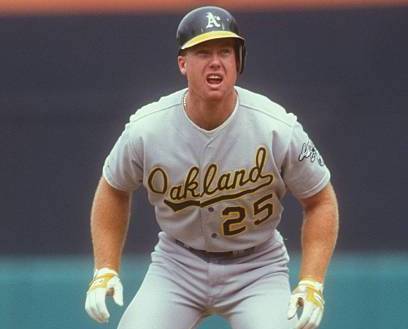
The 1998 season was one of the most memorable in MLB history, largely due to the home run race between McGwire and Sammy Sosa of the Chicago Cubs. Both players were vying to break Roger Maris’s single-season home run record of 61, set in 1961. The race generated unprecedented excitement, drawing attention from casual fans and revitalizing interest in the sport following the damaging 1994 players’ strike.
McGwire and Sosa traded home runs throughout the summer, with each blast bringing them closer to history. On September 8, 1998, McGwire hit his 62nd home run of the season, surpassing Maris’s record. The moment was celebrated across the baseball world, as McGwire became a symbol of perseverance and excellence. He finished the season with 70 home runs, setting a new benchmark for power hitters.
McGwire’s achievement in 1998 earned him widespread acclaim, and he was named the Associated Press Male Athlete of the Year. His remarkable season solidified his place as one of the greatest power hitters in baseball history. However, the glow of his record-breaking performance would later be tarnished by revelations about the use of performance-enhancing drugs during this era.
McGwire continued to produce at an elite level in the years following the 1998 season. He hit 65 home runs in 1999, becoming the first player in MLB history to record back-to-back seasons with at least 60 home runs. Injuries, however, began to limit his playing time, and his production declined as he entered his late 30s. McGwire retired following the 2001 season, finishing his career with 583 home runs, a .263 batting average, and 1,414 RBIs.
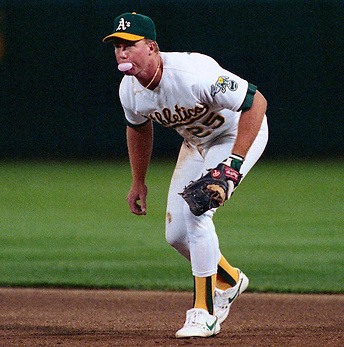
McGwire’s career statistics are a testament to his unparalleled power-hitting ability. He ranks 11th on the all-time home run list, and his career slugging percentage of .588 places him among the best in MLB history. McGwire also drew 1,317 walks and posted a .394 on-base percentage, showcasing his ability to get on base despite his high strikeout totals.
In addition to his individual achievements, McGwire was a 12-time All-Star and won three Silver Slugger Awards. His contributions to the game were recognized with his induction into the St. Louis Cardinals Hall of Fame, cementing his legacy as one of the franchise’s all-time greats.
While McGwire’s on-field accomplishments were extraordinary, his legacy is complicated by his admission of using performance-enhancing drugs during his career. In 2010, McGwire publicly acknowledged that he had used steroids, including during the 1998 season. His admission reignited debates about the integrity of the game and the role of performance-enhancing substances in baseball.
McGwire’s confession was met with mixed reactions. Some praised his honesty and willingness to take responsibility for his actions, while others argued that his achievements were tainted and should not be celebrated. The controversy surrounding McGwire and other players of his era has led to ongoing debates about how to evaluate their legacies and whether they deserve recognition in the Baseball Hall of Fame.
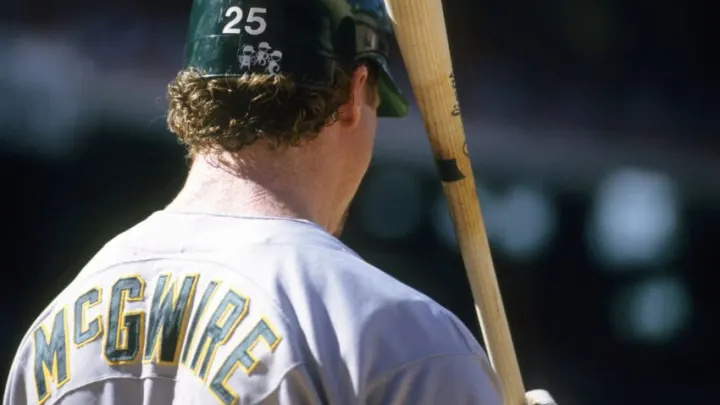
Despite the controversy, McGwire’s impact on baseball is undeniable. His home run chase in 1998 brought new energy to the sport, and his ability to connect with fans made him one of the most popular players of his time. McGwire also inspired a new generation of sluggers, many of whom grew up idolizing his prodigious power.
Mark McGwire’s career in Major League Baseball was a complex blend of extraordinary achievements and significant challenges. As one of the most prolific power hitters in history, McGwire captivated audiences with his record-breaking home runs and larger-than-life presence. His contributions to the game, particularly during the 1998 home run chase, helped restore baseball’s popularity and created unforgettable memories for fans.
However, McGwire’s legacy is also defined by the shadow of performance-enhancing drugs, which complicates his place in baseball history. While his admission of steroid use tarnished his accomplishments, it also opened the door for a broader conversation about the era in which he played.
Ultimately, McGwire’s career reflects both the triumphs and tribulations of a transformative period in baseball. His impact on the game endures, serving as a reminder of the power of sport to inspire, captivate, and challenge our perceptions of greatness.



 The Baseball Scholar
Leave a comment