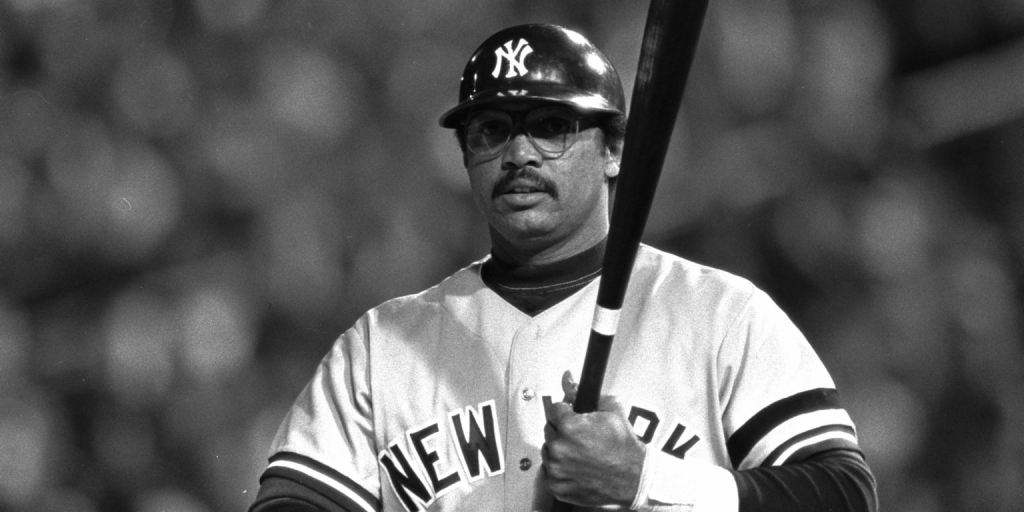
Reggie Jackson, affectionately known as “Mr. October,” carved out one of the most illustrious careers in Major League Baseball (MLB) history. His combination of power, charisma, and an uncanny ability to perform under pressure made him one of the most iconic figures in the sport. Over the course of a 21-year career, Jackson captivated fans with his prodigious home runs, fearless demeanor, and penchant for delivering in the postseason when the stakes were highest. His journey from a challenging childhood to becoming one of baseball’s most celebrated players reflects a story of determination, resilience, and excellence.
Reginald Martinez Jackson was born on May 18, 1946, in Wyncote, Pennsylvania, a suburb of Philadelphia. He was the son of Martinez Jackson, a former Negro League player and later a tailor, and Clara Jackson, a homemaker. Reggie’s parents divorced when he was young, and he lived with his father. Growing up in a predominantly white neighborhood, Jackson faced racial prejudice, which instilled in him a toughness that would serve him well throughout his life.

At Cheltenham High School, Jackson excelled in multiple sports, including football, basketball, track, and baseball. His athleticism was evident, and his natural talent on the diamond soon drew attention from scouts. Despite his prowess, Jackson faced challenges as one of the few African American athletes in his community, but his drive and determination pushed him forward.
After high school, Jackson attended Arizona State University (ASU) on a football scholarship, but he soon shifted his focus to baseball. Under the guidance of ASU coach Bobby Winkles, Jackson developed his skills and blossomed into a star. In 1966, during his sophomore year, he hit .327 with 15 home runs, leading ASU to the College World Series. Jackson’s performance caught the attention of professional scouts, and he was selected second overall in the 1966 MLB Draft by the Kansas City Athletics.
Jackson made his MLB debut with the Kansas City Athletics on June 9, 1967, at the age of 21. Initially, he struggled to adjust to the major leagues, hitting just .178 in his rookie season. However, his raw power and athleticism hinted at his potential. When the Athletics relocated to Oakland in 1968, Jackson began to find his footing, hitting .250 with 29 home runs and 74 RBIs.
The 1969 season marked Jackson’s breakout year. He led the American League (AL) with 47 home runs, drove in 118 runs, and posted a .608 slugging percentage. His performance established him as one of the premier power hitters in the game. Jackson’s combination of speed and power was rare; he stole 26 bases that season and scored 123 runs. His success not only helped the Athletics improve but also positioned him as a cornerstone of the franchise.
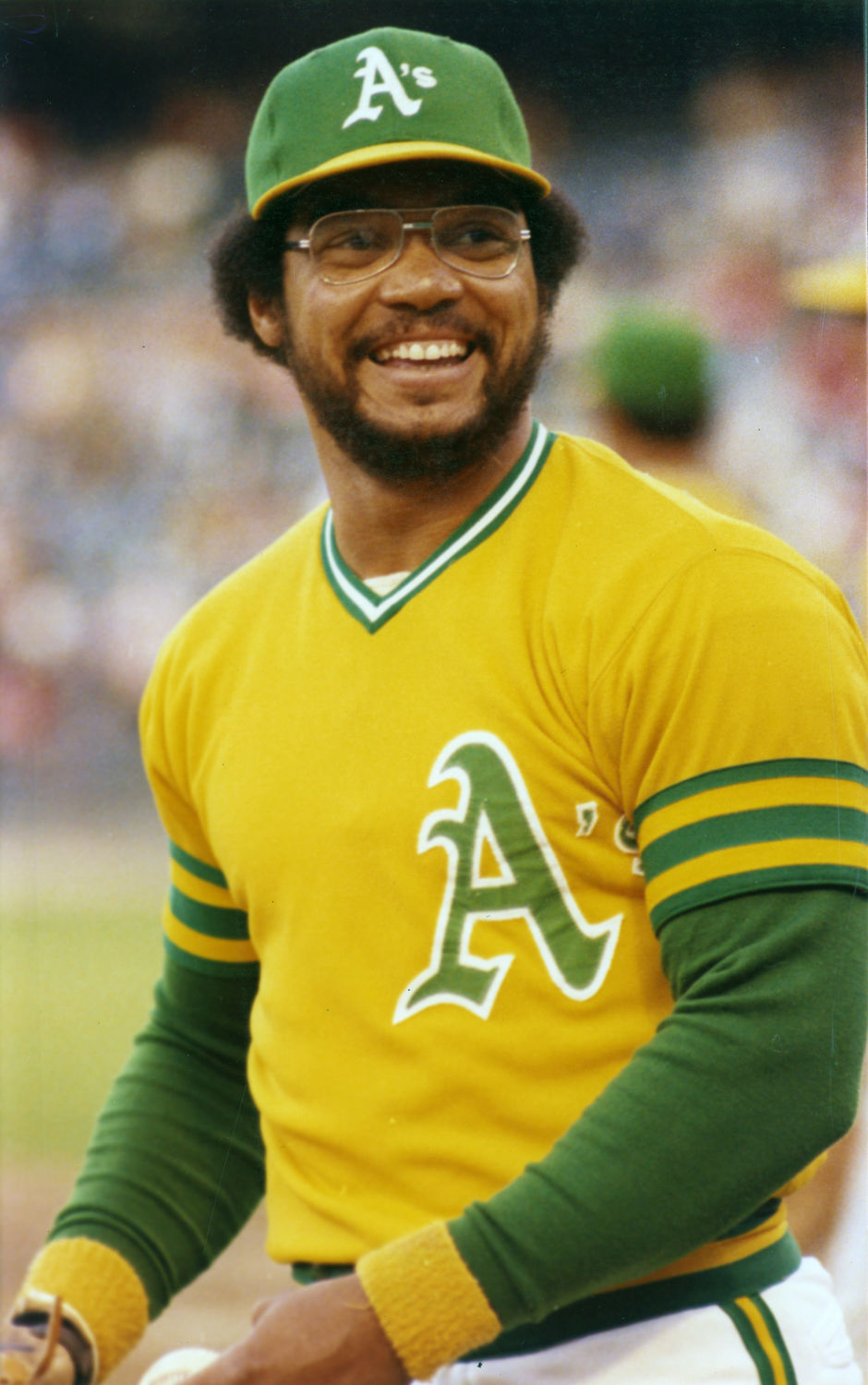
The early 1970s saw Jackson become the centerpiece of the Oakland Athletics’ dynasty. Managed by the colorful and innovative Dick Williams, the A’s captured three consecutive World Series titles from 1972 to 1974, and Jackson was a driving force behind their success. Known for their mustaches, green-and-gold uniforms, and swagger, the A’s embodied the rebellious spirit of the era, and Jackson’s larger-than-life persona fit perfectly.

In 1972, Jackson was named the AL Most Valuable Player (MVP) after hitting .265 with 32 home runs, 117 RBIs, and a league-leading .608 slugging percentage. His postseason heroics that year were crucial to the A’s championship run. Despite suffering a hamstring injury in the AL Championship Series that sidelined him for the World Series, Jackson’s contributions were instrumental in Oakland’s triumph over the Cincinnati Reds in a hard-fought seven-game series.
Jackson’s crowning moment with the Athletics came in the 1973 World Series. Facing the New York Mets, he delivered a stellar performance, hitting .310 with two home runs and six RBIs. In Game 6, Jackson hit a crucial two-run home run that helped force a decisive Game 7, where the A’s clinched the championship. For his efforts, Jackson was named World Series MVP.
Over his nine seasons with the Athletics, Jackson hit .262 with 254 home runs, 733 RBIs, and a .502 slugging percentage. His combination of power and flair made him a fan favorite and a player opponents both respected and feared. However, Jackson’s relationship with Athletics owner Charlie Finley was often contentious, and after the 1975 season, he was traded to the Baltimore Orioles.
Jackson’s tenure with the New York Yankees, which began in 1977, elevated him to legendary status. After signing a five-year, $3 million contract, Jackson became one of the highest-paid players in baseball. His arrival coincided with the Yankees’ resurgence as a powerhouse under owner George Steinbrenner and manager Billy Martin. The team’s dynamic, often volatile, chemistry captured national attention and became the subject of media fascination.
The 1977 season proved to be a turning point in Jackson’s career. He hit .286 with 32 home runs and 110 RBIs during the regular season, helping the Yankees win the AL East. However, it was his performance in the postseason that cemented his legacy. In the World Series against the Los Angeles Dodgers, Jackson delivered one of the greatest individual performances in baseball history.
In Game 6 of the series, Jackson hit three consecutive home runs on three pitches from three different pitchers, leading the Yankees to an 8-4 victory and their first championship since 1962. His display of power and precision earned him the nickname “Mr. October,” a testament to his ability to excel on the sport’s grandest stage. Jackson’s five home runs in the series tied a record, and he was named World Series MVP.
Jackson’s time with the Yankees was marked by both triumph and turmoil. He clashed frequently with Martin and Steinbrenner, and his outspoken personality often drew criticism from the media and fans. Despite the controversies, Jackson continued to produce on the field. In five seasons with the Yankees, he hit .281 with 144 home runs and 461 RBIs, helping the team win another World Series in 1978.
After leaving the Yankees following the 1981 season, Jackson signed with the California Angels. Though no longer in his prime, he remained a productive player, hitting 39 home runs in 1982 and helping the Angels reach the AL Championship Series. Jackson’s leadership and experience were valuable assets, and he became a mentor to younger players.
Jackson spent the final season of his career with the Oakland Athletics in 1987, returning to the franchise where it all began. He retired with 563 career home runs, 1,702 RBIs, and a .262 batting average. At the time of his retirement, he ranked sixth on the all-time home run list and had solidified his place among the game’s greats.

Reggie Jackson’s impact on baseball extends far beyond his impressive statistics. As a player, he combined power, charisma, and a flair for the dramatic, redefining what it meant to be a superstar. His ability to rise to the occasion in the postseason set a standard for excellence, and his “Mr. October” moniker remains synonymous with clutch performance.
Off the field, Jackson was a trailblazer, using his platform to speak out on social issues and advocate for players’ rights. As an African American athlete in a predominantly white sport, he faced racism and discrimination but refused to let it define him. Jackson’s outspokenness and confidence challenged traditional norms and helped pave the way for future generations of players to express themselves freely.
Jackson’s influence is also evident in his post-playing career. He has worked as a special advisor for the Yankees and other organizations, sharing his knowledge and passion for the game. In 1993, he was inducted into the Baseball Hall of Fame, receiving 93.6% of the vote in his first year of eligibility.

Today, Reggie Jackson is remembered not only as one of the greatest players in MLB history but also as a cultural icon who transcended the sport. His legacy as a power hitter, a postseason hero, and a symbol of resilience and individuality continues to inspire players and fans alike.




 The Baseball Scholar
Leave a comment