
Ed Walsh is a name synonymous with dominance, innovation, and the artistry of pitching during baseball’s Dead Ball Era. As one of the most extraordinary hurlers in the history of Major League Baseball, Walsh left an indelible mark on the game with his incredible feats on the mound and mastery of the spitball. His career, while relatively short in duration due to the physical demands of his style, remains one of the most impressive in the annals of baseball history.
With a career ERA of 1.82—the lowest in MLB history among qualified pitchers—Walsh set a standard for excellence that endures to this day. His statistical achievements, dedication to his craft, and impact on the evolution of pitching make his story one of the most compelling in baseball lore. Beyond the numbers, Walsh was a figure who embodied the spirit of the early 20th-century game, a time when pitchers ruled and offensive output was scarce.
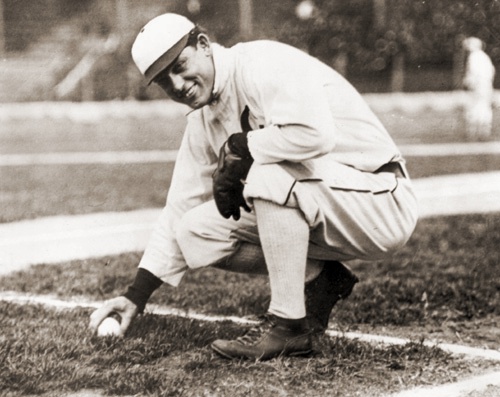
Ed Walsh was born on May 14, 1881, in Plains Township, Pennsylvania, a coal-mining town that shaped his work ethic and tenacity. The son of Irish immigrants, Walsh grew up in a blue-collar environment, where hard work was a way of life. These formative years instilled in him the resilience and discipline that would later define his career.
Walsh’s love for baseball emerged in his teenage years, and he quickly demonstrated a natural talent for pitching. His early experiences playing on local sandlots provided the foundation for his unique style. Despite the lack of formal training and equipment, Walsh developed a powerful arm and a knack for improvisation—skills that would serve him well as he transitioned to professional baseball.
In the late 1890s, Walsh began pitching for semi-professional teams in the Pennsylvania area. His performances caught the attention of talent scouts, and he eventually signed with a minor league team in the Connecticut State League. It was during this time that Walsh honed his spitball—a pitch that would become his signature weapon and the cornerstone of his success.
The spitball was a pitch that defined the era in which Walsh played. By altering the ball’s surface, pitchers could create unpredictable movement, making it exceedingly difficult for hitters to make solid contact. While the pitch would eventually be outlawed in 1920, it was legal during Walsh’s career, and he became one of its most effective practitioners.
Walsh’s mastery of the spitball was not merely a matter of technique; it was an art form. He combined his natural talent with relentless practice, perfecting the grip, release, and deception needed to make the pitch virtually unhittable. His ability to mix the spitball with other offerings, such as a sharp curveball and a deceptive fastball, kept hitters off balance and guessing throughout his career.

Ed Walsh made his Major League Baseball debut with the Chicago White Sox in 1904, and it didn’t take long for him to establish himself as one of the premier pitchers in the league. Over the next few seasons, Walsh became the cornerstone of the White Sox pitching staff, delivering performances that would cement his place in baseball history.
The pinnacle of Walsh’s career came in 1908, a season that stands as one of the greatest individual pitching campaigns ever recorded. That year, Walsh posted an astonishing 40-15 record with a 1.42 ERA, 269 strikeouts, and 42 complete games over 464 innings pitched. His 40 wins remain a benchmark of pitching excellence, a feat that is unlikely to ever be matched in the modern era.
Walsh’s dominance extended beyond individual seasons. Over his 14-year career, he amassed 195 wins, 57 shutouts, and 1,732 strikeouts. His lifetime ERA of 1.82 is a testament to his ability to suppress opposing offenses, even in an era defined by low-scoring games. Walsh’s remarkable durability and effectiveness made him a workhorse for the White Sox, often shouldering workloads that would be unthinkable for pitchers in today’s game.
One of the defining moments of Walsh’s career came in 1906, when he played a pivotal role in leading the Chicago White Sox to their first World Series championship. Dubbed the “Hitless Wonders” due to their lackluster offense, the White Sox relied heavily on their pitching staff, with Walsh serving as one of their aces.
In the World Series against the crosstown rival Chicago Cubs, Walsh delivered a dominant performance in Game 3, throwing a one-hit shutout to secure a crucial victory. His ability to rise to the occasion in high-pressure situations exemplified his value to the team and his status as one of the premier pitchers of his generation. The White Sox ultimately won the series in six games, and Walsh’s contributions were instrumental to their success.
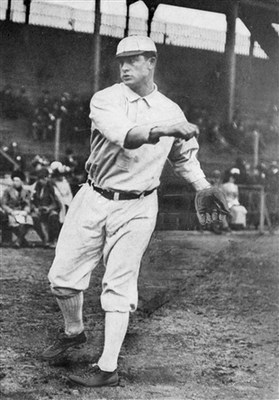
Walsh’s career is filled with stories and moments that highlight his competitiveness and skill. One famous anecdote involves his intense preparation and focus before games. Walsh was known to spend hours studying opposing hitters, analyzing their tendencies, and devising strategies to exploit their weaknesses. This meticulous approach to the game set him apart from many of his contemporaries and contributed to his sustained success.
Another notable moment came on October 2, 1908, in a game against the Detroit Tigers. In a crucial late-season matchup, Walsh pitched a complete-game shutout, striking out 15 batters and keeping the White Sox’s pennant hopes alive. His ability to deliver under pressure earned him the admiration of fans and teammates alike.
While Walsh’s career was marked by extraordinary highs, it was also cut short by the physical toll of his heavy workload. The relentless demands of pitching 300-plus innings per season eventually took a toll on his arm, leading to a decline in performance in the early 1910s. Despite his best efforts to adapt and continue contributing, Walsh retired after the 1917 season.
Although his career ended prematurely, Walsh’s impact on the game was undeniable. He was inducted into the Baseball Hall of Fame in 1946, a fitting recognition of his contributions to the sport.
Ed Walsh’s legacy extends far beyond his statistical achievements. As one of the greatest pitchers of the Dead Ball Era, he exemplified the style of play that defined baseball during the early 20th century. His mastery of the spitball, combined with his work ethic and strategic approach, set a standard for pitchers that continues to inspire generations.

Walsh’s influence can also be seen in the evolution of pitching as an art form. His ability to adapt and innovate on the mound highlighted the importance of intelligence and creativity in the game. Additionally, his career serves as a reminder of the physical demands placed on pitchers and the sacrifices they make in pursuit of excellence.
Ed Walsh’s MLB career is a story of dominance, ingenuity, and enduring impact. With a record-setting ERA, remarkable durability, and a legacy as one of the greatest pitchers in baseball history, Walsh remains a towering figure in the annals of the sport. His mastery of the spitball, his role in the Chicago White Sox’s success, and his contributions to the art of pitching ensure that his name will be remembered as long as baseball is played. Ed Walsh was not just a product of his era; he was a pioneer who elevated the game and left an indelible mark on its history.



 The Baseball Scholar
Leave a comment