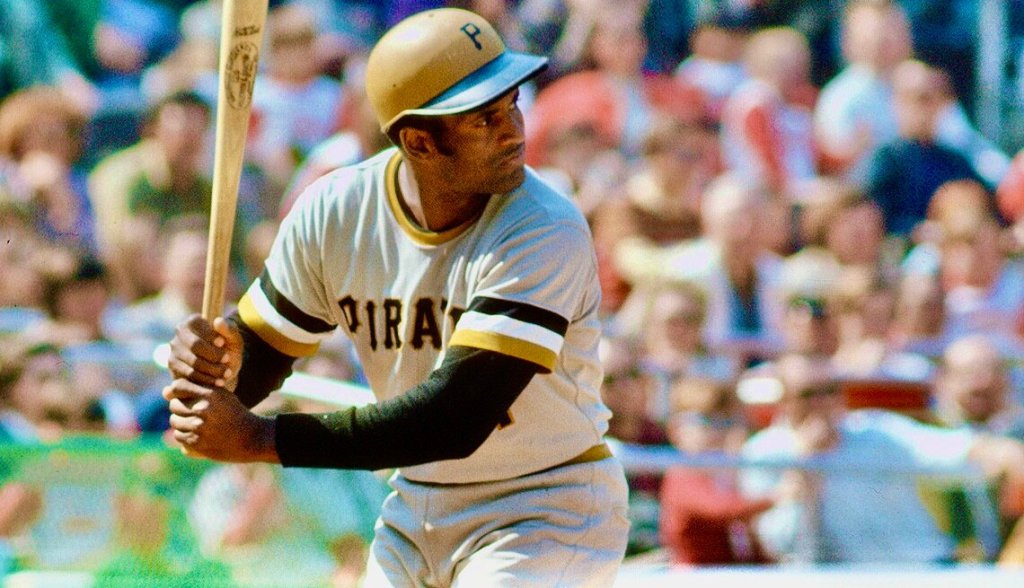
Roberto Clemente Walker, one of the most iconic and impactful players in Major League Baseball (MLB) history, carved out a career defined not only by his extraordinary talent on the field but also by his unwavering dedication to humanitarian causes off the field. Over an 18-year career with the Pittsburgh Pirates, Clemente established himself as one of the greatest right fielders of all time. A Hall of Famer, Clemente’s legacy is one of skill, passion, and selflessness. His statistical achievements, on-field moments of brilliance, and broader contributions to the game of baseball and society at large have cemented his place as an enduring symbol of excellence and humanity.
Roberto Clemente was born on August 18, 1934, in Carolina, Puerto Rico, a small coastal town near San Juan. The youngest of seven children in a working-class family, Clemente grew up in humble surroundings, which instilled in him a strong sense of discipline and a desire to succeed. His father, Melchor Clemente, worked as a foreman in a sugarcane plantation, and Roberto often helped support the family by working odd jobs.
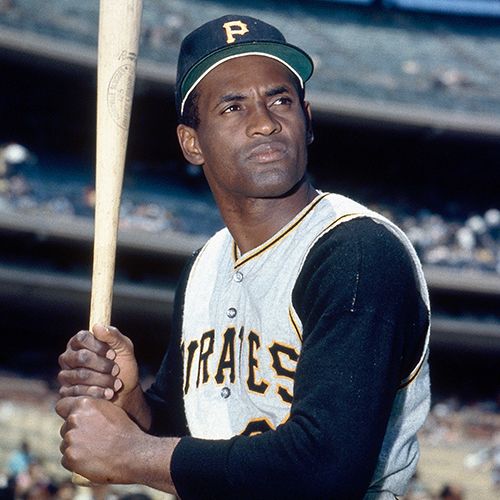
From a young age, Clemente displayed an extraordinary talent for baseball. His athleticism was evident in a variety of sports, but baseball quickly became his passion. Playing with makeshift equipment and on rugged fields, he honed his skills, particularly his throwing arm, which would later become one of his most distinctive attributes. Clemente attended Vizcarrondo High School, where his talent caught the attention of local scouts. By the age of 17, he was playing for the Santurce Cangrejeros in the Puerto Rican Winter League, competing against seasoned professionals.
Clemente’s performance in Puerto Rico drew the attention of MLB scouts, and in 1954, he signed with the Brooklyn Dodgers. Although he spent that year with the Dodgers’ minor league affiliate, the Montreal Royals, Clemente’s talents were undeniable. Recognizing his potential, the Pittsburgh Pirates selected him in the Rule 5 Draft before the 1955 season, setting the stage for one of the most storied careers in baseball history.
Clemente debuted with the Pittsburgh Pirates on April 17, 1955, at the age of 20. The transition to the majors was not without its challenges. Language barriers, cultural differences, and the pervasive racial discrimination of the time made his early years in MLB difficult. As a Black Latino player, Clemente faced prejudice both on and off the field, often being misrepresented in the press or overshadowed by white players. Despite these obstacles, he maintained an unyielding determination to prove himself.
In his rookie season, Clemente played in 124 games and batted .255. While his performance showed flashes of his potential, he was still developing as a hitter. Over the next few seasons, he worked tirelessly to refine his approach at the plate. By 1960, Clemente had emerged as one of the most consistent hitters in the league. That year, he batted .314 with 16 home runs and 94 RBIs, helping lead the Pirates to the National League pennant and their first World Series appearance in 35 years.
Clemente’s performance in the 1960 World Series against the heavily favored New York Yankees was instrumental in the Pirates’ stunning seven-game victory. Although overshadowed by teammate Bill Mazeroski’s iconic walk-off home run in Game 7, Clemente’s contributions were critical. He hit safely in every game of the series, a testament to his clutch hitting and steady presence under pressure.

Over the course of his career, Clemente compiled an impressive array of statistics that place him among the all-time greats. He finished his career with 3,000 hits, a .317 batting average, and 240 home runs. His consistency at the plate was remarkable; Clemente hit .300 or better in 13 of his 18 seasons and recorded at least 200 hits in four different seasons. His ability to combine power and average made him one of the most feared hitters of his era.
Clemente’s defensive prowess was equally legendary. His rocket arm, unparalleled range, and athleticism in right field earned him 12 consecutive Gold Glove Awards from 1961 to 1972. He was known for his ability to make spectacular plays look routine and his uncanny accuracy in throwing out baserunners. Clemente’s defense not only saved countless runs but also set a new standard for outfield play.
In addition to his batting titles in 1961, 1964, 1965, and 1967, Clemente was named the National League MVP in 1966 after a season in which he batted .317 with 29 home runs and 119 RBIs. He also earned 15 All-Star selections, underscoring his status as one of the most respected and admired players in the game.
Clemente’s career was filled with moments of brilliance that showcased his unique combination of skills. One of his most memorable performances came in the 1971 World Series against the Baltimore Orioles. At the age of 37, Clemente was at the peak of his powers, batting .414 in the series and delivering clutch hits in critical moments. His all-around brilliance earned him the World Series MVP award as the Pirates defeated the Orioles in seven games.
Clemente’s performance in the 1971 World Series was a defining moment in his career, as it solidified his reputation as a player who excelled on the biggest stage. His leadoff home run in Game 7 set the tone for the Pirates’ victory, and his defensive heroics in right field were equally impactful. The series served as a national showcase for Clemente’s talent and cemented his status as one of the game’s true legends.
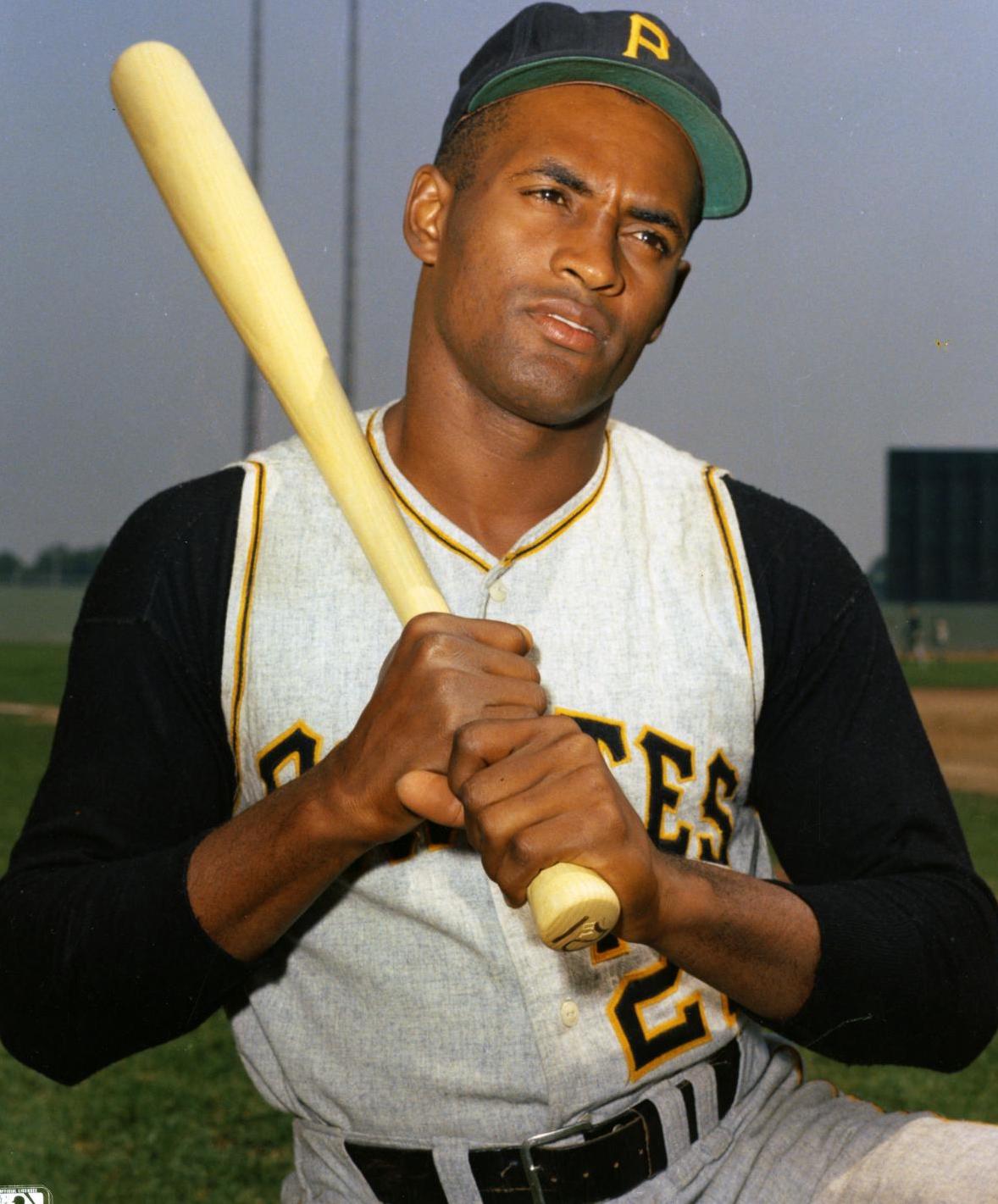
Another iconic moment came on September 30, 1972, when Clemente recorded his 3,000th hit, a double off Jon Matlack of the New York Mets. It was a fitting milestone for a player whose career had been defined by consistency and excellence. Tragically, it would be Clemente’s final regular-season hit, as he died in a plane crash just three months later.
Beyond his statistical achievements, Clemente was known for his fiery passion and deep sense of justice. He played the game with an intensity that was impossible to ignore, often diving for balls or running the bases with unrelenting determination. Off the field, Clemente was equally passionate about helping others. He was deeply committed to humanitarian work, particularly in Latin America and the Caribbean, where he sought to improve the lives of those less fortunate.
One of the most enduring aspects of Clemente’s legacy is his advocacy for racial equality and his pride in his Puerto Rican heritage. He refused to allow prejudice to diminish his identity and often spoke out against injustice. Clemente’s willingness to confront societal issues made him a trailblazer for Latino players and an inspiration for future generations.
Clemente’s tragic death on December 31, 1972, while delivering aid to earthquake victims in Nicaragua, shocked the baseball world and beyond. The plane he was aboard crashed into the ocean shortly after takeoff, and Clemente’s body was never recovered. His death at the age of 38 was a profound loss, but it also immortalized him as a symbol of selflessness and compassion.
Roberto Clemente’s impact on baseball and society is immeasurable. As one of the first Latino superstars in MLB, he broke barriers and paved the way for future generations of players from Latin America. His success demonstrated the immense talent that existed beyond the United States and encouraged MLB teams to scout and sign players from the Caribbean and Latin America.

Clemente’s influence also extended to the cultural and social dimensions of the game. He showed that athletes could use their platforms to address broader societal issues and advocate for change. His commitment to humanitarian work and his pride in his heritage have made him a beloved figure not only in Puerto Rico but around the world.
In recognition of his contributions, MLB established the Roberto Clemente Award in 1973, given annually to the player who best exemplifies sportsmanship, community involvement, and philanthropy. The award serves as a lasting tribute to Clemente’s legacy and a reminder of the values he embodied.
Roberto Clemente’s MLB career was a testament to the power of talent, determination, and compassion. From his humble beginnings in Puerto Rico to his ascent as one of baseball’s greatest players, Clemente’s journey was marked by extraordinary achievements and a profound impact on the game and society. His 3,000 hits, 12 Gold Glove Awards, and MVP honors are a reflection of his greatness as a player, while his humanitarian work and advocacy for social justice underscore his legacy as a global icon.
Clemente’s life and career continue to inspire millions, reminding us of the potential for athletes to transcend their sport and make a difference in the world. His story is one of triumph, sacrifice, and enduring impact—a legacy that will forever hold a special place in the history of baseball and the hearts of fans worldwide.



 The Baseball Scholar
Leave a reply to Anonymous Cancel reply