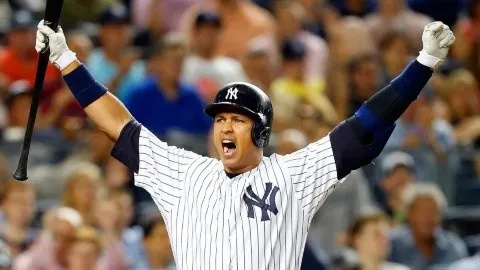
Alex Rodriguez, “A-Rod,” is one of the most accomplished and controversial figures in Major League Baseball (MLB) history. Over a career spanning more than two decades, Rodriguez demonstrated unparalleled talent as a hitter, fielder, and overall athlete. His career, marked by extraordinary statistical achievements, is also a case study in the complexities of modern baseball, including the intersection of performance, public perception, and the impact of performance-enhancing drugs (PEDs). From his debut in 1994 to his retirement in 2016, Rodriguez left an indelible mark on the game, setting records, earning accolades, and becoming one of the most polarizing players in MLB history.
Alexander Emmanuel Rodriguez was born on July 27, 1975, in New York City, New York, to Dominican parents. Baseball was a central part of his upbringing, and Rodriguez’s talent was evident from an early age. After moving to Miami, Florida, he attended Westminster Christian School, where he excelled in both baseball and football. By the time he graduated, he was regarded as one of the top amateur baseball players in the country.
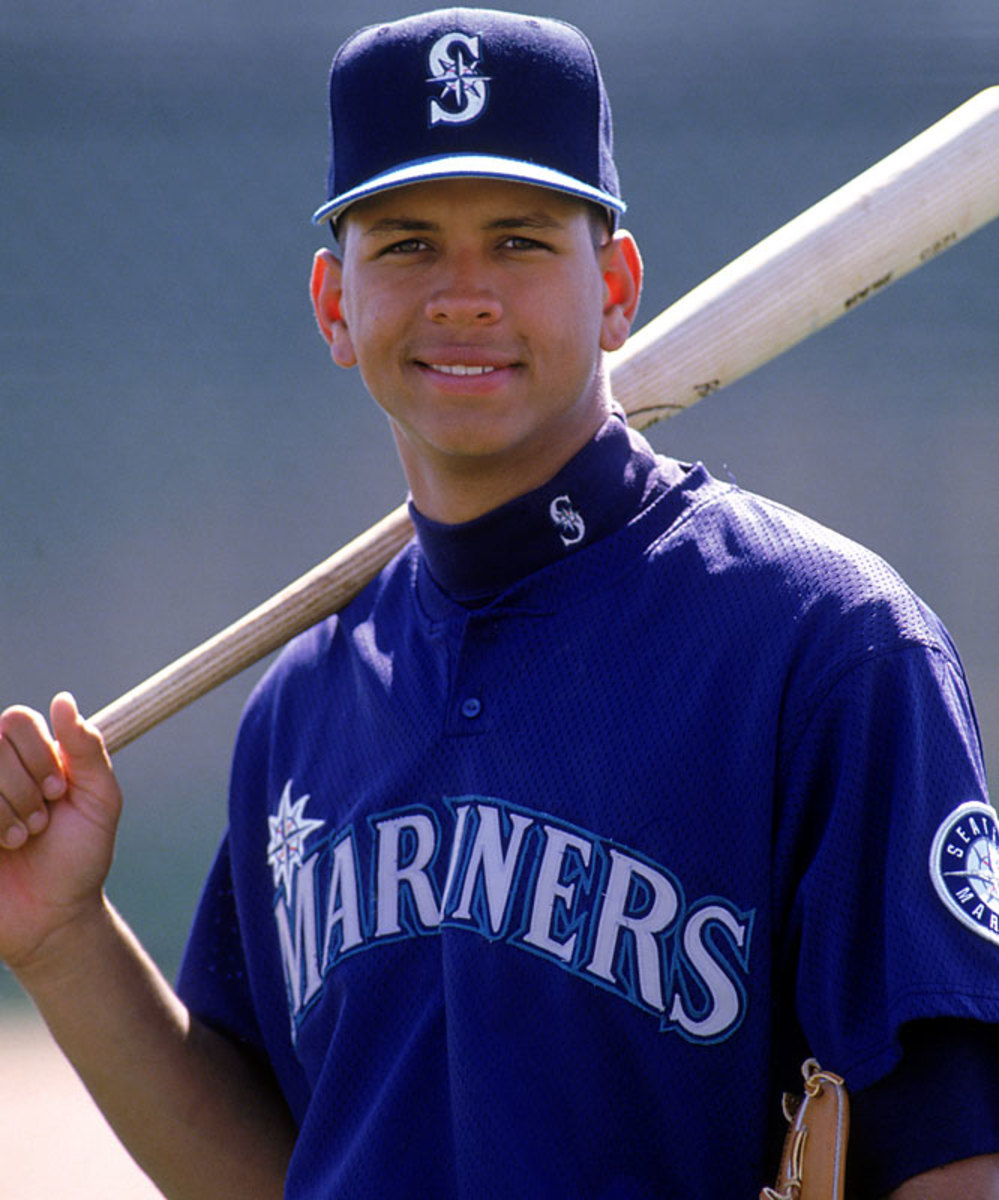
The Seattle Mariners selected Rodriguez as the first overall pick in the 1993 MLB Draft. At just 18 years old, he made his MLB debut on July 8, 1994, becoming one of the youngest players to play in the majors in the modern era. Although his initial performances were unremarkable, Rodriguez’s potential was unmistakable, and he quickly became a cornerstone of the Mariners’ future.
Rodriguez’s breakout season came in 1996 when he established himself as one of the best players in baseball. At just 20 years old, he hit .358 with 36 home runs, 123 RBIs, and 15 stolen bases. His .631 slugging percentage and league-leading 141 runs scored showcased his ability to impact the game in multiple ways. Rodriguez finished second in the American League (AL) Most Valuable Player (MVP) voting, narrowly losing to Juan González. His extraordinary performance solidified him as a superstar.
Over the next four seasons with the Mariners, Rodriguez continued to dominate. He consistently hit over .300, with seasons of 42, 42, and 41 home runs from 1998 to 2000. He was an integral part of the Mariners’ lineup, teaming up with stars like Ken Griffey Jr., Edgar Martínez, and Randy Johnson. Despite his individual brilliance, the Mariners were unable to secure a World Series appearance during Rodriguez’s tenure.
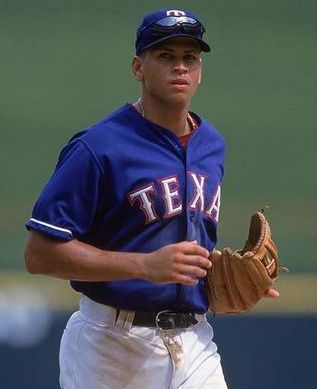
In December 2000, Rodriguez signed a 10-year, $252 million contract with the Texas Rangers, the largest contract in sports history at the time. The move was both celebrated and criticized, as it underscored the growing financial disparities in baseball. Rodriguez’s tenure with the Rangers was individually successful but marked by team struggles.
From 2001 to 2003, Rodriguez cemented his reputation as one of the greatest players in MLB history. He led the league in home runs each year, hitting 52 in 2001, 57 in 2002, and 47 in 2003. He also won the AL MVP Award in 2003 after hitting .298 with 47 home runs, 118 RBIs, and a league-leading .600 slugging percentage. Despite his individual achievements, the Rangers failed to reach the postseason during his tenure, largely due to a lack of pitching and overall team depth.
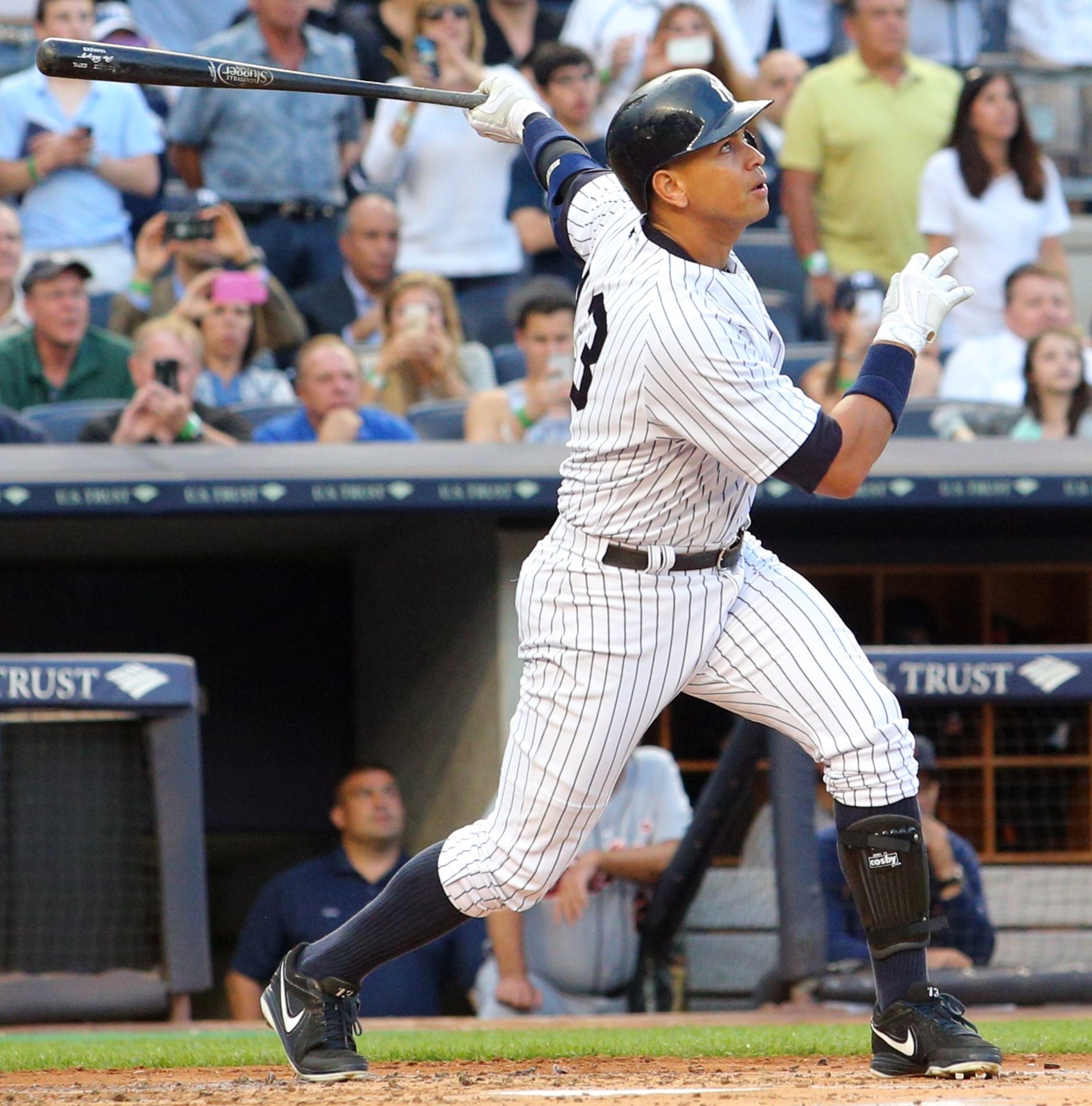
In February 2004, Rodriguez was traded to the New York Yankees, where he moved from shortstop to third base to accommodate Derek Jeter. The move was a pivotal moment in his career, placing him in the media spotlight of the largest market in baseball. Rodriguez thrived in his early years with the Yankees, winning the AL MVP Award in 2005 and 2007.
The 2007 season was one of Rodriguez’s finest, as he hit .314 with 54 home runs, 156 RBIs, and a .645 slugging percentage. His performance earned him his third MVP Award, and he became the first player in MLB history to surpass 500 career home runs before turning 32. However, postseason success eluded Rodriguez during his first few years in New York, leading to criticism that he could not perform under pressure.
In 2009, Rodriguez silenced many of his critics by leading the Yankees to their 27th World Series title. He was instrumental during the postseason, hitting .365 with six home runs and 18 RBIs. His clutch performances, particularly in the AL Championship Series against the Los Angeles Angels, solidified his legacy as a champion.
Rodriguez’s career statistics rank among the greatest in baseball history. Over 22 seasons, he amassed 696 home runs, placing him fourth on the all-time list behind Barry Bonds, Hank Aaron, and Babe Ruth. He also recorded 3,115 hits, 2,086 RBIs (third all-time), and 2,021 runs scored. His career batting average of .295, along with a .380 on-base percentage and a .550 slugging percentage, underscores his consistency and power.
Rodriguez’s advanced metrics further highlight his greatness. His career WAR of 117.5 ranks among the top players in MLB history. He won 10 Silver Slugger Awards, appeared in 14 All-Star Games, and led the league in home runs five times. His combination of power, speed, and defensive prowess made him one of the most well-rounded players of his era.
Despite his on-field success, Rodriguez’s career was marred by controversies related to PED use. In 2009, he admitted to using PEDs from 2001 to 2003 while with the Rangers, citing pressure to perform after signing his record-breaking contract. The admission tarnished his reputation but did not lead to immediate disciplinary action.
In 2013, Rodriguez was implicated in the Biogenesis scandal, which involved the distribution of PEDs to professional athletes. He was suspended for the entire 2014 season, the longest suspension for PED use in MLB history. The scandal significantly impacted his legacy, as many questioned the legitimacy of his achievements.
Alex Rodriguez’s impact on baseball is multifaceted. As a player, he set a new standard for excellence, combining power, speed, and defensive skill in a way that few players had before. His record-breaking contracts also reshaped the financial landscape of the sport, highlighting the growing economic disparities and sparking debates about the value of individual players.

Off the field, Rodriguez’s controversies served as a cautionary tale about the use of PEDs and their impact on the game. His suspension and subsequent return to baseball highlighted the league’s efforts to address the issue and restore integrity to the sport. Despite the controversies, Rodriguez has become a prominent analyst and ambassador for the game, using his platform to mentor young players and promote baseball’s growth.
Alex Rodriguez’s MLB career is a story of extraordinary talent, remarkable achievements, and complex controversies. His statistics and accolades place him among the greatest players in the history of the sport, yet his legacy is complicated by his association with PEDs. Regardless of the controversies, Rodriguez’s impact on baseball is undeniable. He redefined the shortstop position, set numerous records, and left an indelible mark on the game. As a player, analyst, and ambassador, Rodriguez remains a central figure in the narrative of baseball history, embodying both the highs and lows of the modern era.



 The Baseball Scholar
Leave a comment