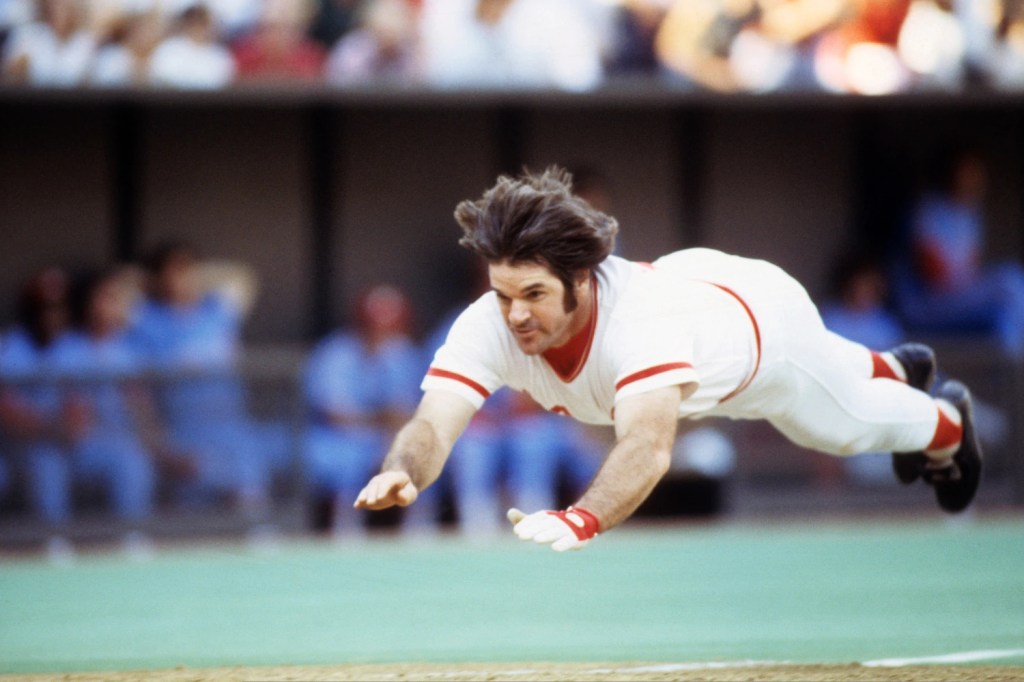
Pete Rose, nicknamed “Charlie Hustle,” is one of the most iconic and controversial figures in Major League Baseball (MLB) history. Known for his unmatched competitiveness and relentless drive, Rose’s career spanned 24 seasons from 1963 to 1986. While his accomplishments on the field cemented his legacy as one of the game’s greatest players, his involvement in gambling ultimately led to a lifetime ban from baseball, clouding his remarkable achievements.
Pete Rose’s MLB career is a testament to consistency, durability, and excellence. He is the all-time leader in hits (4,256), games played (3,562), and at-bats (14,053). Rose also recorded 746 doubles, 135 triples, and 160 home runs, while driving in 1,314 runs and scoring 2,165 runs. His career batting average was an impressive .303, reflecting his exceptional ability to consistently make contact.
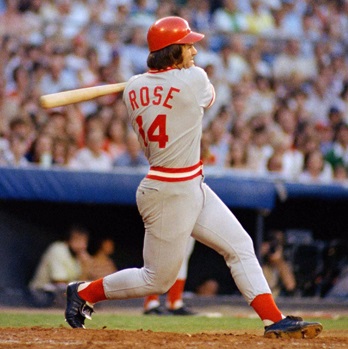
Rose’s versatility on the field was another hallmark of his career. He played multiple positions, including first base, second base, third base, and all three outfield spots. This adaptability allowed him to remain a valuable asset to his teams throughout his lengthy career.
Among Rose’s many accolades, he was a 17-time All-Star, selected at five different positions (an MLB record). He won three batting titles, one Most Valuable Player (MVP) award in 1973, and two Gold Glove Awards. Rose was also instrumental in leading the Cincinnati Reds to two World Series championships in 1975 and 1976, as well as a third title with the Philadelphia Phillies in 1980. His contributions to the Reds’ “Big Red Machine” dynasty of the 1970s remain a cornerstone of his legacy.

Despite his extraordinary accomplishments, Pete Rose’s career and reputation were irreparably damaged by his involvement in gambling. In 1989, MLB Commissioner Bart Giamatti conducted an investigation that concluded Rose had bet on baseball games, including games involving his own team, the Cincinnati Reds, while serving as their manager. Rose agreed to a settlement that resulted in his permanent ineligibility from baseball, though he did not admit to the allegations at the time.
The ban made Rose ineligible for Hall of Fame consideration and excluded him from any involvement in the sport. Years later, in his 2004 autobiography, Rose admitted to betting on baseball, though he maintained that he never bet against his own team. His admission reignited debates about his place in baseball history and the appropriateness of his punishment.

Pete Rose’s impact on the game extends far beyond his statistical achievements. His relentless hustle and passion for the game set a standard for effort and dedication. Known for his head-first slides and fiery demeanor, Rose became the embodiment of grit and determination, inspiring countless players and earning the adoration of fans.
Rose’s approach to the game emphasized the importance of playing hard every day, regardless of circumstances. His ability to consistently perform at a high level over two decades demonstrated the value of work ethic and mental toughness in achieving greatness.
However, Rose’s gambling scandal also served as a cautionary tale about the importance of integrity and accountability in professional sports. MLB’s strict enforcement of its rules against gambling underscored the league’s commitment to preserving the integrity of the game, even when it meant sidelining one of its most celebrated players.

Pete Rose’s legacy is one of both triumph and controversy. As baseball’s all-time hits leader, his place in the sport’s history is undeniable. Yet, his lifetime ban and the circumstances surrounding it have overshadowed his accomplishments, leading to ongoing debates among fans, players, and historians about his exclusion from the Hall of Fame.
While his statistical achievements remain untouched, Rose’s story serves as a reminder of the delicate balance between greatness and accountability. His impact on the game, both as a player and as a cautionary figure, ensures that his name will remain a central part of baseball’s narrative for generations to come.




 The Baseball Scholar
Leave a reply to Wayne Lackey Cancel reply