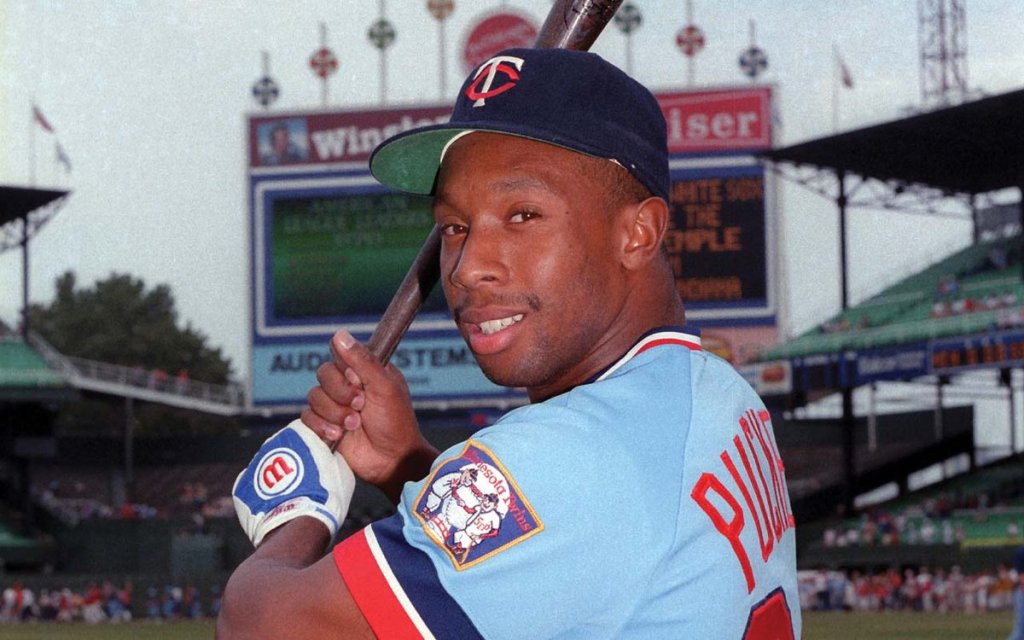
Kirby Puckett’s career in Major League Baseball (MLB) was a remarkable journey of excellence, perseverance, and influence on the game. His story is one of resilience, overcoming obstacles, and making a lasting impact on the sport. From his humble beginnings to his meteoric rise as one of the most beloved players in baseball history, Puckett left an indelible mark on the Minnesota Twins and the league as a whole. His ability to perform under pressure, his consistent offensive and defensive contributions, and his larger-than-life personality made him one of the most revered figures in baseball. His career was tragically cut short due to unforeseen health issues, but his legacy remains intact as one of the greatest players of his era.
Kirby Puckett was born on March 14, 1960, in Chicago, Illinois. Growing up in a tough neighborhood on the South Side of Chicago, he faced adversity from an early age. Baseball provided an escape, and despite financial hardships, Puckett remained determined to pursue his dream of playing professionally. He attended Calumet High School, but he went largely unnoticed by scouts due to the limited exposure of his high school program. After graduation, he took an unconventional path to the major leagues. With no immediate offers from top-tier college baseball programs, he worked various jobs, including a stint at a Ford auto plant, before eventually earning a spot at Bradley University and later transferring to Triton College, a junior college in Illinois.
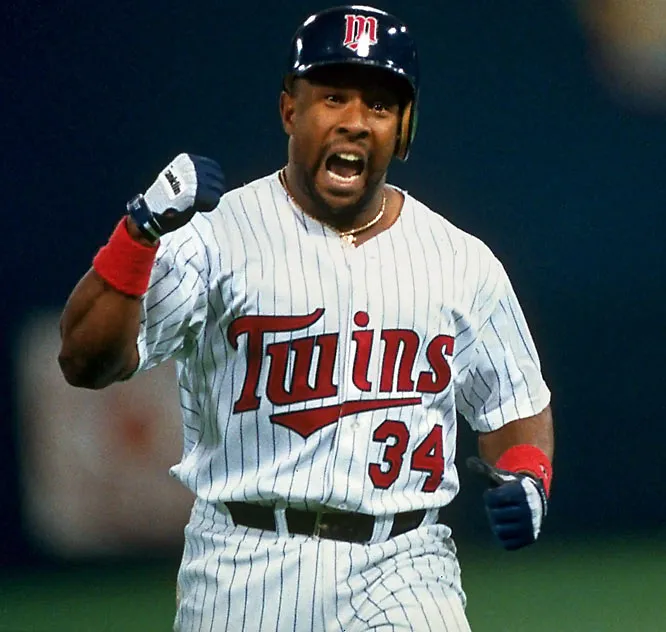
At Triton College, Puckett’s talent finally began to shine, and his ability as a five-tool player—combining speed, power, fielding, hitting for average, and throwing ability—gained recognition. In 1982, the Minnesota Twins selected him in the first round of the MLB Draft, setting the stage for one of the most beloved careers in franchise history. He quickly rose through the Twins’ minor league system, proving himself at every level with his impressive hitting and defensive prowess. His positive attitude and relentless work ethic endeared him to teammates and coaches, reinforcing the belief that he was a special talent.
Puckett made his MLB debut on May 8, 1984, immediately making an impact. In his first big league game, he recorded four hits, an incredibly rare feat that foreshadowed the kind of player he would become. His rookie season was impressive, as he finished with a .296 batting average and established himself as an everyday player for the Twins. Despite lacking power early in his career, he was an elite contact hitter with speed on the basepaths and outstanding defensive abilities in center field.
As he developed, Puckett added power to his game. By 1986, he had transformed into a true all-around offensive threat, hitting .328 with 31 home runs and 96 RBIs. His newfound ability to hit for power, combined with his already impressive ability to make contact, made him one of the most dangerous hitters in the league. In 1987, he helped lead the Minnesota Twins to their first World Series championship. That year, he hit .332 with 28 home runs and 99 RBIs, playing an instrumental role in the team’s success. His defensive prowess in center field was equally impressive, earning him his first of six Gold Glove Awards.
The 1987 World Series was a defining moment in Puckett’s career. The Twins faced the St. Louis Cardinals in a thrilling seven-game series. Puckett’s contributions were crucial, as he hit .357 in the series and provided both offensive and defensive heroics. The Twins won Game 7 at the Metrodome, securing the first championship in franchise history. Puckett’s leadership and performance cemented his status as a superstar, and he became one of the most recognizable figures in the game.
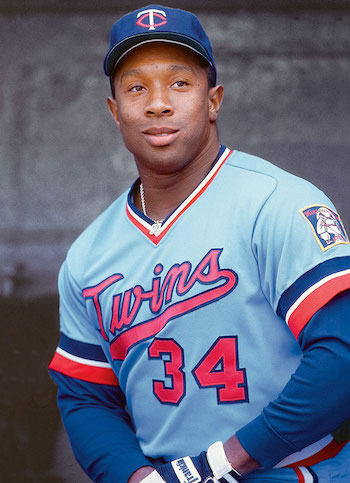
Puckett continued to dominate in the late 1980s and early 1990s, consistently ranking among the league leaders in batting average, hits, and defensive metrics. He was a ten-time All-Star, and his offensive production remained elite. He won the American League batting title in 1989, hitting .339, and continued to be one of the toughest outs in baseball. His ability to consistently hit for high averages, drive in runs, and play outstanding defense made him one of the most well-rounded players of his era.
The 1991 season would provide the most iconic moment of Puckett’s career. The Minnesota Twins returned to the World Series, this time against the Atlanta Braves. In what is considered one of the greatest World Series ever played, Puckett delivered a legendary performance in Game 6. With the Twins facing elimination, he almost single-handedly carried the team to victory. He went 3-for-4 with a triple, multiple highlight-reel defensive plays, and the defining moment—a walk-off home run in the bottom of the 11th inning off Charlie Leibrandt to force a Game 7. His dramatic home run, punctuated by the famous call from broadcaster Jack Buck—“And we’ll see you tomorrow night!”—remains one of the most memorable moments in baseball history. The Twins would go on to win Game 7, securing their second championship in five seasons, and Puckett’s heroics solidified his place as one of the most clutch performers in MLB history.
Puckett continued to be a dominant force throughout the early 1990s, consistently hitting for a high average and providing stellar defense. He led the American League in hits four times and was among the top five in MVP voting multiple times. His infectious energy, leadership, and ability to rise to the occasion made him a fan favorite not just in Minnesota, but across the league. His unique ability to connect with fans, combined with his humble nature and work ethic, made him one of the most respected players of his generation.
Unfortunately, Puckett’s career was cut short in 1996 when he was diagnosed with glaucoma in his right eye. After waking up one morning with blurred vision, doctors determined that he had irreversible damage to his optic nerve. Despite multiple surgeries and attempts to regain his sight, he was forced to retire at the age of 35. His premature retirement was a devastating blow to the baseball world, as he was still performing at an elite level at the time. In his final full season in 1995, he hit .314 with 23 home runs and 99 RBIs, showing no signs of decline.
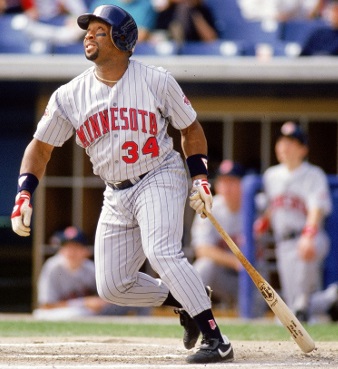
At the time of his retirement, Puckett had accumulated a career batting average of .318, with 2,304 hits, 207 home runs, and 1,085 RBIs. He was a 10-time All-Star, a six-time Gold Glove winner, and a two-time World Series champion. His impact on the game extended beyond statistics, as he was known for his leadership, sportsmanship, and contributions to the community. In 2001, he was inducted into the Baseball Hall of Fame in his first year of eligibility, a testament to the impact he had on the game.
Puckett’s legacy extends beyond his on-field achievements. He was a trailblazer for African American athletes, proving that hard work and determination could overcome any obstacle. He remained involved in charitable work after his retirement, dedicating himself to helping underprivileged children and supporting various philanthropic efforts.
His untimely passing in 2006 at the age of 45 was a tragic loss for the baseball community. Puckett’s contributions to the game, both on and off the field, are remembered fondly by fans and players alike. His infectious smile, love for the game, and ability to rise to the occasion in the biggest moments ensure that he will always be remembered as one of the greatest players of his generation.
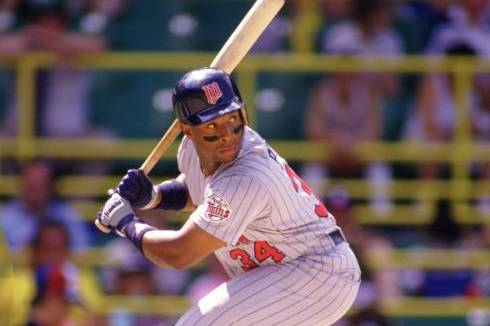
Kirby Puckett’s story is one of perseverance, triumph, and inspiration. From his humble beginnings in Chicago to his Hall of Fame career, he exemplified what it means to be a true ambassador of the sport. His impact on the Minnesota Twins, Major League Baseball, and the broader sports world remains immeasurable. His legacy is one of greatness, and his name will forever be synonymous with excellence in baseball.


 The Baseball Scholar
Leave a comment