
Kevin Appier was one of the most underrated pitchers of his era, a dominant force on the mound who spent the majority of his career with the Kansas City Royals. Over the course of 16 Major League seasons, Appier established himself as one of the American League’s premier pitchers in the 1990s, blending power, deception, and precision to carve out an impressive career. While he was never the flashiest or most talked-about pitcher of his generation, his consistency, durability, and ability to rack up strikeouts and limit runs made him one of the most effective starters of his time. His statistical achievements and impact on the game deserve far more recognition than they have often received. Despite spending much of his prime on a struggling Kansas City team that failed to provide him with adequate run support, Appier’s body of work speaks for itself, with over 2,000 strikeouts, a sub-4.00 career ERA, and multiple seasons of Cy Young-caliber performances. His unique pitching style, work ethic, and ability to dominate opposing hitters left an indelible mark on baseball.
Kevin Appier was born on December 6, 1967, in Lancaster, California. From an early age, he displayed an affinity for baseball, developing a strong arm and a competitive drive that would serve him well in his career. Growing up in California, he played high school baseball at Antelope Valley High School, where he quickly emerged as a standout pitcher. His performances on the mound drew the attention of college scouts, and he went on to play at Fresno State University, one of the top college baseball programs in the country. At Fresno State, Appier continued to develop his skills, refining his mechanics and adding velocity to his fastball. His college years were instrumental in shaping him into a professional-caliber pitcher, and by the time of the 1987 MLB Draft, he was considered one of the top young arms available.
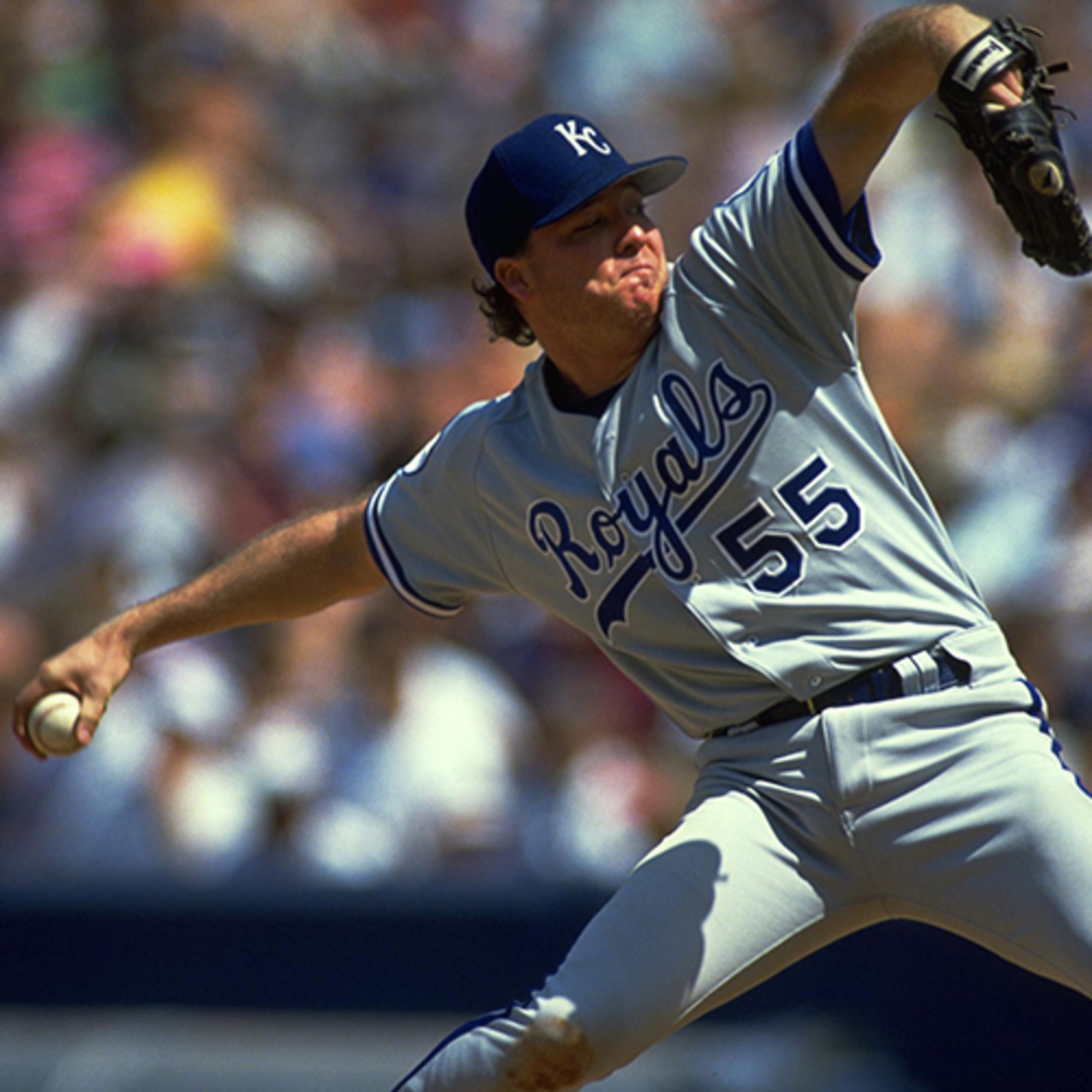
The Kansas City Royals selected Appier in the first round of the 1987 draft, making him the ninth overall pick. The Royals, who had won the World Series just two years earlier in 1985, were looking to rebuild their pitching staff and saw Appier as a future ace. He quickly rose through the minor league ranks, showcasing an advanced feel for pitching, an ability to strike batters out, and a competitive intensity that set him apart. By 1989, Appier had made his Major League debut, appearing in three games for Kansas City late in the season. While his initial outings were brief, they offered a glimpse of the dominant pitcher he would soon become.
The 1990 season marked Appier’s first full year in the majors, and he wasted no time establishing himself as one of the best young pitchers in baseball. At just 22 years old, he went 12-8 with a stellar 2.76 ERA and 127 strikeouts in 185.2 innings pitched. His ERA ranked among the best in the American League, and he finished third in Rookie of the Year voting, an impressive achievement given the level of competition. Appier’s early success was fueled by a devastating slider, a deceptive delivery, and a fastball that had late life, making him incredibly difficult for hitters to square up. He quickly became the ace of the Royals’ pitching staff, a role he would hold for much of the decade.
Over the next several seasons, Appier continued to improve, solidifying himself as one of the premier pitchers in the American League. From 1991 to 1993, he posted three consecutive seasons with an ERA below 3.00, a remarkable feat considering the offensive explosion that was beginning to take hold in baseball. His 1992 campaign was particularly impressive, as he went 15-8 with a league-leading 2.46 ERA and 186 strikeouts. Despite his dominance, Appier did not receive the recognition he deserved, largely due to playing for a Kansas City team that was often out of playoff contention. He finished third in Cy Young Award voting in 1993 after going 18-8 with a 2.56 ERA and 186 strikeouts, but many observers felt he deserved even higher consideration.
One of the defining aspects of Appier’s career was his remarkable consistency. From 1990 to 1997, he posted an ERA under 4.00 in every season while routinely logging 200-plus innings. He was one of the few pitchers in the league who could be counted on for both durability and dominance, making him a highly respected figure among his peers. His ability to keep hitters off balance with his unique, herky-jerky delivery and wipeout slider made him a nightmare for opposing lineups. His fastball, which sat in the low-to-mid 90s, was effective because of its late movement, and he complemented it with a sharp slider and an underrated changeup.
Despite his personal success, Appier’s tenure with the Royals was often frustrating due to the team’s struggles. Kansas City was unable to build a competitive roster around him, and as a result, his win totals did not always reflect his performance. Many seasons saw him post elite numbers while receiving little run support, leading to undeserved losses and no-decisions. Nonetheless, Appier remained loyal to the Royals, continuing to take the mound every fifth day and giving the team a chance to win.
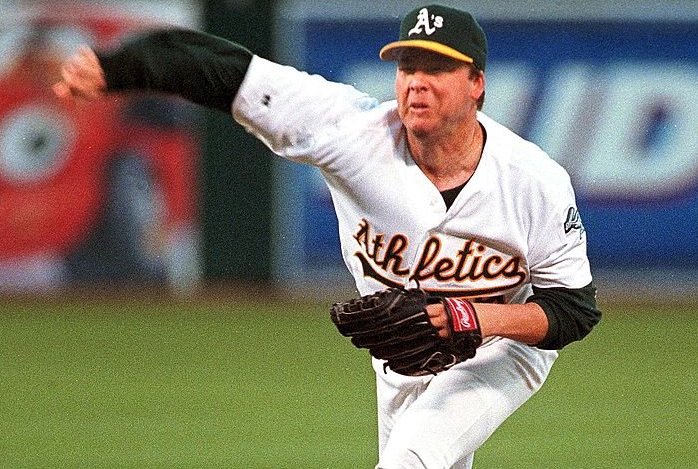
The late 1990s saw Appier battle injuries that began to take a toll on his effectiveness. In 1998, he was limited to just 23 starts due to an arm injury, and by 1999, the Royals made the difficult decision to trade their longtime ace to the Oakland Athletics. The trade marked the end of an era in Kansas City, as Appier had been the face of the pitching staff for nearly a decade. Moving to Oakland provided him with a chance to compete for the postseason, and he delivered a strong 1999 campaign, going 10-9 with a 4.38 ERA. However, injuries continued to hamper him, and he underwent surgery that forced him to miss the entire 2000 season.
Upon his return in 2001, Appier signed with the New York Mets, where he enjoyed a brief resurgence. That season, he went 11-10 with a solid 3.57 ERA, proving he could still be an effective starter. However, he was traded to the Anaheim Angels the following year, a move that would culminate in the highlight of his career. In 2002, Appier was a key member of the Angels’ starting rotation, posting a 14-12 record with a 3.92 ERA and helping the team secure a playoff berth. That October, he played a crucial role in the Angels’ World Series championship run, making multiple starts in the postseason and contributing to the franchise’s first-ever championship. Though he was not the ace of the staff, his veteran presence and experience were invaluable in guiding the Angels through their title-winning season.
After the championship, Appier’s career began to wind down. Injuries continued to plague him, and his effectiveness declined. He made a brief return to Kansas City in 2003, hoping to recapture some of his past success, but he struggled in limited action. By 2004, he retired from baseball, closing the book on a career that, while often overshadowed, was among the most impressive of his generation.
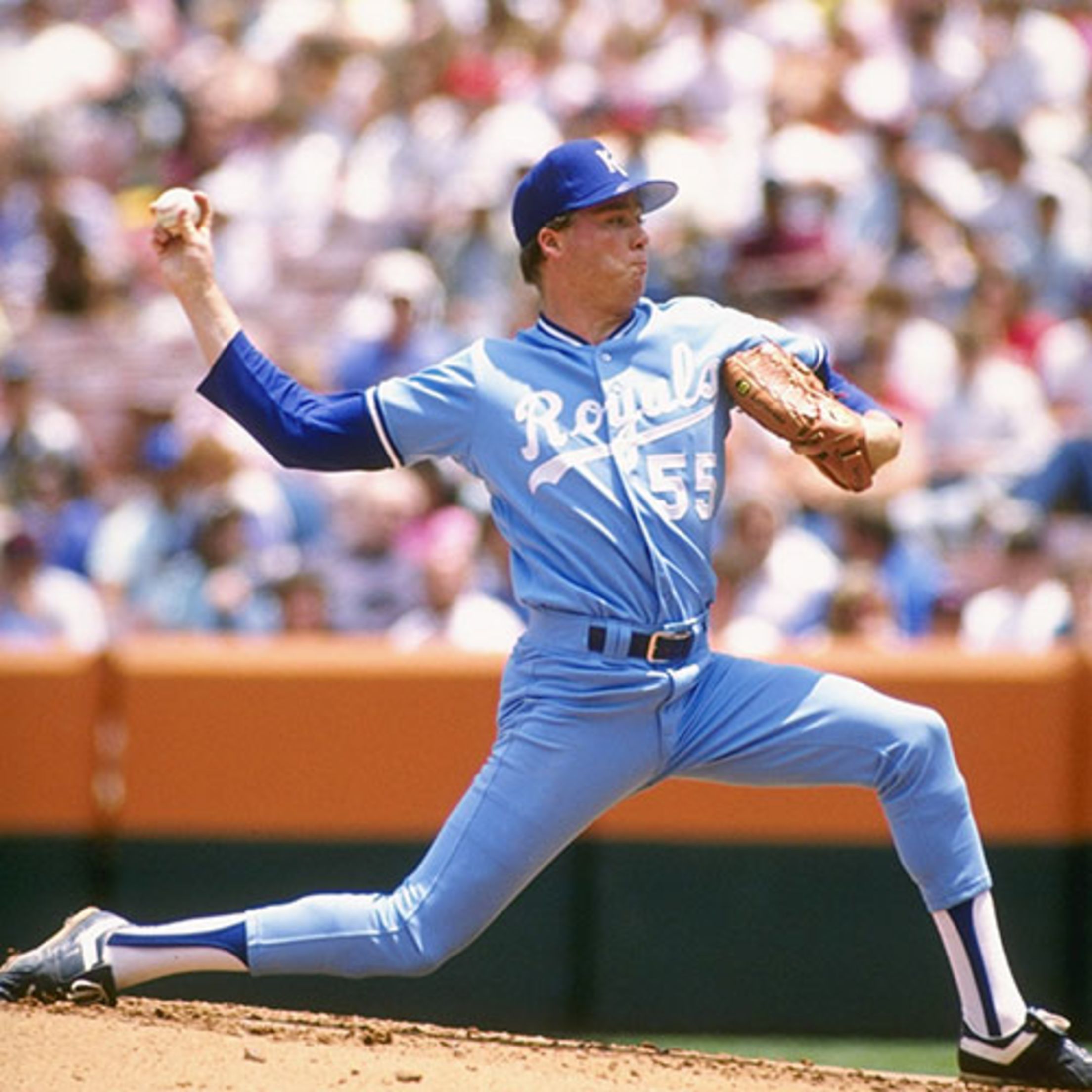
Kevin Appier finished his career with a record of 169-137, a 3.74 ERA, and 2,032 strikeouts. While his numbers may not place him among the all-time greats, his peak seasons were as dominant as any pitcher in baseball. He was a workhorse who combined power and finesse, and his influence on the Royals’ pitching staffs of the 1990s cannot be overstated. Appier’s legacy is one of perseverance, professionalism, and excellence, and while he may not have received the accolades of some of his contemporaries, his impact on the game remains undeniable. His career serves as a reminder that greatness is not always measured in awards but in the ability to compete at an elite level year after year.


 The Baseball Scholar
Leave a comment