
Dave Stieb was one of the most dominant and underappreciated pitchers of his era, spending the majority of his career with the Toronto Blue Jays. Over a span of 15 seasons, Stieb became the winningest pitcher in Blue Jays history, earning multiple All-Star selections and nearly achieving perfection on multiple occasions. His career was defined by his fierce competitiveness, exceptional slider, and ability to consistently perform at an elite level despite often being overshadowed by bigger-name pitchers of the 1980s. While he never won a Cy Young Award or achieved Hall of Fame status, Stieb’s statistical achievements and impact on baseball solidified his place as one of the greatest pitchers of his generation.
David Andrew Stieb was born on July 22, 1957, in Santa Ana, California. Unlike many elite pitchers who spend their youth refining their craft on the mound, Stieb was primarily an outfielder during his college years at Southern Illinois University. He was a talented hitter and outfielder with aspirations of making it to the major leagues as a position player. However, during a college game, he took the mound as a pitcher in an emergency situation, and his performance caught the attention of scouts. His arm strength, natural athleticism, and raw pitching ability were enough for the Toronto Blue Jays to take a chance on him in the fifth round of the 1978 MLB Draft.
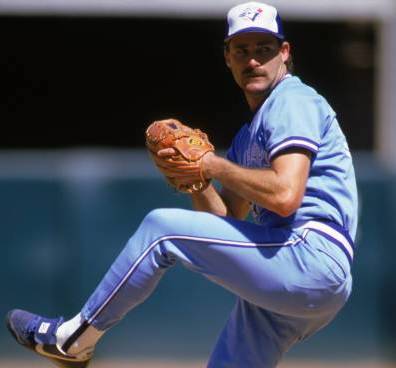
Stieb’s transition from an outfielder to a pitcher was remarkably swift. Unlike most players who spend years in the minor leagues developing their skills, Stieb quickly rose through the Blue Jays’ system, making his Major League debut on June 29, 1979, at just 21 years old. Despite his lack of extensive pitching experience, he displayed a natural feel for the mound, possessing a devastating slider and a strong fastball that kept hitters off balance. His immediate success was a testament to his athleticism and ability to adapt to a new role at the highest level of competition.
By 1980, Stieb had established himself as the ace of the Blue Jays’ staff. He finished the season with a 12-15 record, a 3.71 ERA, and 129 strikeouts, a solid showing for a young pitcher on an expansion team still struggling to find its identity. His ability to go deep into games and control opposing lineups made him an invaluable asset to Toronto as they sought to build a competitive franchise.
Stieb’s breakout season came in 1982 when he won 17 games and posted a 3.25 ERA over 288.1 innings, earning his first All-Star selection. He was developing a reputation as one of the toughest pitchers to face, thanks in large part to his wipeout slider, which had late, sharp movement that baffled hitters. He followed up that performance with another All-Star season in 1983, finishing with a 17-12 record and a 3.04 ERA, cementing his status as one of the best pitchers in the American League.
Throughout the mid-1980s, Stieb was the heart and soul of the Blue Jays’ pitching staff. He regularly logged over 250 innings per season and was among the league leaders in ERA, complete games, and strikeouts. One of the defining aspects of Stieb’s career was his ability to consistently put up dominant numbers despite often lacking the run support or defensive backing that some of his contemporaries enjoyed. He pitched in an era that featured dominant pitchers like Jack Morris, Roger Clemens, and Bert Blyleven, yet he remained one of the most effective and reliable arms in the game.

One of the most remarkable yet frustrating aspects of Stieb’s career was his string of near no-hitters in the late 1980s. He came agonizingly close to achieving the milestone on multiple occasions. In 1988, he had back-to-back starts in which he was one out away from a no-hitter, only to have it broken up at the last moment. The following year, he once again lost a no-hitter with two outs in the ninth inning, making him one of the unluckiest pitchers in baseball history when it came to achieving the elusive feat. These near-misses only added to his reputation as a dominant but underappreciated pitcher who often fell just short of widespread recognition.
Finally, on September 2, 1990, Stieb broke through and threw the first and only no-hitter in Toronto Blue Jays history at that time, defeating the Cleveland Indians 3-0. The moment was a long-awaited redemption for Stieb, who had endured so many heartbreakingly close calls. It was a defining moment in his career and one that solidified his legacy within the Blue Jays organization.
Beyond the statistics, Stieb’s impact on baseball can be measured by the way he helped transform the Blue Jays from an expansion team into a legitimate contender. Before his arrival, Toronto had been a perennial cellar dweller, but by the late 1980s, they were consistently competing for division titles. His leadership and consistency on the mound provided stability for the team, and his fiery competitive spirit set a standard for the young pitchers who followed in his footsteps.
Stieb’s excellence was finally rewarded in 1992 when the Blue Jays won their first World Series. Though injuries had reduced his role by that time, he was part of the team’s roster and played a supporting role in their championship season. While he wasn’t the dominant ace he had once been, his contributions to the franchise were undeniable, and he retired as the winningest pitcher in Blue Jays history.

Over the course of his career, Stieb compiled a 176-137 record, a 3.44 ERA, and 1,669 strikeouts in 2,895.1 innings pitched. His seven All-Star selections and multiple top-five finishes in Cy Young voting reflected just how good he was at his peak. His ability to pitch deep into games, generate weak contact, and dominate with his slider made him one of the best pitchers of the 1980s.
Stieb attempted a brief comeback in 1998 after several years away from the game, making a handful of starts with the Blue Jays before officially retiring. While his return was more of a farewell tour than a serious attempt to reclaim his past dominance, it was a testament to his love for the game and his lasting connection with the franchise.
Despite his achievements, Stieb remains one of the most overlooked great pitchers in baseball history. Part of this can be attributed to playing in Toronto, which at the time did not receive as much media attention as larger markets. Additionally, his lack of postseason success during his prime years may have contributed to his being overshadowed by pitchers who had more high-profile playoff moments. However, advanced metrics and modern statistical analysis have helped to highlight just how dominant he was. His career WAR (Wins Above Replacement) of 56.7 is higher than many Hall of Fame pitchers, further cementing his case as one of the greatest pitchers of his generation.
One of the most unique aspects of Stieb’s career was his ability to succeed despite his unconventional path to the majors. Very few pitchers make the transition from an everyday position player to an elite starting pitcher, yet Stieb did so seamlessly. His natural athleticism and adaptability allowed him to develop into one of the best pitchers of the 1980s despite having spent much of his early career focused on hitting rather than pitching.
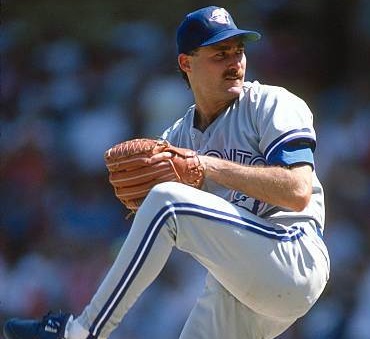
In the years since his retirement, Stieb has remained involved in baseball, often returning to Toronto for team events and celebrations of Blue Jays history. His legacy within the franchise is secure, as he remains the winningest pitcher in team history and one of the greatest players ever to wear a Blue Jays uniform. His contributions to the game, both statistically and in terms of influence, ensure that he will always be remembered as one of baseball’s most exceptional pitchers.
Dave Stieb’s career is a story of perseverance, dominance, and a relentless pursuit of excellence. He overcame the odds to become a seven-time All-Star, a near Cy Young winner, and the author of one of the greatest pitching careers of his era. While he may not always receive the recognition he deserves, those who watched him pitch understand that he was one of the most formidable competitors in baseball history. His impact on the game remains undeniable, and his place among the all-time greats is secure.



 The Baseball Scholar
Leave a comment