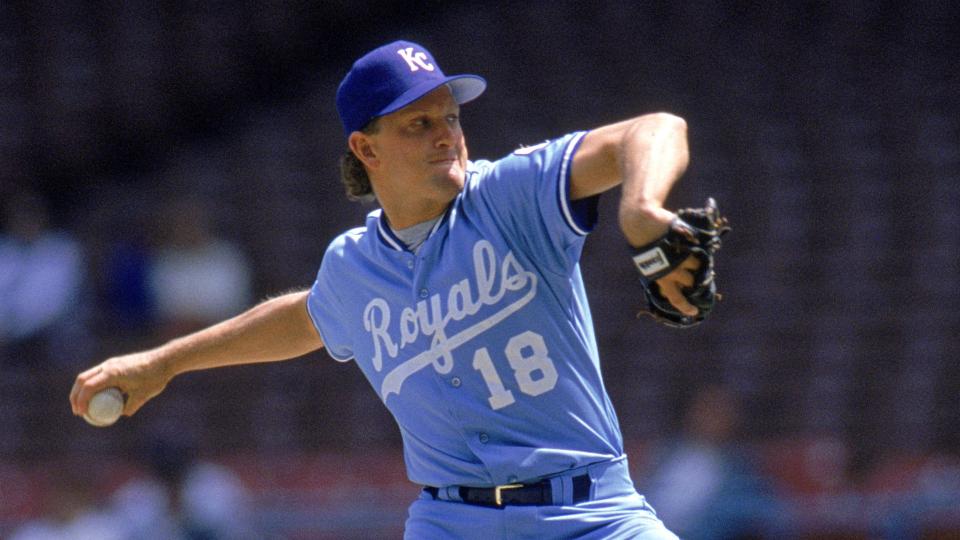
Bret Saberhagen is one of the most fascinating pitchers in Major League Baseball (MLB) history, known for his pinpoint control, fierce competitiveness, and ability to shine on the biggest stages. Over his illustrious career, Saberhagen carved out a legacy as one of the premier pitchers of the 1980s and early 1990s, with a career that included Cy Young Awards, a World Series MVP, and numerous dominant performances that cemented his place among the game’s elite. This essay delves into the remarkable career of Bret Saberhagen, exploring his early life and development, statistical achievements, moments of dominance, and his lasting impact on baseball. Additionally, we will examine the unique aspects of his career that set him apart from his contemporaries.
Bret William Saberhagen was born on April 11, 1964, in Chicago Heights, Illinois, and grew up in Southern California. He attended Grover Cleveland High School in Reseda, California, where he quickly made a name for himself as a dominant pitcher. Despite his slight build, Saberhagen possessed a strong arm and an exceptional feel for pitching, which caught the attention of scouts. In 1982, the Kansas City Royals selected him in the 19th round of the MLB Draft, a pick that would turn out to be one of the biggest steals in franchise history.
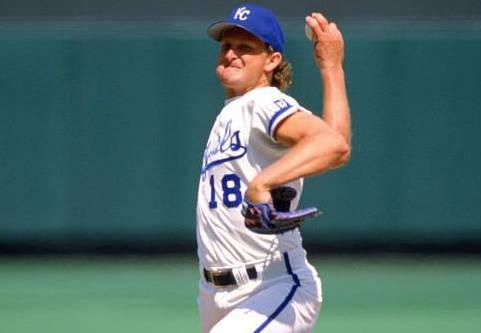
Saberhagen’s rise through the minor leagues was swift. His combination of poise, control, and an impressive arsenal of pitches allowed him to ascend rapidly through the Royals’ farm system. By 1984, at the age of just 20, Saberhagen made his MLB debut with the Kansas City Royals. It didn’t take long for him to establish himself as one of the most promising young pitchers in the league. In his rookie season, he posted a solid 10-11 record with a 3.48 ERA, showing flashes of brilliance that hinted at his future stardom.
The following year, 1985, proved to be the defining season of Saberhagen’s career. At just 21 years old, he emerged as the ace of a Royals team that would go on to win the World Series. He finished the regular season with a sparkling 20-6 record, an MLB-leading 2.87 ERA, and 158 strikeouts in 235.1 innings pitched. His remarkable consistency and ability to deliver in high-pressure situations earned him the American League Cy Young Award, making him one of the youngest recipients of the prestigious honor.
Saberhagen’s brilliance reached its peak during the 1985 postseason, particularly in the World Series against the St. Louis Cardinals. With the Royals facing elimination in Game 5, he delivered a masterful complete-game shutout, keeping Kansas City’s championship hopes alive. In the decisive Game 7, Saberhagen once again took the mound and pitched another complete-game shutout, securing the Royals’ first-ever World Series title. His performances earned him the World Series MVP award, and he became a household name across the baseball world.
Over the next few seasons, Saberhagen continued to establish himself as one of the premier pitchers in baseball. In 1987, despite dealing with injuries, he put together another impressive campaign, finishing with a 3.36 ERA and 163 strikeouts. However, it was in 1989 that he would reach new heights, delivering one of the finest seasons of his career. He posted a league-best 23-6 record with a 2.16 ERA, 12 complete games, and a career-high 193 strikeouts. His dominance was rewarded with his second American League Cy Young Award, cementing his status as one of the game’s elite pitchers.
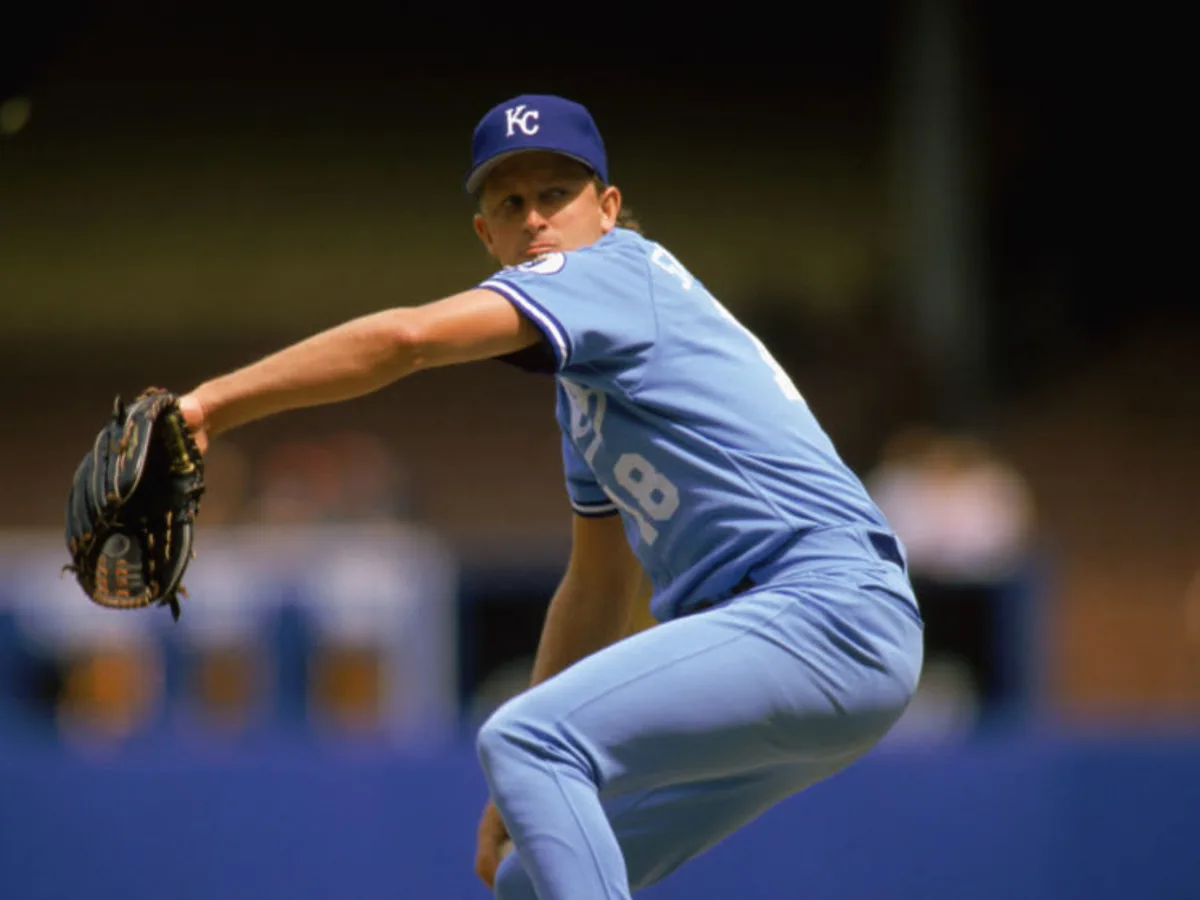
Throughout his career, Saberhagen was known for his remarkable control and efficiency. Unlike many power pitchers of his era, he relied more on precision than sheer velocity. His pinpoint accuracy and ability to change speeds effectively made him a formidable opponent for hitters. Saberhagen was particularly known for his exceptional command of his fastball and changeup, which allowed him to induce weak contact and work deep into games.
One of the unique aspects of Saberhagen’s career was his tendency to excel in odd-numbered years. Baseball fans and analysts often joked about the “odd-year phenomenon,” as his best seasons seemed to come in years such as 1985, 1987, and 1989. Whether coincidence or not, it became a defining quirk of his career and added to his enigmatic reputation.
Despite his undeniable talent, Saberhagen’s career was not without challenges. Injuries frequently hampered his ability to maintain peak performance. Shoulder and elbow issues plagued him throughout the early 1990s, limiting his effectiveness and availability. Nevertheless, he remained a valuable asset to any team he played for.
In 1991, the Royals traded Saberhagen to the New York Mets, where he continued to showcase his talent, albeit with mixed results due to injuries. He had a standout season in 1994, posting an impressive 14-4 record with a 2.74 ERA and an astounding 143 strikeouts to just 13 walks. This remarkable strikeout-to-walk ratio remains one of the most impressive feats in modern pitching history and highlights his unparalleled control.

Saberhagen later had stints with the Colorado Rockies and the Boston Red Sox, where he experienced brief resurgences but struggled to stay healthy for extended periods. Despite his injury struggles, his impact on the game remained profound, and he was widely respected for his dedication and professionalism.
Over the course of his 16-year MLB career, Bret Saberhagen compiled an impressive statistical resume. He finished with a career record of 167-117, a 3.34 ERA, and 1,715 strikeouts in 2,562.2 innings pitched. He was a three-time All-Star, a two-time Cy Young Award winner, and a World Series MVP. His control was legendary, as evidenced by his career walks per nine innings (BB/9) rate of just 1.7, one of the best marks in MLB history.
Saberhagen’s impact on baseball extends beyond his statistics. He was a trailblazer in terms of pitching efficiency, demonstrating that success could be achieved through precision and strategy rather than relying solely on power. His legacy is also marked by his postseason heroics, which solidified his reputation as a clutch performer capable of rising to the occasion when it mattered most.
One of the unique aspects of Saberhagen’s career is his influence on future generations of pitchers. His ability to mix pitches, command the strike zone, and adapt to different situations served as a blueprint for many young pitchers aspiring to reach the major leagues. He was also known for his leadership qualities, mentoring younger players and sharing his wealth of knowledge with teammates.
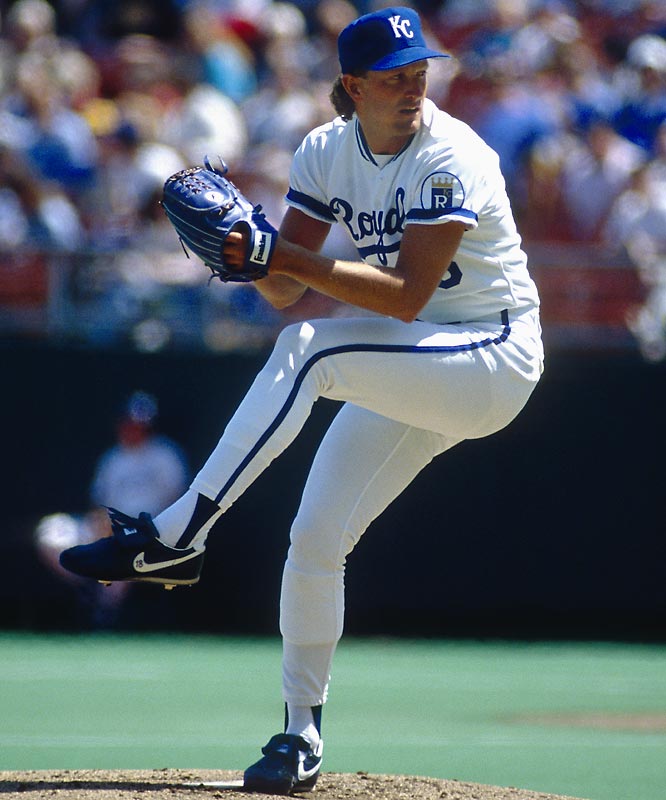
In retirement, Saberhagen has remained involved in baseball through coaching and mentoring roles. He has also been active in charitable endeavors, using his platform to give back to the community and support various causes.
Bret Saberhagen’s career is a testament to the power of perseverance, skill, and determination. From his early days as a promising young pitcher to his legendary performances in the 1985 World Series, he left an indelible mark on the game of baseball. Despite the challenges posed by injuries, his impact on the sport endures, and he remains a beloved figure among Royals fans and baseball enthusiasts alike.
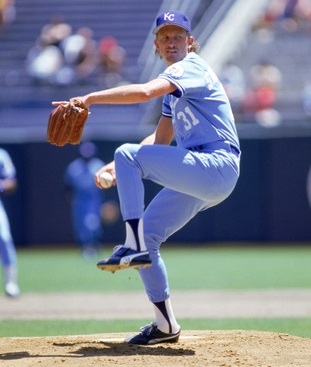
In conclusion, Bret Saberhagen’s MLB career was defined by brilliance, resilience, and an unwavering commitment to excellence. His statistical achievements, including two Cy Young Awards and a World Series MVP, reflect his dominance on the mound, while his unique style of pitching influenced countless players who followed in his footsteps. Whether remembered for his pinpoint control, his odd-year dominance, or his legendary postseason performances, Saberhagen’s legacy in baseball history is secure, and his contributions to the sport will be celebrated for generations to come.



 The Baseball Scholar
Leave a comment