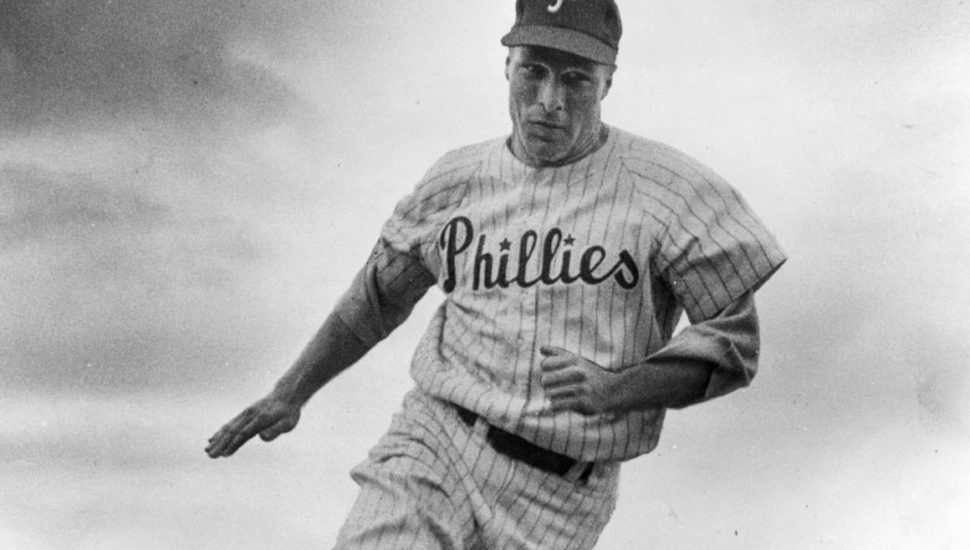
Richie Ashburn was one of the most talented and beloved players in Major League Baseball history. Over a career that spanned from 1948 to 1962, Ashburn became known for his incredible hitting ability, outstanding defense in center field, and his speed on the basepaths. A two-time National League batting champion and a key member of the Philadelphia Phillies’ “Whiz Kids” team of 1950, Ashburn carved out a reputation as one of the best pure hitters and defensive outfielders of his era. His impact on the game extended far beyond his playing days, as he later became a legendary broadcaster and an enduring symbol of Phillies baseball.
Richie Ashburn was born on March 19, 1927, in Tilden, Nebraska. Growing up in a small farming town, Ashburn developed a passion for baseball at an early age. His father, who had been a skilled amateur player, encouraged his son to practice relentlessly, and young Richie honed his skills on the sandlots of Nebraska. He showed exceptional speed, an innate ability to make contact with the ball, and a natural baseball instinct that set him apart from his peers. By the time he reached high school, he was already recognized as one of the top young athletes in the region. His talent caught the attention of professional scouts, and he eventually signed with the Philadelphia Phillies in 1945.
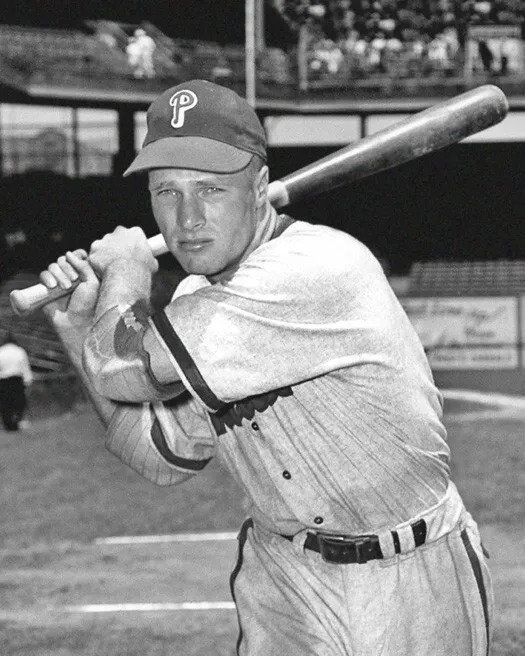
Ashburn’s professional career began in the minor leagues, where he quickly demonstrated his ability to hit for average and cover vast amounts of ground in the outfield. He played for the Utica Blue Sox in 1945 and impressed the Phillies’ organization with his batting skills and baserunning ability. In 1947, he moved up to the Wilmington Blue Rocks, where he continued to refine his game. His rapid rise through the minor league system was a testament to his work ethic and natural talent. By 1948, at the age of 21, he made his Major League debut with the Philadelphia Phillies.
In his rookie season, Ashburn immediately established himself as one of the most promising young players in baseball. He batted .333, led the National League with 32 stolen bases, and collected 154 hits in just 117 games. His combination of speed, contact hitting, and defensive brilliance made him an invaluable asset to the Phillies. He finished third in the National League Rookie of the Year voting, a strong indication of the bright future that lay ahead. His performance in his first year set the foundation for what would become a remarkable career.
Ashburn was a key player for the Phillies during the late 1940s and early 1950s. The peak of his early career came in 1950 when he played a pivotal role in leading the Phillies to the National League pennant. That year, the Phillies were a young, energetic team known as the “Whiz Kids,” and Ashburn was one of their driving forces. He batted .303, collected 205 hits, and played spectacular defense in center field. In one of the most famous moments of the season, Ashburn made a crucial game-saving throw to home plate to preserve a late-season victory against the Brooklyn Dodgers, helping the Phillies clinch the pennant. The play was a defining moment in his career and solidified his reputation as a clutch performer.
The Phillies faced the powerhouse New York Yankees in the 1950 World Series. Although Philadelphia ultimately lost in a four-game sweep, Ashburn performed admirably, hitting .176 but making several outstanding defensive plays in center field. The experience of playing on baseball’s biggest stage was invaluable, and although he would never again reach the World Series as a player, his impact on the game was undeniable.
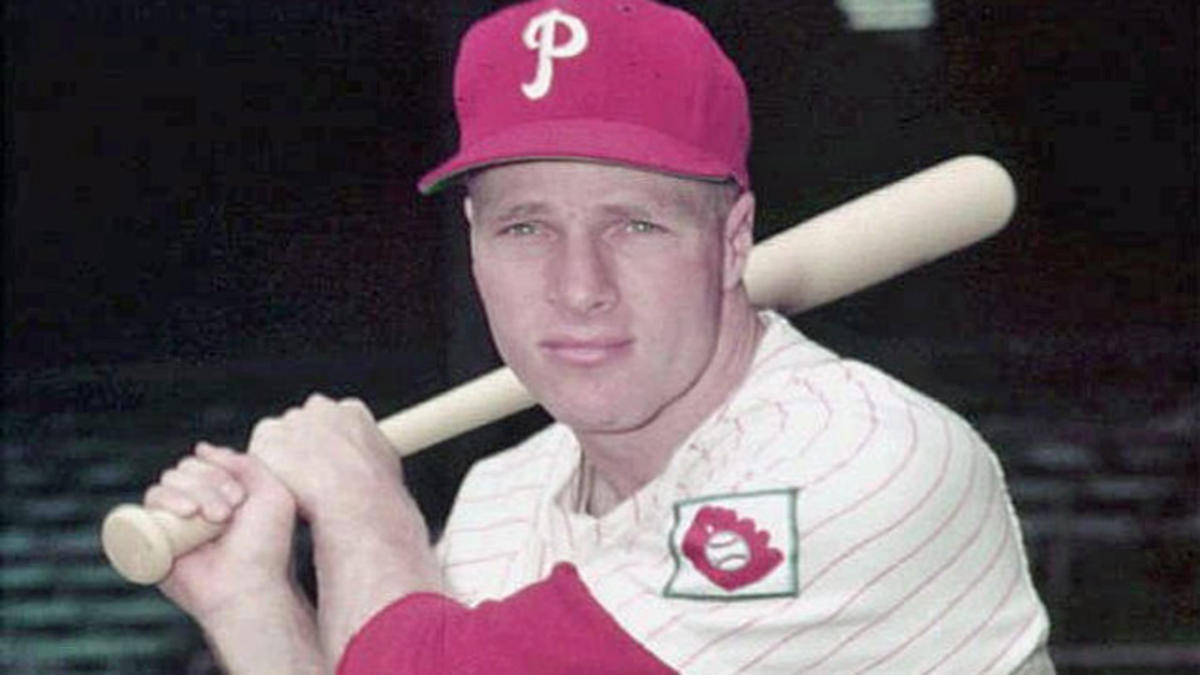
Over the next several seasons, Ashburn continued to establish himself as one of the premier hitters in the National League. He won his first batting title in 1955, leading the league with a .338 average. His ability to hit to all fields and his exceptional bat control made him one of the most difficult hitters to strike out. Ashburn rarely hit for power—he finished his career with only 29 home runs—but his ability to get on base and set the table for his teammates was unmatched. He regularly ranked among the league leaders in hits, batting average, and on-base percentage.
Ashburn won his second batting title in 1958 when he hit .350, leading the National League in both batting average and hits. That season, he collected 215 hits and posted a .440 on-base percentage, demonstrating his ability to get on base at an elite level. His success at the plate was complemented by his stellar defensive play. He had an uncanny ability to read fly balls, cover immense ground in the outfield, and make highlight-reel catches. His defensive skills earned him numerous accolades, and he was widely regarded as one of the best center fielders of his generation.
Beyond his statistical achievements, Ashburn was known for his baseball intelligence and leadership. He was a consummate professional who played the game the right way. His ability to work pitchers deep into counts, make contact with virtually any pitch, and disrupt opposing defenses made him a nightmare for opposing teams. He was also an excellent bunter, frequently using his speed to beat out infield hits. These qualities made him a fan favorite and a respected figure in the game.
One of the unique aspects of Ashburn’s career was his ability to remain productive despite never relying on power. In an era when home runs were becoming increasingly valued, Ashburn proved that a player could be a star without hitting for power. His emphasis on contact hitting, speed, and defense made him one of the most well-rounded players of his time.
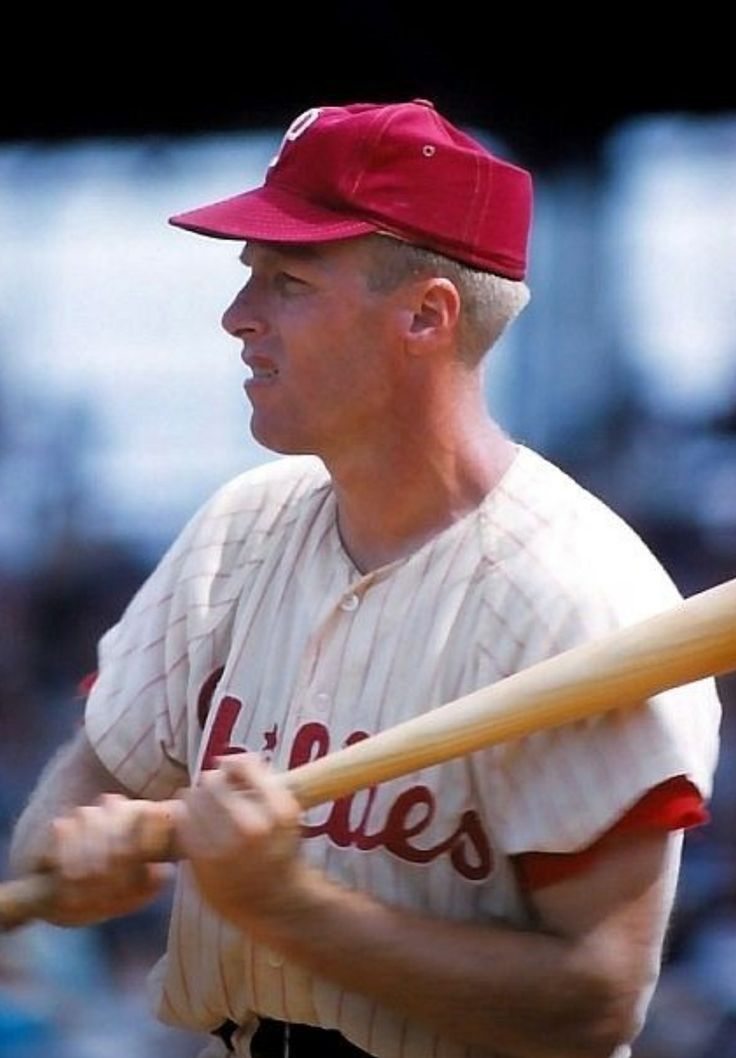
In 1960, Ashburn was traded to the Chicago Cubs, where he spent two seasons before finishing his career with the New York Mets in 1962. Although his final seasons were played on struggling teams, Ashburn remained a productive hitter. He batted .306 in his lone season with the Mets and served as a mentor to the younger players on the expansion team. His influence on the game extended beyond his playing career, as he later transitioned into broadcasting, where he became an even more beloved figure.
After retiring, Ashburn spent more than three decades as a broadcaster for the Phillies. His wit, humor, and deep knowledge of the game endeared him to generations of fans. His partnership with legendary broadcaster Harry Kalas created one of the most iconic broadcasting duos in baseball history. Ashburn’s ability to tell stories, analyze the game, and connect with fans made him an irreplaceable part of Phillies baseball.
Richie Ashburn’s contributions to baseball were finally recognized in 1995 when he was inducted into the Baseball Hall of Fame. The honor was long overdue, as he had been one of the most consistent and impactful players of his era. His induction was celebrated by Phillies fans, who had long revered him as one of the franchise’s all-time greats.
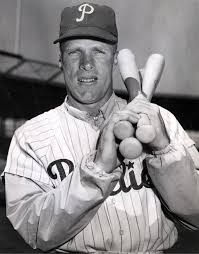
Ashburn’s legacy is one of excellence, professionalism, and dedication to the game. His ability to hit for average, play elite defense, and lead by example made him one of the most respected players in baseball history. His impact on the Phillies, both as a player and a broadcaster, was immeasurable. Even after his passing in 1997, his influence remains strong, and he continues to be remembered as one of the greatest players in Philadelphia Phillies history. Richie Ashburn’s name will forever be associated with the values of hard work, consistency, and an unwavering love for the game of baseball.


 The Baseball Scholar
Leave a comment