
Joe DiMaggio’s name evokes a sense of timelessness, a connection to a golden era of baseball where grace, power, and poise ruled the diamond. Known as “The Yankee Clipper,” DiMaggio is a symbol of excellence and consistency, both as a player and as a cultural icon. His 13-year career with the New York Yankees was defined by incredible achievements, including his legendary 56-game hitting streak, his unparalleled success as a winner, and his lasting impact on the game of baseball. Beyond the statistics, DiMaggio embodied the ideal of a gentleman-athlete, leaving a legacy that transcends the sport itself.
Joseph Paul DiMaggio was born on November 25, 1914, in Martinez, California, to Sicilian immigrant parents. He was the eighth of nine children in a hardworking family, and his father, Giuseppe, was a fisherman. The DiMaggio family later moved to San Francisco, where young Joe grew up near the wharves. It was expected that he, like his father and brothers, would join the fishing trade, but Joe found the work grueling and unappealing. Instead, he gravitated toward baseball, a sport where he quickly displayed a natural aptitude.

DiMaggio’s older brother Vince played professional baseball, and it was through Vince that Joe’s path to the majors began. In 1932, at the age of 17, Joe joined the San Francisco Seals of the Pacific Coast League (PCL), where he began honing his craft. His breakthrough came in 1933 when he hit safely in 61 consecutive games, an early hint of the consistency that would define his MLB career. Major league scouts soon took notice, and in 1934, the New York Yankees purchased his contract for $25,000 and five players.
Despite suffering a severe knee injury during the 1934 season, DiMaggio recovered and made his major league debut in 1936. It was the beginning of a storied career that would cement him as one of the greatest players in the history of baseball.
Joe DiMaggio’s rookie season in 1936 was a revelation. He immediately established himself as one of the most talented and complete players in the game, hitting .323 with 29 home runs and 125 RBIs. Alongside teammates such as Lou Gehrig, DiMaggio helped the Yankees win the World Series that year, the first of nine championships he would claim during his career. His seamless transition to the majors was a testament to his remarkable talent and work ethic.
DiMaggio’s graceful play in center field, combined with his powerful and consistent hitting, made him a cornerstone of the Yankees’ dynasty. Over the next several years, he developed a reputation for performing under pressure, often delivering key hits in crucial moments. By 1939, he had firmly established himself as the face of the franchise and one of the best players in the league. That year, DiMaggio won his first of three American League (AL) Most Valuable Player (MVP) awards, hitting .381 with 30 home runs and 126 RBIs. His batting average of .381 remains the highest single-season mark in Yankees history for a right-handed hitter.
Of all DiMaggio’s achievements, none is more iconic than his 56-game hitting streak in 1941. From May 15 to July 16, DiMaggio recorded at least one hit in every game, a feat that captured the imagination of the nation and remains one of the most celebrated records in sports. During the streak, DiMaggio batted .408 with 91 hits, including 15 home runs and 55 RBIs. The streak ended on July 17 against the Cleveland Indians, but DiMaggio’s achievement had already cemented his place in baseball history.
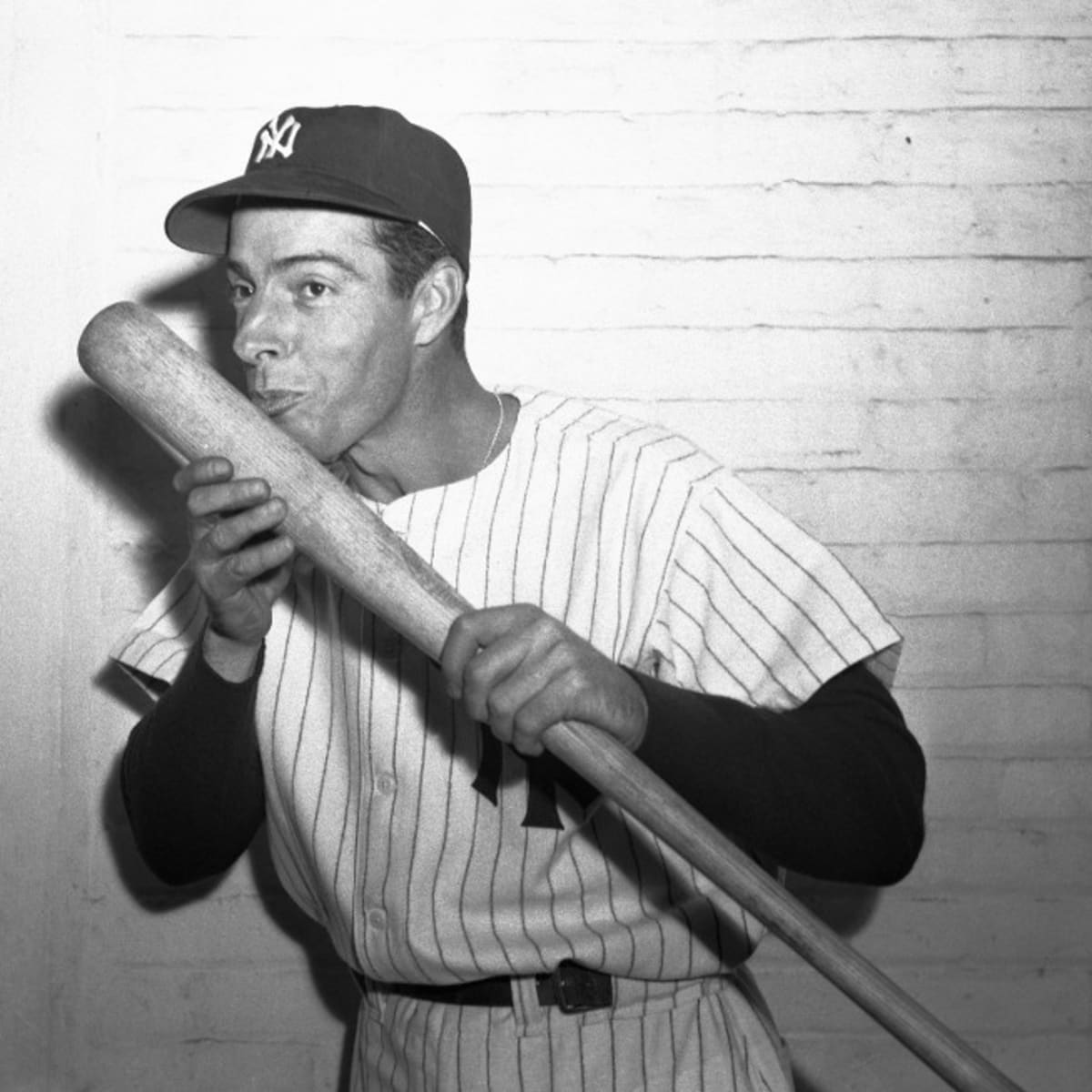
The significance of the hitting streak extended beyond the numbers. In 1941, America was on the brink of entering World War II, and DiMaggio’s pursuit of the record provided a sense of unity and distraction during a tumultuous time. The streak transcended baseball, turning DiMaggio into a national hero and symbol of perseverance.
Joe DiMaggio’s career statistics reflect his extraordinary ability and consistency. In 1,736 games, he compiled a .325 batting average, 2,214 hits, 361 home runs, and 1,537 RBIs. He struck out only 369 times in his career, demonstrating exceptional discipline and bat control. DiMaggio’s 13 All-Star selections underscore his sustained excellence, as he was honored every season he played in the majors.
One of DiMaggio’s most remarkable traits was his ability to rise to the occasion in the postseason. In 51 World Series games, he batted .271 with eight home runs and 30 RBIs, helping the Yankees win nine championships. His role in the Yankees’ dominance during the late 1930s and early 1940s cannot be overstated; the team’s success was built around his consistent production and leadership.
Defensively, DiMaggio was among the best center fielders of his era. His exceptional range, strong arm, and flawless instincts made him a standout in the outfield. His ability to track fly balls with ease and grace earned him widespread admiration and set a standard for future generations of outfielders.
DiMaggio’s career was not without its challenges. In 1943, he enlisted in the United States Army and spent three years serving during World War II, missing the 1943, 1944, and 1945 MLB seasons. Though he never saw combat, DiMaggio’s time in the military reflected his sense of duty and patriotism, values that endeared him to fans even further.
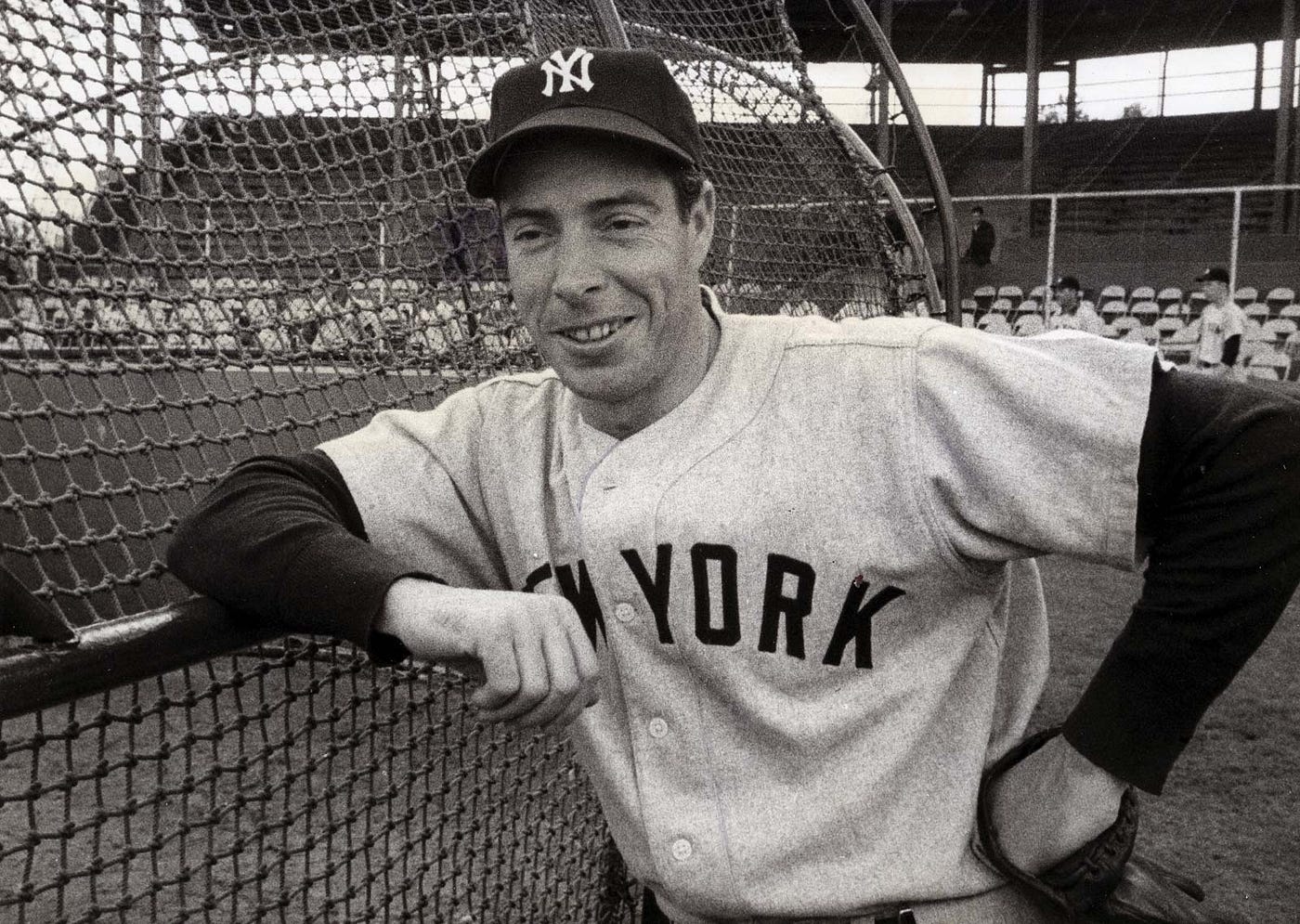
Upon his return to baseball in 1946, DiMaggio faced the difficulty of regaining his pre-war form. Despite lingering injuries and the wear and tear of years on the field, he continued to perform at an elite level. In 1947, he won his third AL MVP award, batting .315 with 20 home runs and 97 RBIs while leading the Yankees to another World Series title.
DiMaggio’s impact on baseball went beyond his on-field accomplishments. He was a cultural icon, celebrated for his elegance, humility, and quiet confidence. Known for his impeccable demeanor, DiMaggio was famously described by teammate Lefty Gomez as someone who “never even got his uniform dirty.”
One of the most famous anecdotes about DiMaggio came during his later years when he was asked why he continued to play so hard even in unremarkable games. His response—“Because there’s always some kid who may be seeing me for the first time. I owe him my best.”—captures the professionalism and dedication that defined his career.
DiMaggio’s marriage to actress Marilyn Monroe in 1954 further cemented his status as a cultural icon, though the union was short-lived. Despite their divorce, DiMaggio remained devoted to Monroe, reportedly placing flowers on her grave for years after her death.
Joe DiMaggio’s influence on baseball is profound and enduring. He was the epitome of a five-tool player, excelling in hitting for average, hitting for power, baserunning, fielding, and throwing. His combination of skill, elegance, and consistency set a standard that few players have matched.
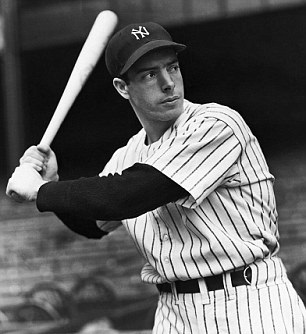
As a cultural figure, DiMaggio represented the ideal of the American hero. He played during an era when baseball was the nation’s pastime, and his success on the field and integrity off it made him a symbol of excellence. His 56-game hitting streak remains one of the most unbreakable records in sports, a testament to his unparalleled skill and determination.
DiMaggio was inducted into the Baseball Hall of Fame in 1955, in his first year of eligibility. His legacy lives on in the annals of baseball history, in the memories of those who watched him play, and in the stories passed down to new generations of fans.
Joe DiMaggio’s MLB career is a story of greatness, grace, and consistency. From his early days as a rising star in San Francisco to his legendary tenure with the New York Yankees, DiMaggio exemplified the qualities of a true champion. His remarkable achievements, including his 56-game hitting streak and nine World Series titles, are etched in baseball history, while his elegance and professionalism have made him a symbol of the sport’s golden age. DiMaggio’s impact extends far beyond the diamond, as he remains a timeless figure who continues to inspire and captivate fans around the world.


 The Baseball Scholar
Leave a comment