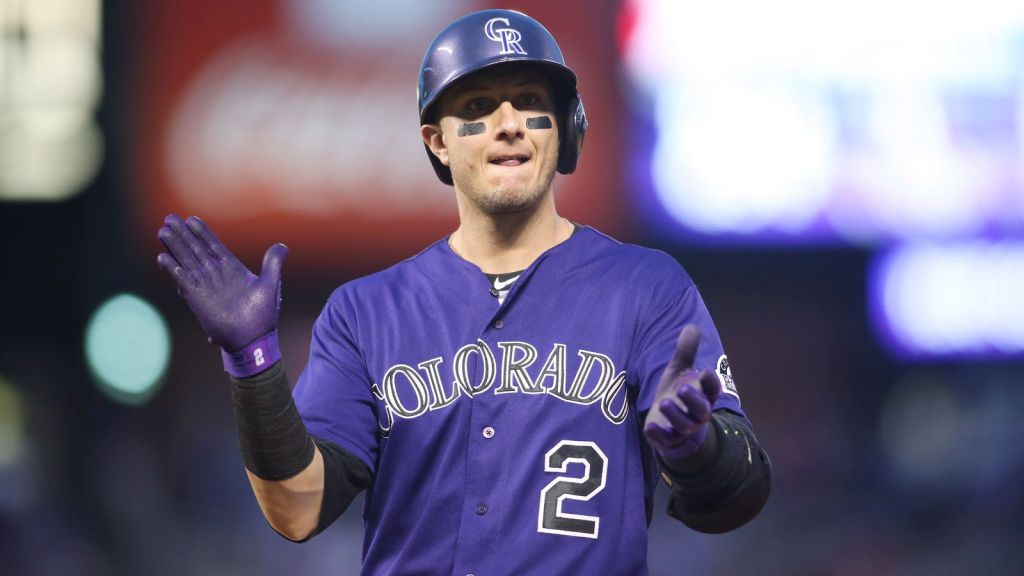
Troy Tulowitzki, born on October 10, 1984, in Santa Clara, California, is one of the most prominent shortstops of his generation. Known for his powerful bat, elite defensive skills, and fiery competitiveness, Tulowitzki forged a career that was at times brilliant, and ultimately tragic due to persistent injuries. Over the course of 13 seasons in Major League Baseball, he left a lasting impression on the game, primarily with the Colorado Rockies and briefly with the Toronto Blue Jays and New York Yankees. His career was marked by both statistical brilliance and “what if” scenarios that underscore how much greater his legacy could have been if not for health concerns.
Tulowitzki’s path to the majors began at Fremont High School in Sunnyvale, California, where he excelled in both baseball and basketball. His talent on the diamond, however, was undeniable. He continued his baseball development at California State University, Long Beach, commonly known as Long Beach State. Playing for the Dirtbags, a college team known for producing future MLB stars, Tulowitzki distinguished himself as a strong-hitting, slick-fielding shortstop. His college performance was impressive enough to draw the attention of major league scouts, and in the 2005 MLB Draft, he was selected seventh overall by the Colorado Rockies.

From the moment Tulowitzki entered the Rockies’ system, expectations were high. He moved quickly through the minor leagues and made his major league debut on August 30, 2006. Though his rookie season was brief, his real coming-out party came in 2007. That year, Tulowitzki played 155 games, hit .291 with 24 home runs and 99 RBIs, and posted a .841 OPS. But his defensive prowess stood out even more. Tulowitzki dazzled fans and analysts with his glove, often making highlight-reel plays that evoked memories of Ozzie Smith and Cal Ripken Jr. That season, he helped lead the Rockies to an improbable run to the World Series, which they lost to the Boston Red Sox. Still, Tulowitzki’s performance in 2007 earned him a second-place finish in the National League Rookie of the Year voting behind Ryan Braun.
One of the most memorable moments of his early career came on April 29, 2007, when Tulowitzki turned an unassisted triple play against the Atlanta Braves, a feat accomplished only 15 times in MLB history. It was a defining moment that captured his instinctive play and raw athleticism. Fans in Denver quickly embraced “Tulo,” and he became the face of the franchise alongside slugger Todd Helton.
The following seasons, however, highlighted a recurring theme in Tulowitzki’s career: exceptional performance disrupted by injuries. In 2008, he suffered a torn quadriceps tendon that limited him to just 101 games and severely impacted his performance. Despite the setback, he rebounded in 2009 with another strong campaign, batting .297 with 32 home runs, 92 RBIs, and 20 stolen bases. He also recorded a .930 OPS and played stellar defense. That year marked his first Silver Slugger Award, and he finished fifth in the NL MVP voting.
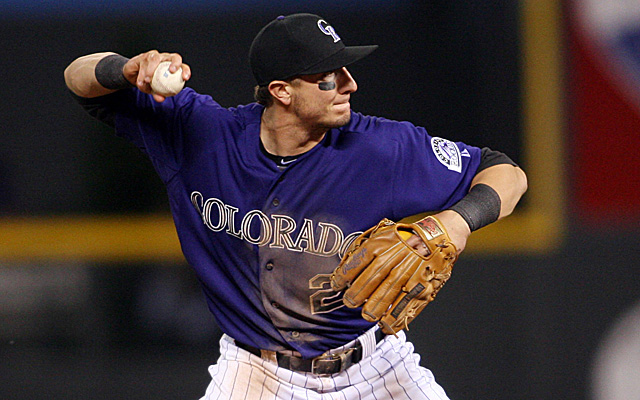
Tulowitzki was at the height of his powers in 2010 and 2011. During those seasons, he cemented himself as arguably the best shortstop in baseball. In 2010, he posted a .315 batting average with 27 home runs and 95 RBIs in just 122 games. He followed that with a .302 average, 30 home runs, and 105 RBIs in 143 games in 2011. His OPS hovered around .900, and his fielding metrics consistently placed him among the best defensive players in the league. He won two more Silver Sluggers and was selected to multiple All-Star Games. He was the cornerstone of the Rockies’ lineup and one of the league’s most feared two-way players.
The Rockies recognized his value and signed Tulowitzki to a 10-year, $157.75 million contract extension in 2010, ensuring he would be the face of the franchise for the next decade. However, as the seasons wore on, his health began to deteriorate. From 2012 to 2014, Tulowitzki played in only 264 games out of a possible 486. Groin and hip injuries began to take their toll. Yet even in limited action, his productivity remained high. In 2014, he hit .340 with 21 home runs in only 91 games, boasting an extraordinary 1.035 OPS. It was arguably the most dominant stretch of his career, but once again, injuries curtailed his season.
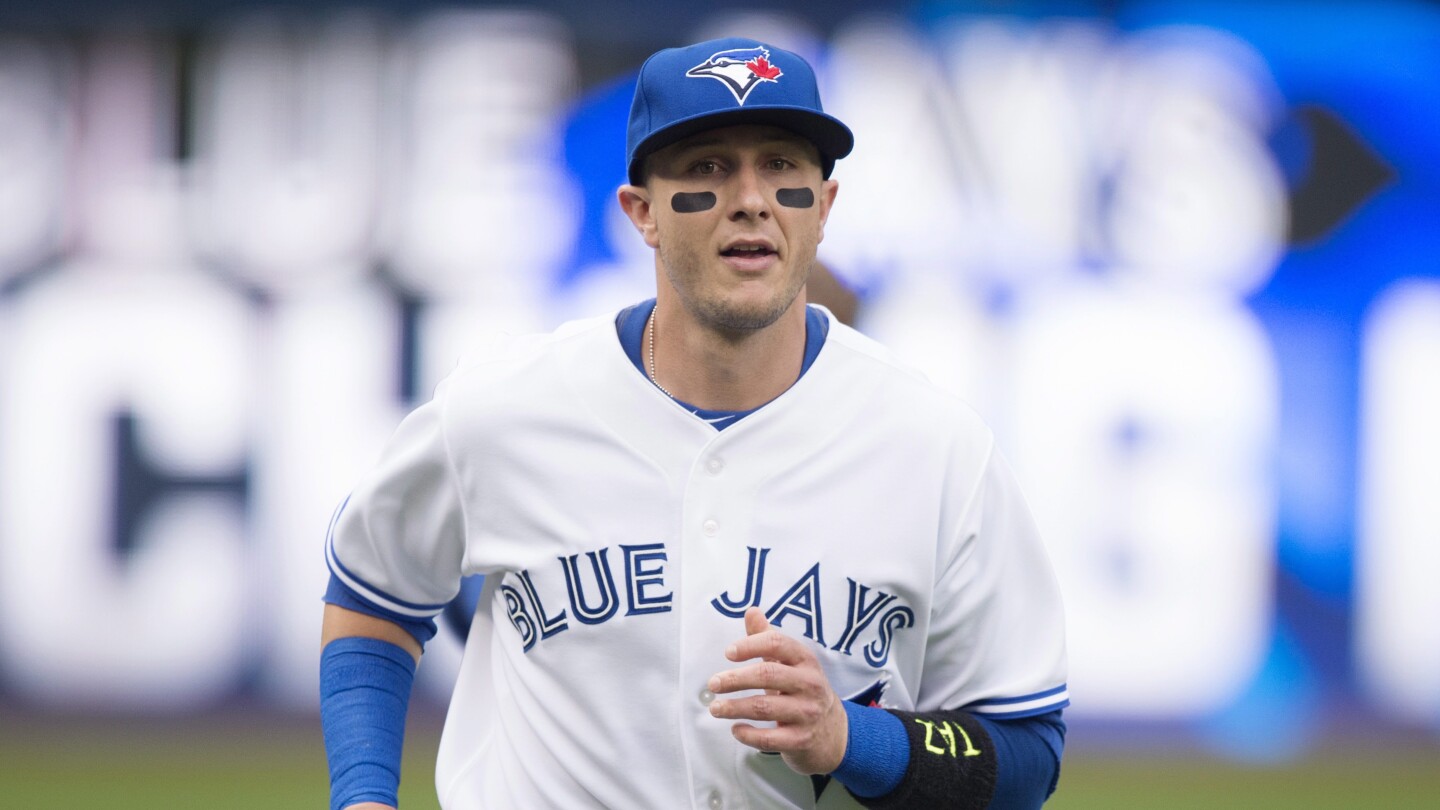
In July 2015, in a shocking and emotional trade, the Rockies dealt Tulowitzki to the Toronto Blue Jays in exchange for José Reyes and a package of pitching prospects. The move marked the end of an era in Colorado. For Tulowitzki, it represented a chance to contend again. He joined a loaded Blue Jays team that included sluggers like José Bautista, Josh Donaldson, and Edwin Encarnación. Toronto made the postseason, and Tulowitzki played a crucial role in their playoff run. In the ALCS against the Kansas City Royals, he hit a key home run and made several defensive gems. The Blue Jays fell short, but Tulowitzki had helped inject new energy into their lineup and provided veteran leadership.

The following season, Tulowitzki played 131 games for Toronto, hitting .254 with 24 home runs and 79 RBIs. His defense remained strong, but the wear and tear on his body was becoming evident. In 2017, a series of injuries, including ankle and foot problems, limited him to just 66 games. He missed the entire 2018 season after undergoing surgery to remove bone spurs in both heels. In December 2018, the Blue Jays released him, despite having two years and $38 million left on his contract.
In January 2019, Tulowitzki signed a one-year deal with the New York Yankees. He hoped for a comeback, even switching to number 12 out of respect for Yankees legend Derek Jeter, his childhood idol. However, his comeback was short-lived. After appearing in just five games, he suffered another injury and was placed on the injured list. On July 25, 2019, Tulowitzki announced his retirement from Major League Baseball. He ended his career with a .290 batting average, 225 home runs, 780 RBIs, a .856 OPS, and five All-Star selections. He also won two Gold Gloves and two Silver Sluggers, and he was considered among the top defensive shortstops of his era.
Tulowitzki’s impact on the game extended beyond the stat sheet. He brought an intensity and passion that galvanized his teammates. His leadership in the clubhouse, especially during the Rockies’ and Blue Jays’ postseason runs, was frequently cited by coaches and players alike. Known for his meticulous preparation and baseball IQ, he often served as an on-field extension of the coaching staff. After his retirement, he transitioned into coaching, accepting a position with the Texas Longhorns baseball program. His knowledge of the game and experience at the highest level made him a valuable mentor to young players.

One of the unique aspects of Tulowitzki’s career was his status as a shortstop who combined elite offensive production with Gold Glove-caliber defense. Few players at the position in his era could match his blend of power, average, and defensive range. While other shortstops like Derek Jeter were known more for offense than defense, or others like Andrelton Simmons were glove-first players, Tulowitzki excelled at both. His physical presence—standing 6-foot-3 and weighing over 200 pounds—made him an imposing figure at a position traditionally dominated by smaller, speedier players.
His injury history has often overshadowed his legacy. There is a sense among fans and analysts that Tulowitzki could have been a Hall of Famer had he stayed healthy. His peak seasons compare favorably with the best shortstops of any era, but his inability to stay on the field robbed him of the longevity typically required for enshrinement in Cooperstown. Still, his impact during his prime years was immense. He played the game with flair and grit, and his presence elevated the teams he played for.
In Colorado, he remains one of the most beloved figures in franchise history. His name is synonymous with the late 2000s Rockies teams that brought excitement and hope to Denver. Alongside Todd Helton and Matt Holliday, Tulowitzki formed the core of a lineup that thrilled fans and helped elevate the Rockies into playoff contenders. His role in the 2007 run to the World Series remains a highlight in the franchise’s timeline.
Off the field, Tulowitzki was known for his charitable work and commitment to youth baseball. He regularly held clinics and camps and was active in community initiatives both in Colorado and in his native California. His attention to detail and insistence on playing the game the right way earned him admiration from players and coaches across the league.
Troy Tulowitzki’s career, while ultimately cut short, was marked by extraordinary achievements and memorable moments. He redefined what a shortstop could be, combining power, consistency, and exceptional defense. His career serves as both a celebration of immense talent and a cautionary tale about the toll that the game can take on the human body. Even though he may not be inducted into the Hall of Fame, his contributions to the game are deeply respected. The legacy of Troy Tulowitzki lives on through the players he coaches, the fans who remember his dazzling plays, and the imprint he left on every team he graced with his presence.



 The Baseball Scholar
Leave a comment