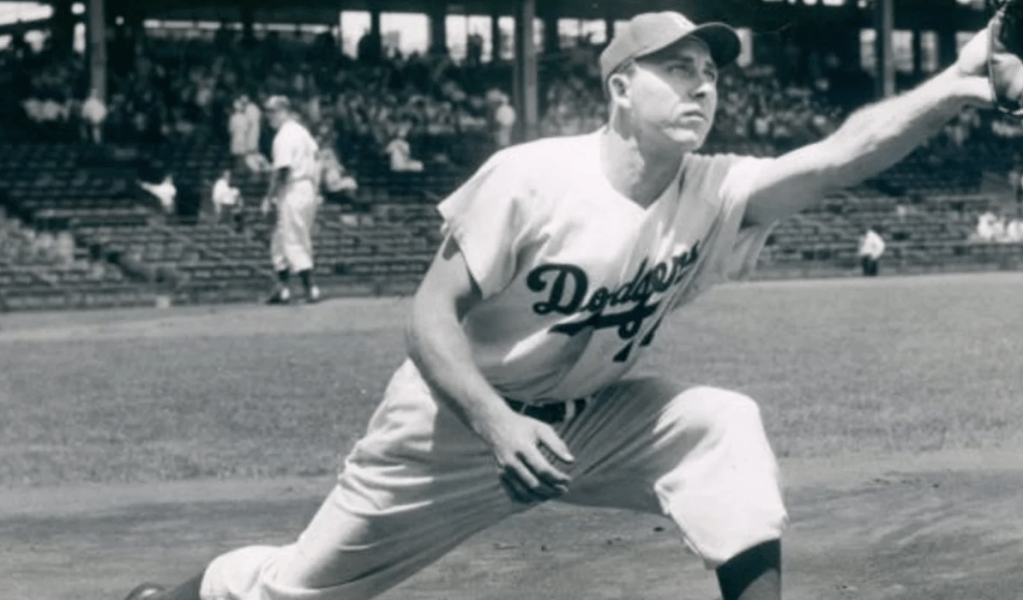
Dolph Camilli’s Major League Baseball career unfolded during a tumultuous era in American history and in the sport itself, and yet his quiet power, dogged determination, and principled stance made him one of the more underappreciated yet highly impactful sluggers of the pre-war and wartime period. Born Adolph Louis Camilli on April 23, 1907, in San Francisco, California, Camilli grew up in a vibrant and diverse environment, one that instilled in him the strength and work ethic that would characterize his playing style. A first baseman with a sweet left-handed swing and a keen eye for the strike zone, Camilli forged an impressive career that included a National League MVP award, two All-Star selections, and a legacy that endures in Brooklyn Dodgers lore. His journey from minor league obscurity to one of the premier power hitters of his generation is a story of grit, perseverance, and leadership.
Camilli’s early life in San Francisco was steeped in the working-class values of his Italian-American family. He attended Sacred Heart Cathedral Preparatory, where his athleticism quickly became evident. A natural athlete, Camilli took to baseball with both passion and discipline. He started his professional career relatively late, spending much of his early twenties in the Pacific Coast League with the San Francisco Missions. There, he steadily honed his skills against high-quality competition. The PCL in those days was nearly equivalent to the majors in terms of talent and fanfare on the West Coast, and Camilli used the league as a proving ground, developing into a formidable slugger known for his patience at the plate and compact swing.
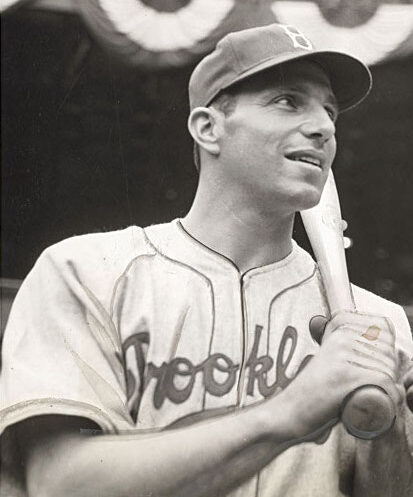
It wasn’t until 1933, at the age of 26, that Camilli made his major league debut with the Chicago Cubs. His time with the Cubs was brief, and he was soon traded to the Philadelphia Phillies in 1934. It was in Philadelphia that Camilli began to blossom. Though the Phillies were largely mired in mediocrity during this era, Camilli quickly emerged as a bright spot. In 1935, he hit .267 with 25 home runs and 79 RBIs, a strong showing that signaled the beginning of his prime years. His powerful bat, combined with an exceptional ability to draw walks, made him one of the most feared hitters in the league. Camilli’s plate discipline was notable for the time, as he regularly posted on-base percentages well above league average. He walked over 100 times in multiple seasons, a rarity in the power-centric offensive style of the 1930s.
Camilli’s tenure with the Phillies lasted until 1937, when he was traded to the Brooklyn Dodgers in what would become one of the most significant moves of his career. The Dodgers of the late 1930s were a team in search of identity and leadership, and in Camilli, they found both. Under manager Leo Durocher, the Dodgers began to transform from also-rans to contenders, and Camilli was at the center of that change. He provided a steadying presence in the clubhouse and a powerful, productive bat in the middle of the lineup. In 1939, he hit .290 with 26 home runs and 104 RBIs, a campaign that solidified his status as a top-tier first baseman.
The 1941 season would prove to be the pinnacle of Camilli’s career. That year, he led the National League in home runs with 34 and in RBIs with 120, helping to lead the Dodgers to their first pennant in over two decades. For his efforts, he was named the National League Most Valuable Player, becoming the first Dodger to receive the award. His performance that season was emblematic of his consistency and clutch hitting, and he became a fan favorite at Ebbets Field. The 1941 Dodgers would go on to face the New York Yankees in the World Series, and although they lost in five games, Camilli’s leadership and performance left a lasting impression.
Camilli’s swing was powerful but compact, tailored perfectly to the confines of Ebbets Field. He combined brute strength with discipline, often working deep counts and taking advantage of pitchers’ mistakes. His strikeout totals were high—he led the league in strikeouts three times—but in an era before such statistics were heavily scrutinized, they were considered a fair trade-off for his power production. Over his career, he would hit 239 home runs and drive in 950 runs, with a lifetime batting average of .277. He also compiled an impressive .388 on-base percentage, a testament to his patience and eye at the plate.

One of the more fascinating aspects of Camilli’s career was his reputation for integrity and quiet leadership. He was not the loudest voice in the locker room, but he commanded respect through his play and his principled stance on issues of fairness and loyalty. During World War II, when many players left for military service, Camilli, then in his mid-thirties, continued to play, helping to maintain the competitive balance of the league. However, his playing career came to a close shortly thereafter. In 1943, the Dodgers traded him to the New York Giants, but Camilli, citing his loyalty to Brooklyn and his unwillingness to play for their archrivals, chose to retire rather than report to the Giants. It was a rare gesture of principle that spoke volumes about his character and his attachment to the Dodgers.
Following his retirement, Camilli remained involved in baseball, serving as a manager and coach in the minor leagues for many years. He was known for his ability to mentor young players, particularly hitters, and for instilling in them the same values of patience and professionalism that had defined his own career. He managed the Oakland Oaks and other minor league teams, remaining a respected figure in baseball circles well into the 1960s.
Camilli’s career, while perhaps overshadowed by flashier contemporaries, deserves a prominent place in baseball history. He was a bridge between the pre-war and post-war eras, a player who brought consistency and power to a position that would later be defined by sluggers. He was a key figure in the revitalization of the Dodgers franchise, helping to lay the groundwork for the success the team would enjoy in the 1950s with players like Jackie Robinson, Duke Snider, and Roy Campanella. While Camilli did not achieve the same level of fame, his contributions were foundational.
His statistics bear closer examination in the context of his era. During the 1930s and 1940s, offensive production was not as inflated as in later decades, making Camilli’s numbers all the more impressive. He finished his career with a 135 OPS+ (on-base plus slugging adjusted for park and league), indicating he was 35% better than the league-average hitter over his career. His peak seasons, particularly from 1935 to 1941, place him among the elite hitters of the National League during that time.
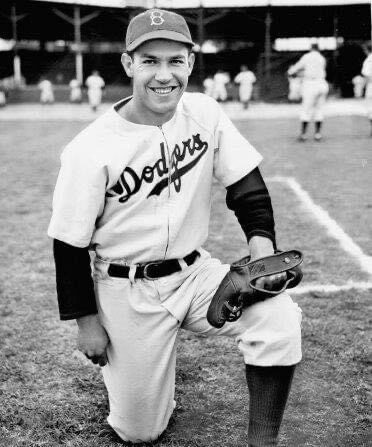
Beyond the numbers, Camilli’s impact was felt in his role as a clubhouse anchor. Managers and teammates consistently praised his ability to stabilize a lineup and his professionalism both on and off the field. He played with a stoic demeanor, rarely showing emotion, but always performing with intensity and focus. In an era when the game was evolving rapidly and the specter of war loomed over the country, players like Camilli provided a sense of continuity and dedication that fans admired.
One of the more overlooked aspects of Camilli’s legacy is his influence on future generations of Italian-American ballplayers. At a time when ethnic identities were still a significant part of the American experience, Camilli was a role model for young athletes from immigrant families. His success demonstrated that talent and hard work could transcend cultural barriers, and he remains an important figure in the history of Italian-Americans in sports.
Camilli passed away in 1997 at the age of 90, long after his playing days had ended, but his name still resonates with baseball historians and fans of the Brooklyn Dodgers. He was posthumously inducted into the Dodgers Hall of Fame and is remembered as one of the franchise’s early stars. While he may not be enshrined in Cooperstown, his contributions to the game are undeniable. He exemplified the virtues of resilience, sportsmanship, and integrity, qualities that are sometimes lost in the modern era of analytics and celebrity.
In examining the career of Dolph Camilli, one finds a player who consistently rose above expectations, who led with quiet determination, and who left an indelible mark on every team he played for. His journey from the sandlots of San Francisco to the bright lights of Ebbets Field is a quintessentially American story, one that blends individual achievement with team success, and personal integrity with professional excellence. Camilli’s story reminds us that greatness in baseball is not always measured in headlines or highlight reels but often in the everyday commitment to excellence that defines a true professional.

Though the era in which he played has faded into history, Dolph Camilli’s legacy endures through the numbers, through the teams he helped elevate, and through the quiet example he set for those who came after him. In every walk he drew, every home run he hit, and every principled stand he took, Camilli added to the rich tapestry of baseball history—a tapestry that continues to celebrate not just the biggest stars, but also the quiet craftsmen whose contributions make the game what it is.



 The Baseball Scholar
Leave a comment