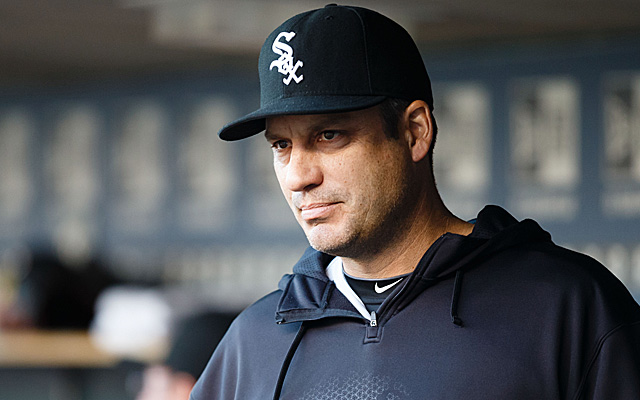
Robin Ventura’s Major League Baseball career stands as a testament to perseverance, intelligence, consistency, and the quiet excellence that often goes underappreciated in the wider tapestry of the sport. Born on July 14, 1967, in Santa Maria, California, Robin Mark Ventura would rise through the ranks of amateur baseball, etching his name into collegiate history before embarking on a steady and significant MLB career. Over 16 seasons in the big leagues, Ventura earned two All-Star selections, captured six Gold Glove Awards, and hit 294 career home runs. Beyond these accomplishments, he brought leadership, resilience, and a cerebral approach to the game that left an enduring mark on every team he played for and managed. His path through baseball is not merely a collection of statistics but a study in how character, preparation, and professionalism can shape a legacy.
Ventura’s early life in California shaped him as an athlete and competitor. A standout at Righetti High School, his baseball prowess was clear early on, leading to his eventual enrollment at Oklahoma State University, where he became one of the greatest collegiate hitters of all time. Ventura’s legendary 58-game hitting streak in college—still an NCAA Division I record—is one of the most remarkable feats in amateur baseball history. He won the Golden Spikes Award in 1988, given annually to the best amateur baseball player in the country, and helped lead Oklahoma State to multiple College World Series appearances. This dominant performance made him a first-round draft pick by the Chicago White Sox in 1988.
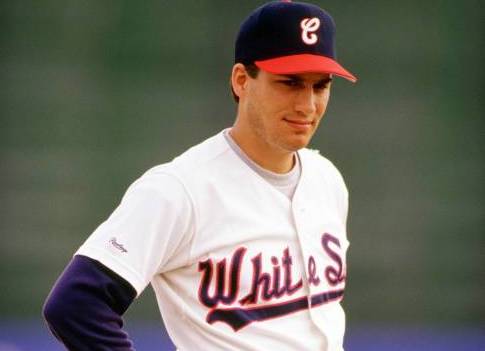
Robin Ventura made his major league debut with the White Sox on September 12, 1989, just one year after being drafted, and quickly became a fixture at third base. Though his rookie season was marked by growing pains, including a 0-for-41 slump at one point, Ventura showed flashes of the skill and mental toughness that would become his trademarks. By the early 1990s, Ventura had established himself as one of the top third basemen in the American League. He hit .284 with 23 home runs and 100 RBIs in 1991, helping the White Sox become playoff contenders. His slick glove work and strong arm made him a defensive asset, and he would go on to win five consecutive Gold Gloves from 1991 to 1995.
The 1990s were a transformative period for the White Sox, and Ventura played a central role in the team’s emergence as a consistent threat in the AL Central. Alongside stars like Frank Thomas, Ventura brought stability and skill to a potent Chicago lineup. In 1993, he posted one of his finest seasons, hitting .262 with 22 home runs and 94 RBIs, helping the White Sox to the American League Championship Series. Although they fell short to the eventual champion Toronto Blue Jays, Ventura’s presence was a key factor in their success. He was known not just for his numbers, but for his poise, humility, and ability to rise to the occasion.
One of the most memorable moments of Ventura’s career—and perhaps one of the most unusual in MLB history—occurred on August 4, 1993, during a game against the Texas Rangers. After being hit by a pitch from Nolan Ryan, Ventura charged the mound, leading to one of the most iconic bench-clearing brawls in baseball lore. Ryan, 20 years Ventura’s senior, famously placed Ventura in a headlock and landed several punches before the two were separated. Though Ventura was ejected and the moment led to criticism, it also demonstrated his willingness to stand up for himself and his team, even in the face of a baseball legend.

Following the 1998 season, Ventura signed with the New York Mets, beginning a new chapter in his career. His first year in Queens proved to be magical. In 1999, Ventura posted one of his finest statistical seasons, hitting .301 with 32 home runs and 120 RBIs. He earned a Silver Slugger Award and was a key cog in a Mets team that made a deep playoff run, culminating in a National League Championship Series showdown with the Atlanta Braves. During that postseason, Ventura produced one of the most iconic moments of his career in Game 5 of the NLCS. With the game tied in the bottom of the 15th inning, Ventura hit what would have been a walk-off grand slam. However, as teammates mobbed him between first and second base, he never completed the trip around the bases, and the hit was officially recorded as a single. It became known forever as “The Grand Slam Single,” a moment that perfectly encapsulated Ventura’s knack for clutch play and the camaraderie he inspired.
Ventura continued to be a steady presence for the Mets through the 2001 season, providing veteran leadership and offensive consistency. Injuries began to take a toll on his production, but his understanding of the game and his ability to mentor younger players remained invaluable. In 2002, Ventura was traded to the New York Yankees, becoming one of the few players to suit up for both New York teams. With the Yankees, Ventura found himself once again in the playoff spotlight. Although his numbers were not as robust as in his prime, he contributed to the Yankees’ deep postseason runs in 2002 and 2003. His experience, professionalism, and defense helped solidify the infield during a competitive era in the Bronx.
Ventura’s final MLB stop came with the Los Angeles Dodgers in 2003 and 2004. Though by then his physical abilities had begun to wane, Ventura still brought value as a part-time player and clubhouse leader. He retired after the 2004 season with a career batting average of .267, 1,885 hits, 294 home runs, and 1,182 RBIs. His six Gold Gloves and two All-Star selections underscore the respect he commanded across the league.

Beyond the numbers, Ventura’s influence can be felt in the way he approached the game—with a calm demeanor, fierce competitiveness, and an emphasis on fundamentals. He was the kind of player whose contributions often went beyond box scores. His teammates valued his leadership, and his managers trusted his baseball IQ. After his playing career, Ventura continued his involvement in baseball, eventually returning to the White Sox as manager in 2012. Though his managerial tenure had its ups and downs, Ventura remained a respected figure within the organization and the sport.
Ventura’s uniqueness also stemmed from his collegiate background. Unlike many MLB stars who go directly from high school or minor league systems, Ventura’s legendary college career made him one of the few players to achieve lasting fame at both the college and professional levels. His NCAA hitting streak remains one of the most remarkable records in amateur sports and speaks to his consistency and mental toughness.
Another defining characteristic of Ventura’s career was his quiet leadership. In an era when flamboyance and media attention often dominated the narrative, Ventura carried himself with humility and a sense of purpose. He let his performance on the field speak for itself and set an example for younger players through his preparation and approach to the game. That professionalism translated into his post-playing career, where he continued to advocate for the values that made him successful.

Statistically, Ventura’s place in baseball history is secure. His 294 career home runs rank him among the top third basemen of his era. He drove in more than 100 RBIs in five different seasons and posted a career WAR (Wins Above Replacement) of over 56, placing him well above the average for his position. Defensively, he was among the best, with a career fielding percentage of .963 and six Gold Gloves to prove it. His 18 career grand slams are among the most in MLB history, tied for third all-time when he retired.
Off the field, Ventura has also remained an admired figure. His charitable work, particularly with youth baseball and educational initiatives, underscores his commitment to giving back. He has often spoken about the importance of discipline, education, and preparation, values that have inspired many beyond the diamond.
Ventura’s career is a reflection of how consistency, integrity, and skill can leave a lasting legacy in professional sports. He may not have been the flashiest player of his generation, but his steady excellence and quiet leadership made him a cornerstone wherever he played. His career moments—from the grand slam single to the brawl with Nolan Ryan—showcase a player with heart, resilience, and a fierce competitive streak. His defense, often underrated, helped redefine expectations for third basemen in his era.
In a game that often lionizes power and spectacle, Robin Ventura stands as a reminder of the enduring value of fundamentals, teamwork, and intelligence. His path from college icon to major league star, and later to major league manager, reflects a full-circle journey grounded in love for the game. He remains a respected figure in baseball circles and a role model for those who aspire to play and lead with dignity.
Ventura’s story is one of substance over flash, of quiet consistency over noise, and of excellence that stands the test of time. In every clubhouse he entered, he earned the respect of his peers, not just for what he did, but for how he did it. In an era filled with stars, Ventura carved out a space uniquely his own—one defined by integrity, determination, and enduring impact.


 The Baseball Scholar
Leave a comment