
Darryl Eugene Strawberry, born on March 12, 1962, in Los Angeles, California, is one of the most enigmatic figures in Major League Baseball history. His life and career are a blend of breathtaking talent, personal turmoil, and ultimate redemption. Known for his powerful left-handed swing, towering home runs, and charismatic presence, Strawberry was once considered the future face of baseball. Despite a career frequently interrupted by injuries, suspensions, and struggles with addiction, he left an indelible mark on the sport, and his journey remains a compelling narrative of potential, triumph, and the resilience of the human spirit.
Growing up in the rough neighborhoods of South Central Los Angeles, Strawberry faced numerous challenges from an early age. He and his brother Michael both exhibited exceptional athletic talent, and it quickly became evident that Darryl possessed something special. He starred at Crenshaw High School as a multi-sport athlete but truly began turning heads with his baseball skills. Scouts were captivated by his size, speed, and raw power—attributes that prompted the New York Mets to select him with the first overall pick in the 1980 MLB Draft. The selection marked the beginning of a professional journey that would see Strawberry rise to meteoric heights before crashing into personal struggles that would define much of his career.
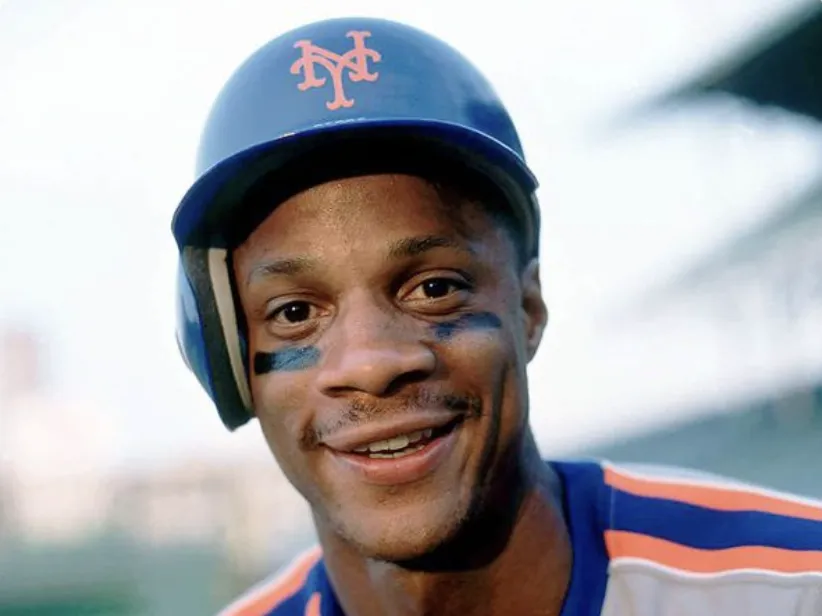
Strawberry made his MLB debut with the Mets on May 6, 1983, and quickly showcased the immense potential that had made him a number one overall pick. In his rookie season, he hit 26 home runs, drove in 74 runs, and stole 19 bases, earning the National League Rookie of the Year Award. His combination of speed and power was rare for someone of his size—6 feet 6 inches tall—and he became a spectacle every time he stepped into the batter’s box. With his long, fluid swing, Strawberry launched balls into the upper decks of stadiums, quickly earning a reputation as one of the most feared sluggers in the game.
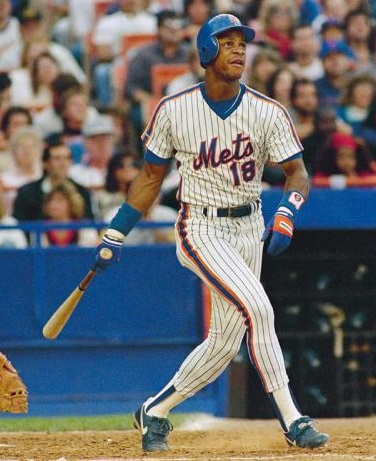
Throughout the 1980s, Strawberry emerged as the offensive cornerstone of the New York Mets. From 1984 to 1990, he hit at least 26 home runs every season and drove in over 90 runs in five of those years. He was selected to the All-Star team eight consecutive times from 1984 to 1991. His best statistical season came in 1987 when he hit .284 with 39 home runs, 104 RBIs, 108 runs scored, and 36 stolen bases, showcasing his rare blend of speed and power. Strawberry finished in the top 10 in MVP voting several times and won two Silver Slugger Awards. His presence in the lineup was electrifying, and he was instrumental in transforming the Mets from a struggling franchise into a championship contender.
Strawberry’s most memorable contributions to the Mets came during the 1986 season, a campaign that culminated in a World Series title. That year, he hit 27 home runs, drove in 93 runs, and played a key role in a dominant Mets team that won 108 games during the regular season. In the postseason, he delivered crucial hits, including a mammoth home run in Game 7 of the World Series against the Boston Red Sox. The Mets’ victory is remembered as one of the most dramatic in baseball history, and Strawberry’s role in that championship run cemented his place in the hearts of New York fans.
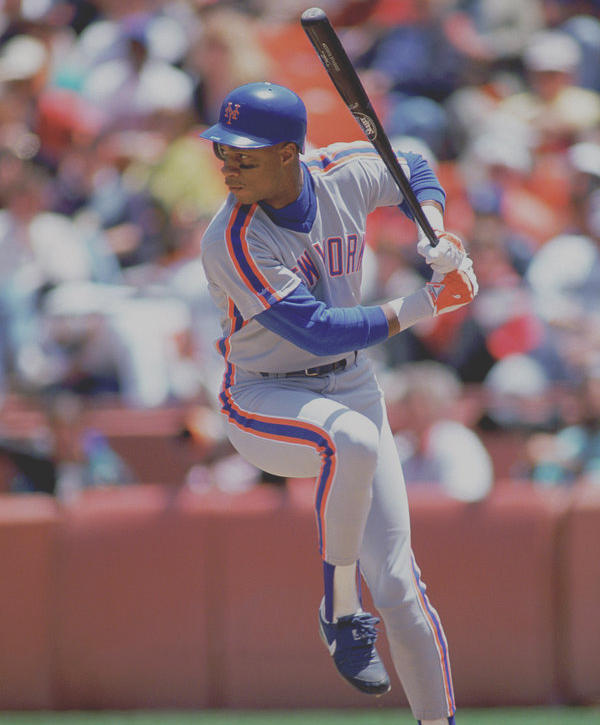
Despite his on-field success, Strawberry’s career was increasingly overshadowed by personal issues. Throughout his time with the Mets, he battled substance abuse, legal problems, and conflicts with teammates and management. His relationship with manager Davey Johnson and other players was often strained, and his off-field behavior frequently made headlines. These issues, combined with the intense scrutiny of the New York media, created a tumultuous environment that took a toll on his performance and mental health.
In 1991, Strawberry signed as a free agent with the Los Angeles Dodgers, returning to his hometown with the hope of revitalizing his career. Unfortunately, injuries and personal problems continued to plague him. He played only three seasons with the Dodgers, appearing in just 75 games in his final season with the team. Brief stints with the San Francisco Giants and other teams followed, but it was clear that the spark that had defined his early career was dimming. His once-limitless potential seemed lost to a combination of physical decline and inner demons.
Strawberry’s story took an unexpected turn in the mid-1990s when he was given a second chance by the New York Yankees. Reuniting with former Mets manager Buck Showalter and later Joe Torre, he joined the Yankees in 1995 and again in 1996 and 1998. Though no longer an everyday player, Strawberry proved to be a valuable contributor off the bench and in key moments. He hit several clutch home runs during the Yankees’ postseason runs, including a pivotal home run in the 1996 American League Championship Series. He was part of three Yankees championship teams (1996, 1998, 1999), a remarkable turnaround for a player who many had written off.

His comeback was all the more inspiring given the health issues he faced. In 1998, Strawberry was diagnosed with colon cancer, a battle that would lead to multiple surgeries and treatments. Despite the physical and emotional toll, he remained a fighter, using his platform to raise awareness about cancer and addiction. His resilience in the face of these challenges endeared him to a new generation of fans and helped reshape his public image from troubled star to redemption figure.
Over his 17-year MLB career, Strawberry posted a .259 batting average, hit 335 home runs, drove in 1,000 runs, scored 898 times, and stole 221 bases. His career on-base percentage was .357, and his slugging percentage was .505. While his final career statistics may not reflect the full magnitude of his talent, they remain impressive given the disruptions he faced. He remains the all-time home run leader for the New York Mets with 252, a record that stands as a testament to his power and consistency during his prime.
Strawberry’s impact on baseball transcends his statistics. He was a cultural icon in the 1980s, one of the most recognizable faces in the sport. His smooth swing, powerful physique, and flair for the dramatic made him a favorite among fans and a marketing dream. Alongside teammates like Dwight Gooden, Keith Hernandez, and Gary Carter, he helped bring swagger and personality to a Mets team that captivated New York and reinvigorated the franchise. The 1986 Mets remain one of the most iconic teams in MLB history, and Strawberry was one of its defining figures.
However, it is perhaps Strawberry’s post-baseball life that has had the most profound impact. After retiring, he faced further struggles with addiction and legal problems, including arrests and jail time. But in the early 2000s, he began a journey of recovery and spiritual awakening. He became a born-again Christian, turned his life around, and committed himself to helping others. He and his wife Tracy founded the Darryl Strawberry Recovery Center, focusing on addiction recovery and mental health treatment. His candidness about his struggles and his commitment to service have made him a respected voice in the recovery community.
Strawberry has also worked as a minister and motivational speaker, using his story to inspire others facing adversity. His willingness to confront his past and use it as a source of strength speaks volumes about his character and growth. He often speaks to young athletes, prisoners, and those battling addiction, offering hope and guidance drawn from his own life experiences. In many ways, his second act has been as impactful as his first, demonstrating that redemption is always possible.
The story of Darryl Strawberry is one of the most compelling in sports history. He was a prodigious talent whose career was derailed by personal demons, yet who ultimately found peace and purpose through faith and service. His baseball career, while not as statistically dominant as it might have been, still stands as a testament to his extraordinary ability. Few players have had such an electric presence on the field, and fewer still have overcome as much off the field. Strawberry’s life is a reminder that greatness is not just about talent or accolades, but about the journey, the battles fought, and the lives touched along the way.

In the end, Darryl Strawberry’s legacy is multifaceted. He is remembered as a power-hitting phenom, a key player in one of baseball’s most memorable championship teams, and a man who overcame incredible odds to find redemption. His story resonates not just with baseball fans, but with anyone who has faced hardship and sought to rebuild their life. In his own words, Strawberry often says that he was once lost but now is found, a sentiment that encapsulates the arc of his life. Whether swinging for the fences in Shea Stadium or speaking to an audience about recovery and hope, Darryl Strawberry continues to make an impact—proof that even the most troubled journeys can lead to extraordinary destinations.



 The Baseball Scholar
Leave a comment