
Carlos Delgado’s MLB career is a remarkable tale of power, perseverance, and quiet influence, one that deserves deeper recognition not only for the statistics he compiled but for the cultural and social impact he had on the game of baseball. Born Carlos Juan Delgado Hernandez on June 25, 1972, in Aguadilla, Puerto Rico, Delgado emerged as one of the most consistent and feared power hitters of his generation. His legacy extends beyond the diamond, encompassing his role as a trailblazer for Latin American players, his principled stands on social issues, and his steady presence as a leader throughout his 17-season Major League Baseball career.
Delgado’s baseball journey began in the tight-knit community of Aguadilla, where he was raised in a middle-class family that valued education and community. His father, Carlos “Cao” Delgado, was a well-known figure in the area and helped cultivate in young Carlos both a strong work ethic and a love for baseball. From an early age, it was evident that Delgado possessed both the physical tools and mental approach necessary to succeed in the sport. He attended Jose de Diego High School in Puerto Rico and caught the attention of scouts with his powerful left-handed swing and advanced approach at the plate. In 1988, at just 16 years old, Delgado signed with the Toronto Blue Jays as an amateur free agent.
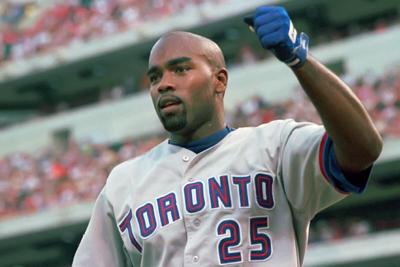
Initially developed as a catcher, Delgado quickly moved through the Blue Jays’ farm system, showing tremendous potential with his bat. His raw power and advanced discipline made him a standout prospect, though his defensive limitations led the organization to experiment with moving him to the outfield and eventually to first base, where he would spend the majority of his MLB career. He made his major league debut on October 1, 1993, with the Blue Jays, a franchise that had just won its second consecutive World Series. Though he saw limited playing time initially, his potential was undeniable.
Delgado’s breakout came in the 1996 season. After years of adjusting and refining his approach at the major league level, he finally secured a full-time role and quickly established himself as one of the premier sluggers in the American League. That season, he hit .270 with 25 home runs and 92 RBIs. From that point forward, Delgado embarked on a decade-long stretch of offensive dominance that placed him among the most productive hitters in the game. Between 1996 and 2004, he averaged over 38 home runs and 120 RBIs per season. His ability to combine raw power with patience at the plate was rare for his time, as he consistently posted high on-base and slugging percentages.
One of the signature moments of Delgado’s career came on September 25, 2003, when he joined an exclusive club by hitting four home runs in a single game against the Tampa Bay Devil Rays. He became only the 15th player in MLB history to achieve that feat, and the performance solidified his place as one of the game’s elite sluggers. That season, he hit .302 with 42 home runs and 145 RBIs, finishing second in MVP voting behind Alex Rodriguez. Delgado’s combination of power, discipline, and durability made him the centerpiece of the Blue Jays’ offense throughout the late 1990s and early 2000s, though he never had the benefit of playing for a contending team during that span.

Statistically, Delgado’s career numbers are remarkable and often underrated in discussions of Hall of Fame-worthy players. He finished with a .280 batting average, 473 home runs, 1,512 RBIs, and 2,038 hits. His career on-base percentage was .383, and he slugged .546, giving him an OPS of .929. Delgado hit 30 or more home runs in 10 consecutive seasons from 1997 to 2006 and had three seasons with 40 or more. He also scored 1,241 runs and drew 1,109 walks, showcasing a well-rounded offensive game.
Delgado left the Blue Jays after the 2004 season and signed with the Florida Marlins, where he had a productive 2005 campaign, hitting .301 with 33 home runs and 115 RBIs. He was then traded to the New York Mets prior to the 2006 season, joining a team with postseason aspirations. With the Mets, Delgado played a pivotal role in their run to the 2006 National League Championship Series. That year, he hit .265 with 38 home runs and 114 RBIs during the regular season, and he was particularly dominant in the postseason, batting .351 with 4 home runs and 11 RBIs in 10 games. His performance in the NLCS against the St. Louis Cardinals included a .304 average and several clutch hits, although the Mets ultimately fell short in seven games.
In his later years with the Mets, Delgado battled injuries but remained a productive force when healthy. In 2008, at age 36, he had a resurgent season, hitting 38 home runs and driving in 115 runs. His ability to remain a top-tier slugger into his mid-30s was a testament to his conditioning, intelligence, and refined approach at the plate. Unfortunately, hip injuries curtailed his career after the 2009 season, and despite efforts to return to the majors, Delgado ultimately retired without fanfare in 2011. His quiet exit from the game mirrored his demeanor throughout his career: professional, focused, and dignified.

Delgado’s impact on the game, however, extends beyond statistics. He was a pioneer in many ways, particularly in his willingness to speak out on social and political issues. In the early 2000s, he made headlines for his silent protest against the Iraq War by choosing not to stand for “God Bless America” during the seventh-inning stretch, a deeply personal and controversial decision that he later explained as an act of conscience. He expressed discontent with the military conflict and the broader implications of American foreign policy, and although his actions drew criticism from some fans and media outlets, he stood firm in his beliefs. This episode highlighted Delgado’s integrity and commitment to principle, distinguishing him from many contemporaries who avoided public stands on contentious issues.
Moreover, Delgado was a vital representative of Puerto Rican and Latin American athletes in MLB. He took seriously his role as a mentor and advocate for younger players, particularly those navigating the complexities of language and cultural barriers in the major leagues. He supported numerous charitable initiatives, both in Puerto Rico and in the United States, focusing on education, health care, and youth development. His nonprofit organization, Extra Bases, has made lasting contributions to underserved communities, further cementing his legacy as a player who used his platform to make a difference.
Despite his impressive resume, Delgado has yet to be inducted into the National Baseball Hall of Fame, a fact that has sparked considerable debate among fans and analysts. He appeared on the ballot in 2015 but received only 3.8% of the vote, falling short of the 5% threshold required to remain eligible in future years. Many argue that his relatively low profile, lack of postseason hardware, and career spent mostly outside the media spotlight contributed to the oversight. Nevertheless, his numbers stack up favorably against numerous Hall of Fame first basemen, and his contributions to the game go well beyond what is captured in traditional statistics.

Delgado’s career can also be examined in the context of the steroid era, a period during which offensive numbers were often viewed with suspicion. Notably, Delgado was never implicated in performance-enhancing drug use, and his consistent production over nearly two decades speaks to the legitimacy of his accomplishments. In a time when many sluggers saw late-career surges accompanied by whispers of enhancement, Delgado maintained a level of consistency and transparency that added to his credibility. His ability to perform at a high level without controversy adds weight to his Hall of Fame case.
His influence continues today, especially in Puerto Rico, where he remains a revered figure. Young players often cite Delgado as a role model, not just for his performance on the field but for the way he carried himself off it. His commitment to community and his embrace of his heritage have made him a beloved figure, and he remains active in baseball circles, promoting the sport and advocating for greater opportunities for Latin American players. Delgado has also worked in broadcasting and served in advisory roles within baseball, maintaining his connection to the game and continuing to offer insights shaped by his extensive experience.
Carlos Delgado’s legacy is one of power and poise, of principled stands and quiet excellence. He may not have received the accolades or media attention of some of his contemporaries, but his body of work speaks volumes. He was a model of consistency, a clubhouse leader, and a trailblazer who opened doors for those who followed. Whether through his 473 home runs, his off-field activism, or his mentorship of younger players, Delgado left an indelible mark on Major League Baseball. His story is a testament to what can be achieved through talent, integrity, and an unwavering sense of purpose.


 The Baseball Scholar
Leave a comment