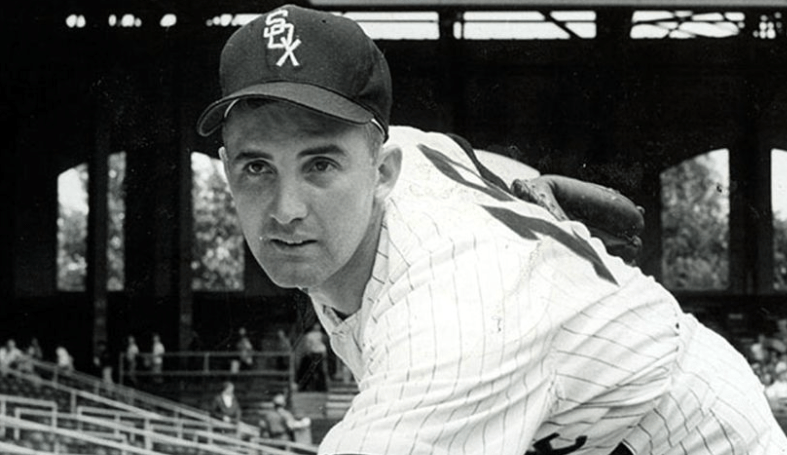
Billy Pierce was one of the most dominant left-handed pitchers of his era, known for his remarkable control, deceptive fastball, and unrelenting competitive spirit. Over an 18-year Major League Baseball (MLB) career that spanned from 1945 to 1964, primarily with the Chicago White Sox, Pierce established himself as one of the premier pitchers of his time. Though often overshadowed by some of his contemporaries, he was a consistent and reliable force on the mound, earning seven All-Star selections, leading the American League in multiple pitching categories, and playing a key role in the 1959 White Sox team that reached the World Series. His contributions to the game extended beyond statistics, as he was widely respected for his leadership, sportsmanship, and commitment to the sport.
Born on April 2, 1927, in Detroit, Michigan, Walter William “Billy” Pierce grew up in a baseball-loving family. From an early age, he displayed an affinity for the sport, particularly as a pitcher. Despite being small in stature—standing at just 5 feet 10 inches and weighing around 160 pounds—he made up for his lack of physical intimidation with impeccable mechanics, pinpoint accuracy, and a deceptive delivery that left hitters baffled. As a high school star in Michigan, his talent quickly garnered attention, and by the time he graduated, professional scouts recognized his potential.

Pierce’s professional baseball career began in 1945 when he signed with the Detroit Tigers as an 18-year-old. That same year, he made his major league debut, though his early years in Detroit were mostly spent developing his skills rather than playing significant innings. He appeared in five games in 1945 and pitched sporadically over the next couple of seasons. The Tigers, already boasting a deep pitching staff, struggled to find a consistent role for the young left-hander. In 1948, he was traded to the Chicago White Sox in exchange for catcher Aaron Robinson, a move that would ultimately change the course of his career.
With the White Sox, Pierce blossomed into an elite pitcher. He became a full-time starter in 1949 and quickly gained a reputation for his competitiveness and durability. By the early 1950s, he had developed into one of the best pitchers in the American League. He recorded his first 20-win season in 1956, finishing with a 20-9 record and a league-leading 1.97 ERA. This season solidified his status as one of the most effective pitchers of his era. His ability to keep hitters off balance, combined with his outstanding control, made him a formidable opponent on the mound.
One of Pierce’s signature strengths was his mastery of pitching complete games. In an era where starting pitchers were expected to go deep into games, Pierce was among the best at finishing what he started. He led the league in complete games three times and consistently ranked among the leaders in innings pitched. He was also known for his effectiveness against some of the best hitters of his time, including legendary sluggers like Mickey Mantle and Ted Williams. Williams, one of the greatest hitters in baseball history, once remarked that Pierce was one of the toughest pitchers he ever faced, a testament to the left-hander’s skill and competitive nature.
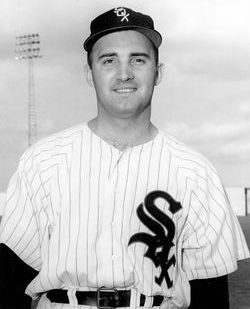
Pierce was selected to the All-Star team seven times, further proving his standing as one of the premier pitchers in the league. His fastball, which had exceptional movement for a left-hander, was his most potent weapon. However, he also developed a sharp curveball and an effective changeup that made him even more dangerous. What set him apart from other pitchers of his time was his ability to mix pitches effectively, keeping hitters guessing and rarely making mistakes in location.
While Pierce had many individual achievements throughout his career, one of the defining moments came in 1959, when he played a crucial role in helping the White Sox reach the World Series for the first time since 1919. That season, he posted a 14-15 record, but his contributions went beyond the win-loss column. His leadership and ability to pitch in critical games were invaluable to a White Sox team known for its strong pitching and defense. In the World Series against the Los Angeles Dodgers, Pierce started Game 6, delivering a solid performance, but the White Sox ultimately fell short, losing the series in six games. Nonetheless, his efforts in helping the White Sox reach the Fall Classic were widely recognized and celebrated.
Following his long tenure with the White Sox, Pierce was traded to the San Francisco Giants before the 1962 season. Despite being in the latter stages of his career, he proved he still had plenty left in the tank. In 1962, he posted a 16-6 record with a 3.49 ERA, helping lead the Giants to the World Series. His experience and veteran leadership were invaluable to a team that featured stars like Willie Mays, Orlando Cepeda, and Willie McCovey. One of his most memorable moments with the Giants came in the best-of-three playoff series against the Los Angeles Dodgers for the National League pennant, where he threw a complete-game shutout in Game 1, setting the tone for San Francisco’s eventual series victory. Though the Giants fell to the New York Yankees in the World Series, Pierce’s contributions were crucial in getting them there.

Pierce retired after the 1964 season, finishing with a career record of 211-169, a 3.27 ERA, and 1,999 strikeouts. He was consistently among the league leaders in key pitching categories throughout his career, finishing in the top ten in ERA seven times and ranking among the top pitchers in strikeouts on multiple occasions. While he never won a Cy Young Award—partly because the award was only introduced in 1956 and only given to one pitcher in all of MLB until 1967—he was widely recognized as one of the most dominant left-handers of his time.
Beyond the numbers, Pierce’s impact on baseball was significant. He was known as a fierce competitor who never backed down from a challenge. His ability to perform in clutch situations made him a valuable asset to every team he played for. Despite his relatively small stature compared to other dominant pitchers of the era, he proved that intelligence, skill, and determination could overcome physical limitations.
Off the field, Pierce was known for his humility and kindness. He remained involved in baseball after his playing career ended, often attending White Sox alumni events and mentoring younger players. He was a beloved figure in Chicago, where he spent the majority of his career and played an instrumental role in making the White Sox a competitive team during the 1950s. His contributions were eventually honored when the White Sox retired his number 19 and later erected a statue of him at Guaranteed Rate Field, ensuring that his legacy would live on for future generations of fans.

Pierce passed away on July 31, 2015, at the age of 88, but his influence on the game remains. Though he has not yet been inducted into the Baseball Hall of Fame, many baseball historians and analysts argue that his contributions warrant recognition among the all-time greats. His statistics, combined with his leadership, consistency, and ability to compete at the highest level, make a compelling case for his enshrinement.
Billy Pierce’s career is a testament to the power of perseverance, intelligence, and skill in baseball. He was a pitcher who made the most of his abilities, never shying away from the game’s biggest moments. Whether it was his time leading the White Sox in the 1950s, helping the Giants reach the World Series in 1962, or mentoring younger players after his retirement, Pierce left an indelible mark on the game. His legacy continues to inspire pitchers who, like him, may not possess overpowering size but make up for it with determination, precision, and an unrelenting will to succeed. As one of the best left-handed pitchers of his era, Billy Pierce remains a figure of admiration and respect in the annals of baseball history.



 The Baseball Scholar
Leave a comment