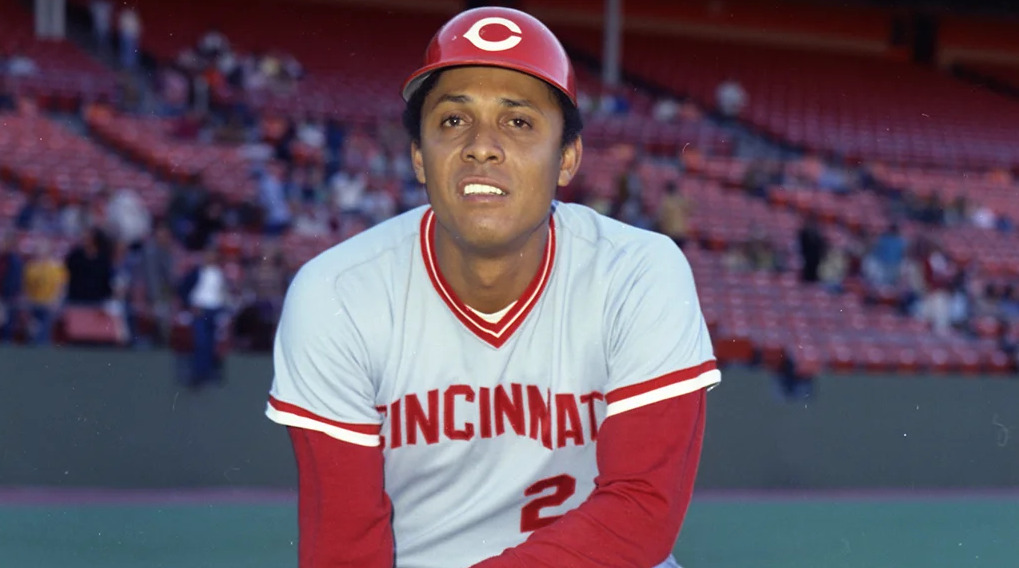
Tony Pérez is one of the most respected and accomplished players in Major League Baseball history. Over a career that spanned more than two decades, Pérez became one of the most dependable run producers of his era, playing a crucial role in the success of the Cincinnati Reds’ “Big Red Machine” dynasty of the 1970s. His ability to drive in runs, his leadership on and off the field, and his contributions to multiple teams cemented his legacy as a Hall of Famer. His career is marked by consistency, clutch hitting, and a dedication to the game that earned him the respect of teammates and opponents alike.
Born Atanasio Pérez Rigal on May 14, 1942, in Ciego de Ávila, Cuba, Tony Pérez grew up in a country where baseball was an integral part of life. As a young boy, he was deeply passionate about the game, often playing with friends in the streets and dreaming of one day making it to the big leagues. His journey to Major League Baseball, however, was anything but easy. Like many Cuban players of his era, he had to navigate significant challenges, including political upheaval and cultural barriers, to reach the pinnacle of the sport.
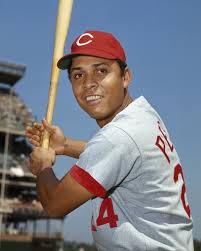
Pérez was signed as an amateur free agent by the Cincinnati Reds in 1960, just before the embargo on Cuba made it much more difficult for Cuban players to enter American baseball. He was assigned to the Reds’ minor league system, where he quickly proved himself as a powerful and consistent hitter. Despite struggling with the English language and adapting to life in the United States, Pérez’s talent was undeniable. In 1964, he made his major league debut with the Reds, but it wasn’t until 1965 that he became a more regular presence in the lineup.
The late 1960s saw Pérez blossom into one of the best hitters in the game. By 1967, he was selected to his first All-Star Game after hitting .290 with 26 home runs and 102 RBIs. His performance in the All-Star Game that year was particularly memorable, as he hit the game-winning home run in the 15th inning, securing a victory for the National League. It was an early indication of his clutch-hitting ability, a trait that would define his career.
As the 1970s began, Pérez established himself as one of the key figures in the development of the “Big Red Machine,” the powerhouse Cincinnati Reds teams that would dominate baseball for much of the decade. Alongside teammates like Johnny Bench, Joe Morgan, and Pete Rose, Pérez was part of one of the greatest lineups in MLB history. While players like Bench and Rose often received more media attention, Pérez was the steady, reliable force in the middle of the order who consistently drove in runs and delivered in critical situations.
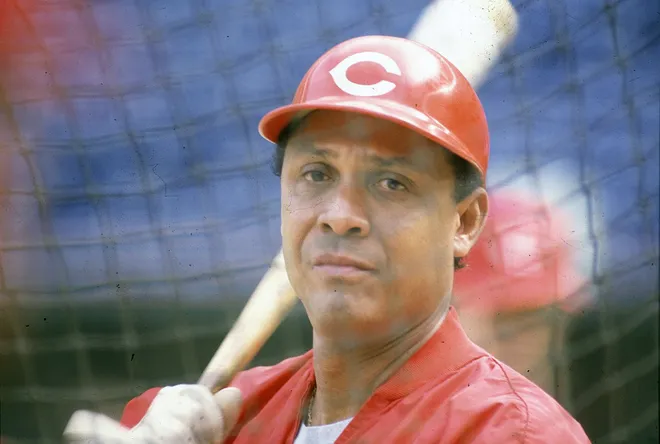
During the 1970 season, Pérez had one of the best years of his career, batting .317 with 40 home runs and 129 RBIs. His ability to produce runs and hit for power made him one of the most feared hitters in the National League. That season, the Reds won the National League pennant but ultimately lost to the Baltimore Orioles in the World Series. Despite the disappointment, it was clear that the Reds had the foundation of a team that could compete for championships for years to come.
The pinnacle of Pérez’s career came in the mid-1970s when the “Big Red Machine” reached its full potential. In 1975, the Reds won 108 games and stormed through the postseason, ultimately defeating the Boston Red Sox in one of the greatest World Series of all time. Pérez played a vital role in the team’s success, hitting .282 with 20 home runs and 109 RBIs during the regular season. In the World Series, he delivered one of the most clutch performances of his career in Game 7, hitting a two-run home run that helped the Reds secure their first championship since 1940.
The following year, the Reds repeated as champions, sweeping the New York Yankees in the 1976 World Series. While Bench was named the series MVP, Pérez’s contributions were invaluable. His leadership and steady bat helped anchor a lineup that was nearly impossible to contain. With back-to-back titles, the “Big Red Machine” solidified itself as one of the greatest dynasties in baseball history.

After the 1976 season, Pérez was surprisingly traded to the Montreal Expos. The Reds’ decision to move him was controversial, as many of his teammates believed that Pérez was the glue that held the team together. The Reds continued to be competitive in the late 1970s, but they were never quite the same dominant force without Pérez’s presence. His departure marked the beginning of the end of the “Big Red Machine” era.
Pérez spent three seasons in Montreal, where he continued to be a productive hitter. In 1980, he joined the Boston Red Sox, where he added veteran leadership to a team filled with young talent. His tenure in Boston was notable for his role in mentoring players like Jim Rice and Dwight Evans. Even in the later stages of his career, Pérez remained a valuable asset to his teams.
In 1983, Pérez returned to the Reds, bringing his career full circle. Though he was no longer the offensive force he once was, his return was symbolic, as it allowed him to retire with the team that he had helped build into a powerhouse. He played two more seasons in Cincinnati before retiring after the 1986 season.
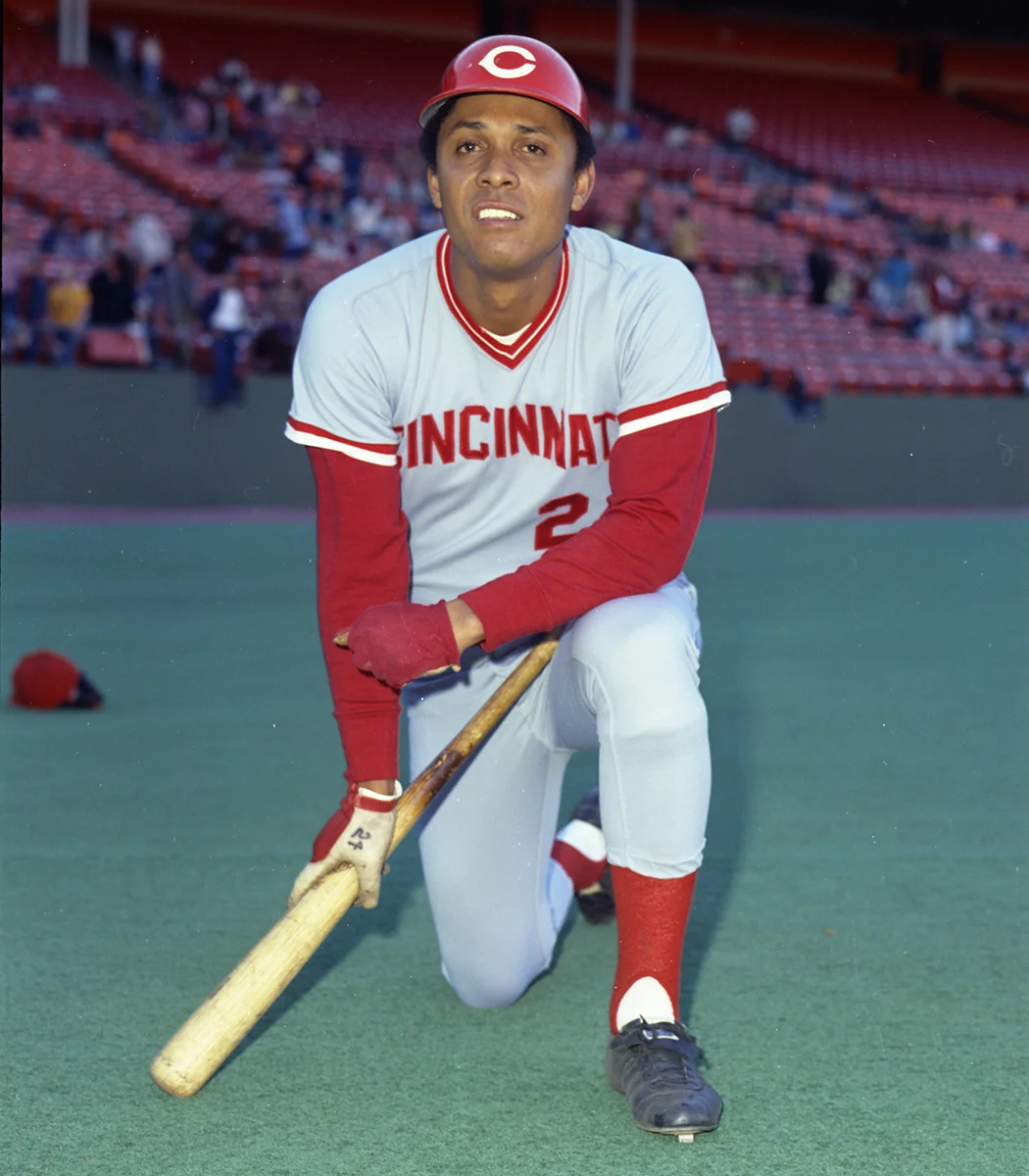
Over his 23-year career, Pérez compiled impressive statistics, finishing with a .279 batting average, 2,732 hits, 379 home runs, and 1,652 RBIs. His ability to drive in runs consistently made him one of the most dangerous hitters of his era. While he never won an MVP award, he was a seven-time All-Star and one of the most respected players in the game.
Pérez’s impact on baseball extended beyond his playing days. After retiring, he became a coach and manager, serving as the manager of the Reds in 1993. Though his managerial career was brief, his influence on younger players was significant. He later took on various roles within the Reds’ organization, remaining a beloved figure in Cincinnati baseball history.
In 2000, Pérez was elected to the Baseball Hall of Fame, a well-deserved honor that recognized his contributions to the game. His induction was a testament to his consistency, leadership, and role in one of baseball’s greatest dynasties. For many, Pérez represented everything that was great about the sport—dedication, perseverance, and a team-first mentality.
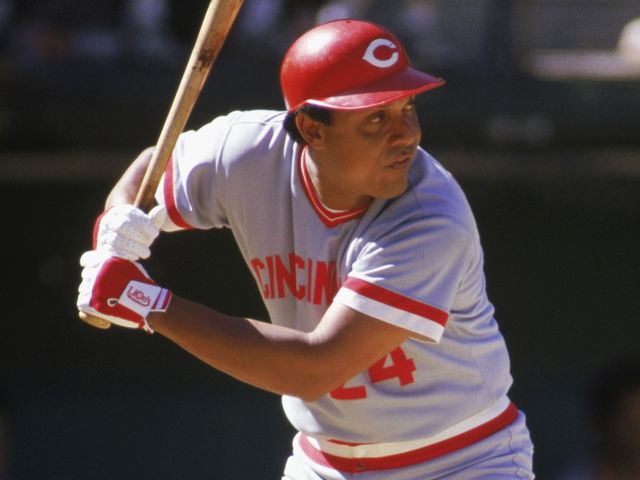
One of the unique aspects of Pérez’s career was his ability to remain a steady presence in an ever-changing game. While baseball evolved significantly during his playing years, Pérez’s approach remained the same. He was a player who could be counted on in clutch situations, who led by example, and who always put the team’s success above personal accolades.
His legacy continues to be felt in baseball today. As one of the most prominent Latin American players of his era, Pérez paved the way for countless others to follow in his footsteps. His success helped change perceptions about Latin American players in Major League Baseball and opened doors for future generations.
Tony Pérez’s career is a testament to what makes baseball special. His ability to perform under pressure, his leadership, and his contributions to some of the greatest teams in history ensure that he will always be remembered as one of the sport’s greats. Whether it was his clutch hitting in the postseason, his mentorship of younger players, or his unwavering dedication to the game, Pérez left an indelible mark on baseball that will never be forgotten.


 The Baseball Scholar
Leave a comment