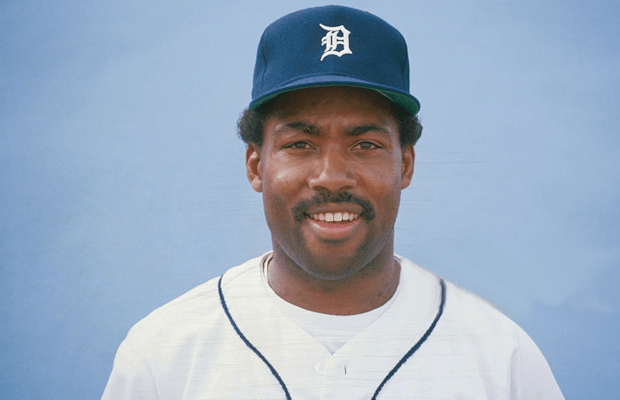
Chet Lemon was one of the most underrated outfielders of his era, a player who combined exceptional defensive ability with a potent offensive game. Over the course of his 16-year Major League Baseball career, Lemon became known for his keen batting eye, his ability to get on base, and his tremendous ability to track down fly balls in center field. His career, which spanned from the mid-1970s through the late 1980s, saw him play for the Chicago White Sox and the Detroit Tigers, where he was a key contributor to a World Series championship team. Despite not always receiving the national attention of some of his contemporaries, Lemon put together a career that was remarkable both for its longevity and for his consistent ability to provide value to his teams in multiple ways.
Born Chester Earl Lemon on February 12, 1955, in Jackson, Mississippi, he spent much of his childhood in California. He attended Fremont High School in Los Angeles, where he became a standout baseball player. His athleticism and baseball instincts were evident from an early age, and he was drafted by the Oakland Athletics in the first round of the 1972 MLB Draft. However, Lemon would never suit up for the A’s at the major league level, as he was traded to the Chicago White Sox in 1975 before he had the chance to make his big-league debut.
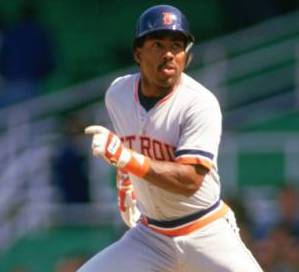
Lemon made his major league debut with the White Sox in 1975 as a third baseman, but he quickly found his true home in the outfield. The move to the outfield allowed Lemon to showcase his strong defensive skills, particularly his ability to read the ball off the bat and take precise routes to fly balls. By 1977, Lemon had become a fixture in the White Sox lineup, and his offensive game began to flourish. That season, he hit .273 with 19 home runs and 67 RBIs, establishing himself as a player who could hit for power and get on base at a high rate.
One of the most remarkable aspects of Lemon’s game was his ability to get hit by pitches. He led the American League in hit-by-pitches four times, a testament to his willingness to stand in close to the plate and do whatever it took to get on base. His approach was emblematic of his toughness and his team-first mentality. Over the course of his career, Lemon was hit by a pitch 151 times, ranking among the all-time leaders in that category at the time of his retirement.
Lemon’s best years in Chicago came in the late 1970s and early 1980s. He was an All-Star in 1978, when he hit .300 with a .385 on-base percentage, 9 home runs, and 67 RBIs. His ability to control the strike zone was a hallmark of his offensive game, and he regularly walked more than he struck out, a rare trait for a power hitter. In 1979, he followed that up with another strong season, hitting .318 with a career-high .496 slugging percentage. He played center field with remarkable range, making difficult plays look routine and earning a reputation as one of the best defensive outfielders in the American League.
After the 1981 season, Lemon was traded to the Detroit Tigers, where he would spend the remainder of his career. The move proved to be a significant one, as he became an integral part of the Tigers’ success in the 1980s. His first season in Detroit saw him hit .266 with 19 home runs and 57 RBIs while continuing to play stellar defense. However, it was in 1984 that Lemon truly left his mark on baseball history.
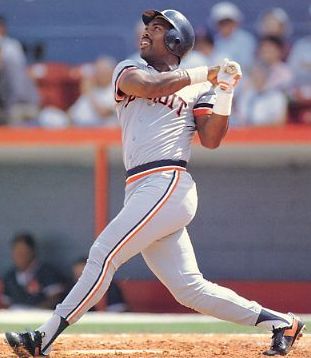
The 1984 Detroit Tigers were one of the most dominant teams of the decade, and Lemon played a crucial role in their World Series championship. That season, the Tigers got off to a historic 35-5 start and never looked back. Lemon played center field every day for the club, providing both offensive and defensive contributions that helped the team maintain its dominance. He hit .287 with 20 home runs and 76 RBIs while also playing outstanding defense in center field. His ability to track down fly balls was critical, as he played behind a pitching staff that relied heavily on fly-ball outs. Lemon’s efforts helped the Tigers finish with a 104-58 record, and they carried that dominance into the postseason.
In the 1984 World Series against the San Diego Padres, Lemon continued to be a steady presence in the lineup and the field. The Tigers won the series in five games, securing their first championship since 1968. While some of his teammates, such as Kirk Gibson and Alan Trammell, received more of the headlines, Lemon’s contributions were essential to the team’s success. His defensive play in center field provided stability, and his ability to get on base gave the Tigers another valuable weapon in their deep lineup.
Lemon continued to be a productive player for the Tigers throughout the remainder of the 1980s. In 1987, he played a key role in Detroit’s dramatic late-season push to win the American League East. That season, the Tigers engaged in a thrilling battle with the Toronto Blue Jays for the division crown, ultimately securing the title on the final day of the season. Lemon hit .277 with 20 home runs and 75 RBIs, proving that he was still a key contributor despite being in his 30s. The Tigers fell to the Minnesota Twins in the American League Championship Series, but Lemon’s leadership and play remained invaluable to the team.
By the time he retired after the 1990 season, Lemon had put together a career that, while perhaps underappreciated in the grand scheme of baseball history, was undeniably excellent. He finished with a .273 career batting average, 215 home runs, and 884 RBIs. He accumulated over 1,800 hits and maintained an on-base percentage of .355, demonstrating his ability to get on base consistently. Defensively, he was one of the best center fielders of his time, finishing his career with a .992 fielding percentage, an incredibly high mark for an outfielder.
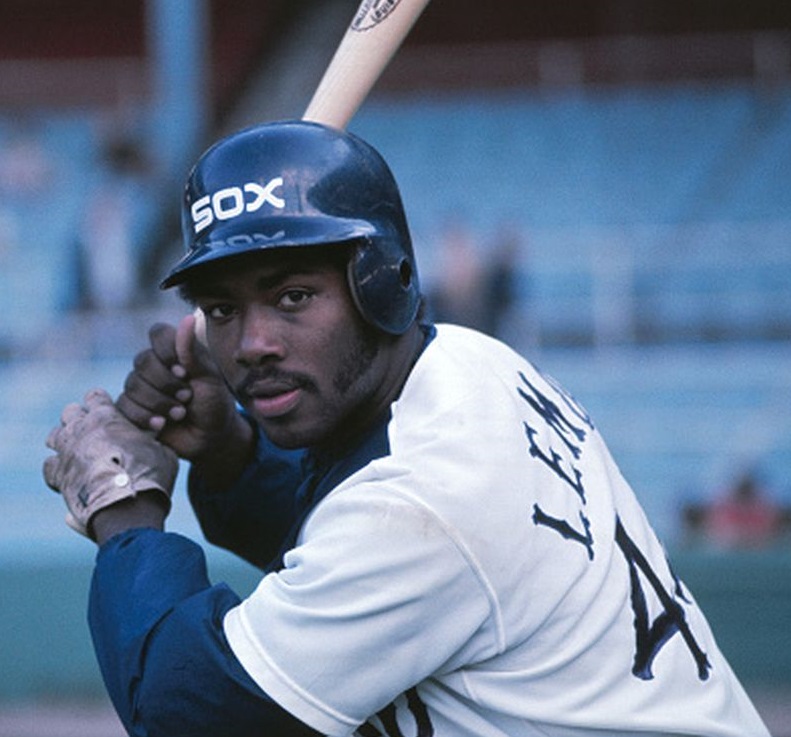
Lemon’s impact on baseball goes beyond just his statistics. He was a player who epitomized what it meant to be a complete ballplayer—one who could hit for average and power, get on base, play outstanding defense, and provide leadership in the clubhouse. His ability to take hits by pitches, work deep counts, and make game-saving defensive plays made him one of the most valuable outfielders of his era.
One of the unique aspects of Lemon’s career was his ability to transition from third base to center field seamlessly, something that not all players are able to do. The move ultimately allowed him to maximize his value and extend his career while helping his teams in a significant way. Additionally, Lemon’s presence on a championship team and multiple playoff contenders underscores his ability to perform at a high level in meaningful games.
In the years following his retirement, Lemon remained involved in baseball, coaching and mentoring young players. His experience and wisdom made him a valuable resource for those looking to learn the game. He also became known for his advocacy for youth baseball, particularly in African American communities, as he sought to encourage greater participation in the sport among young Black athletes.
While Lemon has not been inducted into the Hall of Fame, his contributions to baseball deserve recognition. He was a player who, while never the flashiest or most celebrated, consistently made his teams better. He played the game the right way—with toughness, intelligence, and an unwavering commitment to winning. The teams he played for benefited immensely from his presence, and his impact on the game continues to be felt by those who followed in his footsteps.
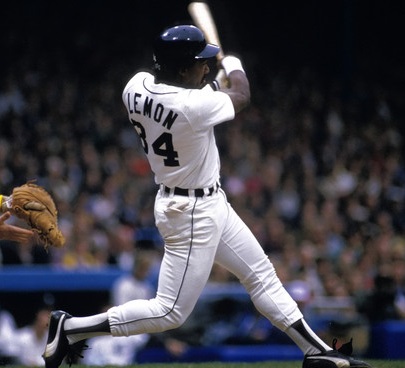
Chet Lemon’s career serves as a reminder that baseball greatness is not always measured solely by awards and accolades. Sometimes, it is defined by the steady contributions of players who show up every day, give everything they have, and leave the game better than they found it. Lemon was one of those players, and his place in baseball history is secure as one of the most well-rounded and dependable outfielders of his era.



 The Baseball Scholar
Leave a comment