
Tim Hudson was one of Major League Baseball’s most consistent and successful pitchers during his 17-season career, leaving behind an enduring legacy as a workhorse on the mound. His career was marked by durability, competitiveness, and effectiveness, earning him recognition as one of the premier starting pitchers of his generation. Hudson’s impact on baseball was profound, particularly in his time with the Oakland Athletics, Atlanta Braves, and San Francisco Giants, as he played an instrumental role in each franchise’s success.
Born on July 14, 1975, in Columbus, Georgia, Timothy Adam Hudson grew up with a deep love for baseball. He attended Glenwood School in Phenix City, Alabama, where he excelled in multiple sports but ultimately found his calling on the baseball diamond. Undersized compared to traditional pitching prospects, Hudson’s path to the major leagues was not as straightforward as that of some of his contemporaries. He was overlooked by major college programs due to concerns about his stature and velocity, leading him to start his collegiate career at Chattahoochee Valley Community College.
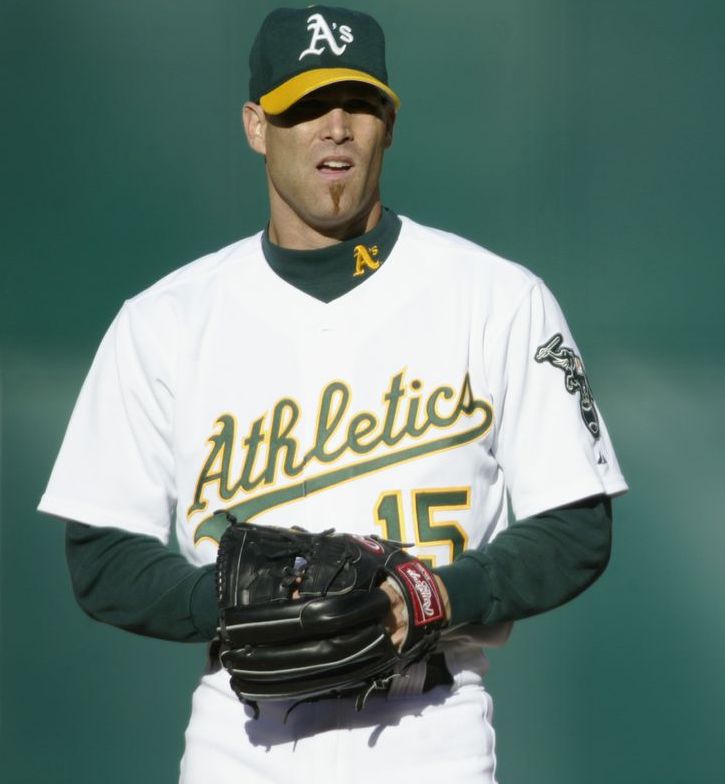
At Chattahoochee Valley, Hudson quickly proved himself as an elite pitcher and hitter, drawing the attention of Auburn University. Transferring to Auburn in 1996, he established himself as one of the top collegiate pitchers in the country. His junior year was particularly dominant as he posted a 15-2 record with a 2.97 ERA while also hitting .396 with 18 home runs. His two-way prowess helped Auburn reach the College World Series and solidified his status as a legitimate professional prospect. The Oakland Athletics selected him in the sixth round of the 1997 MLB Draft, taking a chance on his talent despite lingering concerns about his physical profile.
Hudson quickly rose through the minor league system, impressing scouts and coaches with his pitch command and tenacity. By 1999, just two years after being drafted, he earned a call-up to the majors. Making his MLB debut on June 8, 1999, against the San Diego Padres, Hudson wasted little time proving he belonged. He finished his rookie season with an impressive 11-2 record and a 3.23 ERA, helping to lay the foundation for what would become a dominant stretch for the Athletics.
The early 2000s saw Hudson emerge as a key figure in Oakland’s “Big Three” alongside Barry Zito and Mark Mulder. These three pitchers formed one of the most formidable starting rotations in baseball, helping propel the A’s into perennial contention. Hudson’s 2000 season was particularly noteworthy, as he posted a 20-6 record with a 4.14 ERA, earning his first All-Star selection and finishing second in the American League Cy Young Award voting. Over the next few years, he would continue to be a model of consistency, posting sub-4.00 ERAs and averaging over 200 innings per season.

Hudson was known for his ability to induce ground balls, relying heavily on a sinking fastball that baffled hitters and generated double plays at an impressive rate. Unlike many power pitchers of his era, he did not rely on strikeouts but instead used impeccable control, movement, and deception to keep hitters off balance. His athleticism also played a key role in his defensive abilities, as he was one of the best fielding pitchers in the game.
After six successful seasons in Oakland, Hudson was traded to the Atlanta Braves before the 2005 season. This move brought him closer to home and gave the Braves a legitimate ace to complement their rotation. His first year in Atlanta was solid, as he posted a 14-9 record with a 3.52 ERA, helping the Braves win their 14th consecutive division title. However, injuries hampered his effectiveness over the next couple of seasons, and his ERA climbed above 4.00 for the first time in his career.
Despite these challenges, Hudson rebounded in 2007 with a 16-10 record and a 3.33 ERA, re-establishing himself as one of the top pitchers in the National League. His career took another detour in 2008 when he underwent Tommy John surgery, causing him to miss most of the 2009 season. Many pitchers struggle to regain their effectiveness following such a major procedure, but Hudson defied the odds, returning in 2010 and immediately reasserting himself as a dominant force. He finished that season with a 17-9 record and a 2.83 ERA, earning the National League Comeback Player of the Year award.
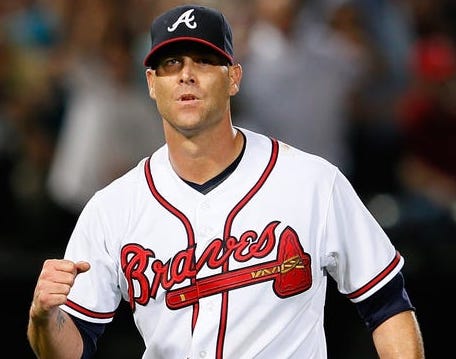
Over the next few seasons, Hudson continued to be a steady presence in the Braves’ rotation. He was instrumental in their return to postseason play, helping them win the National League East in 2013. However, that same season was marred by a devastating injury when he suffered a fractured ankle after a freak accident at first base. Many wondered if he would be able to return to form at age 38.
In 2014, Hudson signed with the San Francisco Giants, providing veteran leadership to an already strong pitching staff. He quickly proved that he still had plenty left in the tank, making the All-Star team that year and helping guide the Giants to the postseason. In October, Hudson finally had the opportunity to pitch in a World Series, a moment that had eluded him throughout his career. He started Game 3 against the Kansas City Royals and later appeared in relief in Game 7, ultimately earning a championship ring as the Giants clinched the title.
Hudson retired after the 2015 season, concluding a remarkable career that saw him accumulate a 222-133 record with a 3.49 ERA, 2,080 strikeouts, and over 3,000 innings pitched. He was one of only a handful of pitchers to win at least 200 games and maintain an ERA below 3.50 in the modern era. His longevity and consistency place him among the most successful pitchers of his generation.
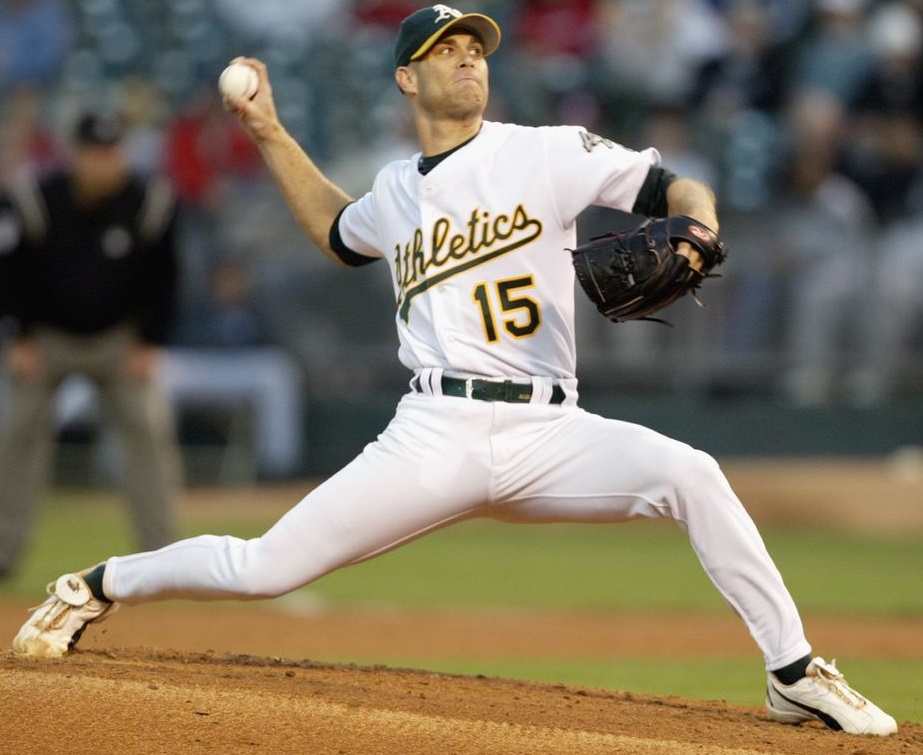
Beyond his statistics, Hudson’s impact on the game was significant. He was a leader both on and off the field, earning the respect of teammates, coaches, and opponents alike. His ability to adapt and overcome adversity—whether it was being overlooked as a college prospect, undergoing major surgery, or rebounding from injuries late in his career—made him a model for perseverance and dedication.
Hudson’s legacy also extends into coaching and mentorship. After retirement, he remained involved in baseball, working with young pitchers and serving as an ambassador for the game. His experiences and insights have made him a valuable figure in the baseball community, and his influence continues to shape the sport.
Ultimately, Tim Hudson’s career is a testament to skill, resilience, and professionalism. He may not have had the overpowering velocity of some of his contemporaries, but his ability to consistently outthink and outwork hitters made him one of the best pitchers of his era. His place in baseball history is well-earned, and his story serves as an inspiration for aspiring pitchers who may not fit the traditional mold but possess the drive to succeed at the highest level.



 The Baseball Scholar
Leave a comment