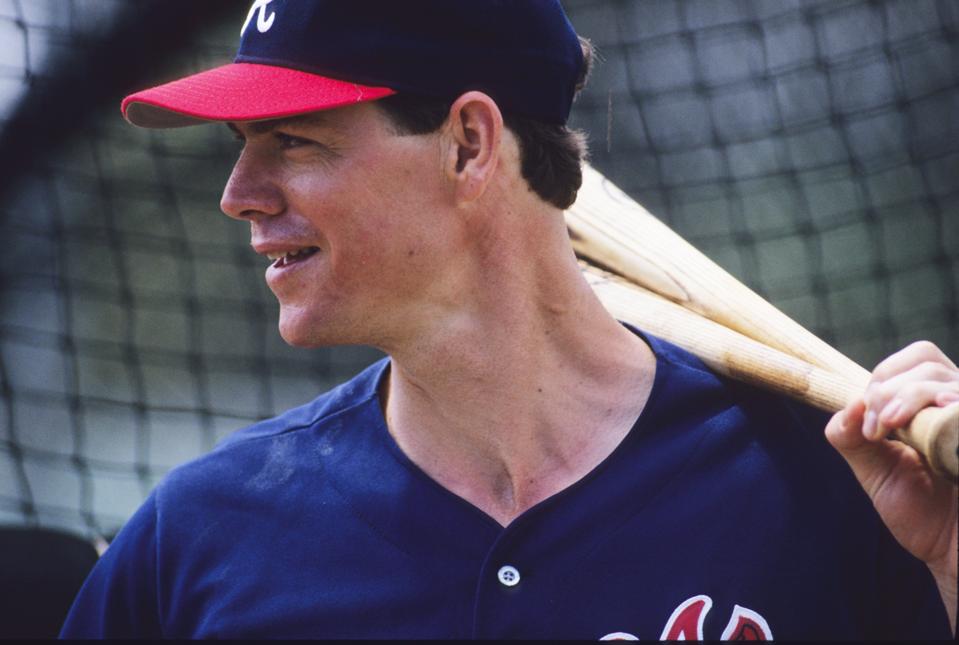
Dale Murphy is one of the most revered figures in Major League Baseball history, particularly known for his time with the Atlanta Braves during the late 1970s and 1980s. His career was marked by incredible athleticism, power-hitting prowess, and an impeccable reputation both on and off the field. Despite playing in an era where his team often struggled, Murphy was a shining beacon of excellence, winning multiple MVP awards and establishing himself as one of the premier outfielders of his generation. His impact on baseball goes beyond his statistics, as he was also a model of sportsmanship and character, becoming a role model for many. This essay explores Murphy’s early life and development, his MLB career and achievements, his impact on baseball, and the unique aspects of his legacy.
Born on March 12, 1956, in Portland, Oregon, Dale Murphy grew up with a strong passion for baseball. As a young athlete, he demonstrated a natural ability to excel at the game. He attended Woodrow Wilson High School in Portland, where his talent on the diamond became apparent to scouts. His combination of size, speed, and power made him an intriguing prospect, and in the 1974 MLB Draft, the Atlanta Braves selected him as the fifth overall pick. This marked the beginning of a journey that would see him become one of the most respected and accomplished players of his era.

Murphy began his professional career as a catcher in the minor leagues, showing promise but also struggling with defensive consistency. His early years in the Braves’ system were filled with potential but also challenges, as his large frame made it difficult for him to develop into an elite defensive catcher. Recognizing this, the Braves made a critical decision that would alter the trajectory of his career: they moved him to first base and eventually to the outfield. This move allowed Murphy to focus more on his offensive capabilities, and by 1976, he had made his MLB debut with the Braves.
His first few seasons in the major leagues were a mix of flashes of brilliance and struggles with consistency. He split time between catching, first base, and the outfield as the Braves tried to find the best position for him. By 1978, it became evident that Murphy’s future lay in the outfield, and by 1980, he had secured a permanent role as the team’s center fielder. From that point forward, he blossomed into one of the most dominant players of the decade.
Murphy’s peak years came between 1982 and 1987, a period in which he was among the most complete players in the game. In both 1982 and 1983, he won the National League Most Valuable Player (MVP) award, becoming one of the few players to win back-to-back MVP honors. His combination of power, speed, and defensive excellence made him a force to be reckoned with. In 1982, he hit .281 with 36 home runs, 109 RBIs, and 23 stolen bases, leading the Braves to a division title. His defensive prowess also earned him the first of five consecutive Gold Glove Awards, highlighting his excellence in the field.
In 1983, Murphy elevated his performance even further, batting .302 with 36 home runs, 121 RBIs, and 30 stolen bases. His ability to contribute in multiple facets of the game made him invaluable to the Braves, and he quickly became the face of the franchise. Despite playing for a team that often struggled in the standings, Murphy remained one of the most respected players in the league. His humility, work ethic, and dedication to the game made him a fan favorite, and he was a perennial All-Star throughout the 1980s.
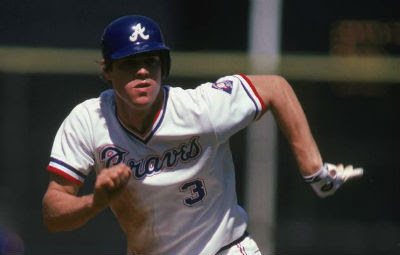
One of Murphy’s most remarkable achievements was his streak of durability. From 1981 to 1990, he played in 740 consecutive games, a testament to his resilience and commitment to the sport. During this stretch, he was consistently among the league leaders in home runs, RBIs, and total bases, solidifying his status as one of the premier sluggers of his era. In 1987, he hit a career-high 44 home runs and drove in 105 runs, continuing to demonstrate his ability to produce at an elite level.
Beyond his individual accolades, Murphy’s impact on baseball extended to his exemplary character. He won the Lou Gehrig Memorial Award in 1985 and the Roberto Clemente Award in 1988, both of which recognize players for their outstanding sportsmanship and community involvement. His integrity and leadership were often cited as some of his most defining traits, and he became an ambassador for the game both during and after his playing career.
Despite his sustained excellence, Murphy’s career saw a decline in the late 1980s. As the Braves entered a rebuilding phase, Murphy’s production began to taper off. In 1990, he was traded to the Philadelphia Phillies, where he played for two seasons before finishing his career with the Colorado Rockies in 1993. Although his final years were not as productive as his peak seasons, his overall impact on the game remained undeniable.
Statistically, Murphy retired with a .265 career batting average, 398 home runs, 1,266 RBIs, and over 2,100 hits. While these numbers are impressive, they alone do not fully capture his greatness. He was one of the most feared power hitters of the 1980s, a two-time MVP, a seven-time All-Star, and a five-time Gold Glove winner. His contributions to the Braves were instrumental in keeping the franchise relevant during a challenging period, and his influence helped pave the way for the team’s resurgence in the 1990s.

Murphy’s Hall of Fame candidacy has been a subject of debate over the years. Despite his dominant peak, he has yet to be elected to the Hall of Fame, primarily due to his relatively short period of elite production compared to other inductees. However, his supporters argue that his back-to-back MVP seasons, combined with his defensive excellence and off-the-field contributions, warrant his inclusion in Cooperstown. Regardless of his Hall of Fame status, Murphy’s legacy in baseball remains secure as one of the most respected and admired players of his generation.
Dale Murphy’s career is a testament to the power of hard work, perseverance, and integrity. He played the game the right way, inspiring both teammates and fans with his unwavering dedication and exemplary sportsmanship. His impact extended beyond the field, as he became a role model for aspiring athletes and a symbol of what it means to play with passion and class. While his name may not always be mentioned among the most statistically dominant players in history, his influence on the game is undeniable. Murphy’s legacy as a beloved figure in baseball continues to endure, making him one of the most iconic players of his era.



 The Baseball Scholar
Leave a comment