
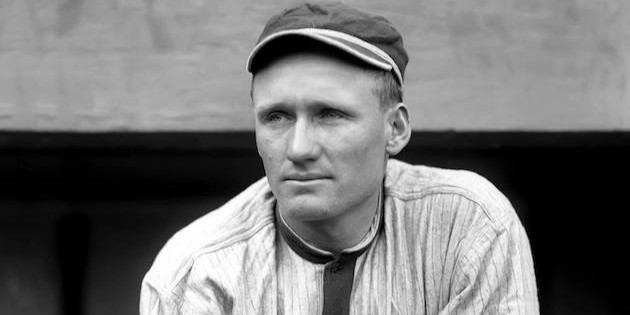
Joe Medwick, one of the most accomplished hitters in Major League Baseball history, left an indelible mark on the game with his prolific offensive production, fierce competitiveness, and undeniable talent. A key member of the famed St. Louis Cardinals “Gashouse Gang” of the 1930s, Medwick played with an intensity that made him both feared and respected. His career spanned from 1932 to 1948, and in that time, he solidified himself as one of the greatest hitters of his era. His legacy is highlighted by a Triple Crown, a National League MVP Award, ten All-Star selections, and a Hall of Fame induction in 1968. Beyond the numbers, Medwick was a player whose aggressive style and passion for the game defined his career.
Joseph Michael Medwick was born on November 24, 1911, in Carteret, New Jersey. The son of Hungarian immigrants, Medwick showed athletic talent from an early age, excelling in multiple sports, including football and baseball. He attended Carteret High School, where he quickly became known for his ability to hit for both power and average. Though he was an outstanding football player and received offers to play at the collegiate level, he ultimately chose to pursue a career in baseball, believing that his future lay in the sport.
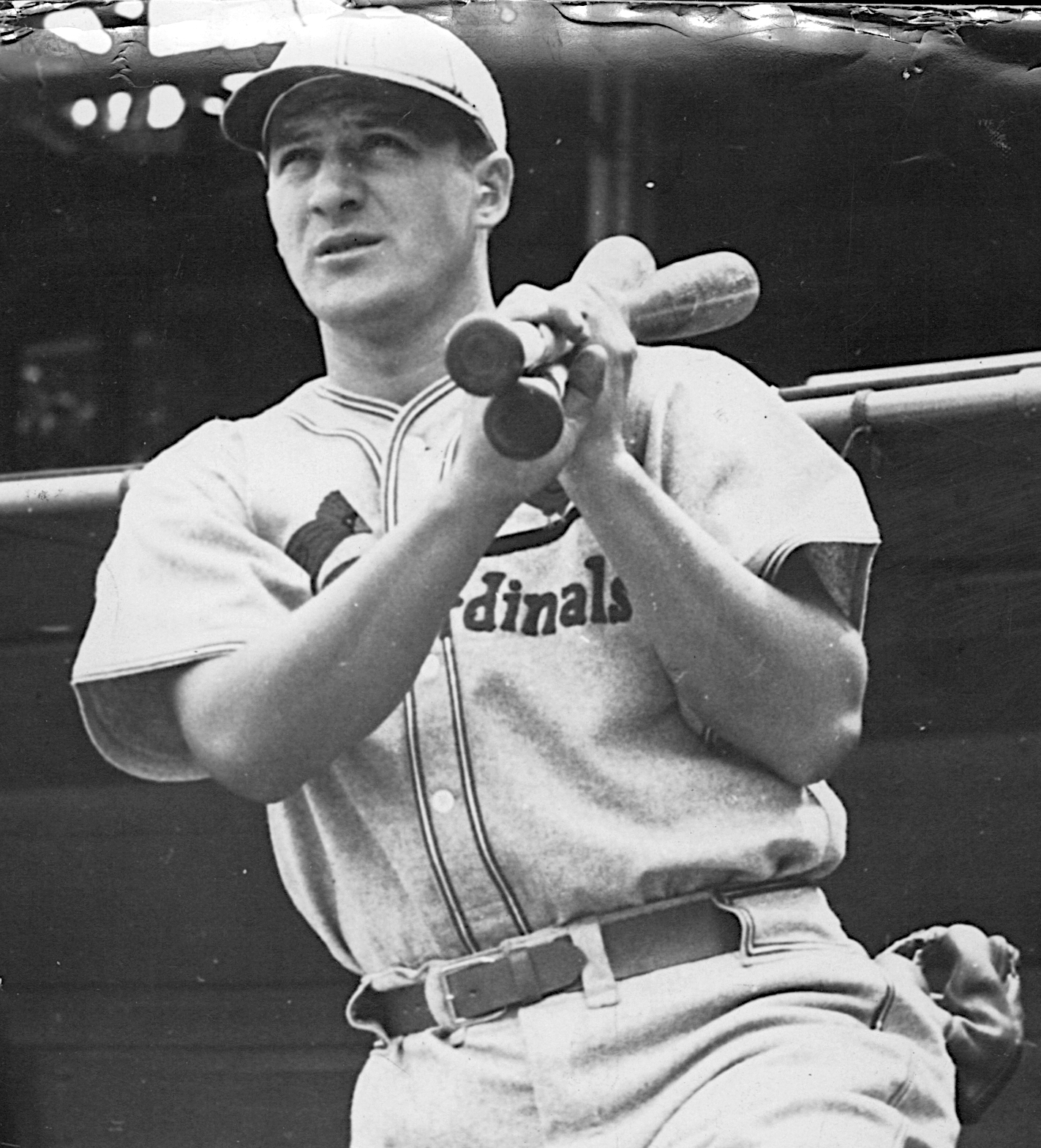
Medwick signed with the St. Louis Cardinals in 1930 and began his professional baseball journey in the minor leagues. It did not take long for his natural hitting ability to stand out. He worked his way through the Cardinals’ farm system, displaying an advanced approach at the plate and the ability to hit to all fields. His performance in the minors was so dominant that by 1932, he had earned a call-up to the major leagues, making his debut with the Cardinals on September 2 of that year. His initial stint was brief, but it gave a glimpse of what was to come.
By 1933, Medwick had established himself as a key component of the Cardinals’ lineup. In his first full season, he hit .306 with 40 doubles, 18 home runs, and 98 RBIs. His aggressive style of play and fiery personality made him a natural fit for the “Gashouse Gang,” the scrappy, hard-nosed Cardinals team that would come to dominate the National League in the mid-1930s. Medwick, with his relentless approach at the plate and ability to drive in runs, quickly became one of the most feared hitters in baseball.
The pinnacle of Medwick’s career came in 1937, when he put together one of the greatest offensive seasons in baseball history. That year, he led the National League in virtually every major offensive category, winning the coveted Triple Crown by hitting .374 with 31 home runs and 154 RBIs. He also led the league in runs, hits, doubles, slugging percentage, and total bases. It was a season of absolute dominance, and he was unanimously named the National League’s Most Valuable Player. Medwick remains the last National League player to win the Triple Crown, a testament to just how remarkable his achievement was.
Beyond his numbers, Medwick was known for his competitive edge. He played with an aggressive intensity that sometimes rubbed opponents the wrong way. One of the most famous incidents of his career occurred during the 1934 World Series between the Cardinals and the Detroit Tigers. Medwick was involved in a controversial play in which he slid hard into third base, sparking a heated confrontation with the Tigers’ infielders. In the next inning, the Detroit crowd reacted by throwing fruit and debris onto the field, forcing Commissioner Kenesaw Mountain Landis to remove Medwick from the game for his own safety. Though the incident was dramatic, it also exemplified the fiery spirit with which Medwick played the game.
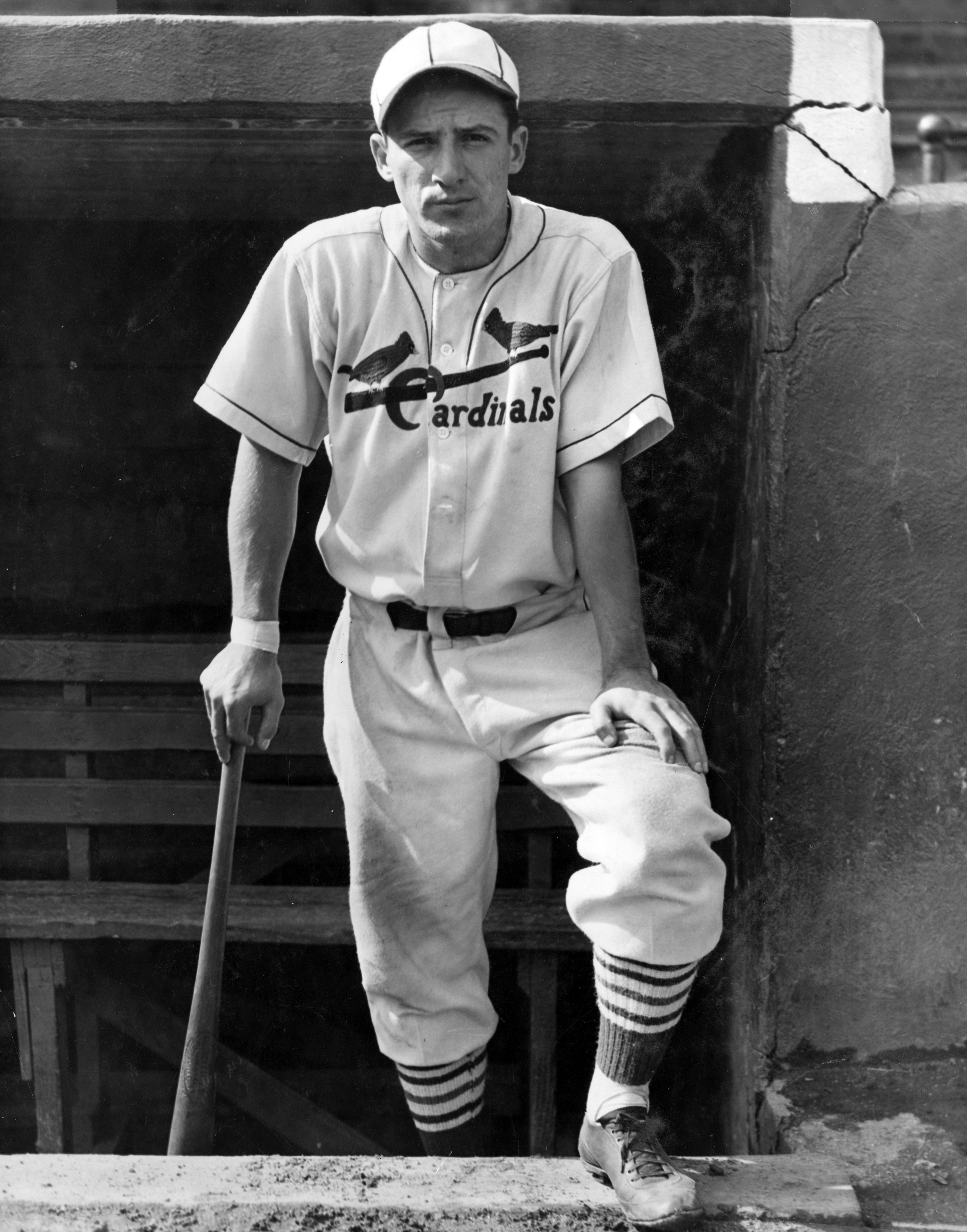
Medwick continued to be one of the most productive hitters in baseball throughout the late 1930s. He consistently hit over .300, drove in runs at an elite rate, and remained a cornerstone of the Cardinals’ offense. However, in 1940, the Cardinals shocked the baseball world by trading him to the Brooklyn Dodgers. The move was partly financial, as the Cardinals were seeking to cut costs, but it also reflected some tensions between Medwick and team management.
His tenure with the Dodgers was productive but was soon interrupted by injuries. Though he continued to hit well, he was never quite the same player after leaving St. Louis. He later played for the New York Giants and the Boston Braves before returning to the Cardinals for a brief stint to close out his career. By the time he retired in 1948, Medwick had compiled a lifetime batting average of .324, with 2,471 hits, 205 home runs, and 1,383 RBIs. His ability to hit for both average and power made him one of the most dangerous offensive players of his generation.
Medwick’s legacy is one of excellence, but his impact extended beyond the numbers. He was a fierce competitor who embodied the tough, hard-nosed style of baseball that defined the era. His dominance in 1937 remains one of the greatest single-season performances in the history of the game, and his role in the success of the “Gashouse Gang” cemented his place as one of the Cardinals’ all-time greats.
In 1968, Medwick was inducted into the Baseball Hall of Fame, a well-deserved recognition of his contributions to the sport. Though his name is not as frequently mentioned as some of his contemporaries, his place in baseball history is secure. He was a player who could do it all at the plate—hit for average, hit for power, drive in runs, and deliver in the clutch.
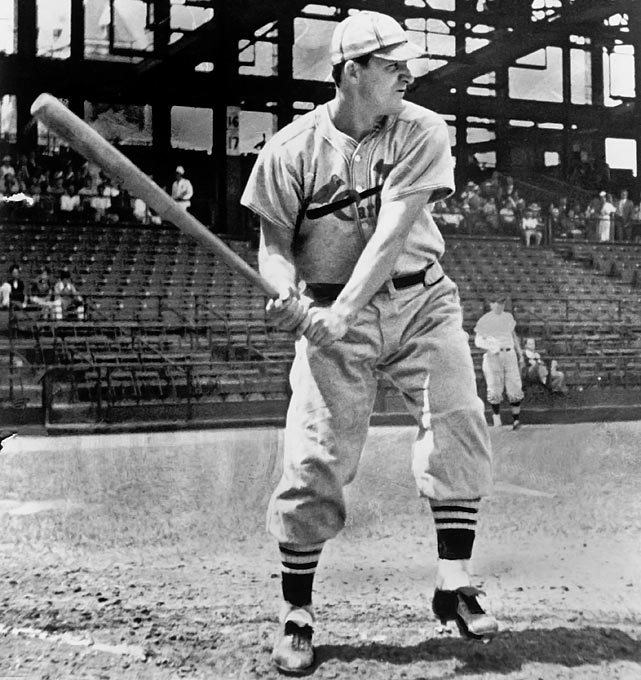
After his playing days, Medwick remained involved in baseball, working as a hitting instructor and mentor to younger players. He continued to pass on his knowledge of the game, ensuring that his legacy would live on through the next generations of hitters.
Joe Medwick’s career is a testament to the power of hard work, talent, and an unwavering competitive spirit. His dominance in the late 1930s set a standard for offensive excellence, and his place in the Hall of Fame is a fitting tribute to a player who left an undeniable mark on the game. Whether remembered for his Triple Crown season, his fiery play, or his role in one of the most famous teams in baseball history, Medwick’s impact on the sport is undeniable. He remains one of the greatest hitters the game has ever seen, a player whose talent and intensity defined an era of baseball.


 The Baseball Scholar
Leave a comment