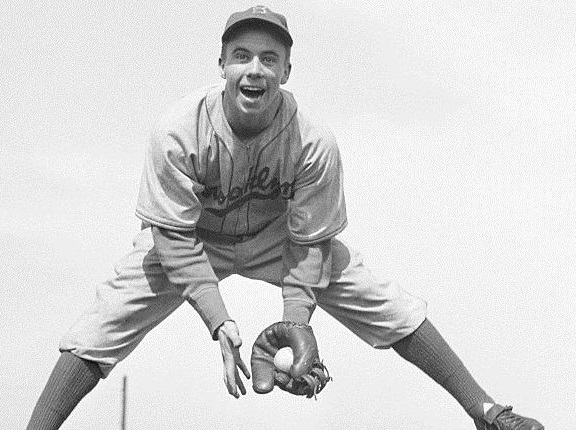
Harold Henry “Pee Wee” Reese was one of the most significant figures in baseball history, not only for his achievements on the field but also for his role as a leader, teammate, and advocate for breaking racial barriers in Major League Baseball. A talented shortstop, team captain, and Hall of Famer, Reese was the heart and soul of the Brooklyn Dodgers during the 1940s and 1950s, playing a critical role in the team’s success. His career is defined not only by his statistics and accomplishments but also by his integrity, leadership, and the support he provided to Jackie Robinson during a transformative era in American sports.
Born on July 23, 1918, in Ekron, Kentucky, and raised in Louisville, Reese developed a love for baseball at an early age. His nickname “Pee Wee” came not from his relatively small stature as a player, but from his childhood prowess in playing marbles, a game where the term “pee wee” referred to a type of small marble. Growing up in Kentucky, Reese was an avid baseball fan and a natural athlete, but he did not play organized baseball until his teenage years. Instead, his early years were spent focusing on other sports, particularly basketball, before he fully turned his attention to baseball.
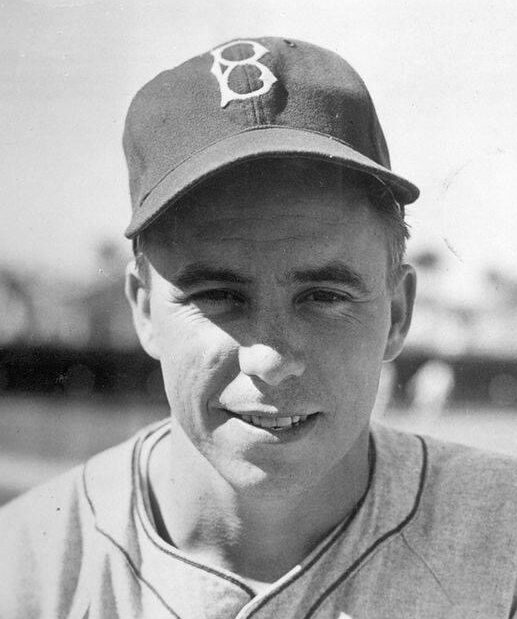
After high school, Reese began playing amateur baseball in the Louisville area, and his talent quickly drew attention. He eventually earned a spot with a local semi-professional team before signing with the Boston Red Sox in 1938. However, the Red Sox already had an established shortstop in Joe Cronin, and rather than giving Reese a chance at a major league career with Boston, the organization traded him to the Brooklyn Dodgers in 1939. That trade would change both Reese’s career trajectory and the history of the Dodgers franchise.
Reese’s major league debut came in 1940, but it was in 1941 that he became the full-time shortstop for the Brooklyn Dodgers, a position he would hold for over a decade. His early seasons showed glimpses of his potential, but his career was briefly interrupted by World War II. Like many players of his era, Reese served in the military, missing the 1943, 1944, and 1945 seasons while serving in the U.S. Navy. His absence from baseball during these prime years likely affected his career statistics, but his time in the military demonstrated his sense of duty and patriotism.
When Reese returned to baseball in 1946, he reestablished himself as one of the game’s premier shortstops. He was known for his exceptional fielding, strong arm, and leadership on the field. His range at shortstop, combined with his ability to make tough plays look effortless, made him a cornerstone of the Dodgers’ defense. His offensive numbers were solid for a shortstop of his era—while not a power hitter, he was a reliable contact hitter who could get on base and contribute offensively. His best offensive season came in 1949 when he batted .279 with 16 home runs, 73 RBIs, and 132 runs scored, helping lead the Dodgers to the National League pennant.
One of the defining aspects of Reese’s career was his leadership role on the Dodgers, particularly during the integration of Major League Baseball. When Jackie Robinson broke baseball’s color barrier in 1947, it was a contentious and difficult time, with many players resistant to the idea of playing alongside a Black teammate. Reese, however, emerged as Robinson’s most important ally on the team. While some players initially objected to Robinson’s presence, Reese extended his support both privately and publicly. In one of baseball’s most famous and symbolic moments, Reese put his arm around Robinson during a game in Cincinnati, showing solidarity in front of a hostile crowd. This gesture, simple yet powerful, is remembered as one of the great moments in sports history and helped set the tone for Robinson’s acceptance in the game.
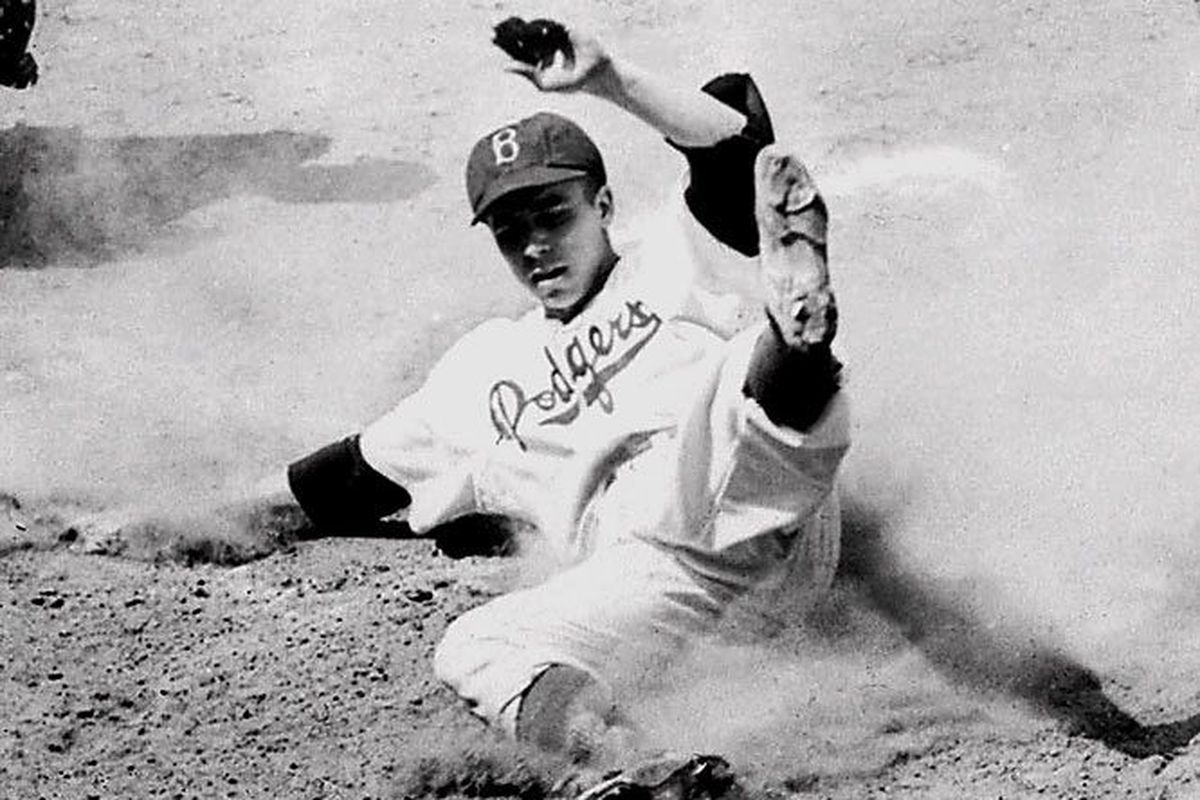
Reese’s influence extended beyond just his relationship with Robinson. As the Dodgers’ captain, he was respected by teammates, opponents, and fans alike. He was known for his steady demeanor, sportsmanship, and ability to bring the best out of his teammates. His leadership helped the Dodgers reach the World Series multiple times, though they often fell short against the powerhouse New York Yankees. However, Reese and the Dodgers finally broke through in 1955, winning their first World Series title. The championship was particularly sweet for Reese, who had endured multiple near-misses throughout his career. His performance in the 1955 World Series was a testament to his importance to the team, as he contributed both offensively and defensively in the Dodgers’ seven-game victory over the Yankees.
Statistically, Reese compiled impressive numbers over his career, especially considering the era in which he played and the position he occupied. Over 16 seasons, all with the Dodgers, he accumulated 2,170 hits, 126 home runs, 885 RBIs, and a lifetime batting average of .269. He also scored over 1,300 runs and was known for his keen eye at the plate, drawing nearly 1,100 walks. His ability to get on base, coupled with his base-running intelligence, made him an invaluable leadoff hitter for the Dodgers.
Beyond the numbers, Reese’s impact on the game is best measured in the way he transformed the shortstop position and in the leadership he provided. At a time when shortstops were typically seen as defensive specialists, Reese helped redefine the position by demonstrating that shortstops could also be offensive contributors. His combination of defensive excellence and offensive consistency set a standard that future generations of shortstops would strive to emulate.
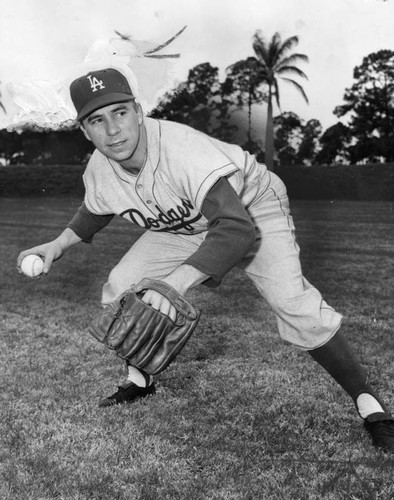
Reese retired after the 1958 season, ending his career just as the Dodgers transitioned from Brooklyn to Los Angeles. His impact on the franchise was undeniable, and he was widely regarded as one of the greatest players in team history. Following his retirement, he remained involved in baseball, working as a broadcaster and scout. His contributions to the game were formally recognized in 1984 when he was elected to the Baseball Hall of Fame, an honor that cemented his legacy as one of the sport’s all-time greats.
Beyond his on-field achievements, Reese’s most enduring legacy is his role in breaking down racial barriers in baseball. His acceptance and defense of Jackie Robinson were critical in helping to ease the transition toward an integrated game. At a time when baseball—and America—was deeply divided along racial lines, Reese’s support for Robinson sent a powerful message about inclusion, teamwork, and the importance of character over prejudice.
In many ways, Pee Wee Reese embodied the essence of what baseball represents: teamwork, leadership, resilience, and a love for the game. His career was defined not only by his individual accomplishments but also by the impact he had on those around him. Whether as a player, captain, or advocate for progress, Reese left an indelible mark on the sport. His influence is still felt today, as the game continues to embrace diversity and celebrate those who, like Reese, used their platform to make a difference.
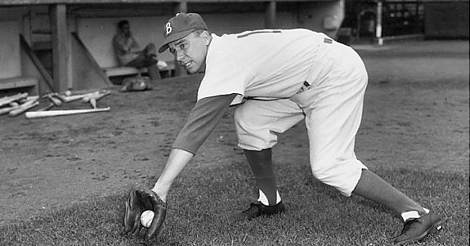
For fans of baseball history, Pee Wee Reese’s story is one of greatness not just in terms of numbers, but in terms of humanity. He was a player who understood that baseball was more than just a game—it was a way to bring people together, to challenge injustices, and to inspire future generations. His contributions to the Brooklyn Dodgers, Major League Baseball, and society at large ensure that his name will forever be remembered as one of the true legends of the sport.



 The Baseball Scholar
Leave a comment