
Albert Belle was one of the most feared sluggers of his era, a player whose combination of power, intensity, and production made him one of the most dominant hitters of the 1990s. Throughout his career, Belle showcased an ability to hit for both average and power while maintaining an aggressive and often controversial demeanor on and off the field. His tenure in Major League Baseball (MLB) was relatively short compared to some of his contemporaries, but his impact on the game was significant. Whether it was his remarkable offensive performances, his competitive fire, or the controversies that followed him, Belle left an indelible mark on the sport.
Born Albert Jojuan Belle on August 25, 1966, in Shreveport, Louisiana, he grew up as a highly disciplined and competitive individual. His upbringing instilled in him a relentless drive to succeed, which later became evident in his approach to the game of baseball. He attended Huntington High School in Shreveport, where he excelled both academically and athletically. Baseball quickly became his primary focus, and his natural talent was undeniable. After high school, Belle attended Louisiana State University (LSU), where he continued to develop as a power hitter.
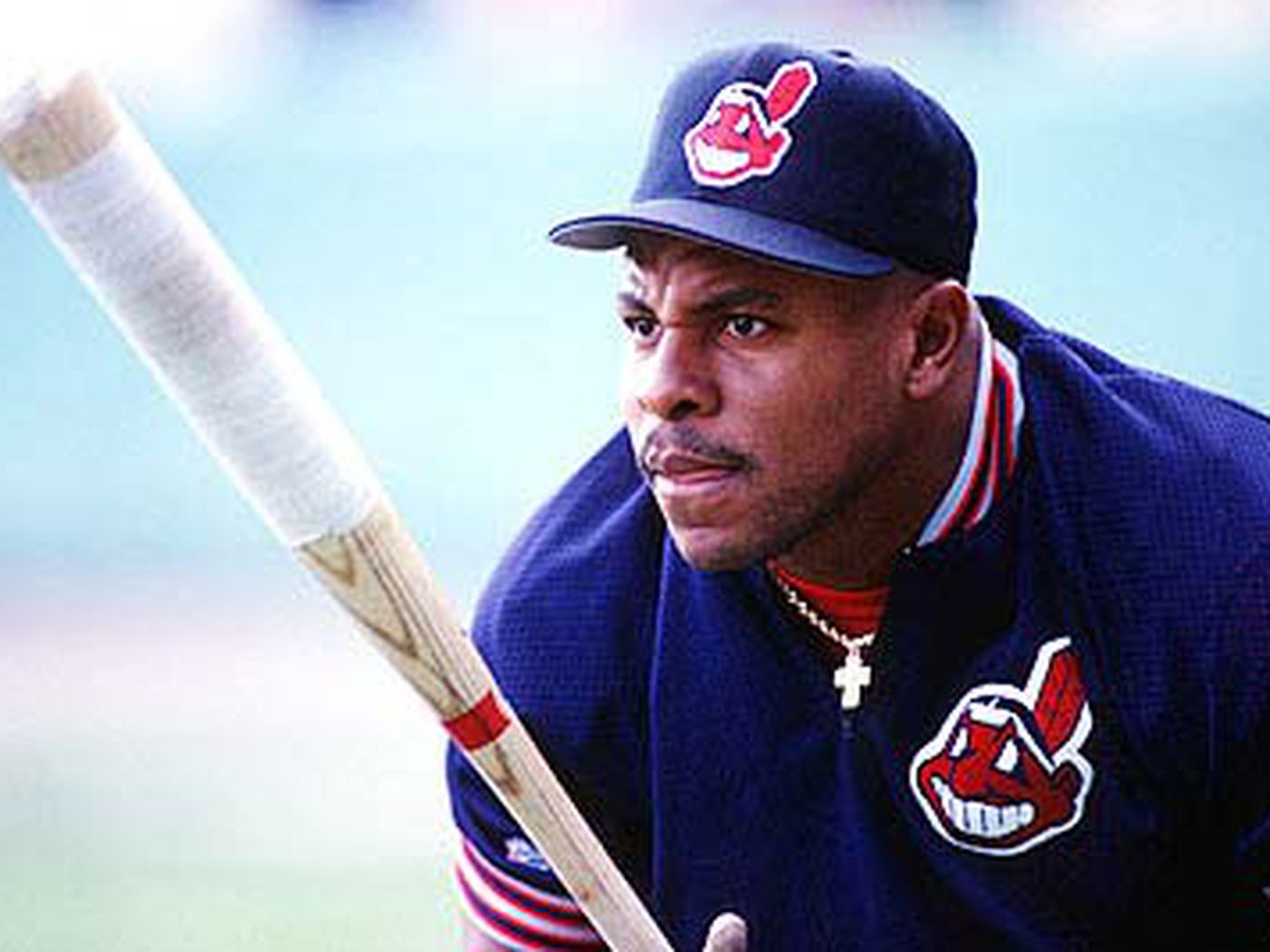
At LSU, Belle was known for his prodigious home run power and intense work ethic. However, his collegiate career was not without controversy. During his time with the LSU Tigers, he had run-ins with teammates and coaches, foreshadowing some of the conflicts that would later arise in his professional career. Despite these challenges, his talent was too great to ignore, and in 1987, he was drafted by the Cleveland Indians in the second round of the MLB Draft.
Belle’s early years in professional baseball were marked by both promise and struggles. He made his major league debut with the Cleveland Indians in 1989 but initially struggled to find consistency. During his early years in the minors and his initial call-ups to the majors, Belle battled personal demons, including issues with his temper and struggles with alcohol. In 1990, he was sent to a rehabilitation facility to address his alcohol problem, an experience that proved to be a turning point in his life and career. Upon his return, Belle rededicated himself to baseball, focusing on refining his immense talents.
By 1991, Belle had begun to establish himself as a legitimate power hitter. He hit .282 with 28 home runs and 95 RBIs, demonstrating his ability to drive in runs at an elite level. The following season, he solidified his place as one of the most dangerous hitters in baseball, posting a .260 batting average with 34 home runs and 112 RBIs. It was clear that Belle was on the verge of superstardom.
The 1993 season was a breakout year for Belle, as he hit .290 with 38 home runs and 129 RBIs. His combination of power, run production, and ability to hit for average made him one of the most well-rounded hitters in the league. Belle’s emergence coincided with a resurgence for the Cleveland Indians, a franchise that had struggled for much of the previous decades. With Belle leading the way, the team was beginning to develop into a championship contender.
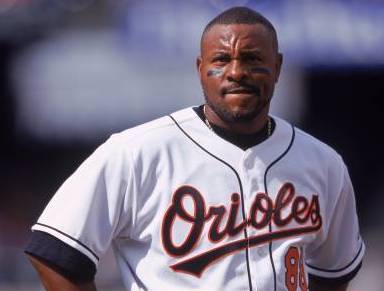
From 1994 to 1996, Belle was one of the most dominant offensive forces in baseball. During the strike-shortened 1994 season, he hit .357 with 36 home runs and 101 RBIs in just 106 games. His .714 slugging percentage led the league, showcasing his ability to generate extra-base hits at an extraordinary rate. In 1995, Belle made history by becoming the first player ever to hit 50 home runs and 50 doubles in the same season. That year, he finished with a .317 batting average, 50 home runs, 52 doubles, and 126 RBIs, leading the league in slugging percentage (.690). Despite these numbers, he finished second in the American League MVP voting behind Mo Vaughn, a result that remains controversial among baseball historians.
Belle’s contributions were instrumental in leading the Cleveland Indians to the 1995 World Series, their first appearance in the Fall Classic since 1954. Though the Indians fell to the Atlanta Braves in six games, Belle’s presence in the lineup was a major reason why Cleveland was able to dominate the American League that season.
In 1996, Belle continued his dominance, hitting .311 with 48 home runs and 148 RBIs. His power and production were unrivaled, but his reputation as one of the game’s most polarizing figures continued to grow. He was known for his confrontational nature, both with the media and with opponents. Incidents such as throwing a baseball at a fan in the stands, his notorious corked bat controversy in 1994, and his heated demeanor on the field made him one of baseball’s most talked-about players. However, there was no denying his ability, and his numbers spoke for themselves.
After the 1996 season, Belle became a free agent and signed a lucrative contract with the Chicago White Sox, making him one of the highest-paid players in baseball at the time. His tenure in Chicago lasted only two seasons, but he remained one of the most productive hitters in the game. In 1997, he hit .274 with 30 home runs and 116 RBIs. He followed that with an even more impressive 1998 season, batting .328 with 49 home runs and 152 RBIs, once again proving that he was among the elite hitters in the sport.
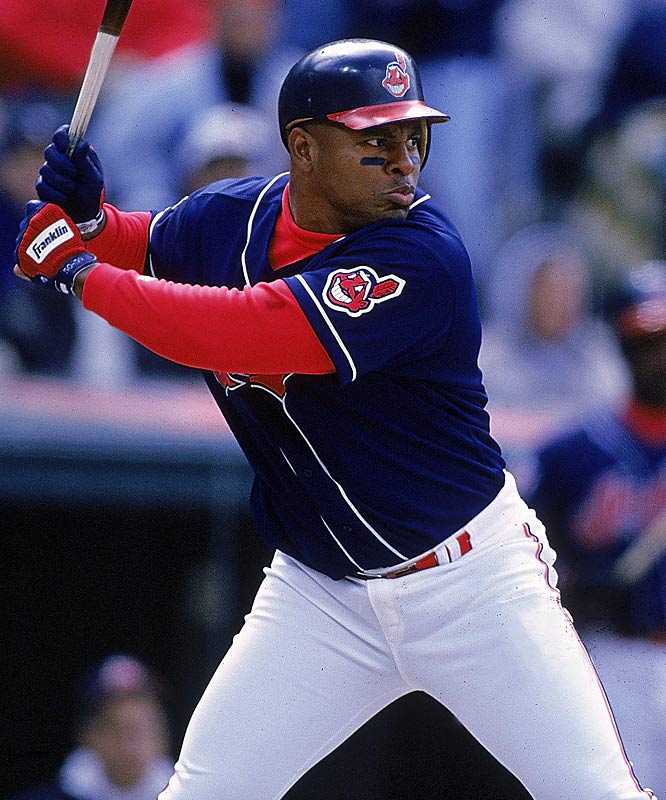
Following the 1998 season, Belle signed a five-year, $65 million contract with the Baltimore Orioles, making him one of the highest-paid players in baseball history. Unfortunately, his time in Baltimore was marred by injuries. He played two seasons with the Orioles, posting solid numbers in 1999 (.297, 37 home runs, 117 RBIs), but his production declined in 2000 as injuries began to take their toll.
Belle was forced to retire following the 2000 season due to a degenerative hip condition. At just 34 years old, his career was over far sooner than anyone had expected. His final career numbers were impressive—he finished with a .295 batting average, 381 home runs, and 1,239 RBIs over 12 seasons. While his career lacked longevity compared to other all-time greats, his peak years were among the most productive in baseball history.
One of the most significant aspects of Belle’s career was his unparalleled consistency during his prime. From 1991 to 2000, he was one of the most productive hitters in the game, regularly finishing among the league leaders in home runs, RBIs, and slugging percentage. He was a five-time All-Star, a five-time Silver Slugger Award winner, and led the American League in RBIs three times. Few players in history could match his ability to combine power and average while striking fear into opposing pitchers.
Despite his statistical achievements, Belle’s relationship with the media and his reputation for being difficult have often overshadowed his accomplishments. Unlike many other baseball greats, he was not known for being friendly or accessible to reporters. His often abrasive personality and refusal to conform to the expectations of sports media hurt his public perception. As a result, his Hall of Fame candidacy has been the subject of debate. Some argue that his peak years were dominant enough to warrant induction, while others point to his relatively short career and controversial nature as reasons for exclusion.

Belle’s impact on baseball extends beyond his statistics. He was one of the most feared hitters of his generation, redefining what it meant to be a power hitter in the 1990s. His ability to hit for both power and average made him a rare offensive weapon, and his contributions to the Cleveland Indians helped revitalize a franchise that had long been considered an afterthought in the American League.
Though his career was cut short, Belle’s legacy as one of the most dominant sluggers of his time remains secure. His unique combination of talent, intensity, and controversy ensures that he will always be remembered as one of the most fascinating figures in baseball history. Whether or not he eventually receives Hall of Fame recognition, his place in baseball lore is unquestioned.



 The Baseball Scholar
Leave a comment