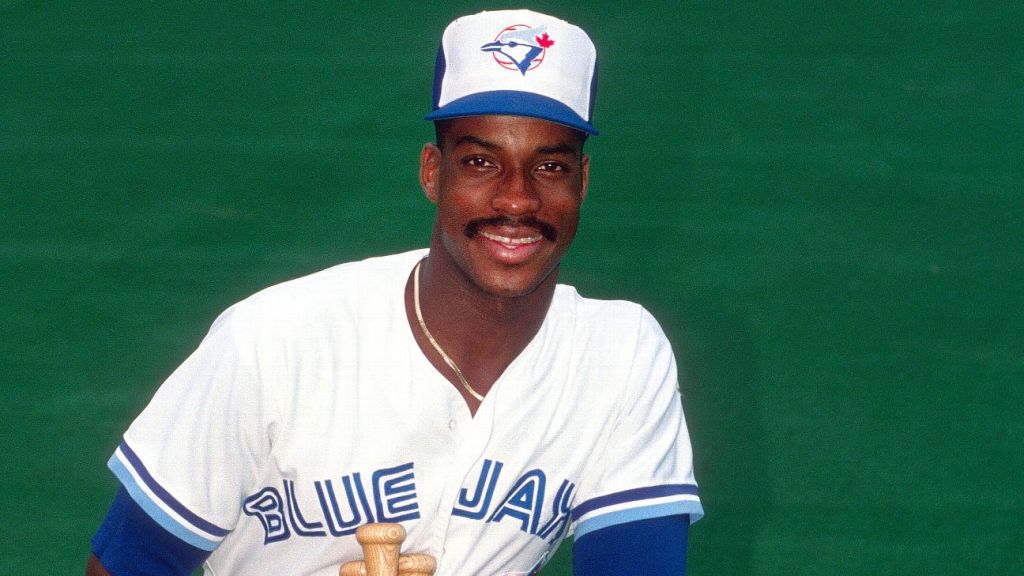
Frederick Stanley McGriff, better known as Fred McGriff, is one of the most consistent and prolific power hitters in Major League Baseball (MLB) history. Over a career that spanned from 1986 to 2004, McGriff established himself as one of the most feared sluggers of his era, demonstrating remarkable consistency, power, and discipline at the plate. His ability to hit for both power and average, along with his leadership and professionalism, made him a beloved figure in the game. Despite playing in an era that saw the rise of performance-enhancing drugs, McGriff was never linked to any scandals, making his statistical achievements even more impressive. His induction into the Baseball Hall of Fame in 2023 was a testament to his contributions to the game. This essay will explore McGriff’s early life and development, his statistical achievements, defining moments in his career, anecdotes from his playing days, and his lasting impact on baseball.
Fred McGriff was born on October 31, 1963, in Tampa, Florida. Growing up in a baseball-rich environment, McGriff quickly developed a passion for the game. As a child, he admired many great players and sought to emulate their success. His early years in baseball were spent playing in Little League and high school, where he quickly established himself as a powerful hitter. However, McGriff was not initially considered a top prospect. In fact, he was cut from his high school baseball team as a sophomore, an experience that fueled his determination to prove his worth.

McGriff eventually earned a spot on the team at Jefferson High School in Tampa, where he began to showcase his ability to hit for power. His strong performances attracted the attention of MLB scouts, and in 1981, the New York Yankees selected him in the ninth round of the MLB Draft. McGriff’s time with the Yankees, however, was short-lived. In one of the more infamous trades in baseball history, the Yankees traded McGriff to the Toronto Blue Jays in 1982 as part of a package for Dale Murray and Tom Dodd. It was with the Blue Jays that McGriff would begin to make a name for himself as a major league slugger.
McGriff made his MLB debut with the Toronto Blue Jays in 1986. He saw limited action in his first two seasons, but by 1988, he had established himself as the team’s everyday first baseman. That year, he hit 34 home runs, led the American League (AL) in on-base percentage (.376), and posted an impressive .881 OPS. His breakout performance signaled the arrival of one of the premier power hitters in baseball.
In 1989, McGriff led the AL in home runs with 36 while maintaining a .269 batting average and a .924 OPS. His ability to hit for power and get on base made him one of the most feared hitters in the league. Despite his individual success, the Blue Jays traded him to the San Diego Padres in 1990 as part of a blockbuster deal that also sent Tony Fernandez to the Padres in exchange for Joe Carter and Roberto Alomar.
McGriff continued his dominance with the Padres, where he remained one of the league’s top sluggers. In 1992, he won the National League (NL) home run title with 35 home runs and posted a .286 batting average with a .960 OPS. However, in 1993, in a move signaling the Padres’ intent to rebuild, McGriff was traded to the Atlanta Braves. This trade proved to be a turning point in his career.

McGriff’s arrival in Atlanta was nothing short of spectacular. He joined a Braves team that was already a powerhouse in the NL, and his impact was immediate. In his first game with the Braves, he hit a towering home run, setting the tone for what would become a memorable stretch run. McGriff finished the 1993 season with a combined 37 home runs and a .291 batting average. His presence in the middle of the Braves’ lineup helped propel the team to another NL West division title.
McGriff played a key role in Atlanta’s dominance during the mid-1990s. In 1994, he hit 34 home runs and drove in 94 runs despite the season being cut short by the players’ strike. He continued his excellence in 1995, hitting .280 with 27 home runs and 93 RBIs while helping the Braves win the World Series—the only championship of his career. In the postseason, McGriff was outstanding, hitting .333 with two home runs and six RBIs in the World Series against the Cleveland Indians. His performance cemented his reputation as a clutch performer on the game’s biggest stage.
McGriff remained a consistent power hitter through the late 1990s. In 1996, he belted 28 home runs and drove in 107 runs while maintaining a .295 batting average. He was a stabilizing force in the Braves’ lineup, providing leadership and production year after year. However, in 1997, the Braves decided to move in a different direction, and McGriff was left unprotected in the expansion draft. He was subsequently selected by the Tampa Bay Devil Rays, allowing him to return to his hometown.
McGriff spent the next few seasons with Tampa Bay, continuing to produce at a high level. In 1999, he hit 32 home runs and drove in 104 runs while posting a .310 batting average, proving that he still had plenty left in the tank. He remained with the Devil Rays until 2001, when he was traded to the Chicago Cubs. With the Cubs, McGriff continued his pursuit of the elusive 500-home-run milestone, but he ultimately fell just short, finishing his career with 493 home runs.

After brief stints with the Los Angeles Dodgers and a return to the Devil Rays, McGriff retired following the 2004 season. His final career numbers were nothing short of remarkable: a .284 batting average, 2,490 hits, 493 home runs, and 1,550 RBIs. He finished with a .377 on-base percentage and a .509 slugging percentage, numbers that place him among the best first basemen in baseball history.
McGriff’s legacy is one of consistency and professionalism. He was a five-time All-Star, a three-time Silver Slugger Award winner, and played a crucial role in the Braves’ 1995 championship run. Despite his impressive statistics, McGriff was often overshadowed by the power hitters of the steroid era, many of whom were later linked to performance-enhancing drugs. Unlike many of his contemporaries, McGriff’s numbers were achieved without any allegations of steroid use, making his achievements all the more impressive.
His impact on baseball goes beyond statistics. McGriff was a role model for young players, known for his humility, work ethic, and leadership. He was never the loudest player in the clubhouse, but he led by example, earning the respect of teammates and opponents alike. His smooth left-handed swing and ability to deliver in clutch situations made him a fan favorite everywhere he played.

McGriff’s induction into the Hall of Fame in 2023 was a long-overdue recognition of his contributions to the game. His career serves as a reminder of the importance of consistency, integrity, and perseverance. He may not have reached the 500-home-run milestone, but his impact on baseball is undeniable.
In the end, Fred McGriff’s career is a testament to what it means to be a true professional in the game of baseball. His legacy will endure as one of the most underrated yet impactful sluggers in MLB history, and his enshrinement in Cooperstown solidifies his place among the all-time greats.



 The Baseball Scholar
Leave a comment