
Victor Gazaway Willis, known as Vic Willis, was one of the most accomplished pitchers of the early years of Major League Baseball (MLB). His career spanned from 1898 to 1910, and he was widely regarded as one of the most durable and dominant pitchers of his era. With an exceptional ability to pitch deep into games, Willis left an indelible mark on baseball history, earning a place in the National Baseball Hall of Fame in 1995. His career was defined by both brilliance and perseverance, as he played through one of the most challenging eras for pitchers, navigating rule changes and the evolution of the game. This essay explores the early life and development of Vic Willis, the key moments that defined his career, his statistical achievements, his impact on baseball, and the unique aspects of his life that set him apart from his peers.
Willis was born on April 12, 1876, in Cecil County, Maryland. Growing up in the late 19th century, baseball was beginning to establish itself as America’s national pastime. Like many young boys of his generation, Willis developed a deep love for the game. He honed his skills playing on local teams, developing his signature pitching style that combined power, control, and endurance.
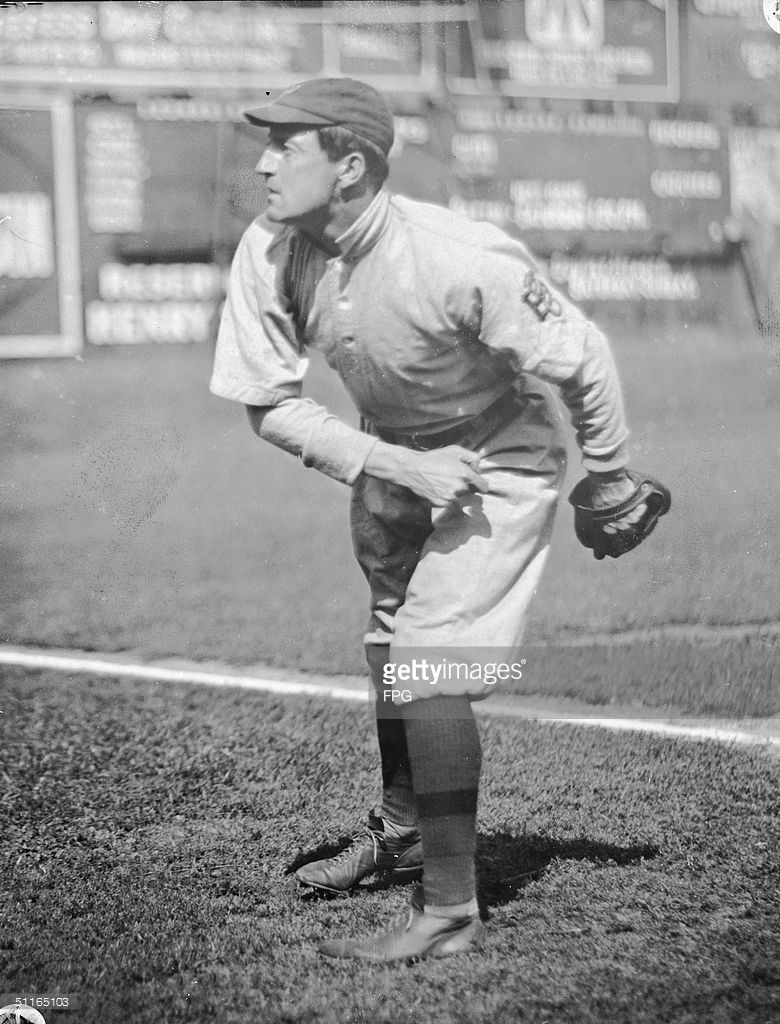
Willis attended Newark Academy in Delaware, where he continued to develop his baseball talents. He quickly gained a reputation as a hard-throwing right-hander who could dominate batters with his fastball. His performance at the amateur level caught the attention of professional scouts, leading to his entry into organized baseball.
Willis made his professional debut in 1898 with the Boston Beaneaters of the National League (NL). In his rookie season, he immediately demonstrated that he was a force to be reckoned with, posting a 25-13 record with a 2.84 earned run average (ERA). During this time, pitchers were expected to complete most of their games, and Willis was no exception. His ability to pitch deep into games became one of his defining characteristics, often throwing well over 300 innings per season.
In just his second season, 1899, Willis improved upon his impressive rookie campaign. He finished with a league-leading 2.50 ERA while posting a record of 27-8. The 1899 season was a testament to his ability to not only win games but also to suppress opposing offenses at a time when run production was steadily increasing in the National League. His dominance on the mound helped the Beaneaters remain one of the top teams in the league.
Willis was at the peak of his powers in the early 1900s. In 1901, he won 20 games for the third consecutive season, further solidifying himself as one of the most dominant pitchers of his time. However, despite his individual success, the Beaneaters began to decline as a team, struggling to compete with the league’s emerging powerhouses.
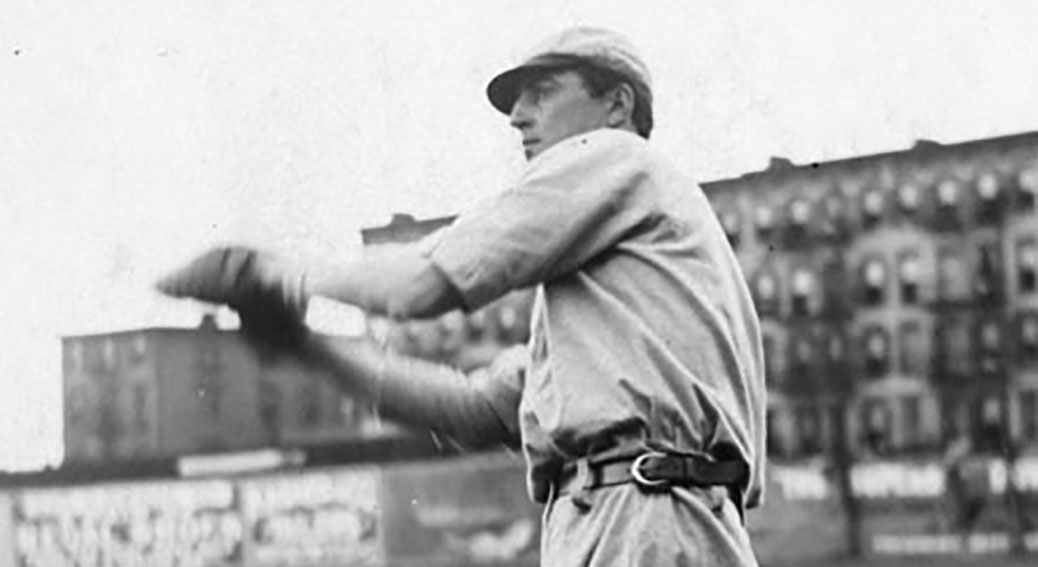
The 1902 season was one of the most remarkable yet frustrating years of Willis’s career. He posted a record of 12-19, but his performance was far better than his win-loss record suggested. He finished the season with a 2.20 ERA and led the league in complete games with 45. The Beaneaters’ poor offensive support contributed to his high loss total, but his endurance and consistency on the mound were undeniable.
In 1903, Willis endured one of the most challenging seasons of any pitcher in baseball history. He finished with a staggering 25 losses, the most in the league. Despite the high loss total, Willis maintained a respectable 3.21 ERA and completed 39 of his 41 starts. His ability to absorb losses without losing his competitive edge spoke volumes about his resilience.
After struggling with Boston, Willis found new life when he was traded to the Pittsburgh Pirates before the 1906 season. The move proved to be a turning point in his career. The Pirates were a competitive team with strong offensive support, and Willis thrived in his new environment. In his first season with Pittsburgh, he won a career-high 27 games against just 11 losses while posting a 1.73 ERA. His performance helped the Pirates finish second in the National League, and he reestablished himself as one of the league’s premier pitchers.
The 1907 season was equally impressive, as Willis won 21 games and recorded a 2.34 ERA. His ability to limit walks and induce weak contact made him one of the most efficient pitchers in baseball. He continued to pitch at a high level through the end of the decade, consistently ranking among the league leaders in wins, ERA, and complete games.
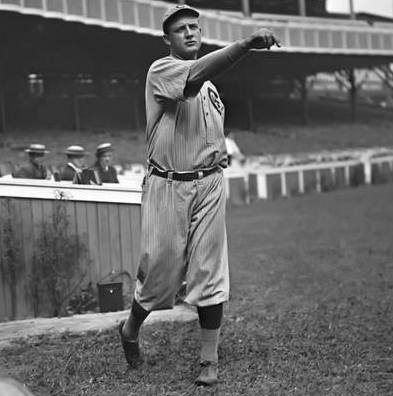
As Willis entered the twilight of his career, his workload began to decline. In 1909, he played a key role in helping the Pirates capture the National League pennant and advance to the World Series. Although he did not play a major role in the Pirates’ championship run, he provided valuable depth to the pitching staff. The Pirates won the World Series that year, giving Willis his first and only championship ring.
Willis played his final season in 1910 with the St. Louis Cardinals. Though no longer the dominant force he once was, he still managed to post a respectable 2.70 ERA in 22 games. After the season, he retired from baseball, concluding an exceptional career that spanned 13 seasons.
Over the course of his MLB career, Willis compiled a remarkable statistical record. He finished with a career win-loss record of 249-205, an impressive feat given that he spent several seasons playing for struggling teams. His career ERA of 2.63 ranks among the best of his era, demonstrating his ability to suppress opposing offenses. Willis also recorded 50 shutouts and 388 complete games, a testament to his durability and endurance.
Willis led the National League in complete games three times and in innings pitched twice. His ability to consistently pitch deep into games set him apart from many of his contemporaries. In an era where pitchers were expected to throw long outings on short rest, Willis excelled at maintaining his effectiveness over extended periods.

Vic Willis had a significant impact on baseball, both during his playing days and beyond. His reputation as one of the most durable pitchers of his era influenced future generations of pitchers. His ability to consistently pitch deep into games demonstrated the importance of endurance and control, two attributes that would become essential for future great pitchers.
One of the unique aspects of Willis’s career was his resilience in the face of adversity. Despite playing for teams that often provided him with minimal run support, he continued to excel and perform at a high level. His 25-loss season in 1905 is often cited as an example of how misleading win-loss records can be in evaluating a pitcher’s performance.
Willis’s induction into the Hall of Fame in 1995 was a long-overdue recognition of his contributions to the game. Although he played in an era that often goes underappreciated in modern discussions of baseball history, his impact was undeniable. He was one of the early pioneers of dominant pitching, setting a standard for durability and excellence that future generations of pitchers would strive to emulate.
Willis’s career is also a reminder of how baseball has evolved over time. The role of the starting pitcher has changed dramatically since his era, with complete games becoming a rarity in modern baseball. His ability to throw over 300 innings in multiple seasons is nearly unheard of in today’s game, highlighting the stark differences in how pitchers are used now compared to the early 20th century.
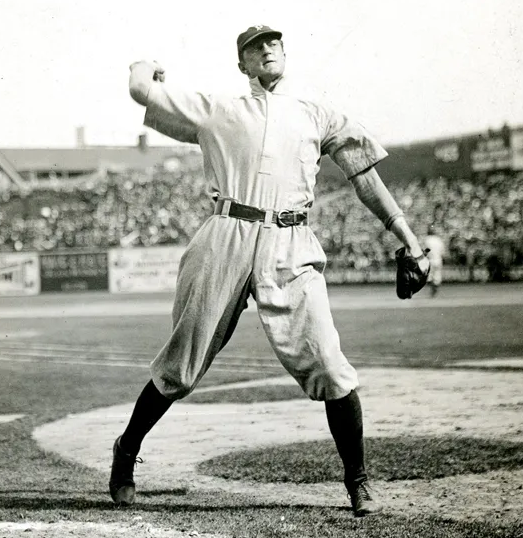
Vic Willis’s MLB career was defined by his durability, dominance, and perseverance. From his early years with the Boston Beaneaters to his resurgence with the Pittsburgh Pirates, Willis consistently demonstrated the qualities of a great pitcher. His statistical achievements, including 249 career wins, a 2.63 ERA, and 388 complete games, place him among the all-time greats of his era.
Beyond the numbers, Willis’s impact on baseball was profound. His ability to pitch deep into games and perform at a high level despite playing for struggling teams showcased his resilience and competitive spirit. His induction into the Hall of Fame solidified his legacy as one of the finest pitchers of the early 20th century.
Although his name may not be as widely recognized as some of the more famous pitchers in baseball history, Vic Willis’s contributions to the game should not be forgotten. He was a true workhorse who embodied the essence of early baseball, and his legacy continues to inspire pitchers who aim to excel through endurance, skill, and determination.



 The Baseball Scholar
Leave a comment