
Buddy Bell was one of the most consistent and well-respected third basemen of his era, known for his exceptional defense, steady offensive production, and leadership both on and off the field. Over an 18-year Major League Baseball career that spanned from 1972 to 1989, Bell established himself as one of the finest defensive third basemen in baseball history while also contributing significantly at the plate. His career included stints with the Cleveland Indians, Texas Rangers, Cincinnati Reds, and Houston Astros, and he later went on to have a managerial and executive career in the sport. His impact on baseball extended beyond statistics, as he was revered for his professionalism, leadership, and baseball acumen. As the son of former Major League outfielder Gus Bell and the father of future MLB player and manager David Bell, Buddy Bell was part of one of baseball’s great multi-generational families.
Born David Gus Bell on August 27, 1951, in Pittsburgh, Pennsylvania, Buddy Bell grew up surrounded by baseball. His father, Gus Bell, was a four-time All-Star outfielder who played for the Pittsburgh Pirates, Cincinnati Reds, and New York Mets during a 15-year Major League career. Growing up in a baseball family gave Buddy an early appreciation for the game, and he spent countless hours learning from his father. He was raised in Cincinnati, Ohio, where he attended Moeller High School, a school that would later become known for producing top-tier baseball talent. His natural ability and strong baseball instincts made him a standout player in high school, and he was drafted by the Cleveland Indians in the 16th round of the 1969 MLB Draft.

After being drafted, Bell quickly moved through the Indians’ minor league system, demonstrating a strong combination of defensive prowess and offensive capability. By 1972, he was ready to make his Major League debut, and at the age of 20, he appeared in 111 games for the Indians that season. Although his rookie campaign was a learning experience, he showed flashes of the skills that would define his career. He hit .255 with nine home runs and 36 RBIs while playing primarily in the outfield before transitioning to third base full-time in 1973.
The decision to move Bell to third base proved to be one of the best moves of his career. His natural athleticism, quick reflexes, and strong throwing arm made him a perfect fit for the position. By 1974, Bell had firmly established himself as the Indians’ everyday third baseman and was developing into one of the league’s premier defenders. His ability to make difficult plays look routine, combined with his solid offensive contributions, made him a valuable player on an otherwise struggling Cleveland team. In 1975, he had a breakout offensive season, batting .283 with 11 home runs and 59 RBIs. His steady improvement earned him his first All-Star selection in 1976, solidifying his status as one of the best young third basemen in the game.
In 1979, Bell was traded to the Texas Rangers, a move that would define the prime years of his career. It was in Texas that he truly flourished, becoming the face of the franchise and one of the most respected players in the American League. His first season with the Rangers saw him hit .299 with 18 home runs and 101 RBIs, marking his first 100-RBI season. His ability to drive in runs while maintaining a high batting average made him one of the most well-rounded third basemen in the league. Defensively, he continued to shine, winning his first Gold Glove Award in 1979. It was the first of six Gold Gloves he would win throughout his career, further cementing his reputation as an elite defensive player.
Bell’s time with the Rangers was marked by remarkable consistency. From 1979 to 1984, he was one of the most dependable players in baseball, averaging over 150 games played per season while maintaining a batting average near .300. His best statistical season came in 1980 when he hit .329 with 17 home runs and 83 RBIs while posting a .379 on-base percentage. He finished 10th in the American League MVP voting that year, a testament to his value to the Rangers. Despite playing on teams that often struggled in the standings, Bell’s individual performance never wavered, and he remained one of the premier third basemen in the game.

Bell’s impact on the Rangers extended beyond his statistics. He was widely regarded as a leader in the clubhouse, mentoring younger players and setting an example with his work ethic and professionalism. He was named the team captain, a role he embraced wholeheartedly. His leadership was particularly important for a Rangers team that was searching for stability and competitiveness in a tough American League West division. Although the Rangers never made the postseason during Bell’s tenure, his contributions helped lay the foundation for the franchise’s future success.
In 1985, Bell was traded to the Cincinnati Reds, allowing him to return to his hometown and play for the team that his father had starred for in the 1950s and 1960s. Although he was no longer in his prime, Bell continued to be a productive player, providing the Reds with veteran leadership and steady production at third base. He played alongside stars like Eric Davis and Dave Parker and remained a key part of the Reds’ lineup. In 1986, he hit .278 with 20 home runs and 75 RBIs, proving that he still had plenty left in the tank.
Bell spent three seasons with the Reds before being traded to the Houston Astros in 1988. Though his time in Houston was brief, he continued to provide valuable contributions as a veteran presence. In 1989, he returned to the Rangers to finish his career, playing his final games with the team that had defined the peak of his playing days. He retired after the 1989 season, closing the book on a remarkable 18-year career.
Over the course of his career, Bell compiled a .279 batting average with 2,514 hits, 201 home runs, and 1,106 RBIs. He was a five-time All-Star, a six-time Gold Glove winner, and one of the most consistent and durable third basemen of his era. His defensive excellence, combined with his ability to hit for average and drive in runs, made him one of the most complete players of his generation. Although he never played in a postseason game, his impact on the teams he played for was immense.

Following his playing career, Bell transitioned into coaching and managing, further solidifying his legacy in the game. He managed the Detroit Tigers from 1996 to 1998, the Colorado Rockies from 2000 to 2002, and the Kansas City Royals from 2005 to 2007. Although he did not find great success as a manager, his knowledge of the game and ability to develop young players earned him respect throughout the league. He later moved into front office roles, working as an advisor and player development executive for various teams.
Bell’s impact on baseball extended beyond his own career, as he played a role in shaping the next generation of players, including his son David Bell, who went on to have a successful MLB career and later became a manager. The Bell family remains one of the most respected baseball families, with multiple generations contributing to the sport at the highest level.
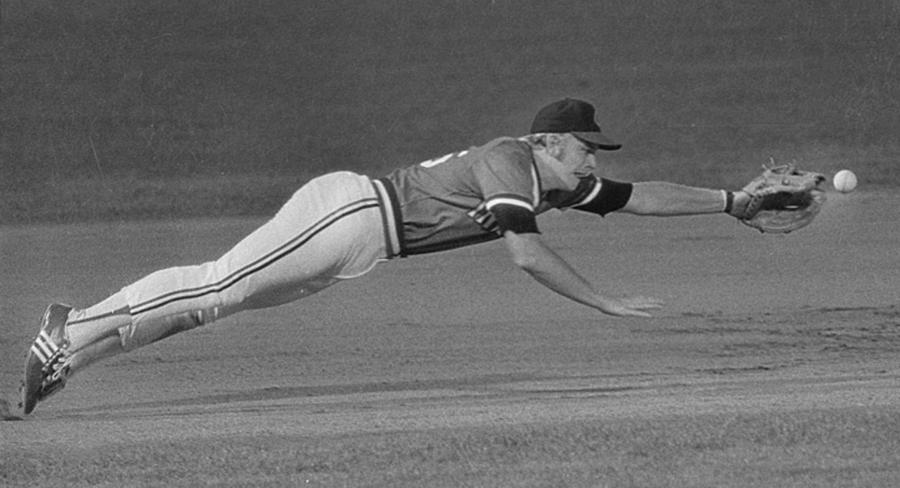
Buddy Bell’s legacy is one of consistency, leadership, and excellence. He was one of the finest defensive third basemen of his era, a reliable hitter, and a respected figure in every clubhouse he was a part of. Though he never received the national spotlight that some of his contemporaries did, his contributions to the game were undeniable. He played the game the right way, earning the admiration of teammates, opponents, and fans alike. His influence on the sport continues to be felt, both through his own achievements and through the generations of players he has helped develop.



 The Baseball Scholar
Leave a comment