
Minnie Miñoso was one of the most influential and dynamic players in the history of Major League Baseball, a trailblazer who helped break down racial barriers and showcased the brilliance of Latin American talent on the biggest stage. His career spanned multiple decades, and his impact on the game went far beyond his impressive statistics. As one of the first Black Latino players in MLB, Miñoso paved the way for future generations of players from Cuba and other Latin American countries. His electrifying speed, offensive prowess, and charismatic personality made him a beloved figure both in his prime and long after his playing days ended. Miñoso was more than just an exceptional player—he was a symbol of perseverance, excellence, and passion for the game.
Saturnino Orestes Armas Miñoso was born on November 29, 1925, in Perico, Matanzas, Cuba. Growing up in a small sugar mill town, he developed a love for baseball at an early age, often playing with makeshift equipment in the streets. Like many Cuban children, Miñoso idolized baseball players and dreamed of making it to the professional level. His natural athleticism and strong work ethic allowed him to develop into a standout player in local leagues, where he gained a reputation as a talented and speedy outfielder.

Miñoso’s skills soon earned him a place in the Cuban professional leagues, where he played for the Marianao club. His performances there caught the attention of scouts from the United States, and in the late 1940s, he joined the New York Cubans of the Negro Leagues. This move was significant, as it marked his first step toward the Major Leagues. The New York Cubans were one of the top teams in the Negro Leagues at the time, and Miñoso thrived in the highly competitive environment. His speed, strong bat, and defensive abilities quickly made him one of the league’s top players.
Miñoso’s time in the Negro Leagues coincided with a period of transformation in baseball. Jackie Robinson had broken Major League Baseball’s color barrier in 1947, and teams were beginning to integrate. Miñoso’s performances with the New York Cubans, including helping them win the Negro League World Series in 1947, made him a prime candidate to become one of the first Afro-Latino players in MLB. In 1949, his contract was purchased by the Cleveland Indians, making him one of the first Black Latino players to sign with a Major League team.
Miñoso made his MLB debut for the Cleveland Indians on April 19, 1949, becoming the first Black Cuban player in Major League history. However, he played sparingly in his first stint with the Indians, appearing in only nine games before being sent back to the minor leagues. Despite the setback, Miñoso continued to work on his game and developed into an even more well-rounded player. His minor league performances were outstanding, and by 1951, he was ready for a full-time role in the Major Leagues.
Miñoso’s big break came when he was traded to the Chicago White Sox early in the 1951 season. It was in Chicago that he truly flourished and became a star. On May 1, 1951, in his first at-bat for the White Sox, Miñoso hit a home run off New York Yankees pitcher Vic Raschi, immediately announcing his arrival as a force to be reckoned with. That season, Miñoso batted .326 with 10 home runs, 76 RBIs, and a league-leading 31 stolen bases, showcasing his all-around ability. He finished second in the American League Rookie of the Year voting and was named to his first All-Star team, becoming the first Afro-Latino All-Star in Major League history.
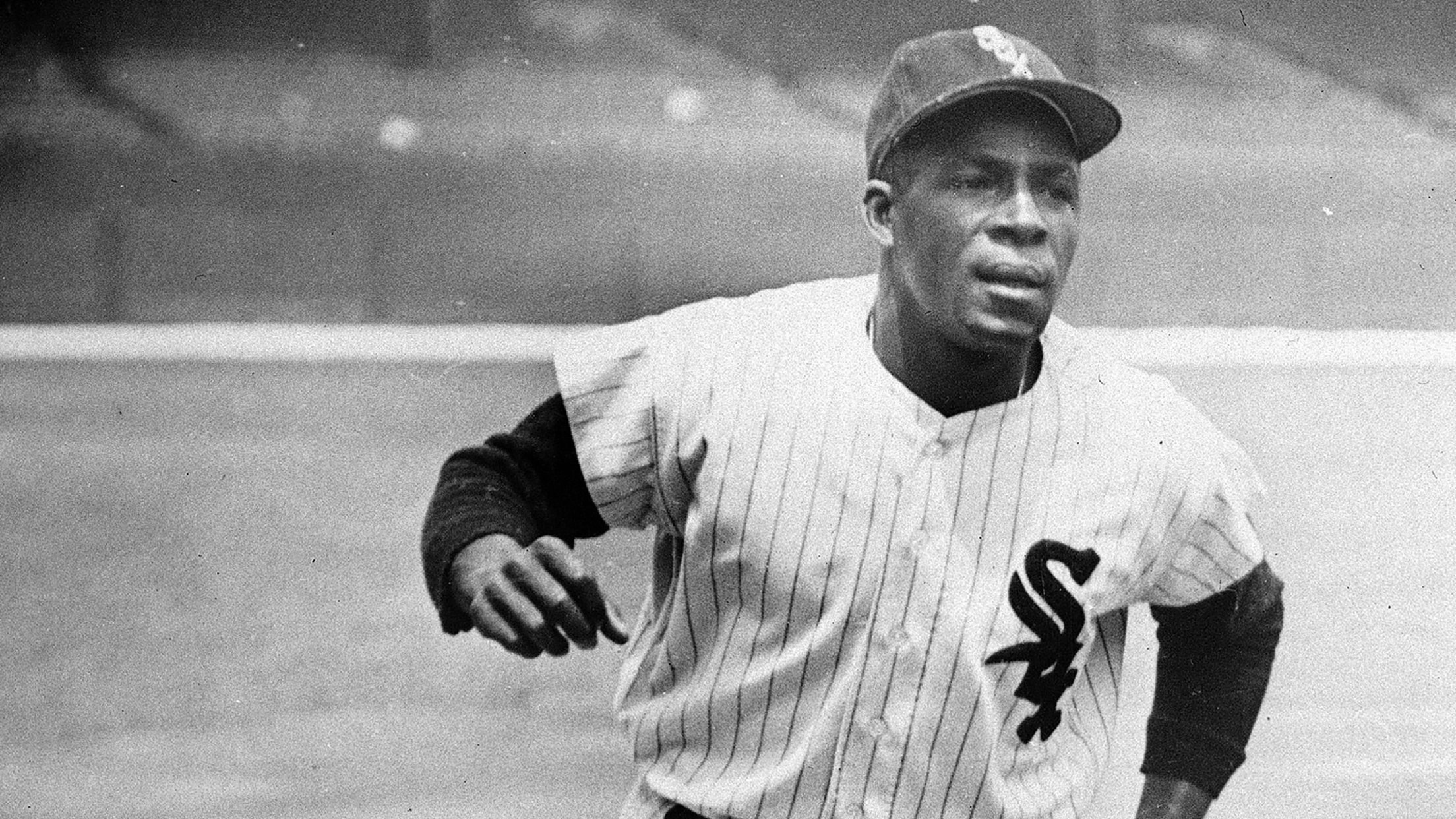
Throughout the 1950s, Miñoso was one of the most consistent and exciting players in baseball. He was known for his ability to hit for average, his speed on the bases, and his outstanding defensive skills in the outfield. He was a key contributor to the White Sox lineup, regularly hitting over .300 and stealing bases at an elite rate. In 1953, he had one of his best seasons, batting .313 with 15 home runs, 104 RBIs, and 25 stolen bases. His ability to create runs in multiple ways made him one of the most valuable players of his era.
Miñoso was also known for his fearless style of play. He led the American League in hit-by-pitches a remarkable 10 times during his career, a testament to his aggressive approach at the plate. He was not afraid to crowd the plate and take a hit to get on base, and his toughness endeared him to fans and teammates alike. His willingness to do whatever it took to help his team win was a defining characteristic of his playing style.
During his prime years with the White Sox, Miñoso was a perennial All-Star, earning selection to the Midsummer Classic seven times. He also won three Gold Glove Awards for his defensive excellence, further solidifying his reputation as one of the best all-around players in the league. In an era before advanced analytics, Miñoso was an early example of a player whose value extended beyond traditional statistics. His ability to get on base, steal bases, and play exceptional defense made him a sabermetric darling long before the term existed.
Despite his success, Miñoso often faced discrimination as one of the few Afro-Latino players in the league. He dealt with racism both on and off the field, enduring taunts and hostility from opposing players and fans. However, he remained focused on his game and let his performance speak for itself. His ability to rise above these challenges and excel at the highest level made him a trailblazer for future generations of Latin American players.

After a decade of dominance with the White Sox, Miñoso had brief stints with the Cleveland Indians and the St. Louis Cardinals before returning to Chicago in 1960. Though he was no longer in his prime, he remained a productive player, hitting .311 in 1960 and continuing to provide leadership and inspiration to younger players. His final full season in MLB came in 1964, but his story did not end there.
One of the most unique aspects of Miñoso’s career was his longevity and his love for the game. In an unprecedented move, he made appearances in Major League games in 1976 and 1980 with the White Sox, making him one of the only players in history to play in five different decades. Though these were ceremonial at-bats, they highlighted the deep respect and admiration that the White Sox organization had for Miñoso. His connection to the team and its fans remained strong long after his retirement.
Over the course of his MLB career, Miñoso compiled a .298 batting average with 1,963 hits, 186 home runs, 1,023 RBIs, and 205 stolen bases. He was a nine-time All-Star, three-time Gold Glove winner, and a pioneering figure in the integration of Latino players into Major League Baseball. His impact on the game went far beyond numbers—he was a role model, an ambassador for Latin American baseball, and one of the most exciting players of his generation.
Miñoso’s influence on baseball extended well beyond his playing career. He remained active in the sport as a coach, mentor, and ambassador, always advocating for the recognition of Latin American players. His contributions were finally recognized when he was inducted into the Baseball Hall of Fame in 2022, a long-overdue honor that cemented his legacy as one of the game’s all-time greats.

Minnie Miñoso’s story is one of perseverance, excellence, and trailblazing impact. He helped break racial barriers, brought excitement to the game with his electrifying play, and paved the way for countless Latino players who followed in his footsteps. His legacy as “Mr. White Sox” endures as a testament to his greatness, and his influence on baseball will never be forgotten. He was not just a great player—he was a pioneer, an icon, and a true legend of the game.



 The Baseball Scholar
Leave a comment