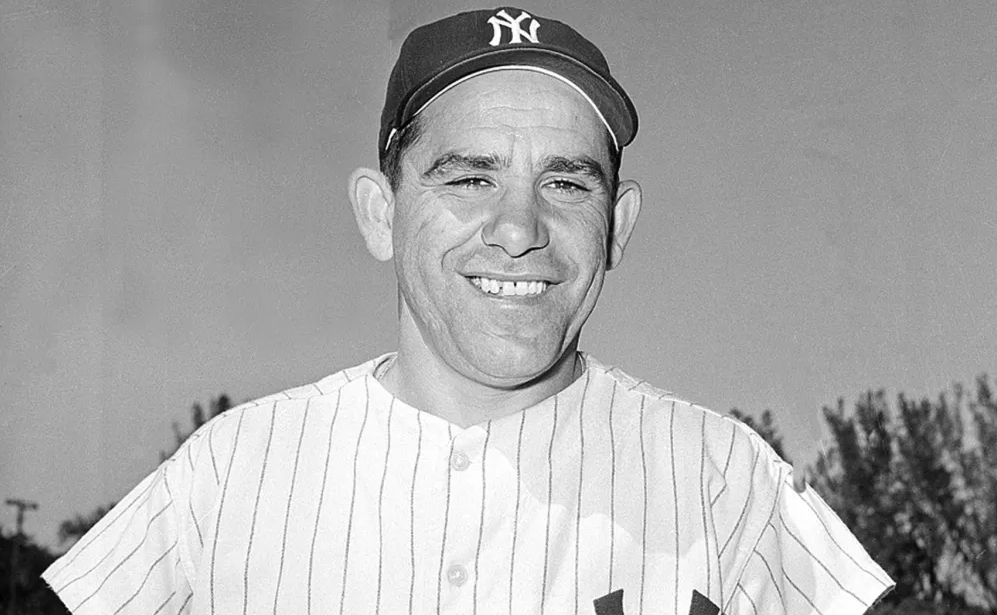
Lawrence Peter “Yogi” Berra was one of the most accomplished and beloved figures in Major League Baseball history, a catcher whose excellence on the field and unique personality off it made him a legendary figure in the sport. His career spanned from the 1940s to the 1960s, and in that time, he became one of the most decorated players in the history of the game. With 10 World Series championships as a player, three MVP awards, and a legacy that extended beyond his playing years into coaching and managing, Berra’s impact on baseball is immeasurable. He was not just a great player but a cultural icon, known for his wit, leadership, and ability to rise to the occasion in crucial moments. His contributions to the game extend far beyond statistics, as he remains one of the most influential and respected figures in baseball history.
Berra was born on May 12, 1925, in St. Louis, Missouri, to Italian immigrants. Growing up in the neighborhood of The Hill, he developed a love for baseball at a young age. Like many young boys of his era, he played sandlot baseball constantly, honing his skills without formal training. His childhood friend and fellow future big leaguer Joe Garagiola grew up on the same street, and the two would often play ball together, unknowingly preparing themselves for future careers in professional baseball. It was during these formative years that Berra earned his famous nickname, “Yogi.” A friend noticed that when he sat cross-legged in the dugout, he resembled a Hindu yogi, and the name stuck with him for the rest of his life.

Despite his natural talent, Berra was initially overlooked by many scouts due to his short and stocky build. At 5 feet 7 inches tall, he did not fit the traditional mold of an elite athlete. However, his determination and work ethic more than made up for any perceived physical limitations. He eventually caught the attention of the New York Yankees, who signed him to a minor league contract in 1943. Before he could make his Major League debut, Berra enlisted in the U.S. Navy during World War II and served as a gunner’s mate on a landing craft during the D-Day invasion of Normandy in 1944. His bravery and service to his country only added to the respect and admiration that fans and teammates would later have for him.
After the war, Berra returned to baseball and made his Major League debut with the Yankees in 1946. In his early years, he was often criticized for his unorthodox style of play. His swing was unconventional, his catching technique was seen as unusual, and his approach at the plate defied traditional hitting mechanics. However, despite these critiques, Berra quickly proved himself to be one of the most valuable players in the game. He possessed an uncanny ability to make contact with pitches outside the strike zone, rarely struck out, and had a knack for delivering in clutch situations.
By 1949, Berra had established himself as the Yankees’ starting catcher, and he would go on to hold that role for over a decade. That year, he helped lead the team to a World Series victory, the first of 10 championships he would win as a player, a record that still stands today. Berra’s offensive production was remarkable for a catcher, a position traditionally known for defense rather than hitting. In 1950, he hit .322 with 28 home runs and 124 RBIs, earning his first of 15 consecutive All-Star selections. His ability to hit for both power and average made him one of the most dangerous hitters in the American League.
Berra’s greatest individual achievements came in the 1950s when he won three American League MVP awards. He earned his first MVP in 1951 after hitting .294 with 27 home runs and 88 RBIs while leading the Yankees to yet another World Series title. His leadership behind the plate was equally valuable, as he worked with the Yankees’ pitching staff to form one of the most dominant dynasties in baseball history. He won his second MVP in 1954, posting a .307 batting average with 22 home runs and 125 RBIs, solidifying his reputation as one of the best all-around players in the game. In 1955, he claimed his third MVP award after another stellar season, further proving that his success was no fluke.

One of Berra’s defining traits was his ability to perform in the postseason. His World Series resume is unparalleled, as he played in 14 Fall Classics and won 10 championships, the most by any player in history. His clutch hitting, defensive leadership, and game management behind the plate were critical to the Yankees’ sustained success. He was involved in some of the most iconic moments in baseball history, including catching Don Larsen’s perfect game in the 1956 World Series. That performance remains the only perfect game ever thrown in World Series history, and the image of Berra leaping into Larsen’s arms after the final out is one of the most famous photographs in baseball.
Berra was also known for his ability to handle pitchers, a crucial skill for any catcher. He worked with some of the greatest pitchers of his era, including Whitey Ford, Allie Reynolds, and Vic Raschi. His ability to call games, frame pitches, and control the pace of play made him an invaluable asset to the Yankees’ pitching staff. Despite never being considered a defensive wizard in the traditional sense, he won three Gold Glove awards for his efforts behind the plate.
As Berra’s playing career began to wind down in the early 1960s, he transitioned into a managerial and coaching role. He played his final game for the Yankees in 1963 before briefly joining the New York Mets as a player-coach in 1965. His influence on the game did not end with his playing days, as he went on to have a successful managerial career. In 1964, he took over as the Yankees’ manager and led them to the American League pennant. However, despite his success, he was controversially fired after the Yankees lost the World Series to the St. Louis Cardinals.
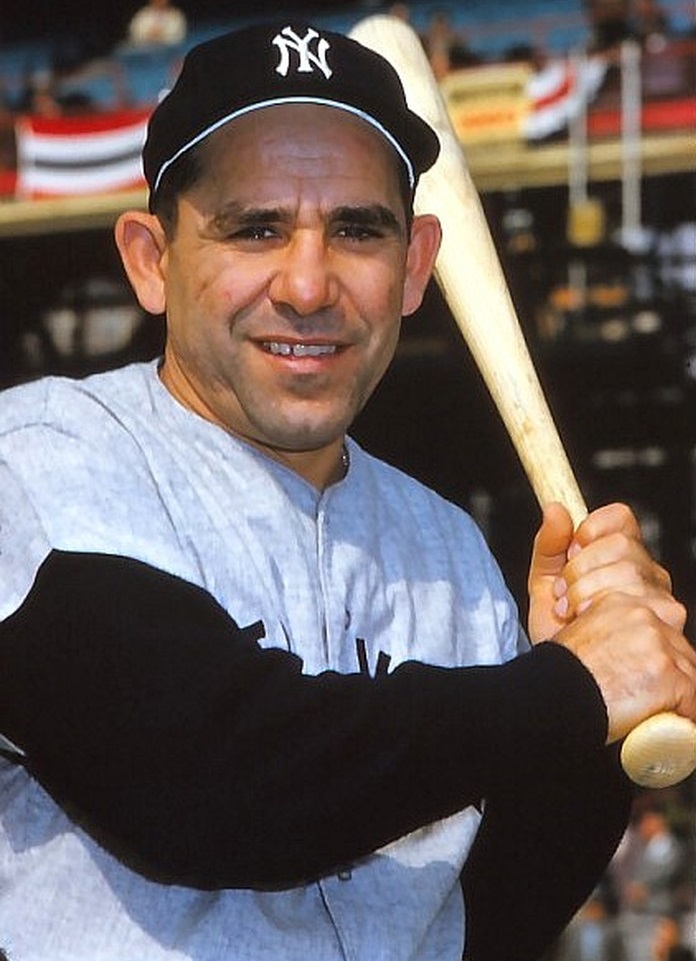
Berra later returned to baseball as a coach and eventually became the manager of the New York Mets in 1972. The following year, he led the Mets to the National League pennant, guiding them to the World Series, where they fell to the Oakland Athletics in seven games. His ability to lead different teams to success as both a player and a manager further cemented his legacy in the game.
Beyond his baseball achievements, Berra became famous for his humorous and often paradoxical sayings, known as “Yogi-isms.” Phrases like “It ain’t over till it’s over” and “When you come to a fork in the road, take it” became part of American popular culture, making Berra one of the most quotable figures in sports history. His charm, humility, and sense of humor endeared him to fans, and his larger-than-life personality made him one of the most beloved figures in baseball.
Berra was inducted into the Baseball Hall of Fame in 1972, a fitting recognition for his extraordinary career. His final career numbers included a .285 batting average, 2,150 hits, 358 home runs, and 1,430 RBIs. His offensive production, particularly for a catcher, was unprecedented, and his ability to perform under pressure set him apart from his peers. His legacy lives on not only in the record books but also in the hearts of baseball fans who admired his incredible achievements and his infectious personality.
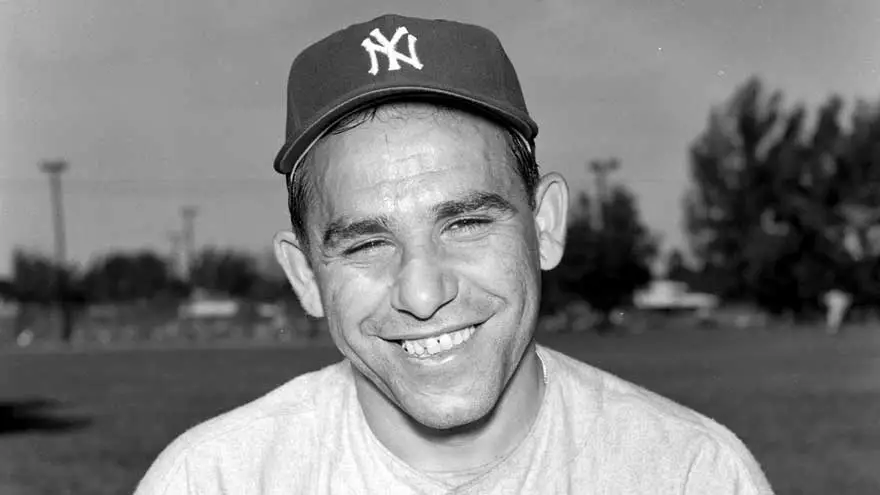
Yogi Berra’s impact on baseball is immeasurable. As one of the greatest catchers of all time, he helped define an era of Yankees dominance while setting a standard for leadership, resilience, and clutch performance. His achievements on the field, combined with his legacy as a coach, mentor, and ambassador for the game, make him one of the most influential figures in baseball history. His life and career serve as a reminder that greatness is not solely measured by statistics but also by the impact a player has on those around him. Yogi Berra’s name will forever be synonymous with excellence, humor, and an undying love for the game of baseball.



 The Baseball Scholar
Leave a comment