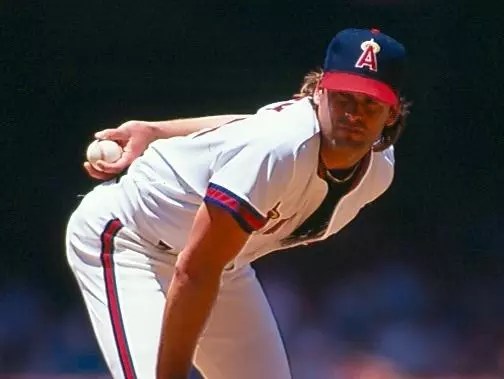
Chuck Finley was one of the most consistent and durable left-handed pitchers of his era, known for his longevity, deceptive delivery, and devastating split-finger fastball. Over a career that spanned from 1986 to 2002, Finley established himself as one of the top pitchers in Major League Baseball, particularly during his long tenure with the California/Anaheim Angels. His ability to perform at a high level for nearly two decades made him one of the most respected pitchers of his time. Despite never winning a Cy Young Award or leading the league in wins, Finley’s consistency, durability, and effectiveness ensured his place as one of the best left-handers of his generation.
Charles Edward Finley was born on November 26, 1962, in Monroe, Louisiana. From an early age, Finley showed an interest in baseball, and as he grew, his athletic ability became evident. He attended West Monroe High School, where he excelled as a pitcher. His tall frame, natural arm strength, and ability to generate movement on his pitches made him stand out among his peers. After high school, Finley attended Northeast Louisiana University (now known as the University of Louisiana at Monroe), where he continued to develop as a pitcher. His performances in college caught the attention of Major League scouts, and in the 1984 MLB Draft, the California Angels selected Finley in the first round as the fourth overall pick.
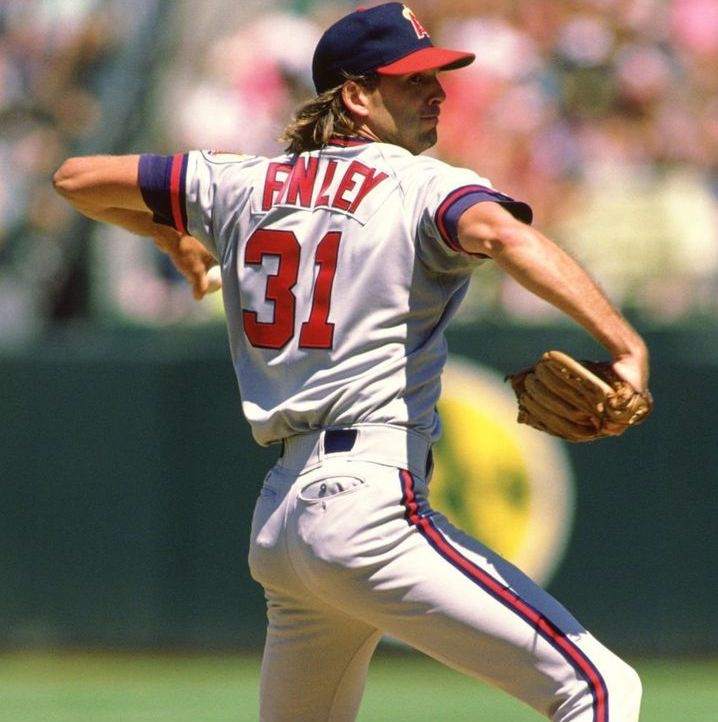
Upon entering professional baseball, Finley quickly rose through the Angels’ minor league system. His fastball, which consistently sat in the mid-90s, along with his ability to throw an effective breaking ball, made him a promising prospect. By 1986, he had made his Major League debut with the Angels, appearing in 18 games and primarily pitching out of the bullpen. His initial outings were promising, and he finished the season with a 3.30 ERA, showing flashes of the dominance he would later achieve as a starter.
By 1987, Finley had transitioned into a full-time starting role. He won 14 games that season while posting a 3.85 ERA, solidifying his place in the Angels’ rotation. His ability to pitch deep into games and maintain effectiveness over a full season made him a key component of the Angels’ pitching staff. Over the next few years, Finley continued to improve, refining his mechanics and developing a signature split-finger fastball that became one of the best in baseball.
The early 1990s saw Finley establish himself as one of the premier left-handed pitchers in the American League. In 1990, he posted a career-best 2.40 ERA while winning 18 games. That season marked the first of five All-Star selections in his career. He followed up with another strong season in 1991, going 18-9 with a 3.80 ERA. His ability to generate strikeouts and induce weak contact made him one of the toughest pitchers in the league. Finley’s mastery of the split-finger fastball made him particularly difficult to hit, as the pitch had a sharp downward movement that fooled both left-handed and right-handed batters alike.
One of the most remarkable aspects of Finley’s career was his ability to maintain consistency over an extended period. From 1989 to 1999, he recorded double-digit wins in every season and regularly ranked among the league leaders in strikeouts. His durability was another defining characteristic, as he routinely pitched over 200 innings per season. Finley was known for his stamina and ability to keep his team in games, making him a valuable asset for the Angels throughout the 1990s.
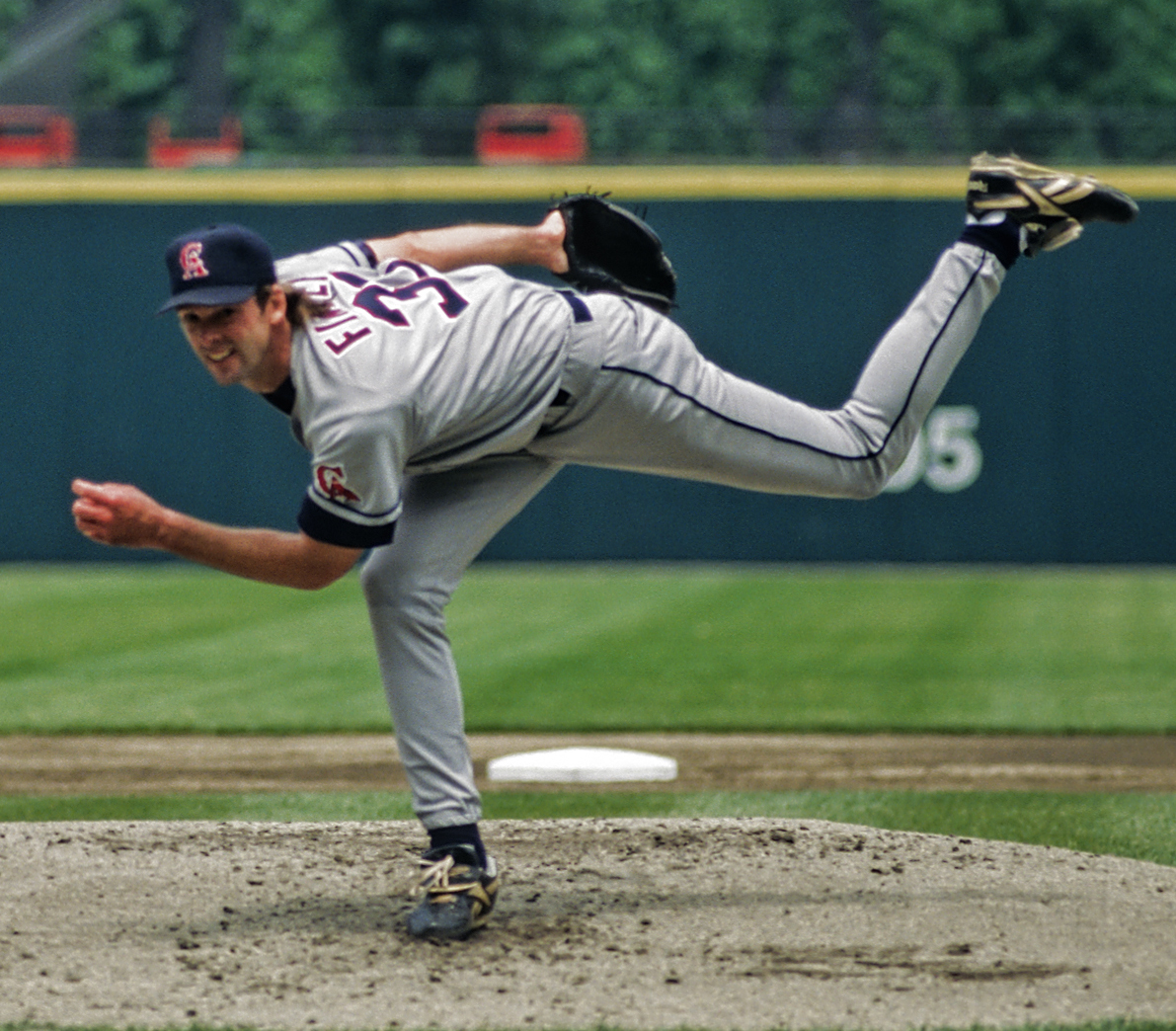
Among Finley’s most notable achievements was his ability to strike out batters at an elite rate. He finished his career with 2,610 strikeouts, ranking among the top left-handed pitchers in Major League history. He was also one of the few pitchers to record four strikeouts in a single inning multiple times, a rare feat that highlighted his ability to overpower hitters.
While Finley’s career was filled with many memorable moments, one of his most dominant performances came on May 12, 1999, against the New York Yankees. In that game, Finley struck out four batters in a single inning, a feat he had already accomplished twice before in his career. This made him the only pitcher in MLB history at the time to achieve the rare feat three times, a testament to the devastating movement of his split-finger fastball.
Finley spent 14 seasons with the Angels, making him one of the longest-tenured players in franchise history. By the late 1990s, however, the Angels were undergoing a transition, and Finley sought a change of scenery. In 2000, he signed with the Cleveland Indians, where he continued to pitch at a high level. That season, he went 16-11 with a 4.17 ERA, helping lead the Indians to the postseason. His veteran leadership and ability to perform in pressure situations made him a valuable addition to the team.
After a year and a half in Cleveland, Finley was traded to the St. Louis Cardinals in 2002. By this time, he was in the twilight of his career, but he still provided valuable innings for the Cardinals as they made a push for the playoffs. However, injuries began to take a toll on his performance, and after the 2002 season, he retired from Major League Baseball.

Over the course of his 17-year career, Finley compiled a 200-173 record with a 3.85 ERA. He struck out 2,610 batters, ranking among the top left-handed pitchers in history. His longevity and consistency made him one of the most reliable pitchers of his era, and his contributions to the Angels, Indians, and Cardinals left a lasting impact on each franchise.
Beyond his statistical achievements, Finley’s impact on baseball extended to his role as a mentor and leader. He was known for his professionalism and work ethic, often helping younger pitchers develop their craft. His ability to adapt over time, particularly with the use of his split-finger fastball, demonstrated his understanding of the game and his ability to evolve as a pitcher.
Despite never winning a Cy Young Award, Finley’s career is widely regarded as one of the most successful for a left-handed pitcher in MLB history. His five All-Star selections and 200 career wins place him among an elite group of pitchers who sustained excellence over a long period.
After retiring, Finley remained involved in baseball, occasionally working as a commentator and making appearances at team events. His legacy as one of the greatest pitchers in Angels history remains intact, and his contributions to the game continue to be recognized by those who followed his career.
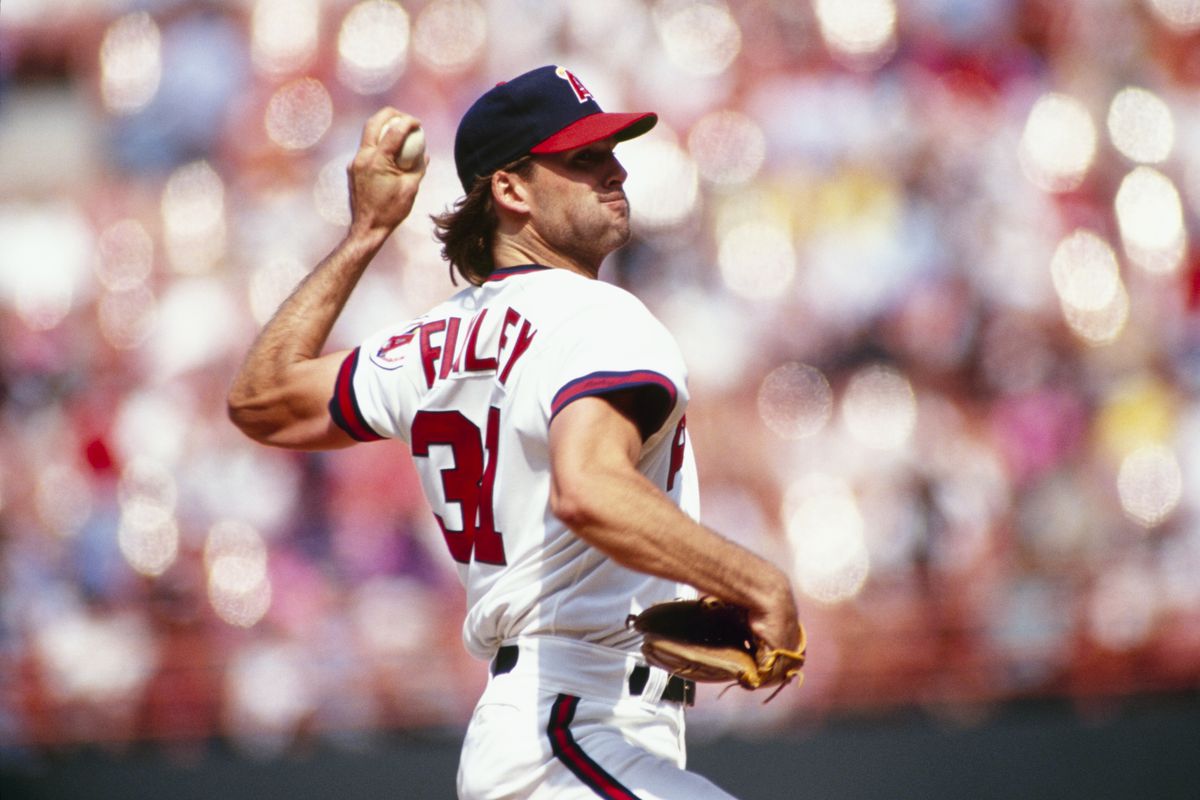
Chuck Finley’s career is a testament to durability, consistency, and excellence. He may not have received the same level of recognition as some of his contemporaries, but his ability to dominate hitters for nearly two decades made him one of the most respected pitchers of his time. His unique achievements, such as his multiple four-strikeout innings and his mastery of the split-finger fastball, set him apart as one of the most effective and memorable pitchers of his era. His legacy in Major League Baseball is one of perseverance, adaptability, and sustained success.


 The Baseball Scholar
Leave a comment