
Joe Torre is best known for his Hall of Fame managerial career, particularly his time as the leader of the New York Yankees dynasty of the late 1990s. However, before he became one of the most respected and successful managers in baseball history, Torre had an outstanding playing career that spanned 18 seasons from 1960 to 1977. As a nine-time All-Star, a National League MVP, and one of the most productive catchers and corner infielders of his era, Torre was one of the most consistent and respected players of his time. His offensive prowess, defensive versatility, and leadership on the field laid the foundation for his later success in the dugout, making him one of the most influential figures in Major League Baseball history.
Joseph Paul Torre was born on July 18, 1940, in Brooklyn, New York. He was raised in an Italian-American household where baseball was a way of life. Torre’s older brother, Frank Torre, was also a professional baseball player who played first base for the Milwaukee Braves and the Philadelphia Phillies. Watching his brother succeed at the major league level inspired Joe to pursue his own baseball dreams. However, Joe had to overcome challenges early in life, including issues with his weight and self-confidence. Despite these struggles, he worked tirelessly to refine his skills and become an elite player.

Torre attended St. Francis Preparatory School in Brooklyn, where he developed into one of the top baseball prospects in New York City. His strong throwing arm, ability to make consistent contact, and natural leadership abilities caught the attention of professional scouts. In 1959, he signed with the Milwaukee Braves and began his journey toward the major leagues. He spent just one full season in the minors, where he showcased his hitting ability and strong defensive skills behind the plate. By 1960, the Braves called him up to the big leagues, marking the start of an outstanding career.
Torre made his Major League debut for the Milwaukee Braves on September 25, 1960, appearing in just two games. He began the 1961 season as a backup catcher but quickly earned more playing time due to his offensive production. That season, he hit .278 with 10 home runs and 42 RBIs in 113 games. His strong debut season established him as a rising star, and by 1963, he had taken over as the Braves’ primary catcher. That year, he hit .293 with 14 home runs and 71 RBIs, proving that he was not only a solid defensive catcher but also an elite hitter.
Torre continued to develop as a player, and by the mid-1960s, he had emerged as one of the best catchers in the National League. In 1964, he had his first truly dominant season, hitting .321 with 20 home runs and 109 RBIs. He was selected to his first All-Star Game and established himself as one of the premier offensive catchers in the game. His ability to hit for both average and power was rare for a catcher, and his presence in the Braves’ lineup made them one of the most potent offensive teams in baseball.
Throughout the late 1960s, Torre remained one of the most consistent and productive hitters in the league. In 1966, he hit .315 with 16 home runs and 83 RBIs while continuing to provide strong defense behind the plate. The Braves, who had relocated to Atlanta before the 1966 season, valued Torre not only for his offensive contributions but also for his leadership on and off the field. By this time, he had become one of the most respected players in the game.
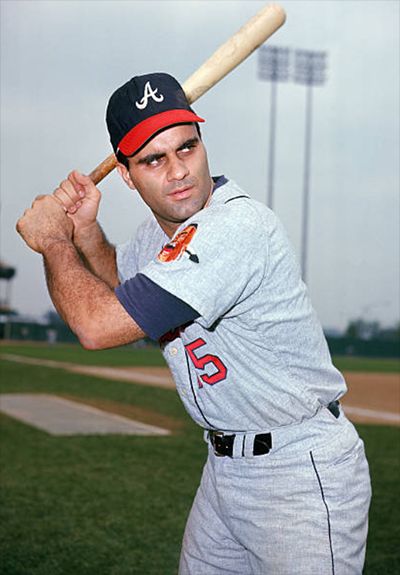
As Torre’s career progressed, the demands of catching began to take a toll on his body. In order to prolong his career and maximize his offensive potential, he transitioned from catcher to playing first base and third base. The move allowed him to continue producing at a high level while reducing the physical wear and tear associated with catching. Torre’s versatility made him even more valuable, as he was now capable of playing multiple positions while still serving as one of the team’s best hitters.
In 1969, Torre was traded to the St. Louis Cardinals in exchange for former MVP Orlando Cepeda. The trade was significant, as it provided Torre with a fresh start in a new city where he could take on an even greater offensive role. The Cardinals moved him primarily to third base, where he excelled, and his offensive numbers flourished. In 1970, he hit .325 with 21 home runs and 100 RBIs, proving that the trade had been a wise move for St. Louis.
The peak of Torre’s playing career came in 1971 when he won the National League MVP award. That season, he led the league with a .363 batting average, 230 hits, and 137 RBIs, all of which were career highs. He also hit 24 home runs and posted a .421 on-base percentage, demonstrating his all-around offensive excellence. Torre’s MVP season remains one of the greatest offensive seasons ever by a third baseman, and he became the first player to win an MVP award while primarily playing that position. His leadership and ability to consistently drive in runs made him one of the most feared hitters in the league.
Despite Torre’s individual success, the Cardinals struggled as a team during his tenure. While the franchise had enjoyed great success in the 1960s, winning two World Series titles, they failed to reach the postseason during Torre’s time in St. Louis. Nonetheless, he remained a cornerstone of the team, continuing to put up strong offensive numbers. He followed his MVP season with another solid campaign in 1972, hitting .289 with 11 home runs and 81 RBIs.

As Torre entered the later years of his playing career, his production gradually declined. In 1975, the Cardinals traded him to the New York Mets, allowing him to return to his hometown for the final years of his career. While he was no longer the same offensive force he had been in his prime, Torre provided veteran leadership for a young Mets team. He played two more seasons in New York before retiring as a player after the 1977 season.
Over the course of his career, Torre compiled a .297 batting average, 2,342 hits, 252 home runs, and 1,185 RBIs. He was selected to nine All-Star Games and won the NL MVP award in 1971. His ability to hit for average, get on base, and drive in runs made him one of the most well-rounded hitters of his generation. He was also one of the few players in history to successfully transition from catcher to corner infielder while maintaining elite offensive production.
Beyond his statistics, Torre’s impact on baseball extended to his leadership qualities and deep understanding of the game. He was widely respected by his teammates and coaches, and his ability to mentor younger players made him a natural candidate for a managerial career. In 1977, shortly after retiring as a player, he became the manager of the New York Mets, beginning a new chapter in his baseball journey. While his early managerial years were challenging, he ultimately became one of the most successful skippers in history, leading the Yankees to four World Series championships in five years and earning induction into the Baseball Hall of Fame.
Torre’s playing career is sometimes overshadowed by his managerial success, but his achievements as a player should not be overlooked. He was one of the best offensive catchers and third basemen of his era, an MVP winner, and a nine-time All-Star. His ability to adapt, evolve, and contribute in different ways over nearly two decades in the major leagues speaks to his exceptional talent and determination.
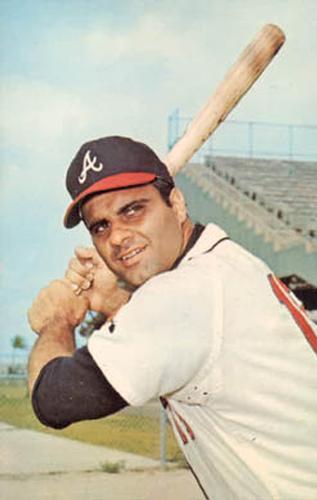
Joe Torre’s legacy in baseball is defined not only by his achievements on the field but also by his influence on the game as a whole. Whether as a player or a manager, he left an enduring impact, and his contributions continue to be celebrated by fans and historians alike. His journey from a talented young catcher in Milwaukee to an MVP third baseman in St. Louis and ultimately to a Hall of Fame manager in New York is a testament to his greatness and longevity in the sport.



 The Baseball Scholar
Leave a comment