
Brian Giles was one of the most underrated hitters of his generation, a player who consistently put up impressive offensive numbers but never received the widespread recognition of some of his contemporaries. A powerful yet disciplined hitter, Giles spent 15 seasons in Major League Baseball, playing for the Cleveland Indians, Pittsburgh Pirates, and San Diego Padres. His combination of power, on-base ability, and defensive versatility made him one of the most valuable outfielders in baseball during his prime. Despite never winning an MVP award or earning extensive All-Star recognition, Giles was a model of consistency and production, leaving a lasting impact on the teams he played for and the game as a whole.
Born on January 20, 1971, in El Cajon, California, Brian Stephen Giles grew up in a baseball-loving family. His younger brother, Marcus Giles, would also go on to play in the major leagues, making the Giles family one of the few to produce multiple big-league players. Brian attended Granite Hills High School, where he quickly established himself as one of the top baseball prospects in Southern California. His talent was evident early, as he displayed an advanced approach at the plate, a natural ability to drive the ball to all fields, and a strong arm in the outfield. After high school, he was selected by the Cleveland Indians in the 17th round of the 1989 MLB Draft.
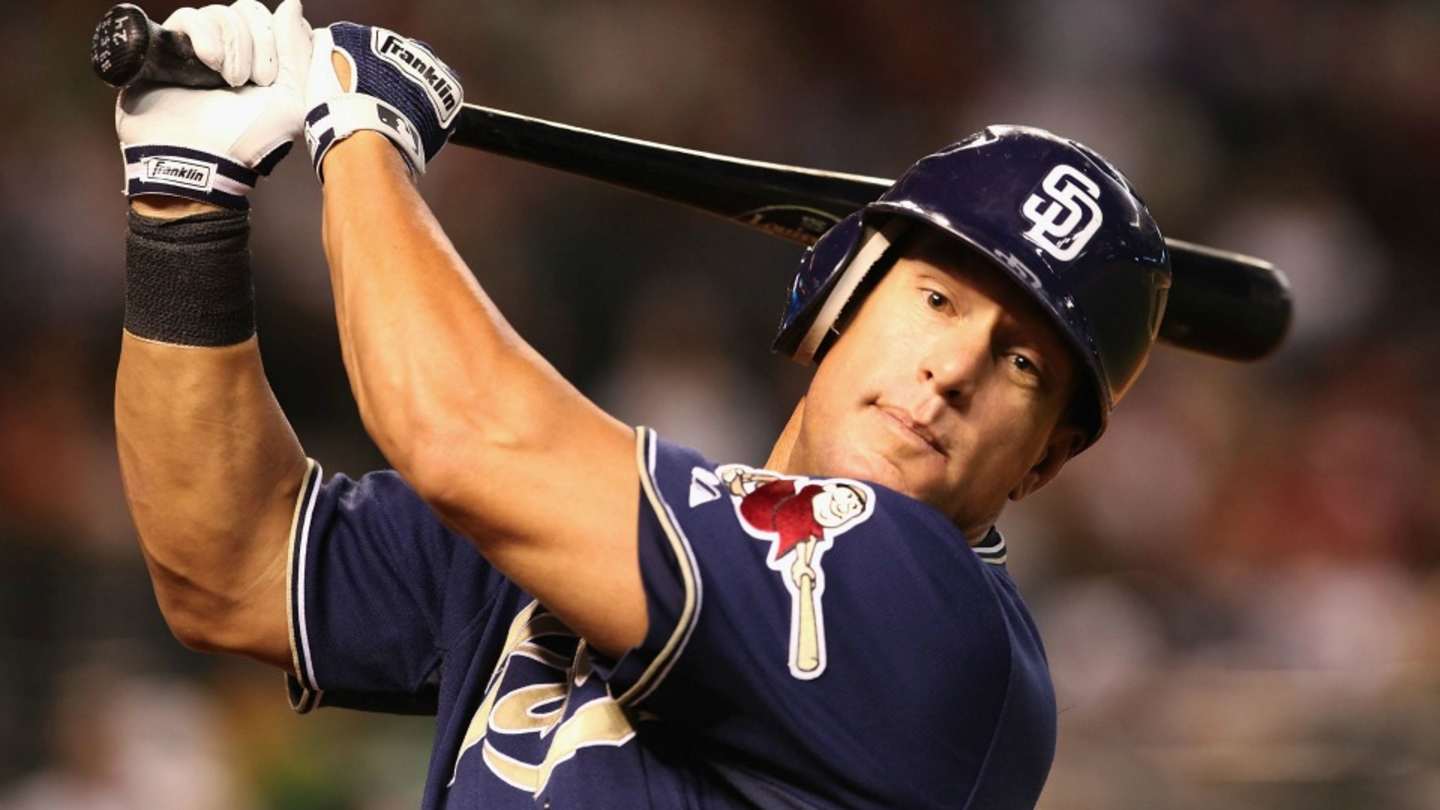
Giles’ path to the major leagues was not immediate, as he spent several seasons developing in the minor leagues. The Indians had a deep farm system at the time, and breaking into their roster was a challenge. However, Giles steadily improved, showing excellent plate discipline, power, and the ability to hit for a high average. He played in the Indians’ minor league system for six years, consistently putting up strong numbers before finally earning a call-up to the majors in 1995.
Giles made his MLB debut on September 16, 1995, with the Cleveland Indians, a team in the midst of one of the most dominant stretches in franchise history. The Indians had an explosive lineup that included future Hall of Famers like Jim Thome and Roberto Alomar, as well as established stars such as Manny Ramirez and Albert Belle. With so much offensive firepower, it was difficult for Giles to find regular playing time in Cleveland. Over the next few seasons, he primarily served as a bench player, filling in as a fourth outfielder and occasionally getting opportunities as a designated hitter.
Despite limited playing time, Giles showed flashes of his offensive potential. In 1997, he hit .268 with 17 home runs and 61 RBIs in just 373 at-bats, demonstrating his ability to hit for power even in a part-time role. However, with the Indians consistently competing for championships and having a deep roster, Giles never had the opportunity to become an everyday player in Cleveland. After the 1998 season, the Indians traded him to the Pittsburgh Pirates in exchange for relief pitcher Ricardo Rincón, a move that would dramatically alter the trajectory of his career.
It was in Pittsburgh that Giles finally had the opportunity to showcase his full potential. Beginning in 1999, he became the Pirates’ everyday left fielder and quickly established himself as one of the most dangerous hitters in baseball. That season, he posted a .315 batting average, hit 39 home runs, and drove in 115 RBIs, while also maintaining an excellent on-base percentage of .418. He showed an elite ability to work counts, draw walks, and hit for both power and average—skills that would define the rest of his career.
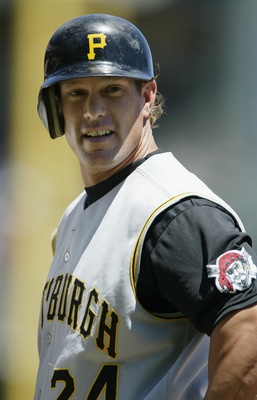
Giles followed up his breakout 1999 season with another dominant year in 2000. He hit .315 again, smacked 35 home runs, and drove in 123 RBIs, while his on-base percentage soared to .432. His blend of power and patience made him one of the most complete hitters in baseball, and yet, due to playing for a small-market team like the Pirates, he did not receive as much national attention as other sluggers of his era. Despite his elite production, he was often overshadowed by players from larger-market teams.
One of the most impressive aspects of Giles’ game was his plate discipline. While many power hitters of his era struck out frequently, Giles consistently posted more walks than strikeouts. In 2002, for example, he walked 135 times while striking out just 58 times, an almost unheard-of ratio for a power hitter. His ability to control the strike zone and get on base at such a high rate made him an incredibly valuable offensive player.
Throughout his tenure in Pittsburgh, Giles remained one of the best hitters in the National League, but the Pirates were struggling as a franchise. The team was in the midst of a prolonged playoff drought, and despite Giles’ stellar individual performances, they were unable to build a winning team around him. In 2003, with the Pirates still out of contention, they traded Giles to the San Diego Padres in exchange for Jason Bay and Oliver Pérez. The trade would benefit both sides, as Bay would go on to become a star for the Pirates, while Giles would bring his veteran leadership and offensive firepower to a Padres team looking to return to playoff contention.
Playing for the Padres meant a return home for Giles, as he had grown up in California. Although he moved from a hitter-friendly ballpark in Pittsburgh to the pitcher-friendly confines of Petco Park, Giles remained a productive offensive force. His home run numbers dipped slightly due to the spacious dimensions of Petco Park, but he continued to be one of the most disciplined hitters in baseball. In 2005, he hit .301 with 15 home runs, 83 RBIs, and an incredible .423 on-base percentage. That season, he played a key role in helping the Padres win the NL West and make the playoffs for the first time since 1998.

Giles continued to be a key contributor for the Padres for several more seasons. Even as he aged, his plate discipline and ability to get on base remained elite. He led the National League in walks in 2005 with 119 and continued to post high on-base percentages well into his mid-30s. In 2007, he helped the Padres reach the tiebreaker game against the Colorado Rockies for the final playoff spot, but they ultimately lost in a dramatic extra-inning contest.
By 2009, injuries had begun to take their toll on Giles. His production declined, and he played his final major league season that year. He finished his career with a .291 batting average, 287 home runs, 1,078 RBIs, and a .400 on-base percentage. While he never won an MVP award or played for a perennial contender, his career numbers place him among the most productive and consistent hitters of his era.
Giles’ impact on baseball extends beyond his statistics. He was a model of consistency, demonstrating that a hitter could combine power and patience to be one of the most valuable players in the league. His ability to get on base at such a high rate made him an advanced hitter, one whose skills were ahead of his time. In an era when strikeouts were becoming more common, Giles remained one of the rare sluggers who valued making contact and maintaining a disciplined approach at the plate.
Despite his impressive career, Giles remains one of the most underrated players of his generation. He never received the national recognition that some of his contemporaries did, largely because he played for smaller-market teams. However, those who followed his career closely understood his immense value as a player.
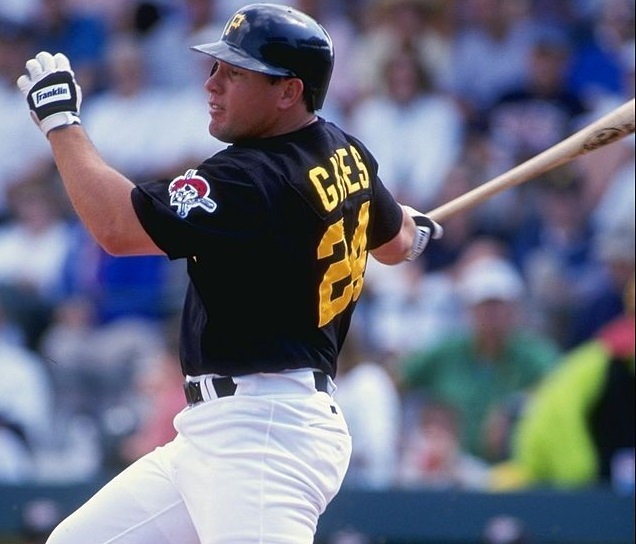
Brian Giles’ legacy is one of quiet excellence. He was never the flashiest player, never the most talked-about star, but year after year, he produced at an elite level. He was a rare blend of power, patience, and consistency, a player who could be counted on to deliver quality at-bats every time he stepped onto the field. While he may not have the accolades of some of his peers, his impact on the game is undeniable. He exemplified what it meant to be a professional hitter and remains one of the most respected players of his era.


 The Baseball Scholar
Leave a comment