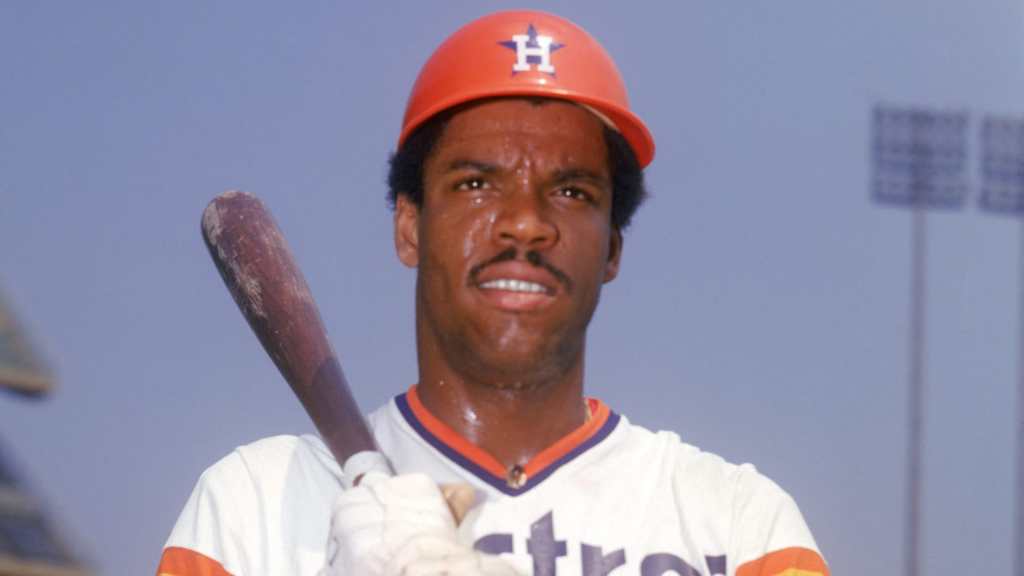
César Cedeño was one of the most electrifying and talented players in Major League Baseball during the 1970s and early 1980s, particularly known for his combination of power, speed, and defensive brilliance in center field. Often compared to Hall of Famer Willie Mays early in his career, Cedeño’s raw talent was undeniable, and he was one of the most dynamic players of his era. Playing the majority of his career with the Houston Astros, he became a cornerstone of their franchise and set a standard for excellence in center field. Over the course of his career, Cedeño compiled impressive statistics, won multiple Gold Glove Awards, and left a lasting impact on the game. His career was filled with remarkable highs and frustrating setbacks, making him one of the more compelling figures in baseball history.
César Cedeño was born on February 25, 1951, in Santo Domingo, Dominican Republic, a country that has produced many great baseball players. From a young age, he showed exceptional athletic ability, and like many young Dominican boys, he grew up playing baseball on the sandlots of his hometown. His speed, quick reflexes, and strong throwing arm made him stand out, and it wasn’t long before professional scouts took notice of his talent. In 1967, at just 16 years old, Cedeño was signed by the Houston Astros as an amateur free agent. The Astros, recognizing his immense potential, brought him into their minor league system, where he quickly developed into one of the top prospects in baseball.
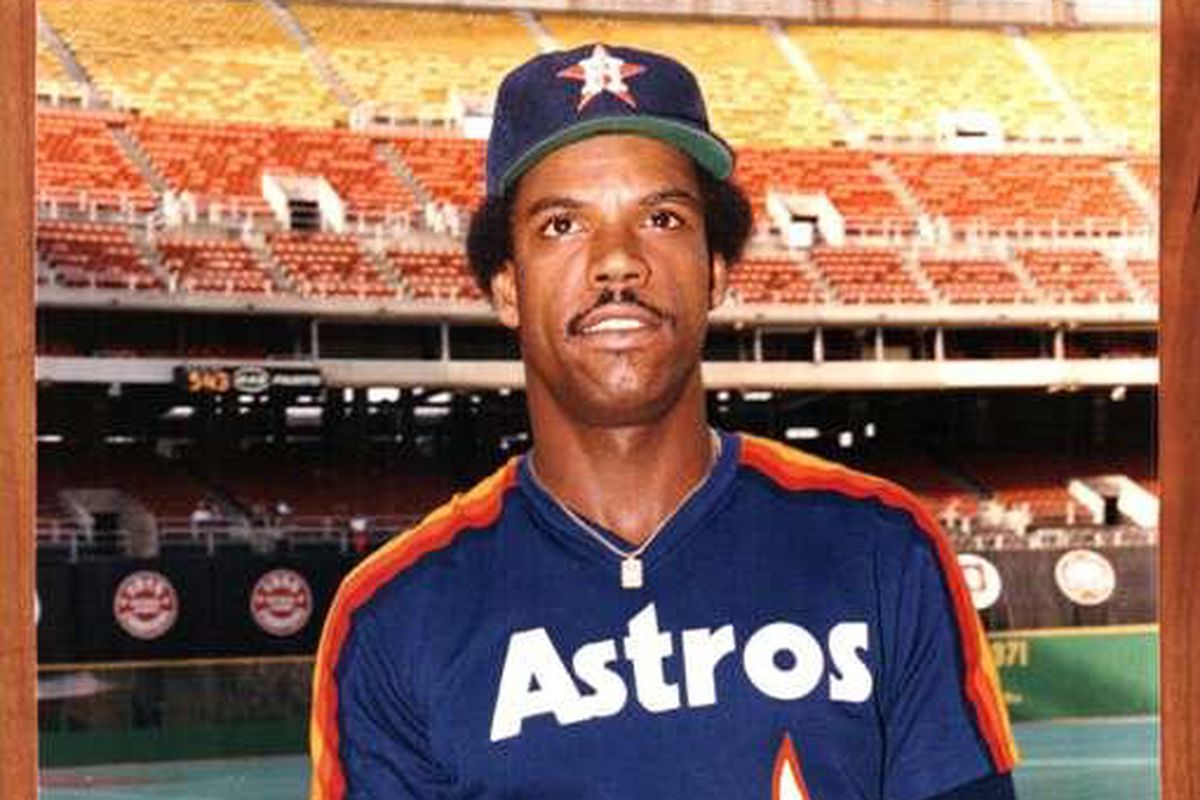
Cedeño’s rise through the Astros’ minor league system was rapid. By 1970, at just 19 years old, he was called up to the major leagues, making his debut with the Astros. From the outset, he displayed the tools that would make him one of the most exciting players of his generation. His rookie season was one of promise as he played in 90 games, hitting .310 with seven home runs, 42 RBIs, and 17 stolen bases. His performance earned him national attention, and the comparisons to Willie Mays began almost immediately. His combination of speed and power was rare, and scouts and analysts believed he had the potential to be one of the greatest players of his generation.
The following season, in 1971, Cedeño cemented himself as the Astros’ everyday center fielder and continued to impress with his offensive production and defensive excellence. He hit .264 with 10 home runs, 81 RBIs, and 40 stolen bases, demonstrating his ability to impact the game in multiple ways. His defense in center field was particularly remarkable, as he possessed the range, arm strength, and instincts that made him one of the best defensive outfielders in baseball. He won his first Gold Glove Award in 1972, an honor he would earn five times during his career.
The 1972 season was the true breakout year for Cedeño, as he put together one of the finest seasons of his career. He batted .320 with 22 home runs, 82 RBIs, and 55 stolen bases, making him one of the most dangerous offensive players in the game. His 55 steals led the National League, and he finished sixth in MVP voting. His ability to hit for average, hit for power, steal bases, and play elite defense made him one of the most complete players in baseball. The Astros, though not perennial contenders, had found a true superstar in Cedeño.
Cedeño continued to dominate throughout the mid-1970s, making four consecutive All-Star teams from 1972 to 1975. During that span, he posted impressive numbers, consistently hitting over .280, stealing at least 50 bases per season, and providing Gold Glove-caliber defense in center field. In 1973, he had one of his best statistical seasons, hitting .320 with 25 home runs, 70 RBIs, and 56 stolen bases. He became the first player in MLB history to hit at least 20 home runs and steal 50 bases in back-to-back seasons. His rare combination of power and speed put him in elite company, and he was widely regarded as one of the most exciting players in baseball.

Despite his individual brilliance, the Astros struggled as a team throughout much of the 1970s, failing to make the playoffs. Cedeño remained their brightest star and the face of the franchise, but his lack of postseason opportunities kept him from gaining the national recognition that other superstars of his era received. He continued to put up stellar numbers year after year, finishing in the top ten in MVP voting multiple times and leading the National League in doubles in 1974 and 1975.
However, injuries began to take a toll on Cedeño’s career as he entered the late 1970s. He suffered from recurring knee problems, which began to sap some of his speed and explosiveness. While still an effective player, his stolen base numbers declined, and his power numbers dipped slightly as well. In 1976, he hit .297 with 14 home runs and 58 RBIs, still solid production, but a step down from his peak years. Despite the injuries, he remained one of the best defensive outfielders in baseball and continued to provide value to the Astros.
One of the most frustrating aspects of Cedeño’s career was that despite his immense talent, he was never able to reach the level of superstardom that many had predicted for him. While he remained an All-Star-caliber player into the late 1970s, the comparisons to Willie Mays, which had once seemed fitting, began to fade. Nevertheless, he remained one of the best all-around players in the National League and continued to be a leader for the Astros.
In 1979, Cedeño had a resurgent season, hitting .262 with 15 home runs and 81 RBIs while stealing 48 bases. The Astros, for the first time in his career, were finally emerging as a legitimate contender. In 1980, Cedeño helped lead Houston to its first-ever playoff appearance, as the Astros won the National League West division. Although he was no longer the same player he had been in the early 1970s, he played a crucial role in the team’s success. In the National League Championship Series against the Philadelphia Phillies, Cedeño suffered an ankle injury that limited his effectiveness, and the Astros ultimately fell short in a dramatic five-game series.
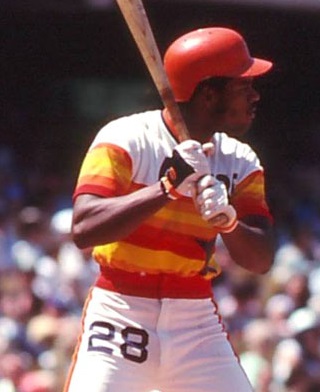
Following the 1981 season, Cedeño’s time with the Astros came to an end as he was traded to the Cincinnati Reds. While no longer the dynamic superstar he once was, he remained a productive player. In 1982, he hit .289 with eight home runs and 57 RBIs for the Reds. His time in Cincinnati was relatively short, and he later had brief stints with the St. Louis Cardinals and the Los Angeles Dodgers before retiring in 1986.
Over the course of his 17-year career, Cedeño compiled impressive statistics. He finished with a .285 career batting average, 2,087 hits, 199 home runs, 976 RBIs, and 550 stolen bases. He was a four-time All-Star, a five-time Gold Glove winner, and one of the premier center fielders of his generation. His ability to impact the game in multiple ways made him one of the most well-rounded players of his era.
Cedeño’s impact on baseball extends beyond his statistics. He was one of the first Dominican-born superstars in MLB, paving the way for future generations of Dominican players. His style of play, which combined speed, power, and defense, set the template for many modern center fielders. Players like Ken Griffey Jr., Carlos Beltrán, and Andruw Jones were often compared to Cedeño because of their similar skill sets.
Despite his incredible talent, Cedeño remains an underrated figure in baseball history. While his career was filled with highlights and individual accolades, he never quite reached the Hall of Fame level that many had projected for him. Injuries and playing for a team that struggled for much of his career limited his visibility on the national stage. However, among baseball historians and fans who saw him play, there is no doubt that he was one of the most exciting and talented players of his generation.
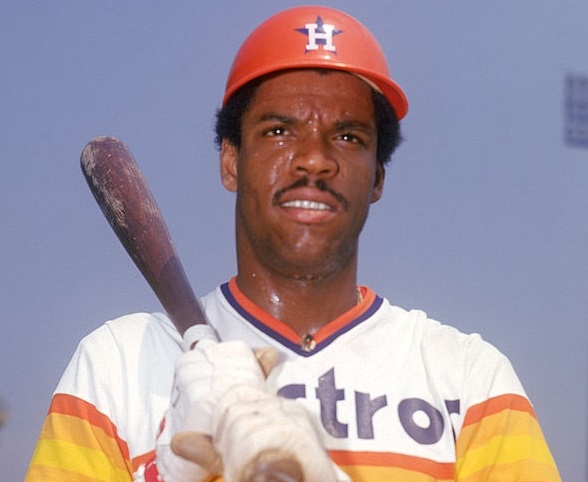
In the years since his retirement, Cedeño has remained involved in baseball, working as a coach and mentor for young players. His legacy as one of the greatest Houston Astros players of all time remains intact, and his influence on the game can still be felt in the way modern center fielders are evaluated and developed.
César Cedeño’s career was one of brilliance, resilience, and what could have been. His combination of power, speed, and defensive excellence made him one of the most dynamic players of his time, and his impact on the game continues to be recognized by those who appreciate his contributions to baseball history.



 The Baseball Scholar
Leave a comment