
Will Clark is often regarded as one of the most complete and dynamic first basemen to play the game of baseball, though his legacy has not always been as widely recognized as it should be. His career, which spanned from 1986 to 2000, was filled with remarkable achievements, both offensively and defensively, and Clark’s impact on the field was nothing short of significant. While he played for several teams during his career—most notably with the San Francisco Giants—his combination of power, plate discipline, and leadership earned him recognition among his peers and fans alike. His legacy as one of the best first basemen of his era, alongside his role in shaping the Giants’ success during the late 1980s and 1990s, remains one of the defining aspects of his career.
Born on March 13, 1964, in New Orleans, Louisiana, William Nuschler Clark Jr. grew up in a baseball-centric family, where his father was a baseball coach. Clark’s passion for the game began at a young age, and his natural talent was apparent even in his youth. He attended John Ehret High School in Marrero, Louisiana, where he developed into one of the top baseball prospects in the state. Clark’s natural athleticism, particularly his bat speed and power, made him a standout player at a time when scouts were particularly drawn to raw talent. His high school career was the first step in what would become a long and successful path to professional baseball.
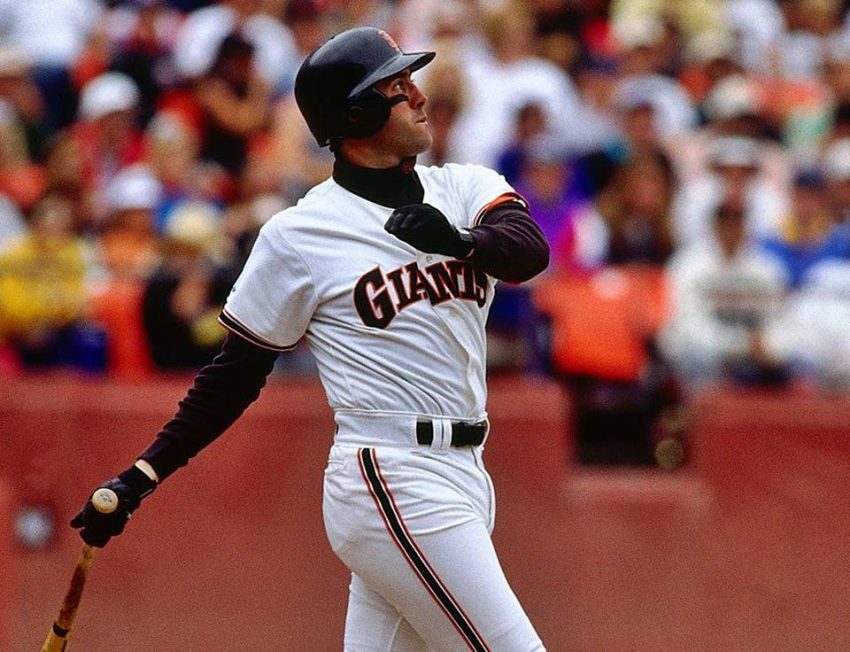
Clark’s college career further elevated his status as a top prospect. He attended Mississippi State University, where he played for the Mississippi State Bulldogs. While at Mississippi State, Clark’s talents continued to shine. His bat became even more refined, and he was recognized as one of the top hitters in collegiate baseball. His performance for the Bulldogs made him one of the most sought-after prospects in the country, and by the time of the 1985 MLB Draft, it was clear that Clark would be a future star. He was selected by the San Francisco Giants as the second overall pick in the draft, a selection that would prove to be a defining moment in both Clark’s career and the Giants’ franchise history.
Clark’s professional debut came in 1986, and it didn’t take long for him to make an impact. His natural talent and strong work ethic quickly caught the attention of his coaches and teammates. He made his MLB debut with the San Francisco Giants on May 29, 1986, at the age of 22, and immediately began to show why he had been a top draft pick. In his rookie season, Clark demonstrated a mature approach at the plate, hitting .287 with 23 home runs and 77 RBIs. He finished second in the NL Rookie of the Year voting, trailing only the legendary Mike Piazza, but his immediate success marked him as a future star. Clark’s defensive abilities at first base were also impressive, as he showcased an ability to make difficult plays and provide stability to the Giants’ infield.
Throughout his early years in the major leagues, Clark’s offensive game blossomed. In 1987, his second season, he had one of his best years, batting .301 with 35 home runs, 88 RBIs, and a .520 slugging percentage. That year, Clark made his first All-Star appearance, cementing his status as one of the league’s premier players. His combination of power and contact hitting made him a formidable force at the plate, and his ability to hit for both average and power made him one of the most well-rounded hitters in baseball.
In 1989, Clark reached the peak of his career with a performance that solidified his place among the best players of his generation. He helped lead the Giants to a division title and earned himself a spot in the National League MVP conversation. Clark finished the season with a .333 batting average, 26 home runs, 101 RBIs, and an OPS of .956. His all-around play, both offensively and defensively, earned him a Gold Glove Award for his work at first base, where he continued to be one of the best in the game. That year, he was named to the All-Star team for the second time in his career.

Clark’s impact during the 1989 postseason was instrumental in the Giants’ success. In the NL Championship Series against the Chicago Cubs, he delivered clutch performances, driving in key runs and showcasing his ability to handle high-pressure situations. Though the Giants ultimately lost to the Oakland Athletics in the World Series, Clark’s performance in the postseason underscored his ability to perform when the stakes were highest. His power, combined with his ability to hit for average, made him one of the most dangerous hitters of the late 1980s.
The early 1990s saw Clark continue to perform at an elite level. Over the next several seasons, he remained a consistent force in the Giants’ lineup, even as the team faced struggles in terms of overall team success. In 1993, Clark had one of his best statistical seasons, hitting .319 with 28 home runs, 101 RBIs, and a .592 slugging percentage. He also led the National League in doubles with 42, showcasing his ability to drive the ball to all fields. He was named to the All-Star team again that year and finished fifth in the NL MVP voting. However, despite his continued brilliance, the Giants were unable to secure a postseason berth in the 1990s, and the team’s inability to find sustained success during this period was a frustrating aspect of Clark’s career.
In 1994, Clark’s career took a dramatic turn when he was traded to the Chicago White Sox in a move that marked the end of his tenure with the Giants. Although his time in Chicago was relatively brief, Clark’s impact continued to be felt. He contributed offensively, hitting .289 with 15 home runs and 63 RBIs in 1995. That year, the White Sox made it to the American League Championship Series (ALCS), where they faced the Cleveland Indians. Clark’s contributions, though limited in the postseason, were a valuable part of the team’s effort. He spent one more season with the White Sox before continuing his career with the Baltimore Orioles and the St. Louis Cardinals in the late 1990s.
Clark’s final seasons in Major League Baseball saw him transition from a star player to a veteran contributor. Though his numbers began to decline, his leadership and experience continued to be valuable for the teams he played for. He retired from baseball in 2000, bringing an end to a career that had spanned 15 seasons.
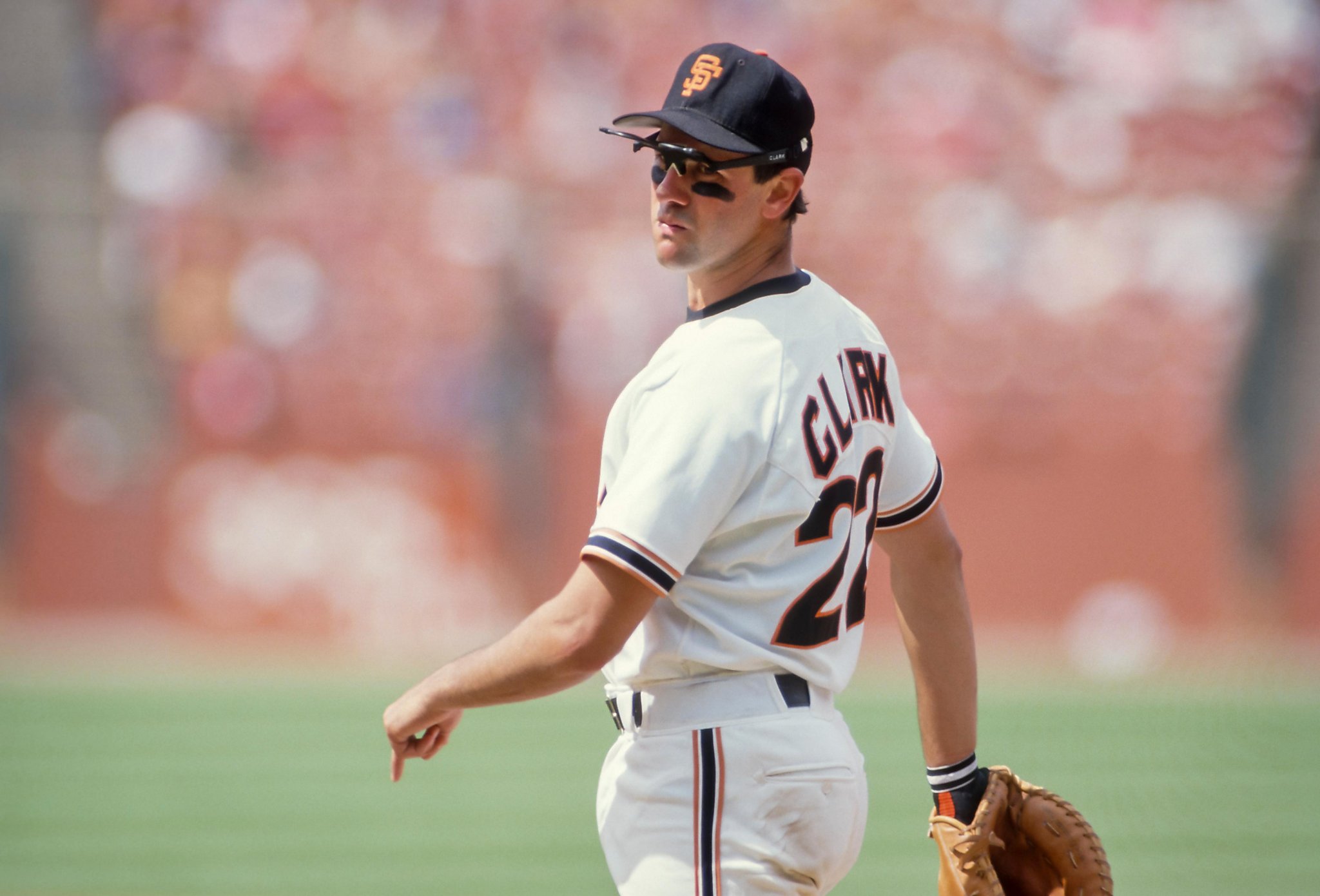
Throughout his career, Clark was a remarkably consistent hitter and one of the most complete players in the league. Over the course of his 15-year career, he accumulated 2,176 hits, 284 home runs, 1,205 RBIs, and a .303 batting average. His combination of power, plate discipline, and defensive skill made him one of the most well-rounded players in baseball during his peak years. He finished his career with a .400 on-base percentage and a .515 slugging percentage, reflecting his ability to get on base and drive the ball with authority.
Clark’s impact on the game extended beyond his individual statistics. He was a leader on the teams he played for and helped to set the tone in the clubhouse. His approach to hitting, which combined power with discipline, helped to define the role of the modern first baseman. His success in both the regular season and the postseason helped to elevate the play of those around him, particularly in the case of the Giants during the 1989 season.
Moreover, Clark’s approach to the game set a standard for future generations of players. His ability to hit for average, combined with his ability to drive the ball to all fields, made him a player who could consistently contribute to his team’s success. His offensive philosophy, centered around patience and solid contact, influenced future first basemen and left an indelible mark on how the position was played. Clark was among the first to showcase the value of a complete offensive game at first base, combining power with discipline and hitting for average, all while maintaining a high level of defensive excellence. His impact on the game transcended his own playing days, as his legacy influenced younger players who sought to emulate his approach.
Beyond his individual accomplishments, Clark’s career has been celebrated for its contributions to the teams he played for. His time with the Giants, White Sox, Orioles, and Cardinals shaped the direction of each franchise during his tenure, and he remains one of the most beloved figures in Giants history. Although Clark did not achieve the level of fame and recognition that some other players of his era did, his impact on the game remains significant. He played the game with passion, grit, and a commitment to excellence that endeared him to fans and teammates alike.

In conclusion, Will Clark’s career was one defined by exceptional talent, consistency, and a well-rounded approach to the game. His ability to hit for average, power, and display elite defensive skills set him apart from many of his peers. Though his career did not result in a Hall of Fame induction, his legacy as one of the most complete players of his generation remains secure. His contributions to the game, particularly in terms of redefining the expectations for first basemen, have left a lasting mark on baseball. Will Clark’s story is one of dedication, excellence, and the pursuit of greatness, making him one of the most important figures in baseball history, even if his legacy is sometimes overshadowed by others.



 The Baseball Scholar
Leave a comment