
Don Drysdale was a towering figure in Major League Baseball during the 1950s and 1960s, both figuratively and literally. Standing at 6 feet 6 inches, Drysdale was an intimidating presence on the mound, known for his fastball, dominance, and fiery demeanor. His career, spanning from 1956 to 1969, marked him as one of the premier pitchers of his time and one of the cornerstones of the Los Angeles Dodgers’ dynasty. Drysdale’s accomplishments were not just measured by his statistics but also by the way he affected the game and set the standard for how pitchers could assert themselves both mentally and physically.
Don Drysdale was born on July 23, 1936, in Van Nuys, California. Raised in a city where baseball was a beloved pastime, Drysdale grew up watching and emulating the sport. He attended Van Nuys High School, where his natural talent as a pitcher quickly became evident. Standing tall and strong, Drysdale had the perfect frame for a power pitcher, and by the time he graduated, scouts were already taking note of his abilities. He was drafted by the Brooklyn Dodgers in 1954, when he was just 18 years old, and his journey to the big leagues began soon after.
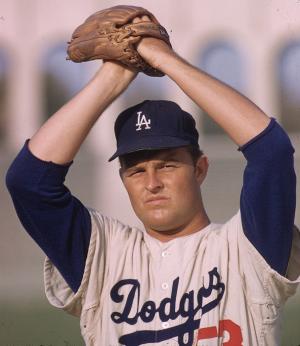
Drysdale’s early years in professional baseball were spent in the minors, where he honed his skills and developed his understanding of pitching. Despite the early challenges that every young player faces, Drysdale’s immense talent set him apart. He worked his way through the Dodgers’ minor league system, gaining experience and learning the ins and outs of pitching. His ascent through the ranks was quick, and by 1956, only two years after being drafted, Drysdale made his major league debut with the Brooklyn Dodgers at the age of 19. In those early days, Drysdale struggled with control but demonstrated flashes of brilliance, including his ability to throw a fastball that many batters found difficult to hit.
The Brooklyn Dodgers’ move to Los Angeles in 1958 proved to be a defining moment not just for the team but also for Drysdale’s career. The Dodgers were looking to make their mark on the West Coast, and Drysdale quickly became a key part of their pitching rotation. Over the next few years, he began to refine his approach and grow into his role as one of the team’s aces. By 1959, he had established himself as one of the most dominant pitchers in the National League, finishing the year with a 17-9 record and a 3.19 ERA. The 1959 season was also the year Drysdale and the Dodgers clinched the World Series title, defeating the Chicago White Sox in a four-game sweep. Drysdale’s impact in the postseason, while not always measured by individual performances, helped solidify his place as a rising star.
The early 1960s saw Drysdale take his place among the league’s elite pitchers. Over the next several years, he became synonymous with dominance on the mound. His fastball was his calling card, regularly clocking in the mid-90s, and his ability to control the game with his arm and mind made him one of the most feared pitchers in baseball. Drysdale’s intimidation factor on the mound was unmatched—he was a pitcher who wasn’t afraid to throw inside, and his ability to back up his pitching with his aggressive attitude made him a feared competitor.
Drysdale’s impact was felt beyond just his strikeouts and ERA. His fierce demeanor on the mound and the way he pitched with confidence and authority transformed him into a figure who was as much about mental warfare as physical prowess. His ability to control the strike zone with precision and his intimidating presence turned him into a leader of the Dodgers’ pitching staff. By 1962, Drysdale was recognized as one of the top pitchers in the league, finishing the season with a 25-9 record, a 2.63 ERA, and 208 strikeouts, the latter of which led the league. His efforts earned him his first All-Star selection, and he was in the midst of a remarkable stretch of dominance. His accomplishments during that season helped lead the Dodgers to the National League pennant, although they were ultimately defeated by the New York Yankees in the World Series.
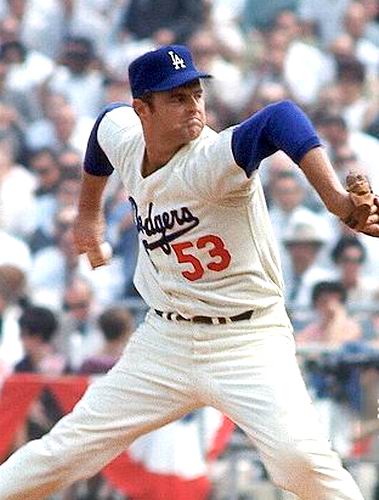
Perhaps the most defining stretch of Drysdale’s career came in 1963, when he had one of the most dominant seasons by a pitcher in MLB history. That year, Drysdale posted a career-best 2.63 ERA and won the Cy Young Award, a testament to his status as the best pitcher in the league. He finished the season with a remarkable 25-9 record, and his performance was integral to the Dodgers’ success. Drysdale led the league in complete games (a staggering 15), strikeouts (with 232), and innings pitched (with 314). His consistency throughout the season, along with his ability to pitch deep into games, was instrumental in Los Angeles’ success. Drysdale was not just a great pitcher in 1963; he was the ace of a team that dominated the National League and captured the World Series title that year, defeating the Yankees in a four-game sweep. Drysdale’s Game 3 performance in the 1963 World Series was unforgettable, as he pitched a complete game shutout against the Yankees, effectively sealing the championship for the Dodgers.
In 1964, Drysdale continued to showcase his skill and consistency, posting a 19-17 record with a 3.06 ERA. However, this would also be the start of a decline, as injuries and the natural toll of a lengthy career began to take their toll on Drysdale’s body. Despite this, he continued to be a key figure in the Dodgers’ rotation throughout the 1960s. His reputation as an innings-eater and a pitcher who could perform under pressure made him a vital part of the team.
Another memorable moment of Drysdale’s career came in 1968 when he set a Major League record for consecutive scoreless innings pitched by a starting pitcher. From May 30 to June 4, Drysdale pitched 58 consecutive scoreless innings, a record that stood for nearly 20 years. The streak was a testament to his control and dominance, as he kept batters off balance and consistently shut down offenses. The streak ended on June 4, 1968, but the accomplishment remained one of the most remarkable feats by a pitcher in the history of the game.
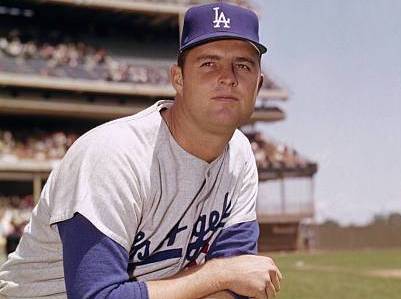
Despite the fact that Drysdale’s physical condition began to deteriorate, he continued to be a productive member of the Dodgers’ pitching staff into the early 1970s. However, by the end of the 1969 season, Drysdale’s career had reached its twilight, and he officially retired from the game in 1970. Over the course of his career, Drysdale had accumulated 209 career wins, 2,486 strikeouts, and a 2.95 ERA. His dominance on the mound, combined with his leadership and mental toughness, cemented his place among the great pitchers of the 1960s.
Beyond his statistical achievements, Drysdale’s legacy lies in his impact on the game. He was a key figure in the Dodgers’ success during the 1960s and helped define the way pitchers approached the game in the post-World War II era. His intimidating presence on the mound and his willingness to throw inside to hitters changed the way teams prepared for games. Drysdale’s reputation as a pitcher who could dominate both physically and mentally resonated throughout the baseball world, influencing future generations of pitchers who looked up to him as a role model.
Drysdale’s post-playing career also contributed to his enduring legacy. After retiring from playing, he transitioned to a career as a broadcaster, providing color commentary for the Dodgers and later for the Major League Baseball Network. His deep knowledge of the game, combined with his experience as a pitcher, made him a respected voice in the broadcasting world. Additionally, Drysdale was inducted into the Baseball Hall of Fame in 1984, solidifying his place among the greatest pitchers in baseball history.
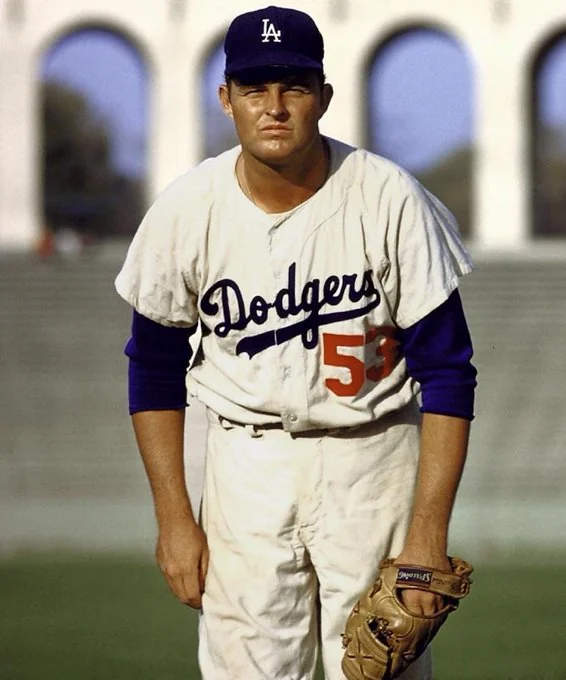
Don Drysdale’s career left a lasting impact on the game of baseball, both through his on-field accomplishments and his influence on the sport. His dominance during the 1960s, his unrelenting competitiveness, and his ability to intimidate hitters made him a legendary figure in the history of the Dodgers and in the annals of baseball. His career, marked by both individual achievements and team success, serves as a reminder of the importance of mental toughness, dominance, and perseverance in achieving greatness. Today, Drysdale’s legacy continues to be honored by fans and players alike, and his contributions to the sport will never be forgotten.


 The Baseball Scholar
Leave a comment