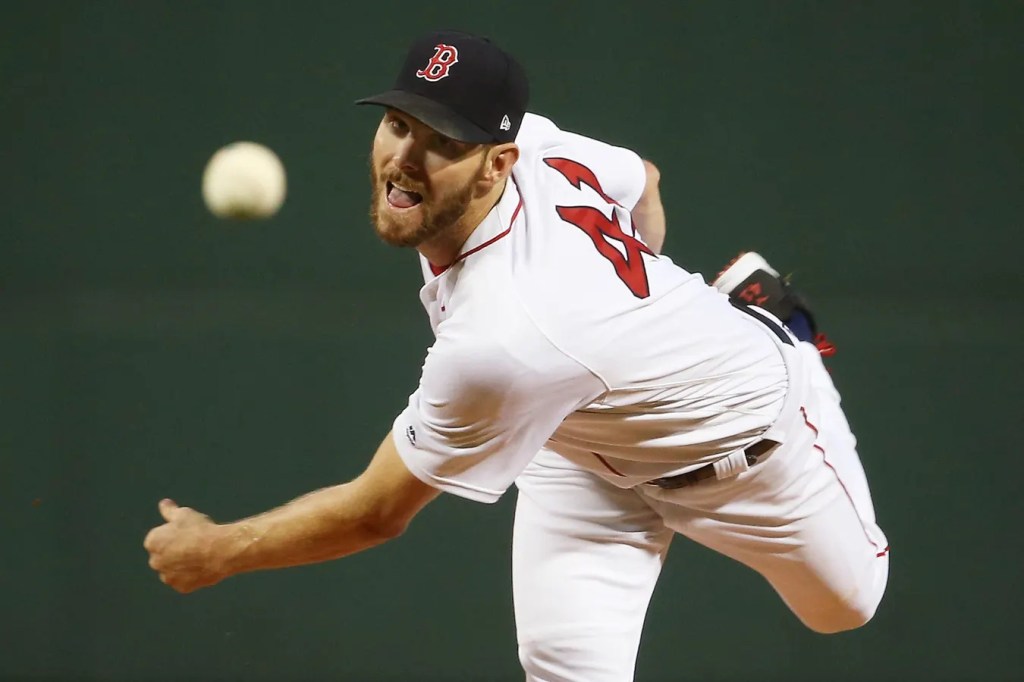
Chris Sale is one of the most dynamic and dominant pitchers of his generation, known for his unique delivery, elite strikeout ability, and relentless competitiveness. From his rise as an electric left-handed pitcher to his status as one of the most feared arms in Major League Baseball (MLB), Sale has left an indelible mark on the game. His career has been filled with extraordinary achievements, punctuated by dominating seasons, postseason heroics, and a relentless drive to be the best. Beyond his statistics, Sale’s impact on the game is also defined by his role in reshaping how pitchers approach the craft, especially with the use of analytics and a non-traditional, high-velocity approach.
Chris Sale was born on March 30, 1989, in Lakeland, Florida. Growing up, he developed a love for sports, excelling not only in baseball but also in basketball. His family, supportive of his athletic pursuits, encouraged his talents, but it was baseball where he truly stood out. Sale attended Lakeland High School, where he quickly became known for his unique pitching mechanics, which were both unorthodox and highly effective. Though not the most physically imposing pitcher at 6’6″ and 180 pounds, Sale’s ability to generate velocity and movement on his fastball made him a formidable prospect. His quirky, almost sidearm delivery helped him deceive hitters, and scouts began to take notice of his electric stuff, even though he was not the most traditional prospect in terms of body type and delivery.
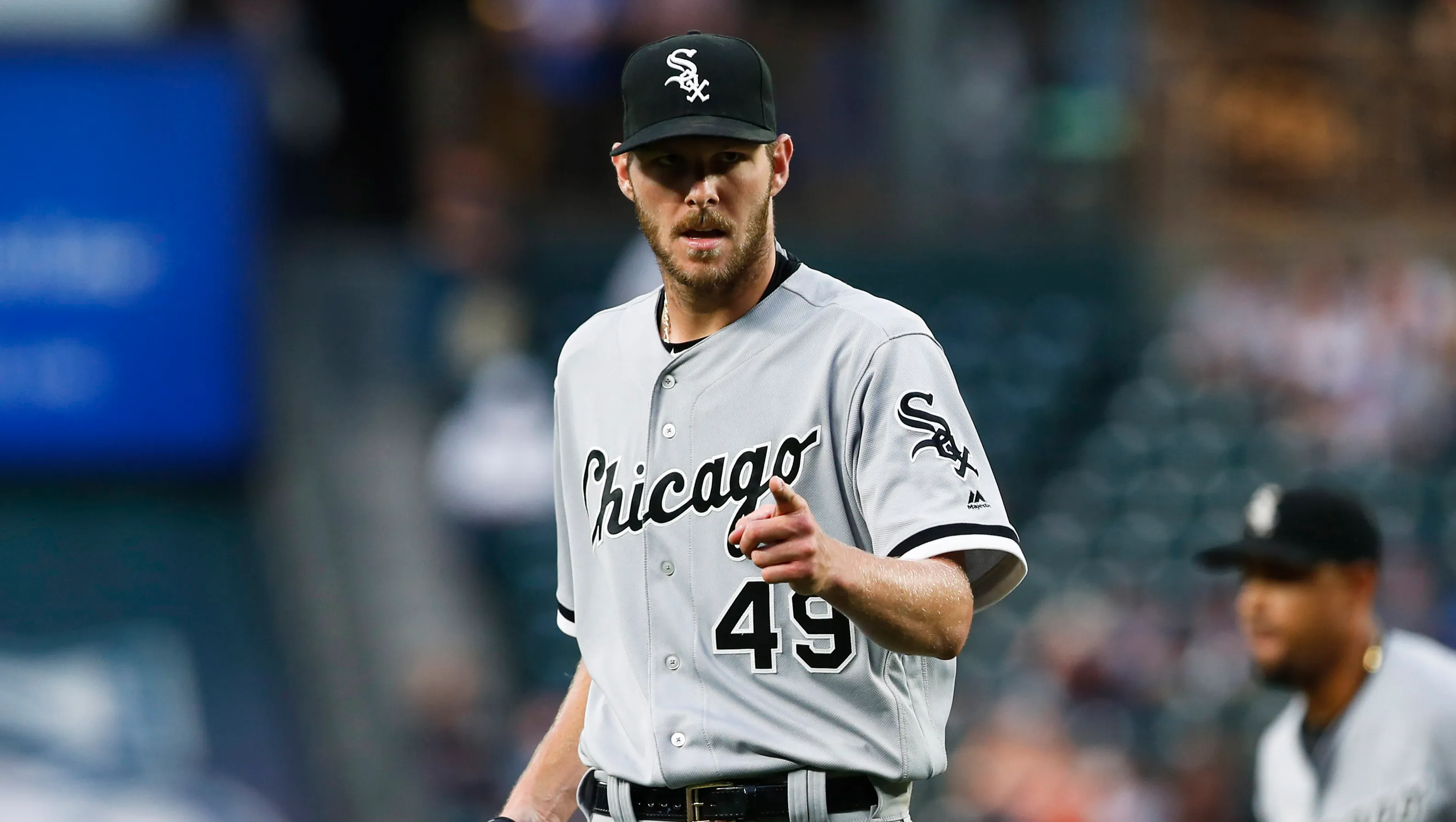
After high school, Sale enrolled at Florida Gulf Coast University (FGCU), where he continued to hone his craft. At FGCU, Sale’s performance quickly caught the attention of Major League Baseball scouts, and he was considered one of the top collegiate pitchers in the country. During his time with the FGCU Eagles, Sale showcased his remarkable pitching ability, dominating the competition with a mid-90s fastball, a wicked slider, and the kind of command that belied his years. His college career was short but impactful, and by 2010, Sale was one of the most highly anticipated pitching prospects in the country.
In the 2010 MLB Draft, the Chicago White Sox selected Sale with the 13th overall pick. From the moment he entered the professional ranks, Sale’s success was immediate. After a brief stint in the minor leagues, he made his MLB debut on August 6, 2010, at the age of 21. Though initially brought up as a reliever, Sale’s fastball and slider combination proved effective right away, and he quickly earned a reputation as a dominant force out of the bullpen. He posted a 1.93 ERA with 12 strikeouts per nine innings in his rookie season, providing immediate impact for the White Sox as they looked for a late-season push toward the playoffs.
Sale’s success in 2010 was a harbinger of what was to come. By 2012, the White Sox transitioned him into a starting role, and the results were nothing short of spectacular. Sale’s unique delivery, which featured a sharp downward motion and deceptive mechanics, made it difficult for hitters to pick up the ball. His ability to maintain mid-90s velocity on his fastball while commanding the strike zone with precision became his calling card. He posted a 3.05 ERA in 2012, striking out 192 batters in 192 innings and finishing sixth in the American League (AL) Cy Young Award voting. His success in the starting rotation solidified his place as one of the game’s premier pitchers, and he quickly became one of the most dominant left-handers in baseball.
In 2013, Sale’s dominance continued. He finished the season with a 2.96 ERA, 226 strikeouts, and just 44 walks in 214.1 innings. His ability to rack up strikeouts while keeping his walk rate low was one of the key aspects of his success. Sale’s pitch mix was as intimidating as it was effective—his fastball sat in the low-to-mid 90s and featured exceptional movement, while his slider was one of the nastiest pitches in the game. He also had a changeup that allowed him to keep hitters off balance, making him a nightmare for opposing batters.
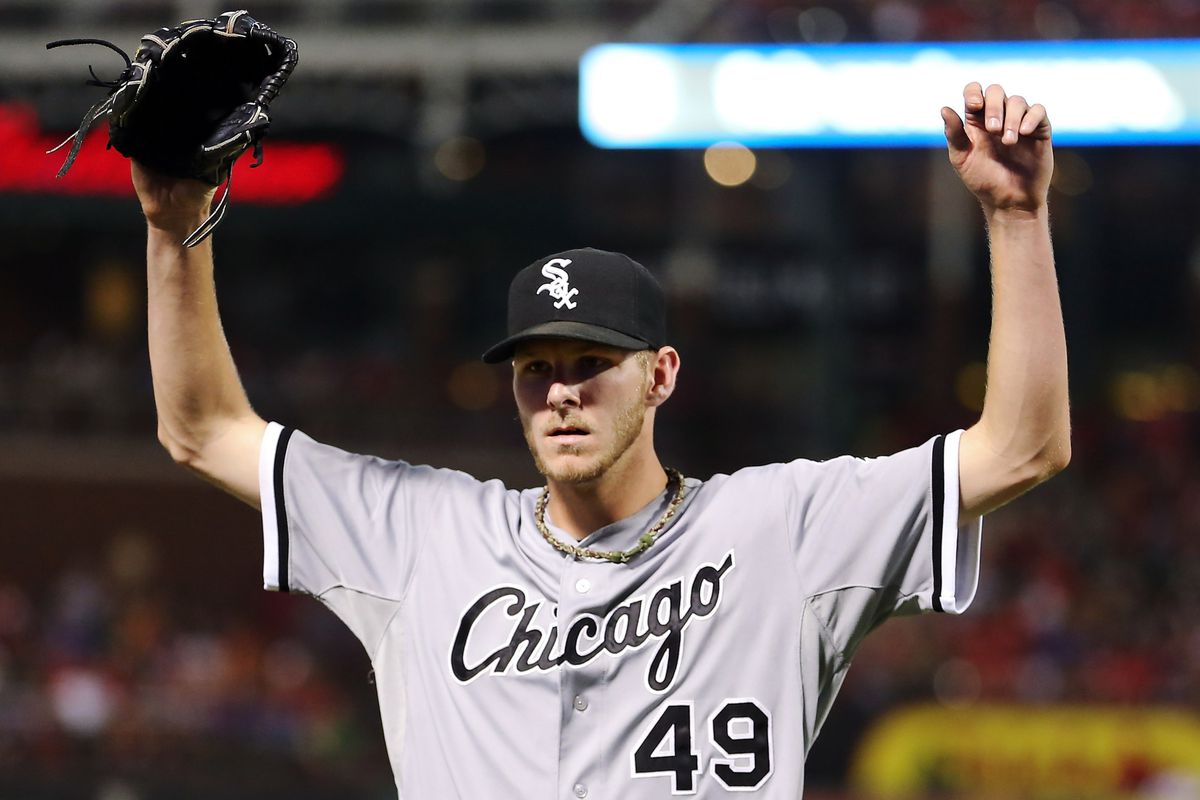
The 2014 and 2015 seasons further cemented Sale’s status as one of the best pitchers in baseball. In 2014, Sale posted a 2.17 ERA, a career-high 10.8 strikeouts per nine innings, and finished second in the Cy Young Award voting behind Corey Kluber. He continued to rack up strikeouts at an extraordinary rate, consistently leading the American League in strikeouts per nine innings. In 2015, he finished with a 3.41 ERA and led the AL in strikeouts, with 274 punchouts in just 208 innings. His dominance was underscored by his ability to control the game from the mound, as he had mastered the art of pitching with both power and precision.
However, it wasn’t just the regular season where Sale shined. As the White Sox struggled to contend for championships, Sale’s competitive nature was showcased in his ability to perform in the postseason. Though his postseason appearances were limited with Chicago, his electric stuff and ability to handle pressure shone through whenever he took the mound.
In 2017, Sale was traded to the Boston Red Sox in a move that would propel his career to even greater heights. The trade reunited him with a team that was already a perennial contender, and Sale quickly became the ace of the Red Sox’s pitching staff. In his first season with Boston, Sale dominated, posting a career-best 2.90 ERA and leading the league with 308 strikeouts in 214.1 innings. He finished second in the AL Cy Young voting, narrowly losing to Corey Kluber. Sale’s performance that season was a continuation of his dominant run from previous years, and he proved that he could still be one of the best pitchers in the game, even in a new environment.
Sale’s tenure with the Red Sox was defined by both individual and team success. In 2018, he played a pivotal role in Boston’s World Series championship run. Despite battling shoulder issues throughout the season, Sale was dominant when it mattered most. In the postseason, he pitched with both precision and poise, leading the Red Sox to their fourth World Series title in 15 years. His performance in the World Series, including his closing out of Game 5 to secure the championship, highlighted his role as a leader on the team and his ability to step up in high-pressure situations.

In addition to his 2018 World Series title, Sale’s career has been marked by his numerous accolades, including multiple All-Star selections, Cy Young Award votes, and Gold Glove Awards. His strikeout totals over the years have consistently placed him among the best in the league, and his WHIP (Walks plus Hits per Innings Pitched) has been among the best for starting pitchers over the course of his career. He has also maintained an ERA consistently below 3.50 for much of his career, even as his career progressed. His combination of velocity, deception, and control made him one of the most feared pitchers of his generation.
However, Sale’s career has also been marred by injuries. After his dominant 2018 season, Sale struggled with elbow issues that required Tommy John surgery in 2020. His recovery from the surgery delayed his return to the mound, and as of 2022, Sale was still working to regain the form that made him one of the best pitchers in baseball. His long recovery process has been a source of frustration for both Sale and Red Sox fans, as the future of his career hangs in the balance. Despite the setbacks, Sale’s resilience and determination to return to top form have kept fans hopeful that he will be able to contribute at a high level once again.
As of the most recent seasons of his career, Sale’s legacy as one of the great pitchers of his era is secure. His career accomplishments, including over 2,000 strikeouts, a career ERA under 3.00, and his dominance on the mound, position him as one of the most successful and talented pitchers of the 21st century. His unique delivery, intense competitiveness, and ability to consistently outperform expectations have made him a beloved figure in Boston and across baseball.
Chris Sale’s impact on baseball is not just measured by his statistics but by the way he has influenced the game. His use of analytics to refine his pitch mechanics and the way he embraced a non-traditional approach to pitching have been part of a broader trend in baseball where power pitching, velocity, and strikeouts have become increasingly important. He played a key role in the transition from the traditional pitcher’s mindset to one that places more emphasis on overpowering hitters with velocity and breaking stuff, which helped redefine the expectations of starting pitchers in the modern game.

In conclusion, Chris Sale’s career has been marked by his electrifying pitching, his leadership on and off the field, and his ability to perform on the biggest stages. From his days with the Chicago White Sox, where he first established himself as a dominant force, to his time with the Boston Red Sox, where he became an integral part of the team’s World Series-winning roster, Sale’s legacy is secure as one of the great pitchers of his era. Though injuries have hindered the latter portion of his career, his body of work, marked by numerous strikeout records, an MVP-caliber season, and postseason success, will ensure that he is remembered as one of the best left-handed pitchers to ever play the game. Chris Sale’s impact on baseball, particularly as a transformative force in the art of pitching, will be felt for generations to come.


 The Baseball Scholar
Leave a comment