
Larry Doby was one of the most significant figures in Major League Baseball history, not only for his accomplishments on the field but also for his groundbreaking role in integrating the American League. As the first Black player in the American League and only the second to break baseball’s color barrier after Jackie Robinson, Doby faced tremendous challenges while establishing himself as one of the premier players of his era. Over the course of his career, which spanned from 1947 to 1959, Doby was a seven-time All-Star, a power-hitting outfielder, and a key contributor to the 1948 Cleveland Indians team that won the World Series. His impact on baseball went far beyond statistics, as he helped pave the way for future generations of Black players in the game. Despite the hardships he endured, Doby left an enduring legacy and was rightfully enshrined in the Baseball Hall of Fame in 1998. His story is one of perseverance, talent, and quiet dignity, and his contributions to baseball and society remain invaluable.
Larry Doby was born on December 13, 1923, in Camden, South Carolina, a region deeply entrenched in segregation at the time. Growing up in the Jim Crow South, he experienced firsthand the racial discrimination that would later define his early struggles in professional baseball. His father, David Doby, died in a domestic accident when Larry was just eight years old, leaving his mother to raise him. Seeking better opportunities, Doby’s family moved to Paterson, New Jersey, where he developed into a multi-sport athlete. Excelling in football, basketball, and baseball, Doby attended Eastside High School, where his natural athletic ability became evident to all who watched him play.
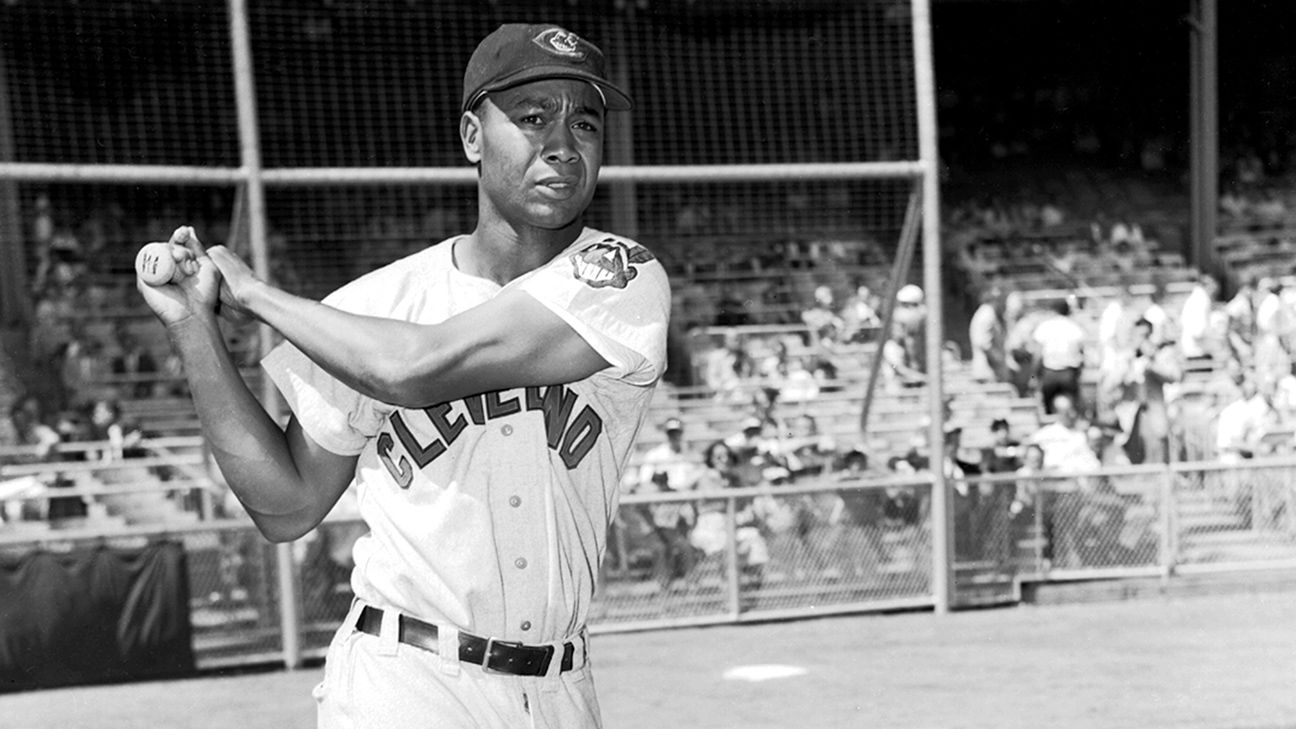
While attending high school, Doby was introduced to Negro League baseball, which provided Black players an opportunity to play professionally at a time when Major League Baseball remained racially segregated. In 1942, at the age of 17, he signed with the Newark Eagles of the Negro National League under the pseudonym “Larry Walker” to protect his amateur eligibility. His time in the Negro Leagues was brief but impactful. He quickly established himself as a promising young player with a potent bat and strong defensive skills. However, his career was put on hold when he joined the U.S. Navy during World War II, where he served from 1943 to 1945.
Following his military service, Doby returned to the Newark Eagles, where he continued to refine his skills. By 1946, he had blossomed into one of the best players in the Negro Leagues, helping lead the Eagles to a Negro League World Series championship. He batted .341 that season, showcasing a combination of power, speed, and plate discipline that made him a coveted talent. His performance caught the attention of Cleveland Indians owner Bill Veeck, who was determined to integrate the American League just months after Jackie Robinson debuted for the Brooklyn Dodgers in the National League.
On July 5, 1947, Larry Doby made history when he debuted for the Cleveland Indians, becoming the first Black player in American League history. Unlike Jackie Robinson, who had the benefit of a year in the minor leagues before reaching the majors, Doby was signed directly from the Negro Leagues and thrown into a new, hostile environment without any transition period. His first few months in the league were challenging, as he faced the same racial hostility, verbal abuse, and physical threats that Robinson had encountered in the National League. Some of his own teammates refused to shake his hand, and opposing players taunted him on the field. The weight of being a racial pioneer in a league that had never before included Black players was a burden Doby carried with quiet dignity.
Despite these difficulties, Doby persevered and, by 1948, had established himself as a regular starter for the Indians. That season, he batted .301 with 14 home runs and 66 RBIs, playing a crucial role in leading Cleveland to its first World Series title in 28 years. In the World Series against the Boston Braves, Doby hit .318 and became the first Black player to hit a home run in a Fall Classic. His contributions helped the Indians secure the championship, and the iconic image of Doby embracing pitcher Steve Gromek after a crucial win symbolized the gradual progress of integration in baseball.
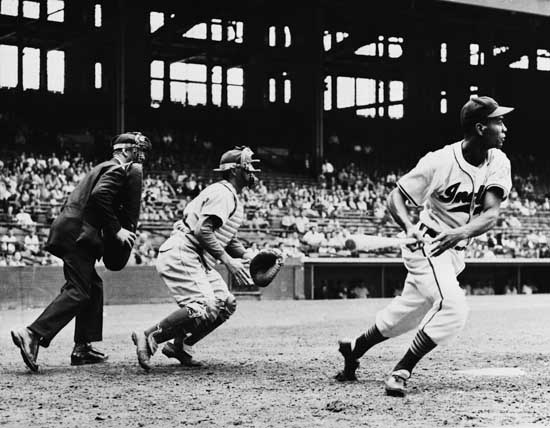
Over the next several seasons, Doby emerged as one of the best players in the game. From 1949 to 1955, he was named to seven consecutive All-Star teams, establishing himself as one of the premier power hitters in the American League. In 1950, he had one of his best statistical seasons, hitting .326 with 25 home runs and 102 RBIs. He followed that with an even better campaign in 1952, leading the American League in home runs with 32 and RBIs with 104 while batting .276. Doby’s ability to hit for power while maintaining a disciplined approach at the plate made him one of the most feared hitters of his time.
Doby’s impact extended beyond the field. As a pioneer for Black players in the American League, he faced intense racism but continued to conduct himself with professionalism and grace. His ability to succeed in an environment that was often hostile toward him demonstrated extraordinary resilience. He opened doors for future generations of Black players, proving that talent, hard work, and perseverance could overcome even the most ingrained prejudices.
As the 1950s progressed, Doby continued to be a key contributor for the Indians. In 1954, he led Cleveland to another American League pennant, hitting .272 with 32 home runs and 126 RBIs. The Indians won a then-record 111 games that season but were swept by the New York Giants in the World Series. Despite the disappointing outcome, Doby’s performance throughout the year solidified his place as one of the league’s elite players.
Injuries and age began to take their toll on Doby in the latter part of the decade. After being traded to the Chicago White Sox in 1956, he played two seasons in Chicago before finishing his major league career with brief stints with the Baltimore Orioles and a second tenure with the Indians. He retired from Major League Baseball in 1959 with a career batting average of .283, 253 home runs, and 970 RBIs.

Following his playing career, Doby remained involved in baseball, coaching and later becoming the second Black manager in Major League history when he took over the Chicago White Sox in 1978. Though his managerial tenure was brief, his presence in the role was another step forward in the integration of baseball leadership. Beyond his direct contributions to the game, Doby worked tirelessly to promote baseball to young players, advocating for diversity and inclusion.
Doby’s achievements were finally recognized on a grand scale when he was inducted into the Baseball Hall of Fame in 1998 by the Veterans Committee. Though his contributions had long been overshadowed by Jackie Robinson, his legacy as a pioneer and one of the great players of his era was finally acknowledged. The Cleveland Indians retired his number 14 in 1994, ensuring that his impact on the franchise would never be forgotten.
Larry Doby’s career and legacy extend far beyond the numbers. He was a trailblazer who endured the same racial hardships as Jackie Robinson but did so with far less fanfare. His excellence on the field and his courage in the face of adversity made him one of the most important figures in baseball history. His quiet dignity, resilience, and immense talent opened doors for countless players who followed in his footsteps. While he may not have received the same immediate recognition as some of his contemporaries, his contributions to the game remain profound. Larry Doby will always be remembered as a true pioneer, a baseball legend, and a symbol of perseverance in the face of overwhelming adversity.


 The Baseball Scholar
Leave a comment