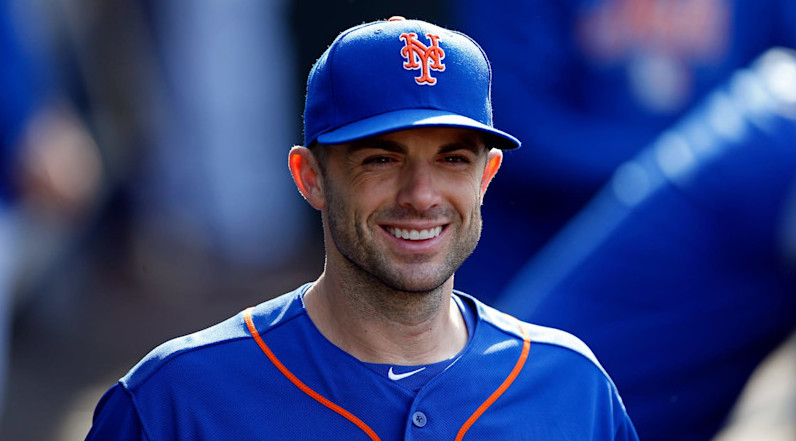
David Wright’s career in Major League Baseball stands as a testament to talent, perseverance, leadership, and loyalty. As the longtime third baseman and captain of the New York Mets, Wright became one of the most beloved figures in franchise history. His combination of power, contact hitting, defense, and leadership made him one of the premier players in the game throughout the 2000s and early 2010s. Over a career that spanned from his debut in 2004 to his emotional farewell in 2018, Wright compiled an impressive statistical resume, earning multiple All-Star selections, Gold Gloves, Silver Sluggers, and leading the Mets to the World Series in 2015. However, his career was also marked by heartbreaking injuries that cut short what could have been a surefire Hall of Fame career. Despite these challenges, Wright’s impact on the Mets and baseball as a whole remains undeniable.
Born on December 20, 1982, in Norfolk, Virginia, David Allen Wright grew up as a baseball prodigy. His love for the game was evident from a young age, and he quickly emerged as a standout player in high school. Attending Hickory High School in Chesapeake, Virginia, Wright established himself as one of the best amateur players in the country. His combination of power, discipline, and defensive instincts caught the attention of scouts, and in 2001, he was selected by the New York Mets in the first round of the MLB Draft. Rather than opting for college, Wright signed with the organization that would become his baseball home for the entirety of his career.

Wright’s rise through the minor league system was swift. He showcased an advanced approach at the plate and an ability to hit for both power and average. His defensive skills at third base continued to improve, making him a well-rounded prospect. By 2004, it was clear that Wright was ready for the big leagues, and the Mets called him up in July. His debut on July 21, 2004, against the Montreal Expos marked the beginning of a new era for the Mets, who had been searching for a franchise cornerstone. Wright wasted little time making an impact, finishing his rookie season with a .293 batting average, 14 home runs, and 40 RBIs in just 69 games. His smooth swing, patient eye, and ability to handle the defensive responsibilities at third base made him an instant fan favorite.
The 2005 season was Wright’s first full year in the majors, and he delivered on all the promise he had shown in the minors. He played in 160 games, hitting .306 with 27 home runs, 102 RBIs, and 42 doubles. His ability to consistently drive the ball to all fields and hit in clutch situations made him one of the most exciting young players in the game. He also began to establish himself as a leader in the Mets’ clubhouse, setting the tone with his work ethic and professionalism. The Mets, under manager Willie Randolph, were in the process of building a contender, and Wright was at the center of those plans.
Wright’s breakout season came in 2006, when he cemented himself as one of the best third basemen in baseball. He hit .311 with 26 home runs, 116 RBIs, and 20 stolen bases, showcasing his rare combination of power and speed. He was selected to his first All-Star Game and won his first Silver Slugger Award. More importantly, the Mets emerged as a powerhouse in the National League, winning 97 games and capturing the NL East division title. Wright played a crucial role in their success, delivering big hits in key moments throughout the season.
The 2006 postseason was Wright’s first taste of playoff baseball, and he helped the Mets reach the National League Championship Series against the St. Louis Cardinals. Though he struggled at times in the series, his presence in the lineup was vital. The Mets ultimately fell in a heartbreaking seven-game series, but Wright had established himself as a franchise player and one of the brightest stars in the game.

Over the next few seasons, Wright continued to dominate. From 2007 to 2008, he posted back-to-back seasons with at least 30 home runs, 100 RBIs, and a batting average above .300. In 2007, he won his first Gold Glove Award for his stellar defensive play at third base and added another Silver Slugger to his collection. His 2008 campaign was arguably the best of his career, as he hit .302 with 33 home runs, 124 RBIs, and 42 doubles. He finished fourth in the National League MVP voting, further solidifying his status as one of the premier players in the game.
However, the Mets suffered devastating collapses in both 2007 and 2008, missing the postseason despite leading the division late in the season. These collapses were particularly painful for Wright, who took personal responsibility for the team’s struggles. Despite the disappointment, he remained a leader and a steady presence in the clubhouse.
The 2009 season marked a turning point for both Wright and the Mets. The team moved into Citi Field, a new ballpark with much larger dimensions than their previous home, Shea Stadium. The cavernous outfield made it difficult for Wright to maintain his home run power, and his numbers declined significantly. He hit just 10 home runs, though he still managed a .307 batting average and 72 RBIs. Adding to the frustration, Wright suffered a concussion in August after being hit in the head by a fastball from Matt Cain. The injury sidelined him for several weeks and raised concerns about his long-term health.
Wright rebounded in 2010 and 2011, regaining some of his power and earning two more All-Star selections. However, the Mets were no longer contenders, as the team struggled with injuries and roster instability. Wright remained a bright spot, continuing to produce at a high level despite playing for a rebuilding team.
In 2012, Wright reasserted himself as one of the game’s elite third basemen. He hit .306 with 21 home runs and 93 RBIs, earning his sixth All-Star selection and finishing sixth in the MVP voting. His leadership was more important than ever, as he guided a young Mets team through a transitional period. That offseason, he signed an eight-year, $138 million contract extension, ensuring that he would remain a Met for the rest of his career.
Wright’s crowning moment came in 2015, when the Mets made an unexpected run to the World Series. After missing most of the season due to spinal stenosis, a degenerative back condition, Wright returned in September and provided a crucial boost to the team. In the National League Division Series against the Los Angeles Dodgers, he delivered a clutch RBI single in Game 1. In the World Series against the Kansas City Royals, Wright hit a dramatic home run in Game 3, electrifying the Citi Field crowd. Though the Mets fell short, Wright’s contributions to the team’s postseason run were invaluable.
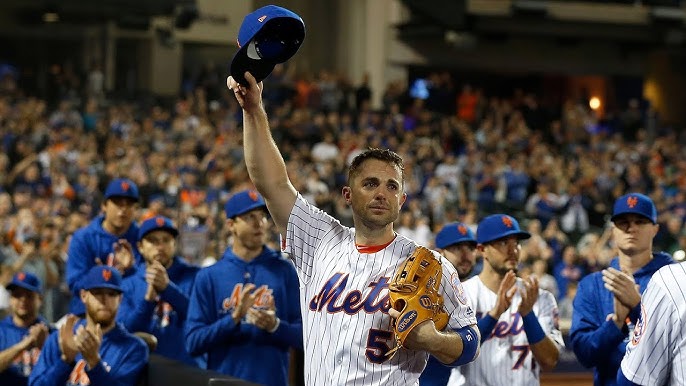
The final years of Wright’s career were defined by his battle with injuries. Spinal stenosis made it increasingly difficult for him to play, and he appeared in just 75 games from 2016 to 2018. Despite his determination to return, his condition forced him into an early retirement. His farewell game on September 29, 2018, was an emotional moment, as Mets fans honored their longtime captain with a standing ovation. Wright officially retired after the season, leaving behind a legacy as one of the greatest players in franchise history.
Wright finished his career with a .296 batting average, 242 home runs, 970 RBIs, and a franchise-record 1,777 hits. His impact on the Mets went beyond statistics, as he was the heart and soul of the team for over a decade. His leadership, professionalism, and loyalty made him a role model for young players, and his contributions to the organization will be remembered for generations.

Though injuries prevented Wright from reaching the Hall of Fame, his legacy as one of the best third basemen of his era is secure. His influence on the Mets and the city of New York remains strong, and he will forever be regarded as one of the greatest players to ever wear the orange and blue.



 The Baseball Scholar
Leave a comment