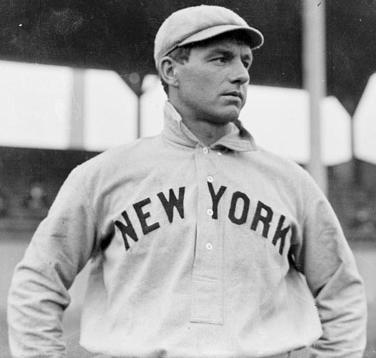
Joe McGinnity, one of the most durable and dominant pitchers of the early 20th century, left an indelible mark on baseball history through his relentless work ethic, unique style of pitching, and impressive statistical achievements. Nicknamed “Iron Man” for his remarkable ability to pitch on little rest and his industrial background, McGinnity carved out a legacy as one of the greatest pitchers of his era. His career, spanning from the late 19th century to the early 20th century, was defined by his unparalleled endurance, remarkable consistency, and contributions to some of the best teams of his time. Over ten Major League seasons, McGinnity amassed 246 wins, a 2.66 career earned run average (ERA), and multiple league-leading performances that solidified his place among baseball’s immortals. His impact extended beyond his playing years, influencing future generations of pitchers and leaving a lasting mark on the evolution of the game.
Born on March 20, 1871, in Cornwall, Illinois, Joseph Jerome McGinnity grew up in an era when baseball was still developing into America’s pastime. His upbringing was modest, and his early life revolved around hard labor, which would later contribute to his reputation for toughness and endurance. Before pursuing baseball as a career, McGinnity worked in iron foundries, a background that earned him his famous nickname. Unlike many of his contemporaries, McGinnity did not rise through the ranks of professional baseball as a teenage prodigy. Instead, he took a longer path to the major leagues, honing his craft in the minor leagues and semi-professional circuits well into his twenties.
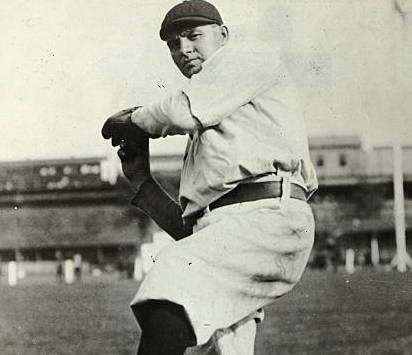
McGinnity’s professional baseball career officially began in the mid-1890s when he pitched for minor league teams across the Midwest. He quickly gained attention for his durability and unorthodox underhand delivery, which baffled hitters and allowed him to pitch deep into games. His signature pitch, a mix of curveballs and deceptive fastballs, proved effective against batters who were used to a more traditional overhand style. By 1898, he had made a name for himself in the minor leagues, leading to his eventual call-up to the National League in 1899 with the Baltimore Orioles, a team managed by the legendary John McGraw.
McGinnity’s rookie season in 1899 was nothing short of spectacular. Pitching for the Orioles, he posted a 28-16 record with a 2.68 ERA, establishing himself as one of the league’s premier arms. His ability to pitch frequently and effectively made him invaluable to his team, and his performance quickly earned the respect of his peers. During this era, pitchers were expected to complete most of their starts, and McGinnity embraced this challenge with remarkable consistency. He frequently pitched both games of doubleheaders and was known to throw on consecutive days, an almost unthinkable feat by modern standards.
When the Baltimore Orioles disbanded after the 1899 season, McGinnity moved to the Brooklyn Superbas in 1900, where he continued to shine. He led the league with 28 wins, a 2.94 ERA, and 39 complete games, showcasing his extraordinary stamina. His dominance on the mound helped Brooklyn win the National League pennant that year, and McGinnity quickly became one of the most feared pitchers in baseball. His success was not solely due to his physical endurance; he was also a keen strategist, using deception, movement, and precise control to keep hitters off balance. Unlike many pitchers who relied purely on velocity, McGinnity’s effectiveness stemmed from his ability to change speeds and mix pitches intelligently.
In 1901, McGinnity briefly left the National League to join the newly formed American League, pitching for the Baltimore Orioles (not to be confused with the modern Orioles, as this franchise later became the New York Yankees). However, he returned to the National League the following year, reuniting with John McGraw on the New York Giants. This move proved to be the defining chapter of his career, as McGinnity thrived under McGraw’s aggressive and strategic leadership.
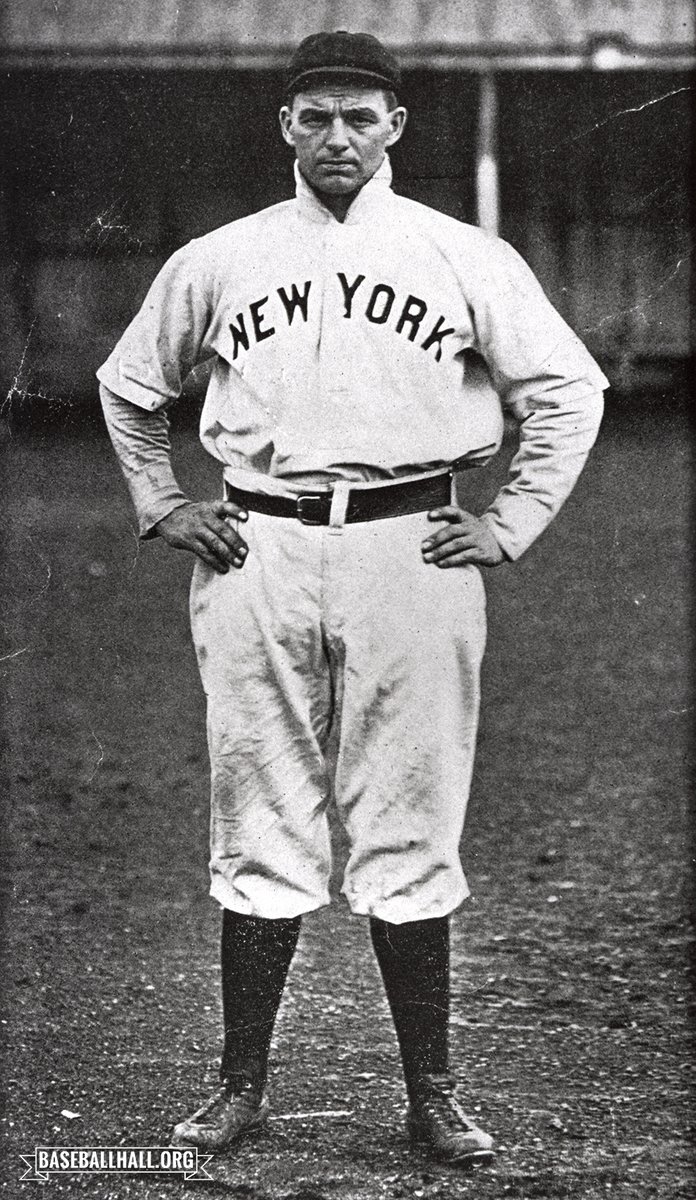
From 1902 to 1908, McGinnity was the ace of the Giants’ pitching staff, and he enjoyed one of the most dominant stretches in baseball history. His best season came in 1904, when he won a staggering 35 games, a feat that remains nearly unthinkable in modern baseball. That year, he pitched an incredible 408 innings, completed 38 of his 48 starts, and led the league in wins, complete games, and shutouts. His contributions were instrumental in leading the Giants to the National League pennant, although they controversially declined to participate in the World Series against the American League champions, the Boston Americans.
McGinnity’s ability to pitch frequently and effectively was legendary. He routinely started games on back-to-back days and sometimes even pitched in both games of a doubleheader. In 1903, he famously pitched both games of a doubleheader on three separate occasions, winning all six games. His relentless workload earned him the admiration of fans and teammates alike, as he was seen as the ultimate workhorse. His ironman reputation was not just a product of his physical toughness but also his mental resilience. He understood the importance of pacing himself within games and using his defense effectively to minimize his pitch count, a strategy that allowed him to maintain his effectiveness over long stretches of play.
Despite his intense workload, McGinnity remained highly effective throughout his career. In addition to his 35-win campaign in 1904, he led the National League in wins five times and consistently ranked among the league leaders in ERA and strikeouts. His performance in crucial games further cemented his legacy, as he had a knack for delivering in high-pressure situations. He played a crucial role in helping the Giants win another National League pennant in 1905, a season in which he won 21 games and posted a 2.87 ERA. That year, the Giants, led by McGinnity and fellow ace Christy Mathewson, won the World Series against the Philadelphia Athletics, marking the pinnacle of his career.
As he entered his late 30s, McGinnity’s dominance gradually began to decline, though he remained a valuable pitcher. He played his final Major League season in 1908, finishing with a career record of 246 wins, 142 losses, and a lifetime ERA of 2.66. However, his baseball career was far from over. Even after leaving the major leagues, McGinnity continued to pitch in the minor leagues well into his 50s, an astonishing testament to his love for the game and remarkable endurance. He not only played but also managed several minor league teams, passing on his knowledge to younger players and shaping future generations of pitchers.
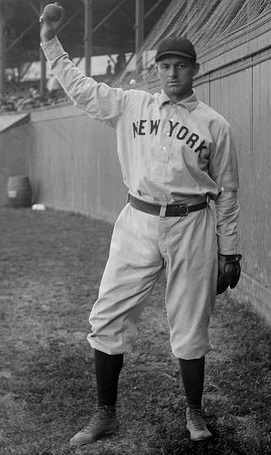
Joe McGinnity’s impact on baseball extended beyond his playing days. His incredible durability and workload helped define the expectations for pitchers in the early 20th century, setting a standard that few could match. While his style of pitching—throwing multiple games in a row and completing nearly every start—would be considered impossible by today’s standards, it exemplified the toughness and resilience that defined baseball’s early years. His influence on the game was profound, particularly in shaping how pitchers approached their craft in an era before modern training methods and bullpen specialization.
In 1946, McGinnity was posthumously inducted into the Baseball Hall of Fame, a fitting tribute to one of the greatest pitchers of his time. His legacy remains one of perseverance, endurance, and excellence. Though modern baseball has evolved far beyond the era in which he played, his impact on the sport endures, serving as a reminder of a time when pitchers were expected to be both dominant and durable. His contributions to the game, from his statistical achievements to his role as a mentor in the minor leagues, ensure that Joe McGinnity’s name will forever be remembered among baseball’s immortals.



 The Baseball Scholar
Leave a comment