
Lou Whitaker, one of the most underrated second basemen in Major League Baseball history, built a remarkable career defined by consistency, defensive brilliance, and offensive production. Spending his entire 19-year career with the Detroit Tigers, he formed one of the greatest double-play duos in baseball history alongside shortstop Alan Trammell. Though often overshadowed by more celebrated stars of his era, Whitaker’s impact on the game was profound. His longevity, statistical achievements, and contributions to the Tigers’ success—especially their 1984 World Series championship—cemented his place as one of the finest second basemen of his time. His exclusion from the Hall of Fame remains one of the most debated oversights in baseball history, given his exceptional career numbers and contributions to the game.
Louis Rodman Whitaker Jr. was born on May 12, 1957, in Brooklyn, New York, but was raised in Martinsville, Virginia. His athletic prowess became evident at an early age, as he excelled in baseball throughout his youth. Though he originally played third base in high school, the Detroit Tigers saw his potential as a middle infielder and selected him in the fifth round of the 1975 MLB Draft. His transition from third base to second base was a pivotal moment in his career, as it placed him in a position where his quick reflexes, strong arm, and defensive acumen would shine.
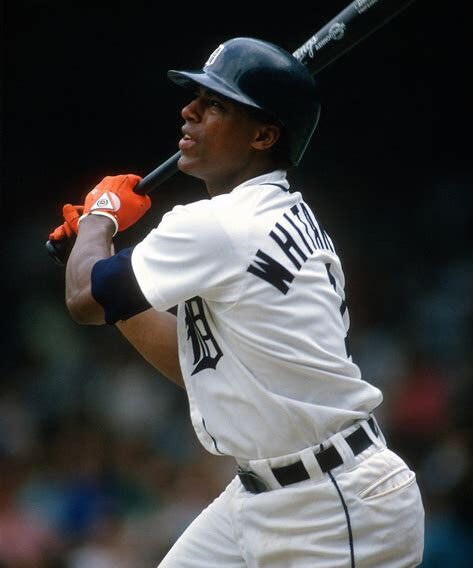
Whitaker’s rise through the Tigers’ minor league system was swift. In 1976, he played for the Lakeland Tigers in Class A ball and quickly displayed a promising bat and excellent defensive instincts. The Tigers recognized his potential and, by 1977, he was playing in Triple-A for the Evansville Triplets. That same year, Whitaker received a September call-up to the major leagues, marking the beginning of what would become one of the most consistent careers in baseball history.
His first full season in the majors came in 1978, and it was nothing short of spectacular. As a rookie, Whitaker batted .285 with 71 runs scored and played outstanding defense, earning him the American League Rookie of the Year Award. This honor was significant, as it was the first sign that the Tigers had a future star on their hands. Whitaker’s quick hands, smooth double-play pivots, and increasing offensive output made him a key component of Detroit’s infield for years to come. His ability to make tough plays look effortless and his growing confidence at the plate made him an invaluable asset to the team.
One of the defining features of Whitaker’s career was his long-standing partnership with Alan Trammell. The duo first played together in the minors and developed a chemistry that carried over seamlessly into the major leagues. By the late 1970s and early 1980s, they had established themselves as one of the best double-play combinations in baseball history. Their nearly two-decade tenure together set a record for the longest time a second baseman and shortstop played together on the same team. Their synchronicity on the field was unmatched, as they seemed to anticipate each other’s movements with an almost telepathic connection. This stability provided the Tigers with a defensive foundation that played a crucial role in the team’s success.
Offensively, Whitaker was a steady producer throughout his career. While he was never considered a pure power hitter, he provided significant pop for a second baseman. He consistently hit around .270 to .280, reached double digits in home runs, and was a reliable source of runs scored. His ability to get on base made him an ideal top-of-the-order hitter, and he often set the table for sluggers like Lance Parrish, Kirk Gibson, and Darrell Evans. By the early 1980s, Whitaker had established himself as one of the best all-around second basemen in the league.
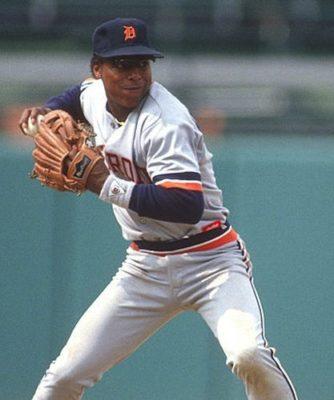
The pinnacle of his career came in 1984 when the Detroit Tigers dominated Major League Baseball from start to finish. Under manager Sparky Anderson, the Tigers started the season with an astonishing 35-5 record and never looked back, finishing with 104 wins and cruising to the American League pennant. Whitaker was a critical component of this championship team, batting .289 with 13 home runs, 56 RBIs, and 206 hits. His defensive brilliance and steady bat helped Detroit secure its first World Series title since 1968. In the Fall Classic against the San Diego Padres, Whitaker played a key role in the Tigers’ five-game victory, providing timely hits and flawless defense. The image of Whitaker and Trammell celebrating the final out remains one of the most iconic moments in franchise history.
Throughout the mid-to-late 1980s, Whitaker continued to be one of the most productive second basemen in baseball. He earned five All-Star selections (1983, 1984, 1985, 1986, and 1987) and three Gold Glove Awards (1983–1985) for his exceptional defense. His range, ability to turn double plays, and quick reflexes made him a nightmare for opposing hitters. He also won four Silver Slugger Awards (1983–1985, 1987), showcasing his offensive prowess at a traditionally light-hitting position.
In 1986, Whitaker had one of the best offensive seasons of his career, batting .276 with 20 home runs, 73 RBIs, and a career-high 87 walks. His ability to work deep counts and get on base made him an asset at the top of the order. The following year, he played a vital role in leading the Tigers to the postseason once again. In 1987, Detroit won the American League East with a thrilling finish, edging out the Toronto Blue Jays in the final days of the season. Whitaker batted .265 with 16 home runs, 59 RBIs, and 110 runs scored. Unfortunately, the Tigers were eliminated in the ALCS by the eventual World Series champion Minnesota Twins, but Whitaker’s contributions remained invaluable.
As the 1990s began, Whitaker remained a consistent performer, though the Tigers entered a period of decline. Despite the team’s struggles, he continued to produce at a high level. In 1991, he enjoyed one of his best power-hitting seasons, slugging 23 home runs with 78 RBIs and a .279 batting average. Even as he aged, his disciplined approach at the plate and smooth fielding abilities kept him among the elite at his position.
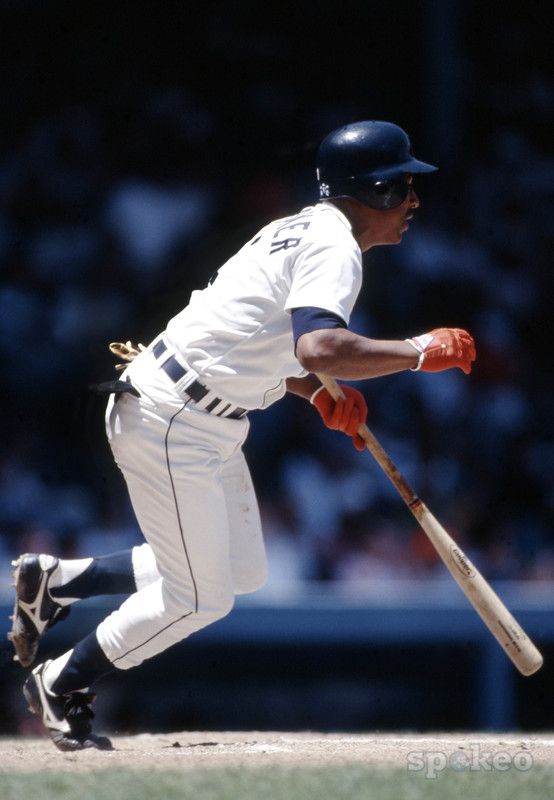
Whitaker played his final season in 1995, ending his career with 2,369 hits, 244 home runs, 1,084 RBIs, 1,386 runs scored, and a .276 career batting average. His longevity and consistency were hallmarks of his career, and his numbers compare favorably to other Hall of Fame second basemen. However, when he became eligible for Hall of Fame consideration, he was shockingly left off after just one ballot, receiving only 2.9% of the vote—far below the 5% threshold needed to remain on future ballots. Many baseball analysts and fans consider this one of the greatest oversights in Hall of Fame voting history, as his career numbers and overall impact on the game clearly warranted greater recognition.
Despite his Hall of Fame snub, Whitaker’s influence on the game remains significant. His career helped redefine what a second baseman could be, demonstrating that players at the position could be complete offensive and defensive threats. His longtime partnership with Alan Trammell set a standard for double-play duos, and his ability to combine power, speed, and defense made him one of the most well-rounded players of his era.
In the years since his retirement, Whitaker has received greater recognition for his accomplishments, particularly from the Detroit Tigers organization. In 2019, the Tigers retired his number 1 jersey, a long-overdue honor for one of the franchise’s all-time greats. Many baseball historians continue to advocate for his induction into the Hall of Fame, and his case remains one of the most compelling among overlooked players.
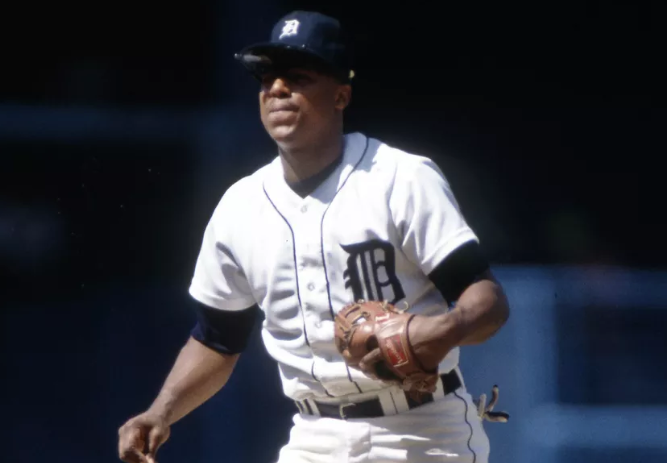
Lou Whitaker’s career is a testament to excellence, consistency, and quiet dominance. While he may not have received the widespread recognition that some of his contemporaries did, his impact on the game is undeniable. As one of the best second basemen of all time, his legacy continues to inspire new generations of baseball fans and players alike.


 The Baseball Scholar
Leave a comment