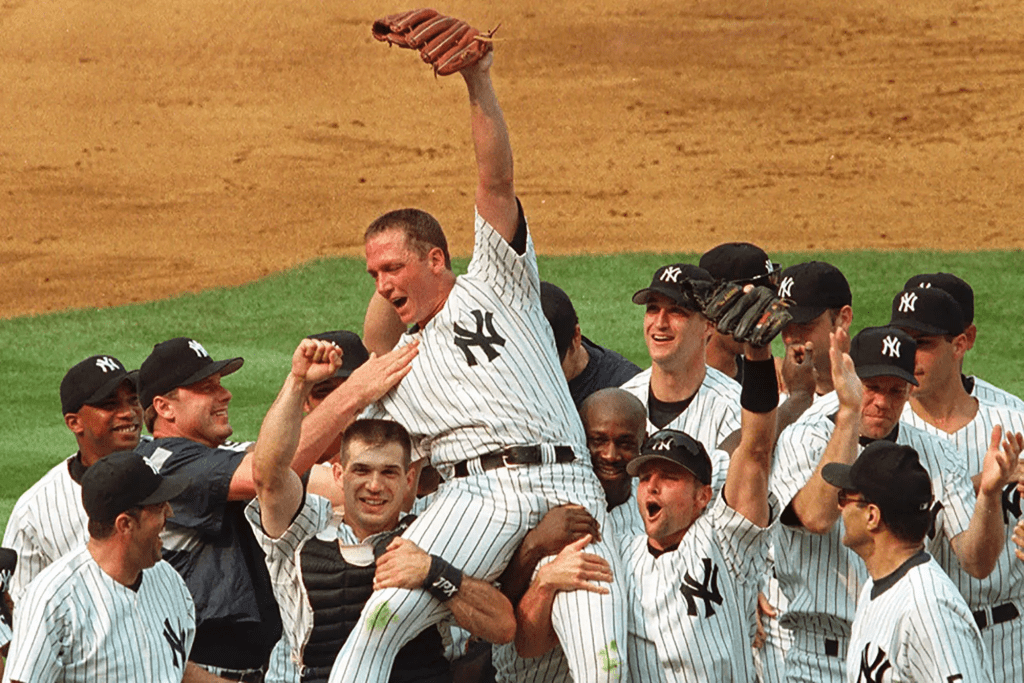
David Cone, one of the most accomplished pitchers in Major League Baseball (MLB) history, is a figure whose career has spanned decades of change and evolution within the sport. From his humble beginnings to his time in the spotlight as a dominant starting pitcher, Cone’s story is one of persistence, triumph, and, most importantly, the undeniable impact he had on the game of baseball.
David Brian Cone was born on January 2, 1963, in Kansas City, Missouri. The son of an accountant and a homemaker, Cone’s early life was shaped by the working-class values instilled by his parents. Growing up, Cone was an athletic child with a deep love for baseball, but his early years were not marked by immediate success or recognition. Like many future stars, Cone was not an automatic choice for his high school varsity team, but he quickly proved his worth. In his senior year at Rockhurst High School, he blossomed into a top-tier pitcher, drawing attention from scouts for his powerful fastball and emerging ability to command his pitches. His raw talent was undeniable, and this would set the stage for his future success.

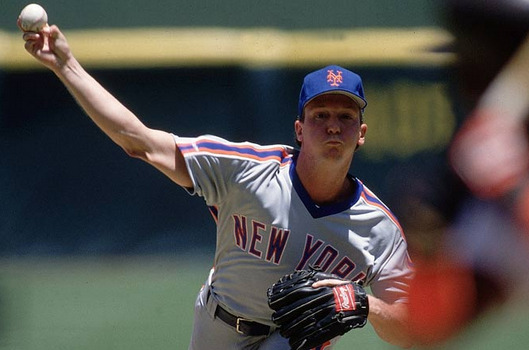
Cone’s journey to professional baseball began with a scholarship to the University of Arizona, where he continued to refine his skills. However, the New York Mets took notice of his burgeoning potential when they selected him in the third round of the 1981 MLB Draft. Cone made his MLB debut with the Mets on April 14, 1986, at the age of 23, marking the beginning of a career that would see him transcend his early years as a solid but unspectacular pitcher. Cone’s early years in New York were a time of growth and learning, as he navigated the pressures of playing in a big market. He pitched for the Mets for six seasons, and though he showed flashes of brilliance, his time in New York was marred by inconsistency and struggles with injuries. Yet, it was during this period that Cone began to form the mental toughness that would serve him well in the years to come.
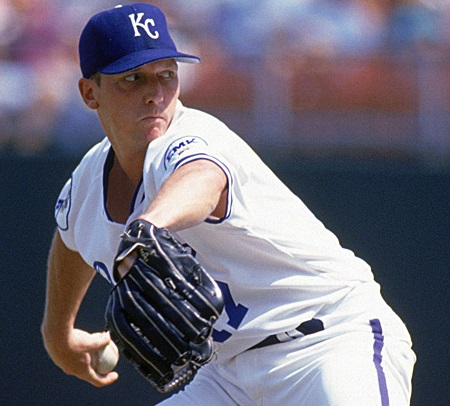
In 1988, Cone was traded to the Kansas City Royals, where his career took a significant turn. It was in Kansas City that Cone’s true potential began to surface. His development as a pitcher accelerated under the tutelage of the Royals’ coaching staff, and he developed a reputation for being a hard worker and a student of the game. His pitching became more refined, and Cone’s dominance on the mound began to shine through. By 1991, Cone had cemented himself as one of the league’s top pitchers, earning his first All-Star selection. His incredible fastball and sharp curveball made him nearly unhittable, and he was known for his ability to dominate opposing batters.
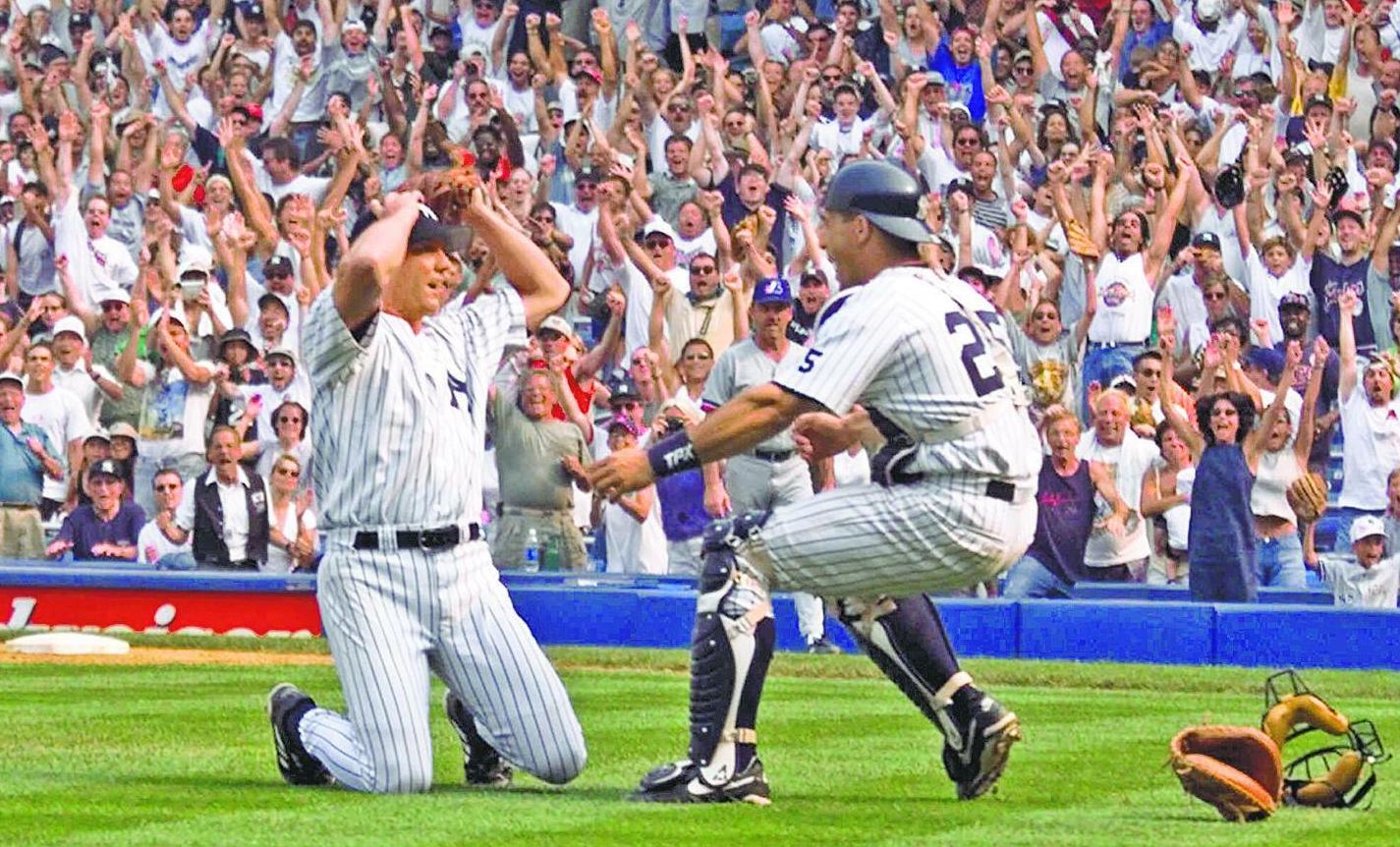
Perhaps one of the most significant moments in Cone’s career came in 1994, when he was traded to the Toronto Blue Jays. This trade allowed Cone to achieve the ultimate goal for many players: winning a World Series. In 1994, Cone pitched a perfect game on July 18 against the Montreal Expos, etching his name into the history books. That moment, as iconic as it was, was just one of the many highlights of his career. As a key member of the Blue Jays pitching staff, Cone contributed significantly to their 1992 and 1993 World Series titles, adding his own signature to the Blue Jays’ legacy of success.
Following his time in Toronto, Cone’s career took him to the New York Yankees, where he became a key figure in the franchise’s most successful period in recent history. Cone’s arrival in the Bronx in 1995 proved to be the start of a career renaissance. At the height of the Yankees’ dominance in the late ’90s, Cone established himself as an anchor in their starting rotation, winning two World Series titles in 1996 and 1999. His mastery on the mound during the postseason made him an invaluable asset to the Yankees, and Cone was instrumental in the team’s success during this era. His performances in the postseason were nothing short of exceptional, and his impact on the game during these years cannot be overstated.
Cone’s competitiveness and ability to rise to the occasion were key components of his success. In 1999, he earned his fourth and final All-Star selection, a testament to his status as one of the best pitchers of his era. Cone’s performances during this time were marked by his exceptional control, pinpoint accuracy, and ability to handle high-pressure situations. Cone was known for his meticulous preparation and commitment to his craft. His dedication to studying hitters and fine-tuning his mechanics set him apart from many of his contemporaries. As a result, he was able to sustain his effectiveness well into his 30s, despite the natural wear and tear that comes with being a starting pitcher.
One of the defining features of Cone’s career was his versatility. He was not just a traditional power pitcher, but a craftsman who could adapt his pitching style to the demands of the game. He had a keen understanding of how to mix his pitches and how to set up batters. His curveball was one of the most devastating pitches in baseball, and he could throw it for strikes at will. Cone’s ability to maintain a sharp breaking ball, even as his fastball velocity started to decline with age, was a testament to his adaptability. His leadership both on and off the field was also an integral part of his success. As an older player, Cone became a mentor to the younger pitchers on the Yankees staff, offering guidance and wisdom based on his years of experience.
David Cone’s career was not without challenges, however. He battled injuries throughout his career, including a serious shoulder injury that kept him on the sidelines for much of the 2001 season. Yet, Cone’s ability to come back from these setbacks demonstrated his resilience and unwavering commitment to the game. His perseverance in the face of adversity was a quality that defined his career, and it further solidified his place among the game’s greats.
Beyond the numbers, Cone’s impact on the game can be seen in the way he changed the expectations for what a pitcher could accomplish. His success in big games, his role in multiple championship-winning teams, and his ability to excel in the postseason were groundbreaking. Cone’s leadership, intelligence, and work ethic set a new standard for pitchers who sought to succeed not only in the regular season but in the postseason as well. His success in New York, in particular, was a shining example of how a player could thrive under the pressure of the big stage.
Cone’s post-playing career has also been marked by his continued involvement in the game of baseball. After retiring, he transitioned into broadcasting, where his sharp insight into the game and his wealth of experience made him a respected voice in the sport. Cone’s ability to analyze the game from a pitcher’s perspective has made him a sought-after commentator and analyst, and his contributions to the sport have continued in this new capacity.
David Cone’s legacy is undeniable. With 194 career wins, over 2,600 strikeouts, and a career earned run average (ERA) of 3.46, Cone’s statistics speak for themselves. But his true impact extends beyond the box scores. He is remembered as one of the most intelligent, competitive, and durable pitchers of his era, a player who transcended his individual numbers to become a part of the fabric of baseball history. His ability to perform in the most crucial moments, his work ethic, and his leadership both on and off the field set him apart as one of the true greats of the game.
David Cone’s career serves as a blueprint for what it means to be not just a successful pitcher, but a complete player. From his early struggles to his late-career success, Cone’s journey is a testament to the power of hard work, perseverance, and a deep love for the game of baseball. His legacy, shaped by a perfect game, multiple World Series titles, and a career filled with memorable moments, will forever be etched in the annals of MLB history.



 The Baseball Scholar
Leave a comment